There was a time when Noel Parmentel, an occasional contributor to this magazine, who died recently, used to call me nearly every Sunday. I’d pick up the phone and hear, in his gravelly voice: “Lingeman? Noel.”
I wasn’t always happy to have my Sundays thus interrupted but looking back I’m glad he dropped the dime. What did we talk about? Probably gossip about doings at The Nation and literary matters in general. Noel was well-read. I remember him once telling me to lay off a certain person who, he said quoting Graham Greene, was a member of the “non-torturable class.” Noel and I were members of the same generation of aspirers who invaded New York in the sixties hell-bent on making a name for ourselves. There was a business element in Noel’s and my relationship, of course. Sooner or later, he would dangle an article idea before me like a lion tamer waving a steak before one of his charges. Noel knew what he was doing. He was a pro and a helluva writer. Here’s a free sample of his prose style lopped from a piece he wrote for us about a grifter named Stew Leonard, titled “The Skim Scam at Stew’s Dairy.”
“Stew Leonard’s judgment day is set for October 20 in Federal District Court in New Haven, where Fairfield County’s big butter and egg man (now the heavy in a light opera bouffe Gotterdammerrung) will learn his fate. On advice of counsel—Watergate prosecutor James Neal—Leonard copped a plea of ‘conspiring to defraud the Federal Government of taxes on $17.5 million’ that he and three Norwalk co-defendants skimmed from the World’s Largest Dairy Store. Guidelines call for up to five years of jail time on top of an already levied $15 million fine. In the absence of divine intervention, Leonard will be trading down his Holstein glad rags for Danbury pin stripes. Old MacDonald never had days like this.”
Now that, J-school grads, is a lede!
So, our Sabbath talks were not in vain. Some of his best ideas ended up as articles in in The Nation.
But hold on, I hear you saying. Wasn’t Noel a conservative contributor to Bill Buckley’s National Review?
True enough. But Noel was politically ambidextrous. As one of his friends, the writer Dan Wakefield, put it, he “savaged the right in the pages of The Nation, would turn around and do the same to the left in National Review and blasted both sides in Esquire, and everyone loved it.” As for his politics, he defined himself as a “reactionary individualist.”
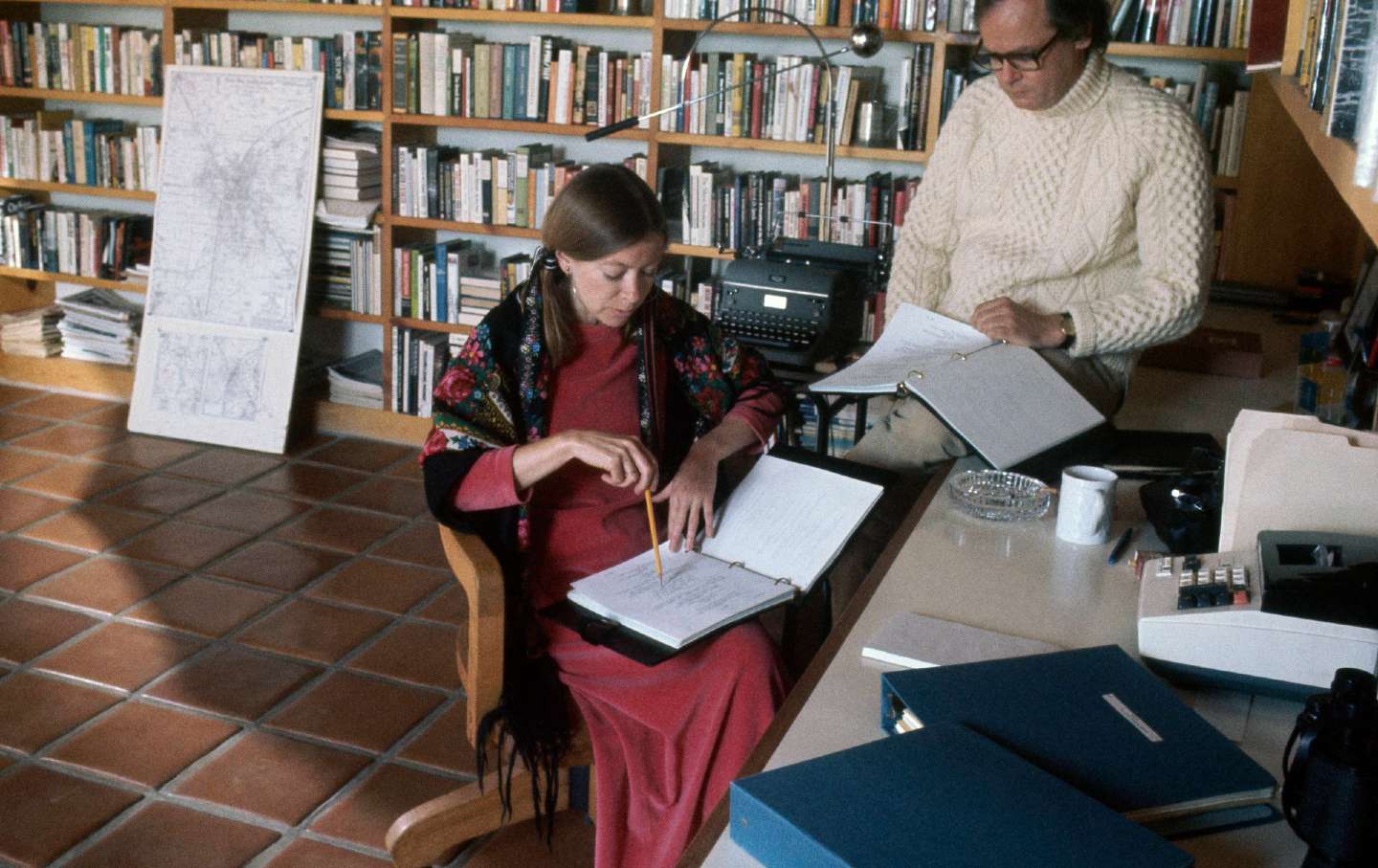
His former lover and mentee, the novelist Joan Didion, said it more caustically: “He belonged to nothing, He was an outsider who lived by his ability to manipulate the inside.”
In addition to being a classy writer, Noel had the deal-making instincts of a shark literary agent. Add to that the fact that he was an enabler, a generous motivator of fellow writers. When he and Didion were an item, he pushed her into finishing her first novel, Run River. After they broke up, he eventually dropped her. Later, he fixed her up with John Gregory Dunne, then a writer for Time, whom she later married. The pair emigrated to the left coast, where they became in-demand screenwriters.
Noel himself had great talent and originality as a magazine writer. Indeed, an article he published in Esquire, was what drew me and, I think, Victor Navasky, The Nation’s editor at the time, to solicit his prose. It was a satirical sendup of the Young Americans for Freedom, a cabal of pimply young conservatives, titled “The Acne and the Ecstasy.”
It now occurs to me that even amid the political stresses of the sixties and seventies, Noel and I, could talk to each other across fault lines. Perhaps there’s a lesson there for today’s literati.