How LA Defeated Donald Trump
And how the rest of the country can too.
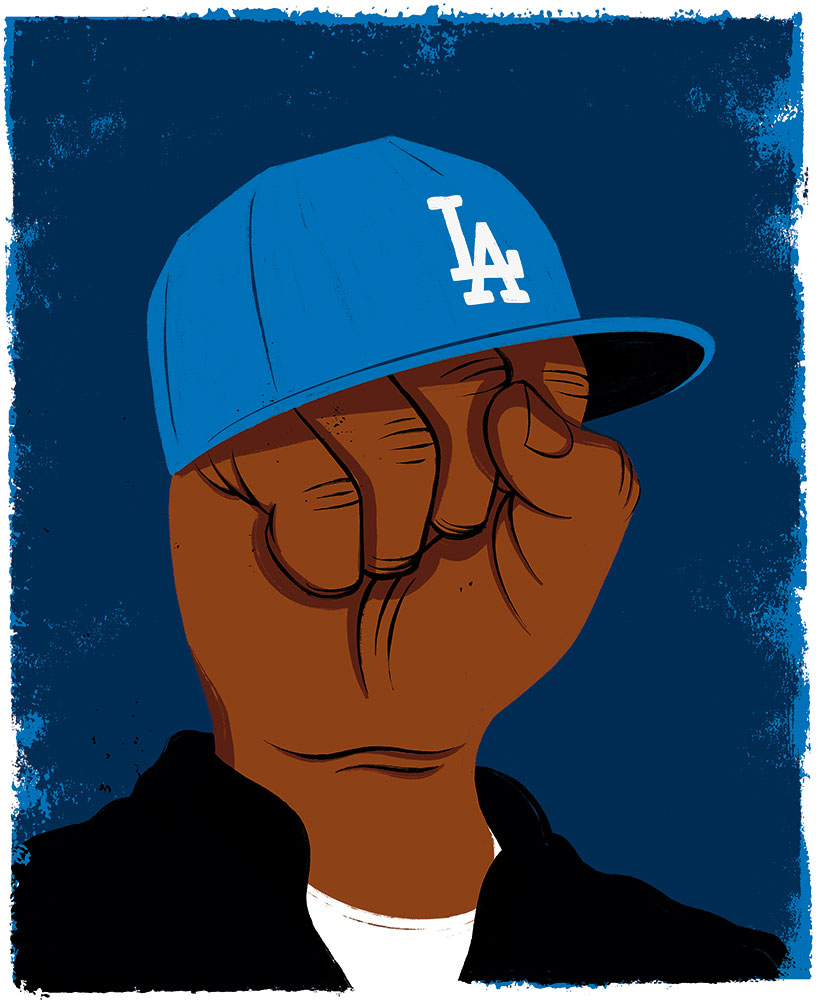
This article is part of a special Nation package devoted to LA’s bold stand against the Trump administration’s assaults on the city.
Donald Trump hates Los Angeles—and for good reason. Los Angeles is a deep-blue city that regularly backs Democrats at every level of government. It is a strong union town in a nation where the labor movement is treading water. It is majority Black and brown, with whites representing only 28 percent of its nearly 4 million residents. And it must particularly gall this president, who has made his name by attacking immigrants, to have to acknowledge that almost 35 percent of the population of one of the wealthiest urban centers in the world came from a different country. The City of the Angels was one of the first of America’s sanctuary cities, and it remains defiantly proud of this status—refusing cooperation with the ICE and Border Patrol thugs that Trump has unleashed to terrorize the nation’s Black, brown, and Asian neighborhoods.
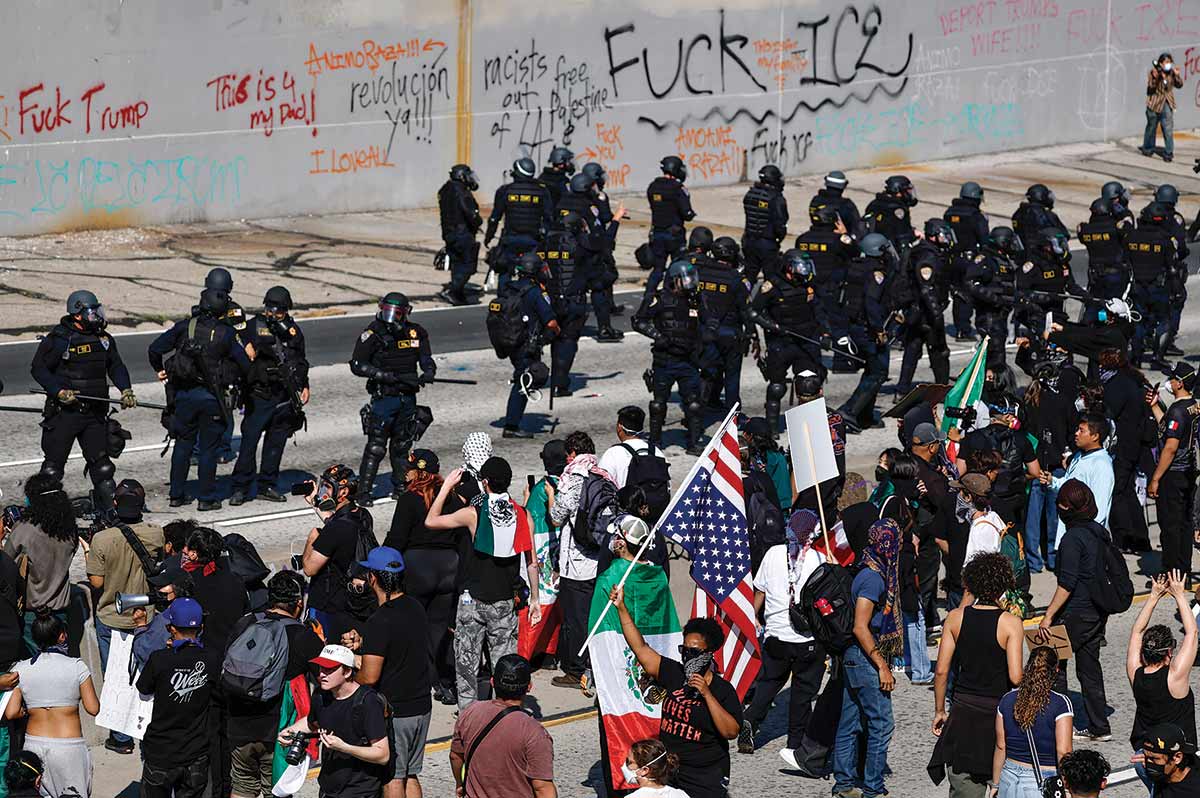
It is this resistance—and the ever-growing, diverse, militant, and creative ways it is challenging the government’s ethnic-cleansing campaign—that Trump hates above all. The movement was unrelenting from the moment of his second inauguration, with near-daily actions at workplaces, churches, schools, courthouses, detention centers, and the hotels that were housing ICE agents. For all these reasons, Trump decided to escalate his war on LA. In June and July of 2025, he ordered more than 4,000 National Guard troops and 700 Marines to invade the city. With this absurd re-creation of storming “the halls of Montezuma,” Trump hoped to crush all resistance, terrorize immigrants, and send a potent message to other cities that were proud and protective of their diversity.
But Trump failed. LA refused to bend. And by the end of July, almost all of the 5,000 troops were gone. “President Trump is realizing that his political theater backfired,” announced California Governor Gavin Newsom. “This militarization was always unnecessary and deeply unpopular.” What Newsom said was true. But it is important to remember that it took fierce and effective local opposition to bring about this realization. The story of that opposition offers a lesson for communities across the country.
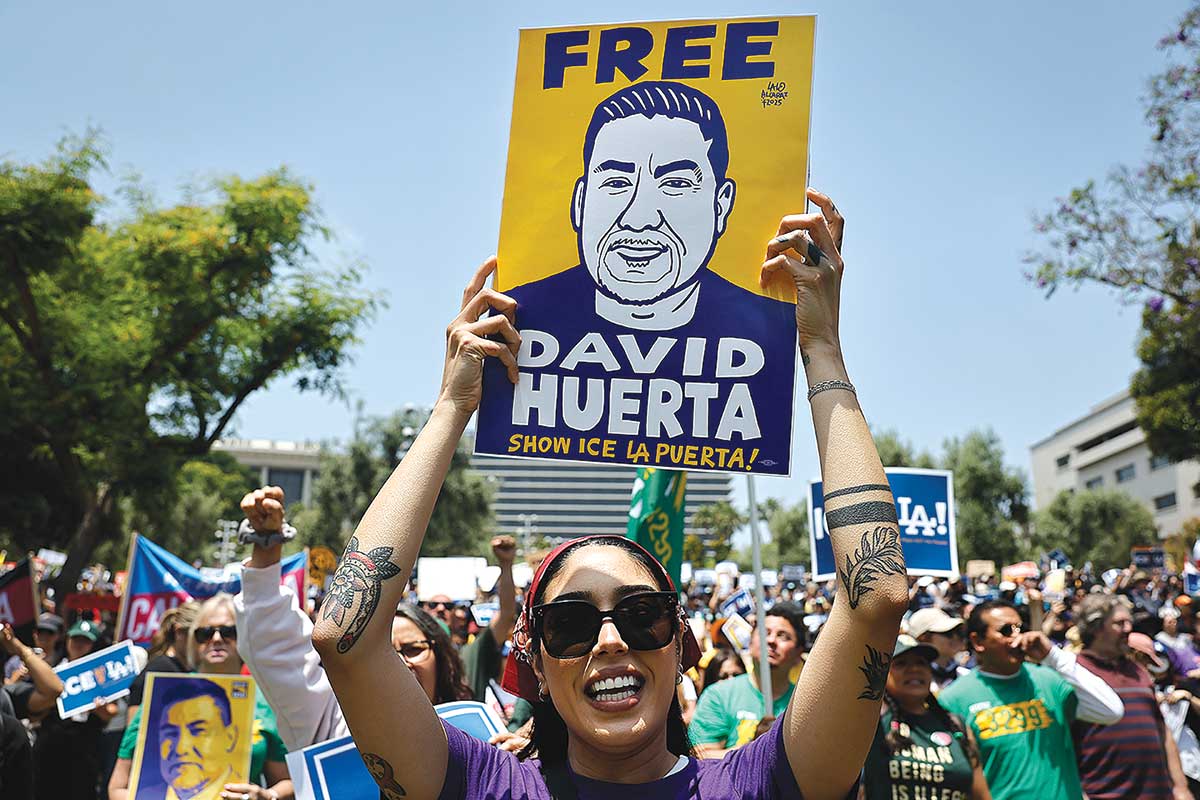
The LA Resistencia, already mobilized to oppose deportations, was ready when Trump’s troops marched in. Large rallies were organized at a downtown detention center on June 6.
That same day, SEIU California president David Huerta was injured and arrested while documenting an ICE raid in downtown Los Angeles. In a statement released from his hospital bed, Huerta said, “What happened to me is not about me; this is about something much bigger…. Hard-working people, and members of our family and our community, are being treated like criminals. We all collectively have to object to this madness because this is not justice.”
Huerta’s beating and arrest kicked the resistance into warp speed. The Los Angeles County Federation of Labor, one of the largest union federations in the country, went into action. On June 9, a labor-led demonstration drew thousands to the city center to demand Huerta’s release and an end to the city’s occupation. Unions organized rallies and demonstrations, joined other immigrant-defense actions, and added the voices of tens of thousands of workers to the demands to get the troops out of LA and end the horrendous ICE raids.
The unions were vital not only because of their size, resources, and reach, but also because so many of their members are either immigrants or the descendants of immigrants. The threats from ICE are real and dangerous for these workers, their families, and their communities, as well as the local businesses, social groups, churches, and even youth sports teams that are essential to their neighborhoods. This concern connected labor with a broad multi-sectoral coalition that included key social forces. In many ways, this remarkable coalition represented the necessary anti-fascist united front in embryo.
In addition to the union movement, worker centers and immigrant-rights organizations joined in. The faith community stepped up too: Clergy and Laity United for Economic Justice and the Holman United Methodist Church—one of the largest African American churches in the city—jointly offered “know your rights” seminars and training for nonviolent resistance. The Roman Catholic Diocese of Los Angeles, with its huge presence in Latino and immigrant communities, also played a part.
The legal battle was equally important. Governor Newsom sued the Trump administration in June 2025 over its deployment of the National Guard, and organizations like the Immigrant Defenders Law Center, the American Civil Liberties Union of Southern California, the National Lawyers Guild, and the Mexican American Legal Defense and Educational Fund (MALDEF) took vital legal action as well. In one especially crucial ruling, US District Judge Charles Breyer determined that the National Guard deployment violated the Posse Comitatus Act, which limits the use of the military for domestic law enforcement. Breyer’s powerful 52-page ruling found that the administration had willfully violated federal law. Warning that Trump appeared to be intent on “creating a national police force with the President as its chief,” the judge barred the Pentagon from “ordering, instructing, training, or using the National Guard currently deployed in California, and any military troops heretofore deployed in California,” from “engaging in arrests, apprehensions, searches, seizures, security patrols, traffic control, crowd control, riot control, evidence collection, interrogation, or acting as informants.” The courts continue to wrangle with these issues, but Breyer set a standard that members of Congress can adopt in demanding a say about Trump’s deployments.
Legal rulings get a lot of attention from the media. But art and culture warriors get attention on the streets. And they were another critical sector of the resistance. Musicians like Ivan Cornejo and Junior H, along with other artists, helped raise funds for immigrant-rights organizations and to cover the legal fees of immigrant families. Stars like Olivia Rodrigo, Becky G, Finneas, Chiquis, and Tyler, the Creator publicly condemned the federal actions; will.i.am, who grew up in the East LA Estrada Courts projects, put out a killer track, “East LA”, with his Black Eyed Peas bandmate Taboo. At the same time, Los Angeles artists used murals, protests, street art, and exhibitions to resist and condemn the ICE raids and military deployment that had begun.
Strikingly, one of the most important sectors of the anti-fascist front were liberal and neoliberal Democrats. Instead of kowtowing to Trump when he threatened to cut off federal aid if they didn’t support his ethnic-cleansing project, an incredible range of Democratic elected officials lined up against him, including Newsom, California’s two US senators, nearly all the Democrats in the California congressional delegation, and the Democratic supermajority in the California Assembly and Senate, as well as LA Mayor Karen Bass, the City Council, the school board (and school superintendent), and the powerful county Board of Supervisors. This broad support from Democratic politicos not only strengthened the resistance but pushed the mainstream media—including important outlets like the Los Angeles Times—to provide consistent coverage of the opposition to the troops and strong editorial support for the demand to pull them out of the city.
Not surprisingly, the ICE raids and troop deployment caused serious problems for the Los Angeles business community. Construction companies (including those working on rebuilding from the wildfires in Pacific Palisades and Altadena), hotels, restaurants, garment factories, and small- and medium-size businesses that depend on immigrant customers lost revenue. Immigrant workers feared going to work because of possible ICE raids, and customers with the same fear stayed away from restaurants and local businesses. LA’s economy took a real hit because of Trump’s ham-fisted effort to compel the city to “bend the knee.” Consequently, the Los Angeles Area Chamber of Commerce and the Los Angeles Business Council were among the “nontraditional allies” that spoke out against the troops and the ICE raids.
Support even came from the city’s mostly white middle-class suburbs. One unexpected example was when residents of Topanga Canyon took the initiative to distribute fliers at local farmers’ markets, letting people know why they should oppose the ICE raids and how they could support farmworkers who had previously been targeted by La Migra. That was a potent illustration of why we should recognize that all resistance is precious.
There are several key lessons to take away from the LA Resistencia.
Build on your organizing foundation. There is no need to reinvent the wheel. Many of the groups that repelled the deployment of federal troops had been organizing for years and had a base that could immediately step up when the military stepped in. Even before the troop deployment, unions such as Unite Here Local 11, which represents hotel and restaurant workers, and United Teachers Los Angeles, with educators who teach in large immigrant communities, had been active in opposing the ICE raids. Movement stalwarts like the Pilipino Workers Center, the Los Angeles Black Worker Center, and the Koreatown Immigrant Workers Alliance have long been organizing low-wage workers of color, many of them immigrants, in the city’s home healthcare, restaurant, construction, and garment industries. Aquilina Soriano Versoza, the executive director of the Pilipino Workers Center, explained: “We grew the LA Rapid Response Network, launched protests and vigils, a Summer of Action that had daily actions, organized community events that integrated culture and care to reclaim our streets, and met with key legislators to document and expose how the federal government was lying and at the same time violating our constitutional right to not be arrested or grabbed off of the streets or from the workplace without probable cause. To not be racially profiled or targeted because we are low-wage workers.”
When the ICE raids intensified in June of this year, a citywide coalition of unions, immigrant-rights organizations, worker centers, and other organizations began sending members to Home Depots, a favored gathering spot for day laborers. They deployed to restaurants, car washes (a fairly recent focus of union organizing, led by the CLEAN Carwash Worker Center), swap meets, churches, and immigrant neighborhoods. Everywhere that ICE sent its thugs, the people were there—documenting and protesting their actions, distributing “know your rights” cards and information on how workers could access mutual-aid support. It was the critical bedrock for the effort to remove the troops.
Have a clear goal. The consistent theme from the unions, the other worker-based organizations, the Democratic electeds, and all the participants in the resistance was: Get the troops out now and end the ICE raids. This provided overall guidance to all sectors of the united front and created the much-sought-after “consistent and compelling message” that our movements frequently lack.
Unite all who can be united. As I wrote earlier, the broadest of broad fronts came together around these clear goals. Having such a wide range of forces actively speaking up not only positively influenced mainstream media coverage; it gave a type of protection to the “street forces” who mobilized thousands of Angelenos. USC professor Manuel Pastor spoke about the importance of coalitions having depth and strength. “An untold part of the story: Many business leaders were appalled by the deportations of their workers,” he noted, “and from that came some unusual allies. So a lesson: Keep the anti-ICE coalition as broad as possible.” Pastor also mentioned another important lesson: “If you have sympathetic public officials on this issue, put aside differences you have on other issues to have them be part of the face of resistance.”
The left knows how to do this. The Los Angeles experience demonstrates that the left can indeed work constructively and without the sectarian problems that have long plagued protest movements. With such a wide array of forces in the struggle, the risk of clashing egos, power struggles, and showboating was high. Even when different coalitions were working on similar issues—such as immigrant defense, food assistance, and “know your rights” training—everyone kept their eyes on the prize. None of the coalitions sniped at or attacked the others. There was none of the sectarian “this is my turf” idiocy that so often weakens and even destroys movements. Each group had its own distinct politics, each had its own set of priorities, but they all had a common message: Get these storm troopers out of our city and stop the fascist ICE raids.
When we unite and fight, we can win! Before Trump’s Gestapo got the boot from LA, he tried to claim that he had “saved the city from burning down.” The next sound you heard was that of millions of Angelenos laughing their asses off at this absurd assertion. Then a strong, broad anti-fascist front forced the president to withdraw the Guard and Marines. Suzi Weissman, a widely respected local political commentator, summed it up nicely: “The militarization was a provocation, and Trump’s opening act on his war on ‘the enemy within.’”
Trump has since sent troops to Washington, DC, and threatened Chicago, Memphis, and Portland—blue cities, often with African American mayors—calling them “war-ravaged” and apocalyptic. But LA showed the country that resistance and solidarity work: When people organize and stand firm, even a president bent on repression can be pushed back. If Trump thought Los Angeles would be the model for his authoritarian power grab, what he got instead was the template for defeating it.
The struggle is not over. ICE has continued and even accelerated its horrendous raids in LA and throughout the US, offering a powerful reminder that the defense of immigrants must remain an absolute priority for those who are determined to crush the threat of fascism and to renew and expand democracy. Much more remains to be done, including developing a national strategy for defeating MAGA, one rooted in the lessons from LA and other resistance cities that can unite labor and other essential social movements and that can effectively build the strength of the resistance while weakening our enemies. But LA shows us not only that this must be done, but that it can be done—and that we can win.
As we say in the Chicano Liberation Movement, Sí Se Puede!!!
More from The Nation

Want to Support the Fight Against Fascism? Boycott Trump’s World Cup Want to Support the Fight Against Fascism? Boycott Trump’s World Cup
In this week‘s Elie v. U.S., The Nation’s Justice correspondent urges soccer lovers to stay away from the US this summer, takes on the attacks on Alex Pretti, and warns of a dange...
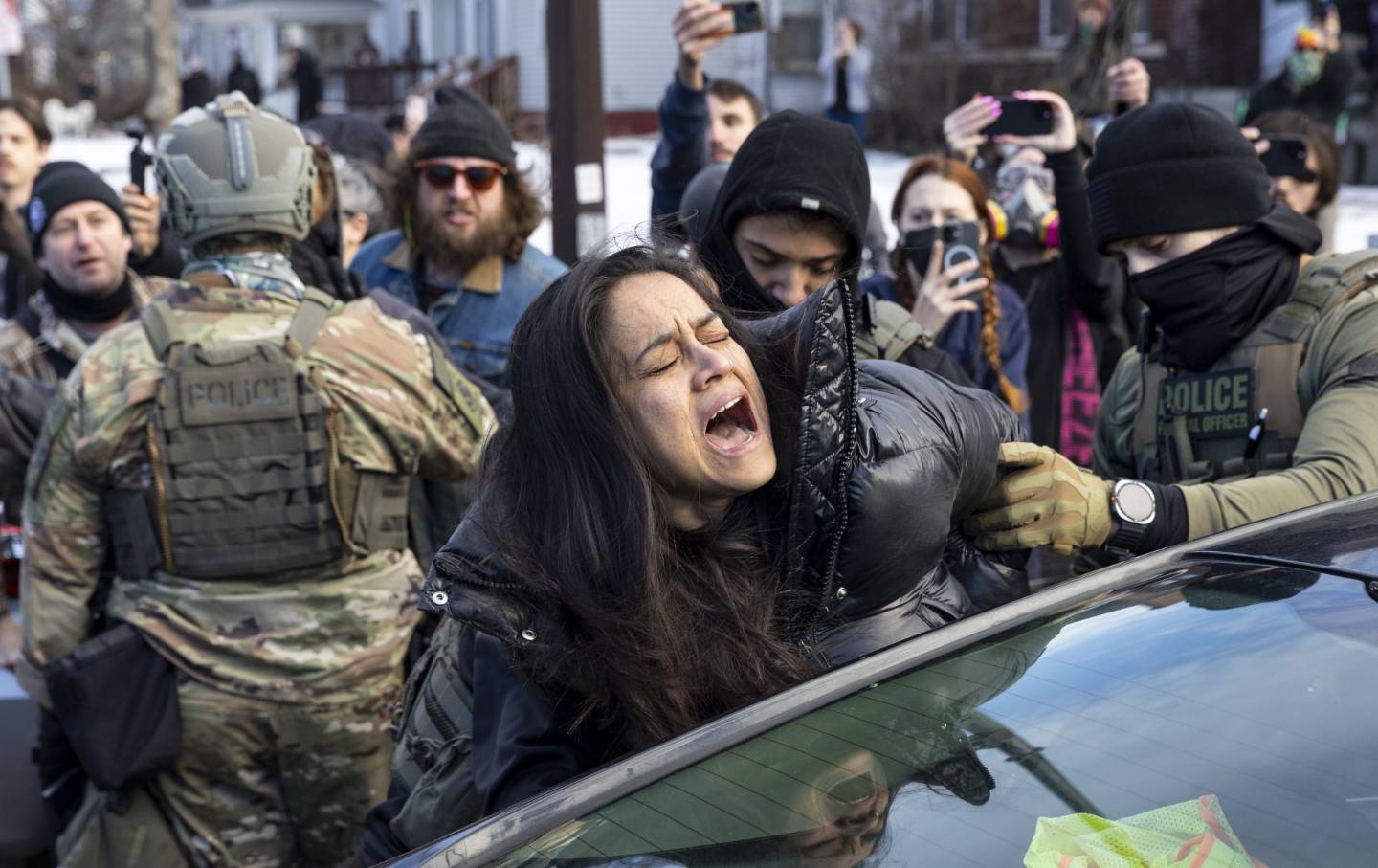
ICE Brutally Dragged This Disabled Woman Out of Her Car. What Happened Next Was Just As Chilling. ICE Brutally Dragged This Disabled Woman Out of Her Car. What Happened Next Was Just As Chilling.
“They laughed at me and told me this wouldn’t have happened if I was a ‘normal’ human being,” Aliya Rahman tells The Nation.
Manhattan Republicans Get a Lesson in Mamdani-Era Self Defense Manhattan Republicans Get a Lesson in Mamdani-Era Self Defense
A New York Republican club hosted a seminar dwelling on vigilante fantasies in one of the nation’s safest cities.

The Smug and Vacuous David Brooks Is Perfect for “The Atlantic” The Smug and Vacuous David Brooks Is Perfect for “The Atlantic”
The former New York Times columnist is a one-man cottage industry of lazy cultural stereotyping.

The Cartoonist, the Director, and the Sex Workers The Cartoonist, the Director, and the Sex Workers
Sook-Yin Lee’s new romantic comedy, Paying for It, explores Platonic love and prostitution.

How Online Frat Mobs Target Sexual Assault Survivors How Online Frat Mobs Target Sexual Assault Survivors
A video documenting an alleged gang rape in Florida drew a flood of harassment, threats, and doxxing

