
The Smug and Vacuous David Brooks Is Perfect for The Atlantic
The former New York Times columnist is a one-man cottage industry of lazy cultural stereotyping.
The Smug and Vacuous David Brooks Is Perfect for “The Atlantic”
The former New York Times columnist is a one-man cottage industry of lazy cultural stereotyping.

David Brooks
(Nathan Congleton / NBC via Getty Images)Through an unlikely set of circumstances, in the early aughts, I was at the media party where longtime New York Times columnist Maureen Dowd approached David Brooks about coming on board. I’ve long thought in retrospect that I should have put my body on the line to prevent the ensuing intellectual catastrophe from happening.
Brooks, who has occupied the prestigious (if mythical) “reasonable conservative” perch at the opinion section of the Paper of Record for nearly a quarter century, is now decamping for The Atlantic, another inert organ of elite consensus politics, to serve as a staff writer and host of a video podcast. For Brooks to be forsaking his role as the nation’s Times-branded civic scold while US democracy swoons further into the abyss amid Donald Trump’s second authoritarian term drives home how ineffectual-to-untenable he has been as a trollish Never Trumper. Still, his failure bears a closer look, if only to size up the vacuity of a particular strain of culture-calibrating punditry from the US right that has bent over backward to avoid acknowledging a clear and present mobilization of blood-and-soil reaction.
For in the moral universe that David Brooks presides over, there is never a sustained ideological threat to democracy and civic culture from an insurgent right; instead, the great hazard before us is the failure of liberal and left elites to strike just the right Goldilocks posture of sympathy with the conservative grievance-industrial complex. Across successive revanchist right takeovers of the GOP, Brooks’s columnizing output hewed to this message with the unshakable conviction of a Soviet apparatchik, and he also reliably plied it from his role as a reasonable right solon on the PBS News Hour—which, alas, shares the same editorial instincts as Maureen Dowd.
During a post-2016 election colloquy of pundits debating the laughably irrelevant proposition, “Do liberals hold the moral high ground?,” Brooks, who was of course arguing the negative claim, disclosed the formula behind all his sober diagnoses of what ails our body politic. “A lot of people voted for Donald Trump because they thought a lot of tenured radicals along the coasts thought they were morally superior to them,” he proclaimed. “So if you want the kind of politics we have today, think you’re morally superior to the other side.”
That smug, counter-empirical refrain has fueled countless Brooks columns, to say nothing of a torrent of ponderous and unenlightening books, harking back to his reputation-making work of “comic sociology” Bobos in Paradise. In Brooks’s foreshortened social vision—which, for the record, is neither comic nor sociological—myopically privileged if provisionally well-meaning liberal elites have broken faith with the American civic tradition by putting themselves indelicately forward as role models for everyone else. The ensuing backlash is thus entirely their doing, in just the way that abusive spouses declare that their inattentive mates have left them no choice but to assault them.
This just-so fable of terminal social haughtiness from the left was, despite its rough plausibility for certain neighborhoods in Berkeley or Cambridge, always a lie. Back when Brooks, then a staff writer at The Weekly Standard, was burnishing his mainstream comic-sociological bona fides in the pages of—you guessed it—The Atlantic, he published a suburban safari dispatch from Montgomery County, Maryland, outside DC, and the Franklin County exurbs of Philadelphia professing to document the insular lifestyle politics in strongholds of “blue state” liberalism and “red state” cultural revolt on the right. The resulting Mad Libs–style account was classic Brooks; riding mowers and NASCAR viewing were duly name-checked as badges of conservative belonging, while NPR listening and (irony of ironies, given his subsequent career arc) a subscription to The New York Times were telltale signs of opportunistic liberal secession from the broader polis.
The only problem, as then–Philadelphia magazine writer Sasha Issenberg documented, is that the whole thing was a fairy tale. Three of the country’s top five NASCAR TV markets were in blue states, Issenberg found, and the QVC home-shopping network—another sign of red-state habitation in Brooks’s account—also drew most of its revenue from blue states. Brooks’s claim that he was unable to spend more than $20 on a meal in Franklin County was likewise easily exposed bullshit. When Issenberg interviewed Brooks about this barrage of falsehoods, he retreated to his “comic sociology” shtick, and argued that he was trafficking in broad generalizations that “ring true” to the worrisome cultural divides overtaking the country.
Tellingly, when Issenberg cited another unfounded claim in the Atlantic piece—the proto-Trumpian fable that “blue America” was awash with undocumented immigrants—the pundit’s genial comic mask slipped. “This is dishonest research,” the dishonest researcher announced. “You’re not approaching the piece in the spirit of an honest reporter. Is this how you’re going to start your career? I mean, really, doing this sort of piece? I used to do ’em, I know ’em, how one starts, but it’s just something you’ll mature beyond.”
In his own self-professed journalistic maturity, Brooks has been a one-man cottage industry in the sort of lazy cultural stereotyping Issenberg called him out for 22 years ago. His disingenuous account of the American right’s dismal racial politics deserve special mention in a career teeming with disingenuousness; here, he magically transforms the attitudes of professional elites into the basis for the claim that racial animus plays no serious role in the modern right. “Between 1984 and 2003 I worked at National Review, The Washington Times, the Wall Street Journal editorial page and The Weekly Standard. Most of my friends were Republicans,” Brooks burbled in a 2017 column. “I never heard blatantly racist comments at dinner parties, and there were probably fewer than a dozen times I heard some veiled comment that could have suggested racism. To be honest, I heard more racial condescension in progressive circles than in conservative ones.” The real bearers of bad-faith racial division are accordingly, “white identitarians” of the right who by some truly recondite process of cultural osmosis, have seized on “the multicultural worldview taught in schools, universities and the culture and, rightly or wrongly, have applied it to themselves.” Once more, Brooks surveys the most destructive and immoral features of the American conservative movement and comes bearing the abuser’s self-serving alibi to the liberal opposition: Look what you made them do.
Through all this culture-war fabulizing, Brooks has been particularly obsessed, as he was in Franklin County, with the ostensible great divide in bespoke dining habits, devoting one infamous column to a lunch out with a companion who lacked a high-school diploma reduced to cringing terror before an exotic selection of deli meats. On social media, Brooks professed to document an outlandish airport restaurant bill as evidence of Biden-fomented inflation when in fact the greatest outlay on his check was the pundit’s bourbon order. After this bit of stunt commentary drew a torrent of viral outrage, Brooks was forced to retire the arrogant self-defense he mounted before a young magazine journalist and concede, “I screwed up.”
Unfortunately, no similar admission will be affixed to Brooks’s legacy of twice-a-week columns tracing the wrenching divisions of our political life to twee consumer choices and elite liberal wokeness run amok. For all of Brooks’s dissections of life inside the bubble of self-regarding blue-state privilege, his own ludicrously privileged rounds have battered his brand. In November last year, Brooks published a typically self-involved column dismissing the furor over the Epstein files as catnip to the conspiracy-minded MAGA right while calling out Democrats who agitated for the files’ release as bad civic actors “undermining public trust and sowing public cynicism.”
It turned out that a good deal of cynicism was very much in order here. Brooks himself was found in the Epstein files, having attended a 2011 gathering of plutocrats and plutocrat-adjacent know-it-alls that included Epstein and was organized by Epstein’s agent. In trying to brush aside this latest blow to his credibility, Brooks mounted a defense that was admittedly novel for a heroic interpreter of the harmful defamations of ordinary folk circulating in America’s bastions of cultural privilege: He hangs out with so many billionaires in his free time that he couldn’t really be bothered to learn whether one of them was a pedophile and sex trafficker. Perhaps sensing a threat to its own access-first model of journalism, the Times issued a statement parroting the ridiculous claim.
The Epstein embarrassment may well have played some role in Brooks’s decision to vacate one of the most influential pundit chairs in American journalism. But the real David Brooks scandal is that the same elite institutions he pretends to castigate hired him to continue propagating the kind of “rings true” lullabies that keep them believing in their own world-shaping importance. I have no doubt that he’ll be a successful podcaster for The Atlantic, which played such a pivotal role in demonstrating to him the professional benefits of lying your ass off.
More from Chris Lehmann
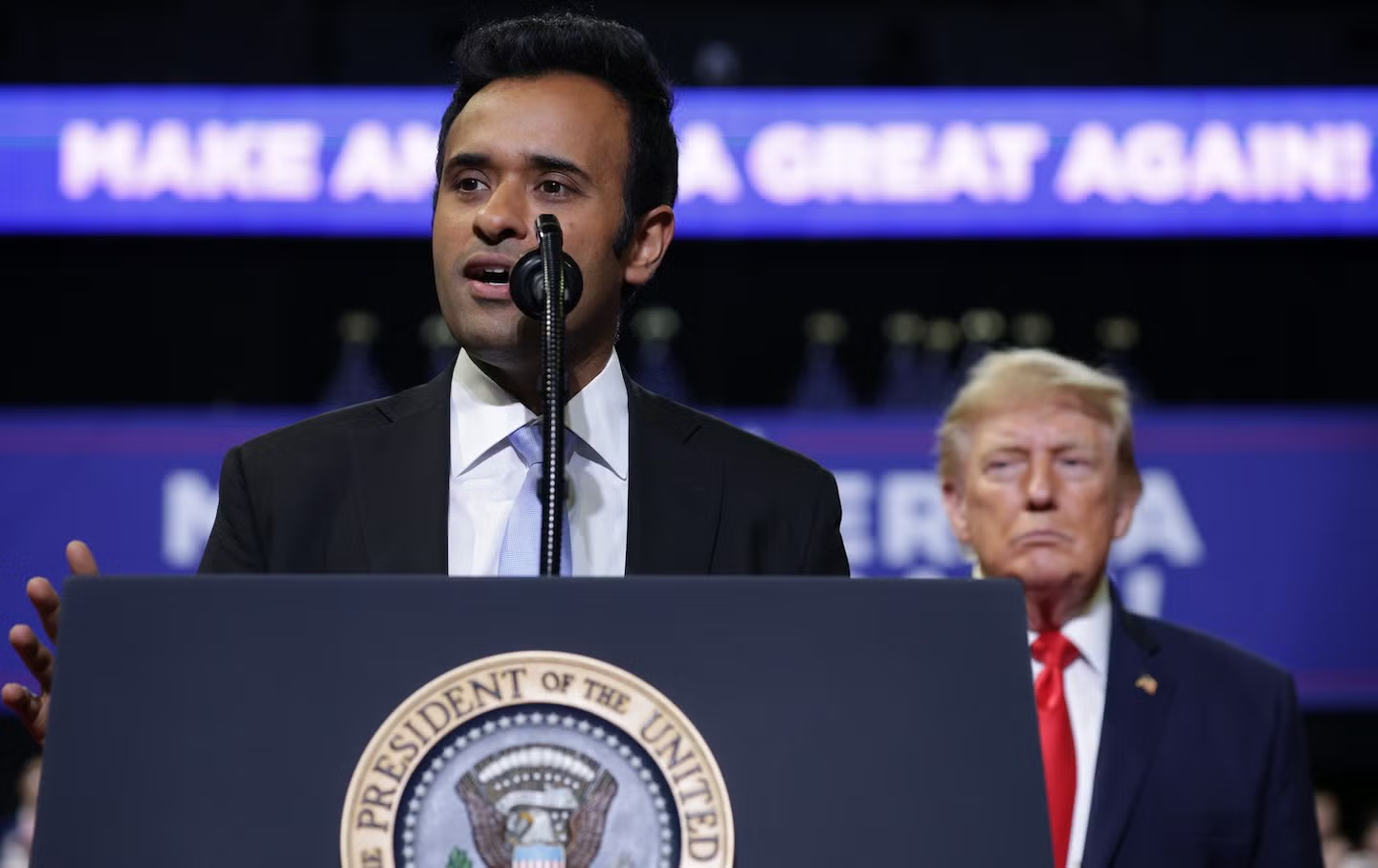
Vivek Ramaswamy’s New Attack Ad Should Be a National Scandal Vivek Ramaswamy’s New Attack Ad Should Be a National Scandal
The Ohio GOP gubernatorial candidate has accused his Democratic opponent, Amy Acton, of lying about being raped when she was 12 years old.
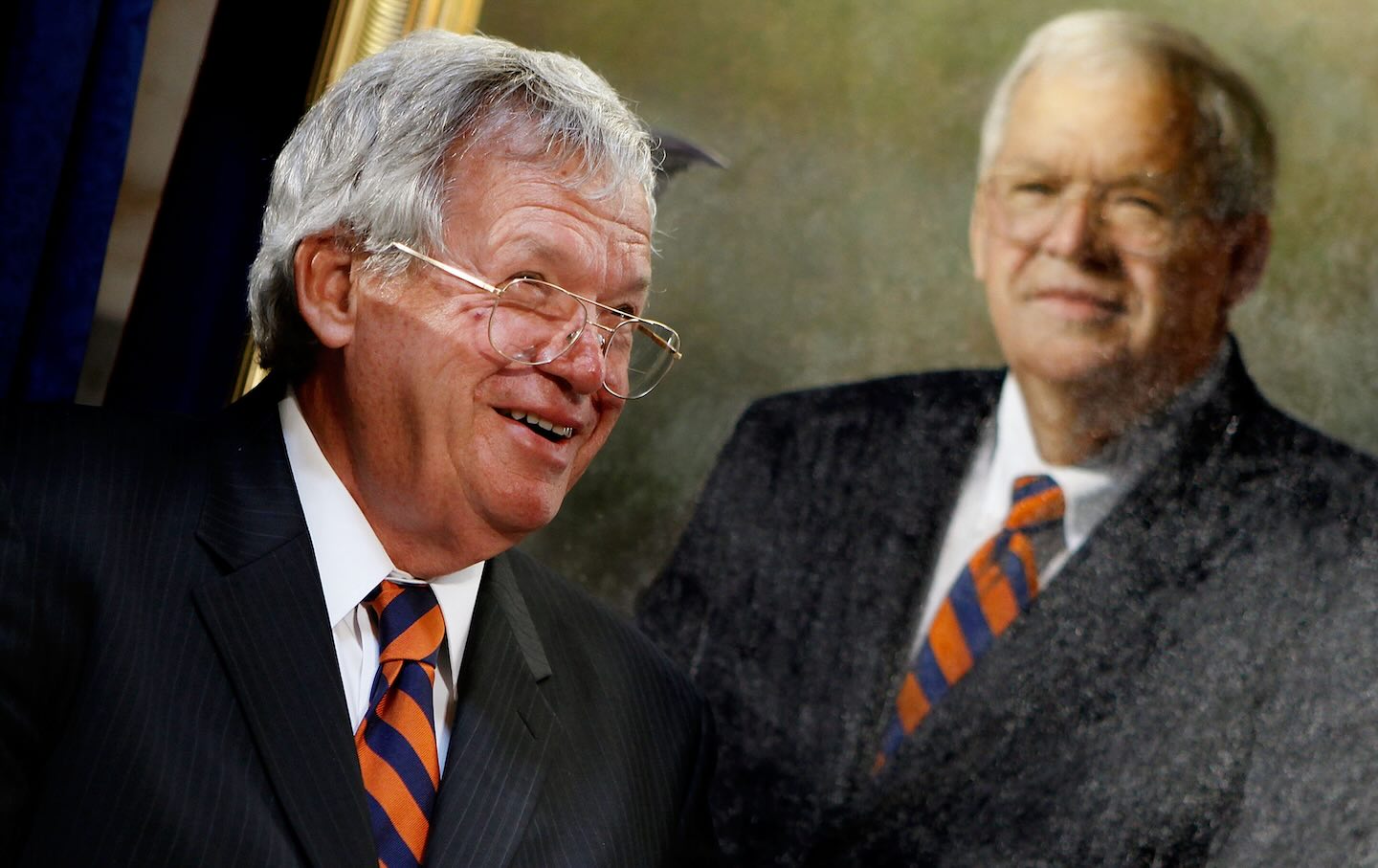
The Picture of Dennis Hastert The Picture of Dennis Hastert
The disgraced former congressman was a better representative of the GOP than the party would like to admit.
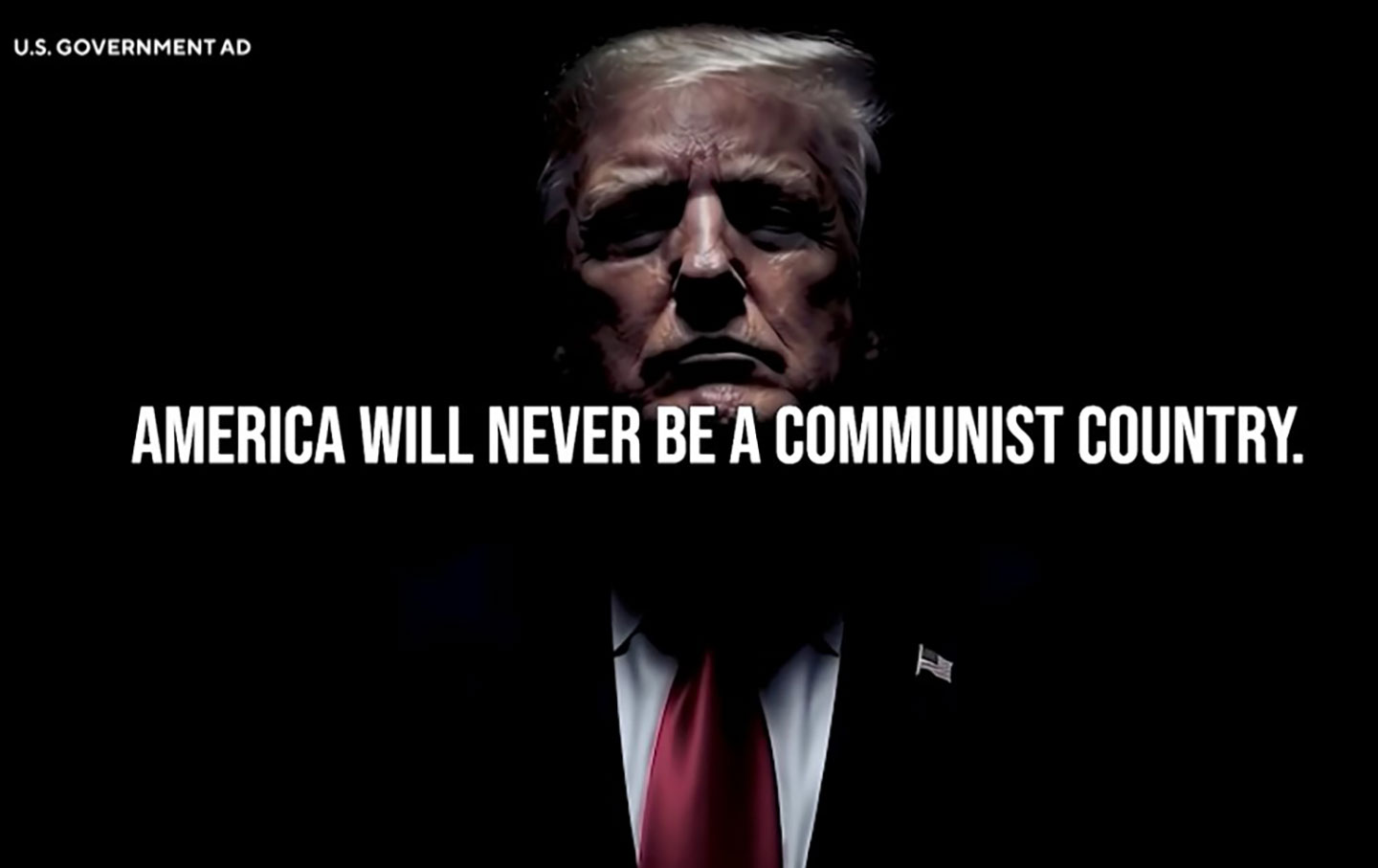
Trump Is Using Your Taxpayer Money to Pay for Illegal Election Propaganda Trump Is Using Your Taxpayer Money to Pay for Illegal Election Propaganda
But as brazen and authoritarian as these ad spots are, they seem likely to backfire.
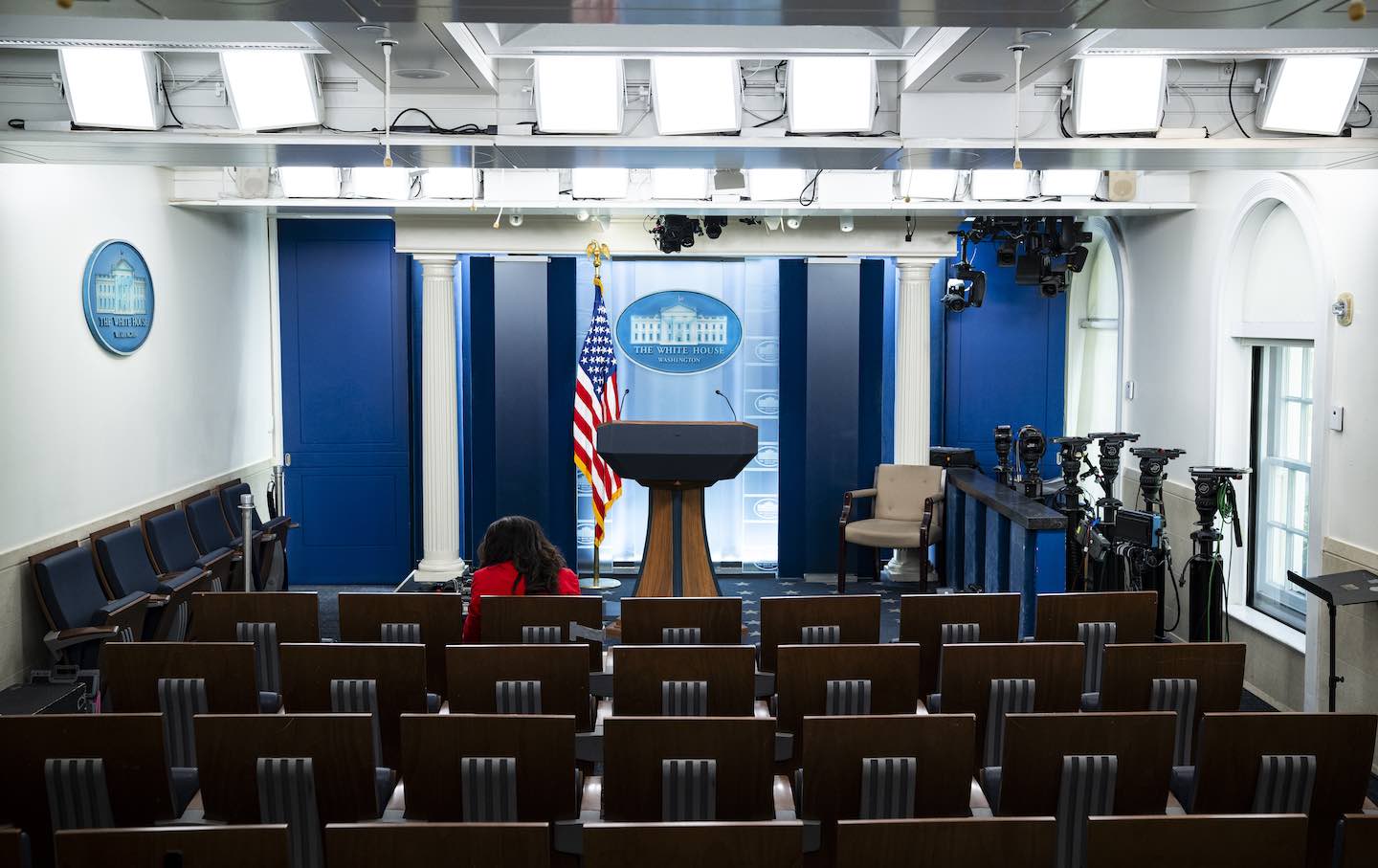
Trump Wants to Keep Journalists Out of the White House. He Should Get His Wish. Trump Wants to Keep Journalists Out of the White House. He Should Get His Wish.
The president has banned MS NOW, CNN, and Politico from attending press briefings. The rest of the media should respond with a boycott.

AI Is a Kitchen-Table Issue AI Is a Kitchen-Table Issue
And with the Trump administration encouraging unregulated growth in the industry, Democrats need to start acting like it.
Populists Can’t Be Populist if They Suppress the Vote Populists Can’t Be Populist if They Suppress the Vote
The crusade against ballot access, like virtually every other facet of Trump’s agenda, does nothing to serve the interests of “the people,” but our press is too brain-dead to noti...

