The Hantavirus Isn’t the Biggest Threat We’re Facing
The government’s destruction of our pandemic preparedness is.
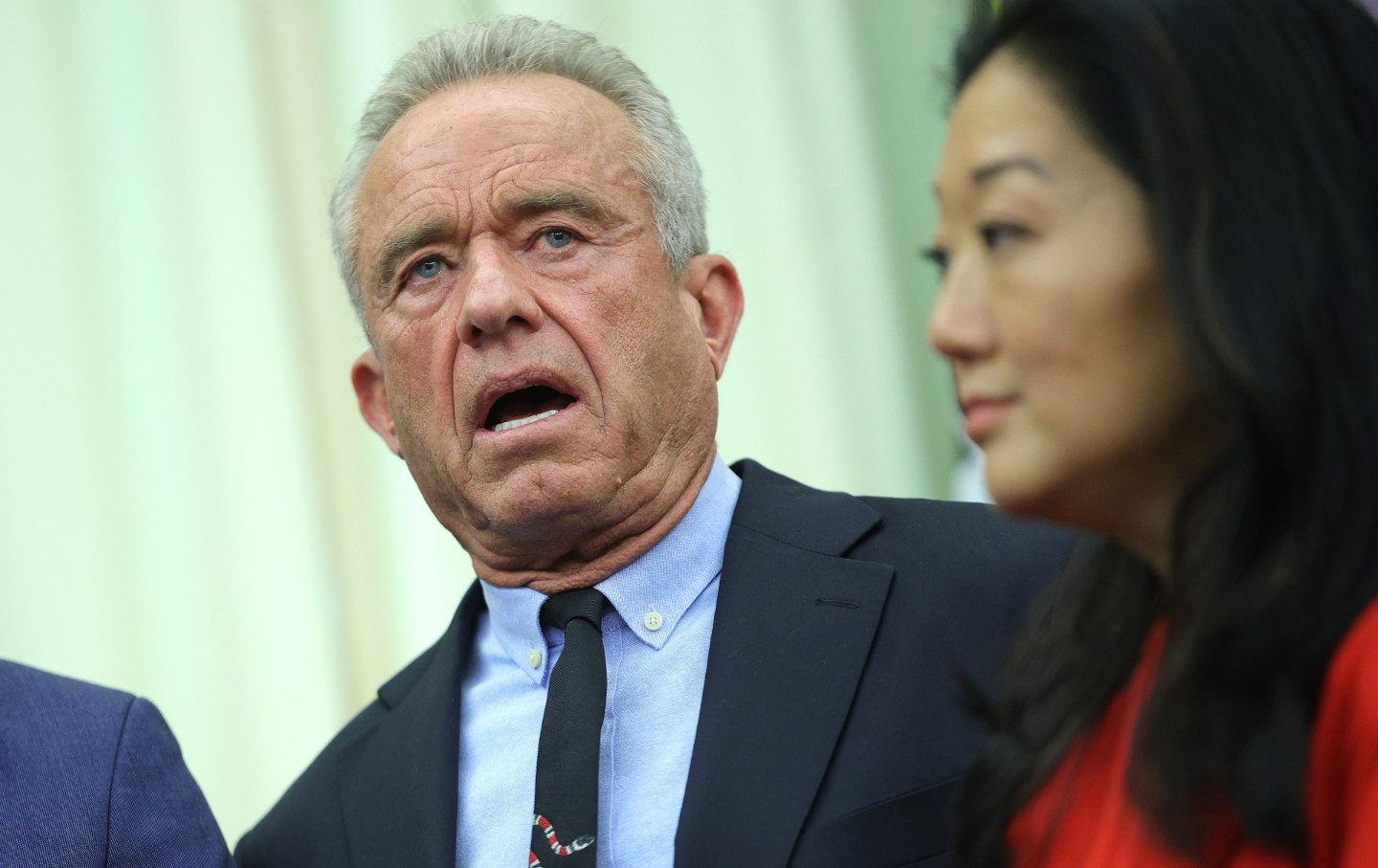
Secretary of Health and Human Services Robert F. Kennedy Jr. answers a question on the hantavirus in the Oval Office on May 11, 2026.
(Kevin Dietsch / Getty Images)First, the good news: If you are in the United States, you are not going to catch the hantavirus. At least, you’re not going to catch the strain of the pathogen that’s been in the news lately.
That strain is known as the “Andes” variant, so named because it has previously been confined to South America. To repeat: It is not coming for us. We do have our own, made-in-the-USA hantavirus strain, called the “Sin Nombre” virus. It’s transmitted by inhalation of aerosolized rodent feces, urine or saliva and has caused under 1,000 cases since it was identified back in 1993, with the highest number of cases in the Southwest. If you live in New Mexico, Arizona, or Colorado, the risk of acquiring the virus when cleaning out a shed or garage is low but nontrivial. Put on an N-95 mask and wash your hands if you’re concerned. Otherwise? You’re going to be fine.
While the Andes virus has been known to spread by human-to-human contact, the exposed individuals in the United States from the outbreak on the cruise ship MV Hondius have been sequestered for now at the Administration for Strategic Preparedness and Response Regional Emerging Special Pathogen Treatment Center at the University of Nebraska Medical Center/Nebraska Medicine in Omaha or at Emory University’s Serious Communicable Diseases unit in Atlanta. Once they have been assessed, they will undergo a 42-day monitoring period in isolation. If they can isolate at home, that will be allowed. Will we see a few more cases? Perhaps even beyond those now in confinement? Possibly, but even so, Andes has mitigating characteristics that distinguish it from influenza or SARS-CoV-2, and prolonged, close personal contact is required for transmission. All in all, large-scale outbreaks are now unlikely given the control measures in place.
That’s the good news. Now for the not-so-good news.
This is a dry run for any new or known pathogen with pandemic potential. And today, the people who would be in charge of managing such a pandemic are the worst possible people: from Robert F. Kennedy Jr. at Health and Human Services, to Jay Bhattacharya at the National Institutes of Health and the Centers for Disease Control and Prevention, to Russell Vought in the White House.
Together, these men have left the White House Office of Pandemic Preparedness and Response Policy vacant; have shuttered 10 of the Centers for Research in Emerging Infectious Diseases meant to study zoonotic pathogens that jump from animals to humans, like hantavirus; gutted the STOP Spillover Project, a USAID-funded network that tracked “menacing animal viruses across seven countries”; put a hold on research at the Integrated Research Facility in Frederick, Maryland, which studies high-risk pathogens; left key posts at CDC with acting directors including the Division of High-Consequence Pathogens; wound down mRNA vaccine research, which is one of the platforms under consideration for a hantavirus vaccine; refocused infectious disease research away from novel pathogens at NIH toward more common infections; proposed cutting funding for state and local preparedness grants to health departments and hospitals around the country; canned the CDC’s full-time cruise ship inspectors and port health workers; and we have left the World Health Organization, leaving us flying solo without a key source of international collaboration and coordinated planning.
This list is stunning in its comprehensiveness and its dangerousness. If you wanted to make Americans sitting ducks for any new pandemic, these fellas have put all the checkmarks next to the items on the to-do list for ensuring that our collective vulnerability is maximized. Then remember, RFK Jr., is a proponent of terrain theory, the idea that it’s your environment that makes you sick, not infectious diseases, and only those who are weak have anything to fear from viruses like SARS-CoV-2. Jay Bhattacharya, meanwhile, is an economist who made his name by minimizing the threat of Covid-19 based on his own flawed study, raged against infectious disease containment measures, and could barely get through an interview with Jake Tapper on CNN on hantavirus last week. And Russ Vought, the Rev. Jim Jones of the administration, is hell-bent on some apocalyptic vision of the collapse of the US in a superpower suicide from which his Christian nationalist state will rise up, making the rest of us collateral damage on the road to Dominion. For those who were dissatisfied with our national leadership during Covid and championed Trump’s dream team as heralding in a new era in American public health and biomedicine, well, how’s that working out for y’all?
So while there is a lot of chatter out there about the risk of the Andes virus, with everyone now having an opinion on the relatively rare infection and its potential for further spread, the real story is the collapse of pandemic preparedness in this country—all the public health and scientific infrastructure that has disappeared, the purge of talent, experience, and expertise that was meant to keep us safe. A new outbreak is clickbait—everyone wants to get into the mix and get a piece of the action. Those I am truly interested in hearing from are the researchers, clinicians, and epidemiologists who work on hantaviruses and emerging diseases—many of them who have seen their grants from NIH, USAID, and other federal agencies cut. Hantavirus is not the coming plague, but one is surely coming for us in the future. We’ve never been as exposed and vulnerable as we are now for when that moment arrives. That is what should frighten you to your very core.
Become a Sustaining Donor This September
Between the reemergence of right-wing red-baiting and Donald Trump’s use of the chilling National Security Presidential Memorandum–7 to criminalize left political organizing, we’re seeing McCarthyism reborn before our eyes.
This assault on democracy cannot be ignored or wished away. Resisting it requires bravery in the face of threats and repression, a steadfast commitment to the truth, and the unwavering belief that we can—and will—overcome this darkness.
We must have an independent media that sets the record straight, unearths corruption and abuses of power, and advances a politics of justice and dignity for all if we’re to win this fight.
That’s why I’m writing to you today. This September, The Nation needs to add 100 monthly donors to sustain our progressive journalism. Your contribution makes the next investigative report, the next truth-speaking column, and the next pathbreaking essay all possible.
I hope you’ll support our work with a recurring donation today. If you donate $10 or more a month, we’ll send you a brand new “Hands Off the Free Press!” sticker to recognise your commitment to our cause. Please, donate today.
Onward,
Katrina vanden Heuvel
Editor and Publisher, The Nation