Nixon and Trump: The Good Women They Defeated
We remember Trump’s female opponent. Time to remember Nixon’s?
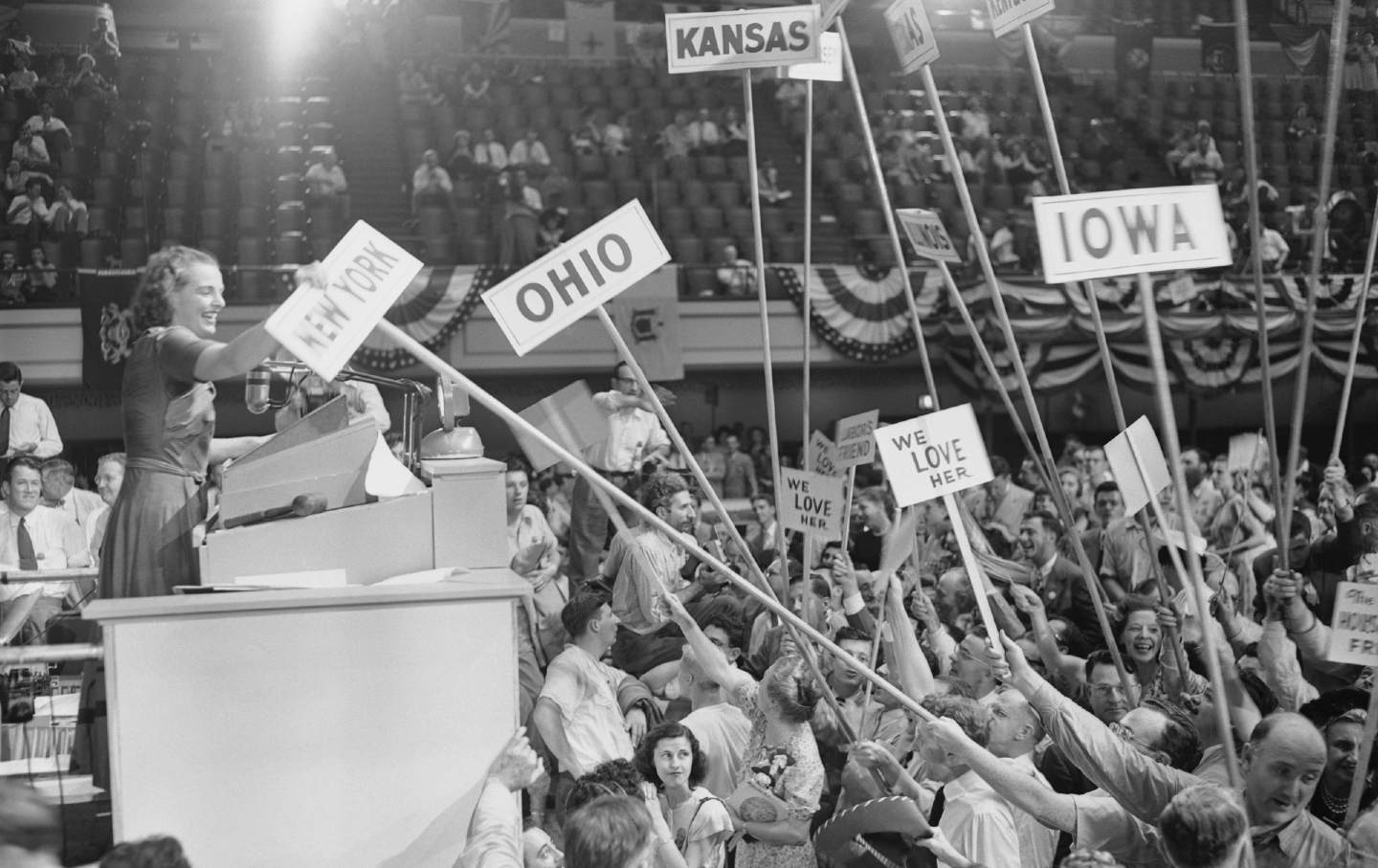
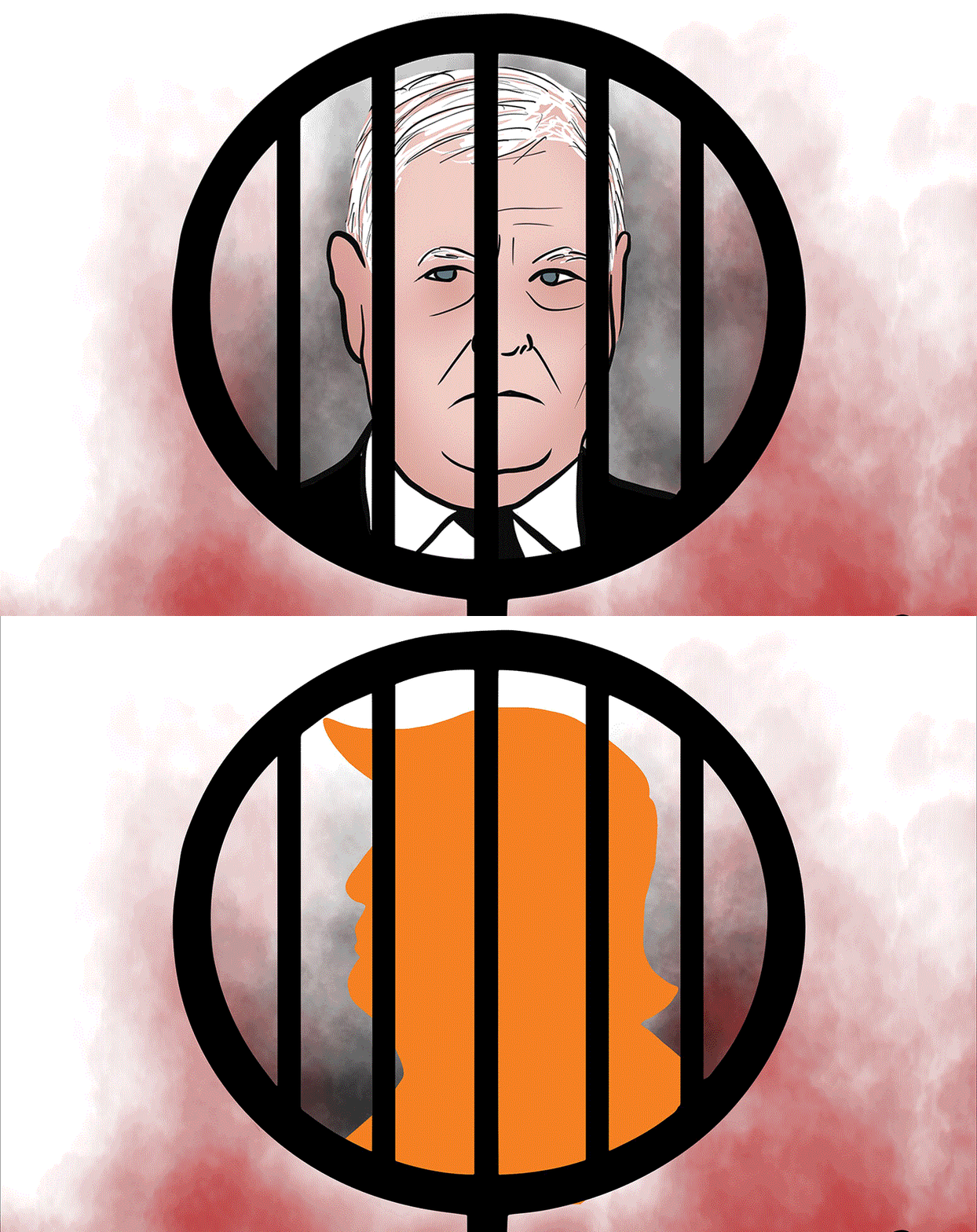
Understandably, the political name that most often comes up in comparison with Donald Trump is Richard Nixon. To get to the White House, Trump defeated a good, and better qualified, opponent. Who happened to be a woman. And so did Nixon as he began his ultimately troubled trajectory to the top—though too many have forgotten his opponent.
As my friends and family know, I have idolized… and dramatized… Helen Gahagan Douglas since I briefly met her (as a cub reporter) in 1973. It was smack in the middle of Watergate, and she had not been seen or heard from since Nixon beat her in the (until then) dirtiest Senate race in California history. Even though people were wearing buttons saying, “Don’t Blame Me, I Voted for Helen Gahagan Douglas,” she was too classy to say more than, “I just feel bad for this country.”
I went on to write countless articles about her and eventually co-write a theatrical production (yes, called Don’t Blame Me…) which my partner, Wendy Kout, and I rolled out at fundraisers in New York, Washington, and Los Angeles. These were for Helen-ish causes (including several for The Nation). When Ms. Magazine celebrated its 50th year, I wrote about its first cover girl. (Yes, Helen.) And now, once again, I am pondering what Helen would think about the political times we are living through.
A bit of history: Helen started off as a wealthy Brooklyn-born, Irish-American Republican. With big dreams, she became a star on Broadway, where she played opposite her eventual husband—and the man who turned her politics around. That was the great and bravely progressive Melvyn Douglas. They eventually moved to Hollywood, where he became the star, and she grew interested in liberal issues: most particularly the plight of migrants. Melvyn went to war and Helen, then a mother of two, went to Congress (one of two women at the time).
Her fights were memorable and prescient. Demonstrating how inflation impacted normal Americans, she walked down the House aisle with a shopping basket filled with overpriced goods. Against big oil developers, she fought for clean water. She spoke out on women’s health issues. She integrated the lunchroom. Her colleague, a young Richard Nixon, mocked her when she filibustered for days to name every Black man who had served in the war, to make sure they got listed in the Congressional Record. (Yvonne Brathwaite Burke, California’s first and a prestigious Black member of Congress, recently told me, “Helen was my hero.”) Eventually, despite her husband’s warnings about anti-communist fever, Helen squared off against Nixon in the infamous 1950 Senate race (during which Ronald Reagan switched parties to join the GOP).
Now, of course, we confront a man who makes Tricky Dick look like a Boy Scout. No, it is not necessarily a time to applaud him, but he at least had read some history, and did not call those who served in the military suckers or losers. I was among the first Americans to visit China (with my philanthropist/anti-nuclear activist father) because the then-president had opened it up. Still, as Carl Bernstein recalled in an interview with historian Jonathan Alter, “What happened in Watergate was [we had] a criminal president of the United States who established this huge, vast campaign to undermine the very basis of American democracy: the electoral system. The similarity between Nixon and Trump is stunning.”
Today’s representatives not only disagree but rarely talk with one another. By all accounts, Helen Gahagan Douglas was admired for her spunk (and yes, her beauty) and well-liked. The media was not helpful. Reporters asked about her rumored relationship with LBJ and tried to create a feud between her and GOP Representative Clare Boothe Luce. But Helen stayed strong. She did not compromise, even when she could—and perhaps should—have. Like when her frustrated Senate campaign manager begged her to aim lower, and use “America” in every sentence. “The truth is, Melvyn played a politician better than I ever did,” she said late in life. (He portrayed former governors twice.)
I recently met with Massachusetts Senator Ed Markey, who said he got into politics for one reason: “Because I hated Richard Nixon.” I spoke with Senator Sherrod Brown, who remembered first hearing about our play. “But I bet very few people are around who even know her name,” he said. Robert Redford said he became active because his parents always talked about the 1950 race.
When people ask about my HGD obsession, I don’t know the answer. Maybe because I, too, grew up “entitled,” so to speak, but like Helen, have never stopped fighting for what’s right. So, what would Helen Gahagan Douglas think and urge us to do now? First and foremost, she would suggest we listen to what others say, to question rather than attack. And to do more than just get to that all-important ballot box. To knock on doors, to write those cards, to make those calls.
I imagine she’d ask, “How will you feel later, wearing a button that says, ‘Don’t Blame Me, I Voted for Joe Biden’?”