
What the Democrats Can Learn From Gavin Newsom’s Trump Mockery
As Democrats sharpen their online game, Gavin Newsom’s Trump-style jabs reveal both the risks and rewards of fighting fire with fire in an attention economy built for bluster.
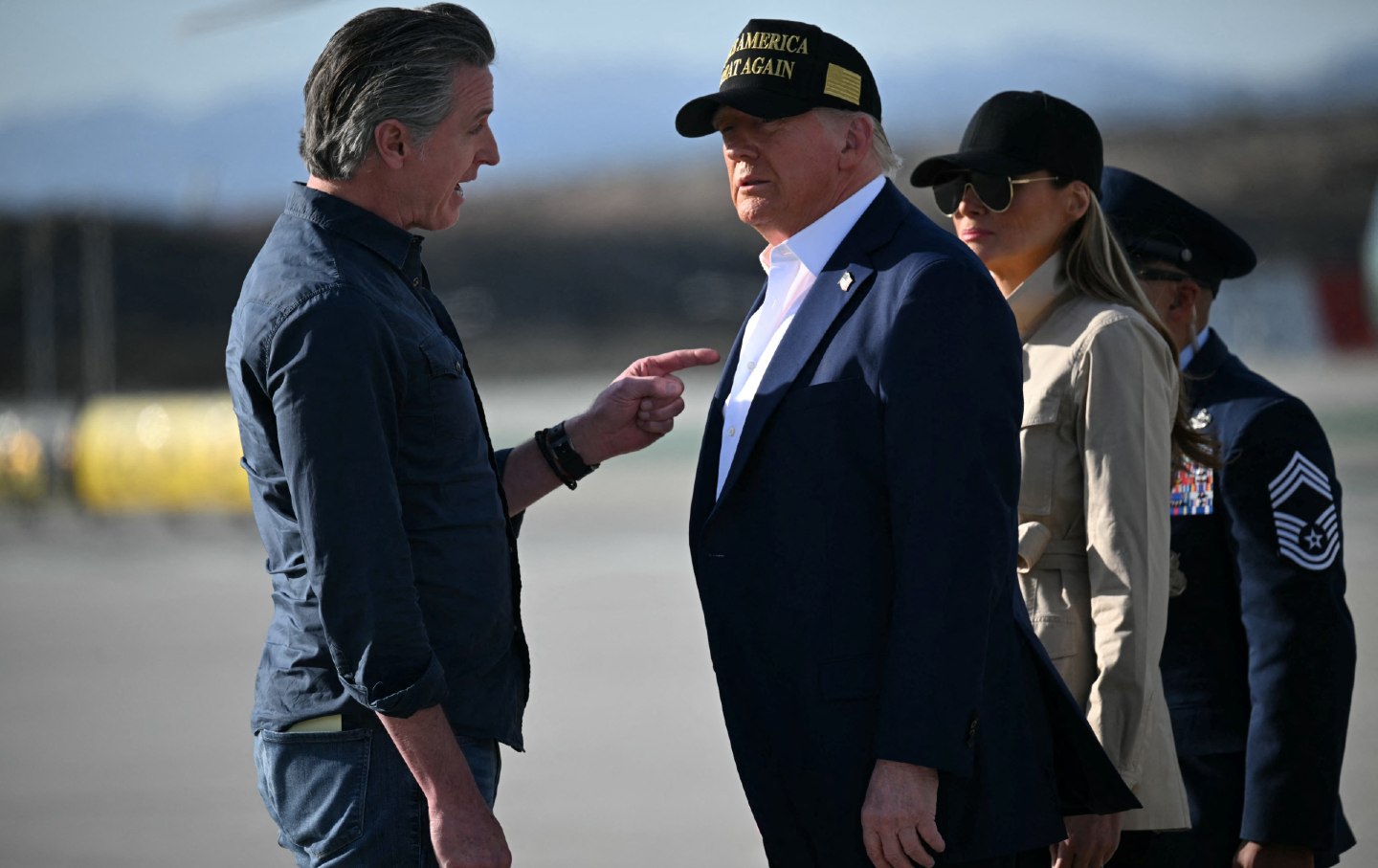
Gavin Newsom’s recent mockery of Donald Trump proves that imitation isn’t always the sincerest form of flattery. Amid the ongoing battle over congressional redistricting, Newsom’s pitch-perfect posts about Trump’s “TINY HANDS” and California’s “PERFECT MAPS” have been wildly entertaining, and, at least by one measure, wildly successful—the posts have garnered millions of views and counting.
While it’s refreshing to see a prominent Democrat unapologetically standing up to the current administration, Newsom’s jabs also reinforce the staying power of Trump’s blustery and incoherent style. And they reveal the degree to which the attention economy has disrupted our focus and degraded our language.
Trump continues to benefit from the steady decline in the American attention span driven by social media. His style of short, punchy, inflammatory language—and his strategy of flooding the zone with a new federal freak show day after day—is engineered to succeed in this chaotic environment. But some recent online victories seem to indicate that progressives can also win on this battlefield if they deploy the right combination of profane style and policy substance.
It’s possible the Trump era would never have been inaugurated without the concurrent smartphone era’s reshaping attention spans and media habits. One survey has found that Americans check their phones an astonishing 144 times daily, and about 40 percent of adults report being “almost constantly online.” As a result, Americans are reading less. In 2024, less than half of adults said they had picked up a book in the past year, continuing a consistent downward trend.
The MSNBC journalist Chris Hayes has analyzed this regression in his book The Sirens’ Call: How Attention Became the World’s Most Endangered Resource (a story that millions of Americans could benefit from understanding, if only they were still reading). He argues that the relentless competition for attention erodes thoughtful discourse while incentivizing the most thoughtless voices. It has contributed to mental health crises, the decline of journalism, and political polarization. It also fueled the rise of Donald Trump, who long ago proved himself to be a malignant savant of attention manipulation.
Trump’s understanding of the new media ecosystem propelled all three of his presidential campaigns. In 2016, he received an estimated $5.6 billion worth of free media. By that September, the word Americans associated the most with Hillary Clinton was “e-mail,” while they connected Trump with “speech,” “president” and “immigration.”
Fast-forward to 2024, and he kept courting online attention with stunts such as working a choreographed 30-minute “shift” at McDonald’s. He dominated news media with mendacity that demanded journalistic coverage, such as his promotion of the xenophobic falsehood that Haitian migrants were eating Ohio pets. As Hayes wrote, Trump’s approach to politics over the last decade has been the “equivalent of running naked through the neighborhood: repellent but transfixing.”
Now Trump is not just benefiting from but intentionally accelerating these reversals. He has defunded and harassed leading research universities, censored historical exhibits at museums, and created Truth Social—an imitation of Twitter that has emerged as a playground for conspiracy theorists.
He is attempting the governmental equivalent of a lobotomy.
These setbacks have led progressives to increasingly understand that electoral victory requires digital dominance. And squaring up with Trump on social media appears a prerequisite for rallying the public around any political vision. As one strategist put it while praising Newsom’s Trump impersonation: “Democrats are over being the ‘nice guy’ party.”
Already, there is some delightful needling of the right easily found in the proverbial social media haystack. The streamer Hasan Piker has been described as a “gateway drug” for progressive politics, while his engaging brand of explicit quips led GQ to name him “the hottest left-wing political commentator online.” When Alexandria Ocasio-Cortez streamed herself playing the game Among Us with Piker before the 2020 election, she almost broke a livestreaming record on the Twitch platform, drawing about 440,000 concurrent viewers.
Elected Democrats are also taking off their virtual gloves. Illinois Governor J.B. Pritzker responded to Trump’s renaming of the Gulf of Mexico by threatening to rechristen Lake Michigan “Lake Illinois.” In an example of game respecting game, Zohran Mamdani’s strategy of speaking directly to voters through social media received unlikely praise from Tucker Carlson and Marjorie Taylor Greene. Greene is less a fan of Texas Representative Jasmine Crockett, who went viral for describing Greene as having a “bleach-blonde bad-built butch body.” And in Maine, the oysterman and Democratic US Senate candidate Graham Platner is drawing headlines for a pugnacious campaign launch video in which he declares: “The difference between Susan Collins and Ted Cruz is at least Ted Cruz is honest about selling us out and not giving a damn.”
Popular
“swipe left below to view more authors”Swipe →Still, talking the talk also requires walking the walk by implementing bold, authentically progressive initiatives. One of Newsom’s Trump-mocking posts announced an aggressive redistricting plan to counter Republican gerrymandering in Texas. Bernie Sanders has endorsed that move, just as he endorsed Mamdani, whose affordability agenda represents another ambitious stance to match pugilistic rhetoric.
Otherwise, adhering to the philosophy of “when they go low, we go high” risks failing to meet voters where they are. It seems Americans seek a fighter on their behalf and at their side.
“THANK YOU FOR YOUR ATTENTION TO THIS MATTER.”
Become a Sustaining Donor This September
Between the reemergence of right-wing red-baiting and Donald Trump’s use of the chilling National Security Presidential Memorandum–7 to criminalize left political organizing, we’re seeing McCarthyism reborn before our eyes.
This assault on democracy cannot be ignored or wished away. Resisting it requires bravery in the face of threats and repression, a steadfast commitment to the truth, and the unwavering belief that we can—and will—overcome this darkness.
We must have an independent media that sets the record straight, unearths corruption and abuses of power, and advances a politics of justice and dignity for all if we’re to win this fight.
That’s why I’m writing to you today. This September, The Nation needs to add 100 monthly donors to sustain our progressive journalism. Your contribution makes the next investigative report, the next truth-speaking column, and the next pathbreaking essay all possible.
I hope you’ll support our work with a recurring donation today. If you donate $10 or more a month, we’ll send you a brand new “Hands Off the Free Press!” sticker to recognise your commitment to our cause. Please, donate today.
Onward,
Katrina vanden Heuvel
Editor and Publisher, The Nation
More from The Nation
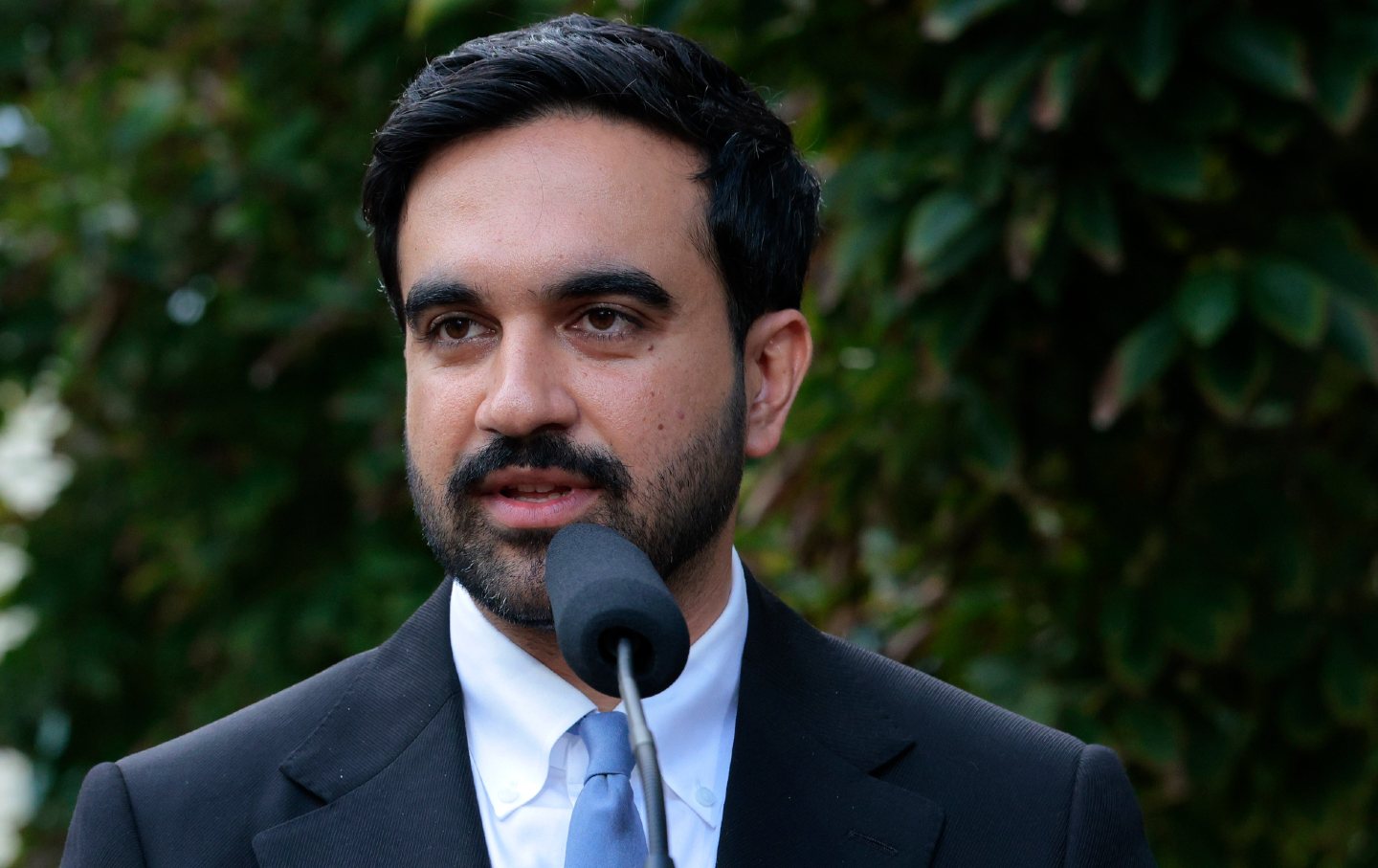
Zohran Mamdani Hosts the World Zohran Mamdani Hosts the World
In a meeting with mayors from around the globe, Mamdani argued that the left must fix everyday problems—or the right will find someone to scapegoat for them.
Is There Any Good News Left? Is There Any Good News Left?
Despite what our algorithms suggest, there’s still news worth celebrating.
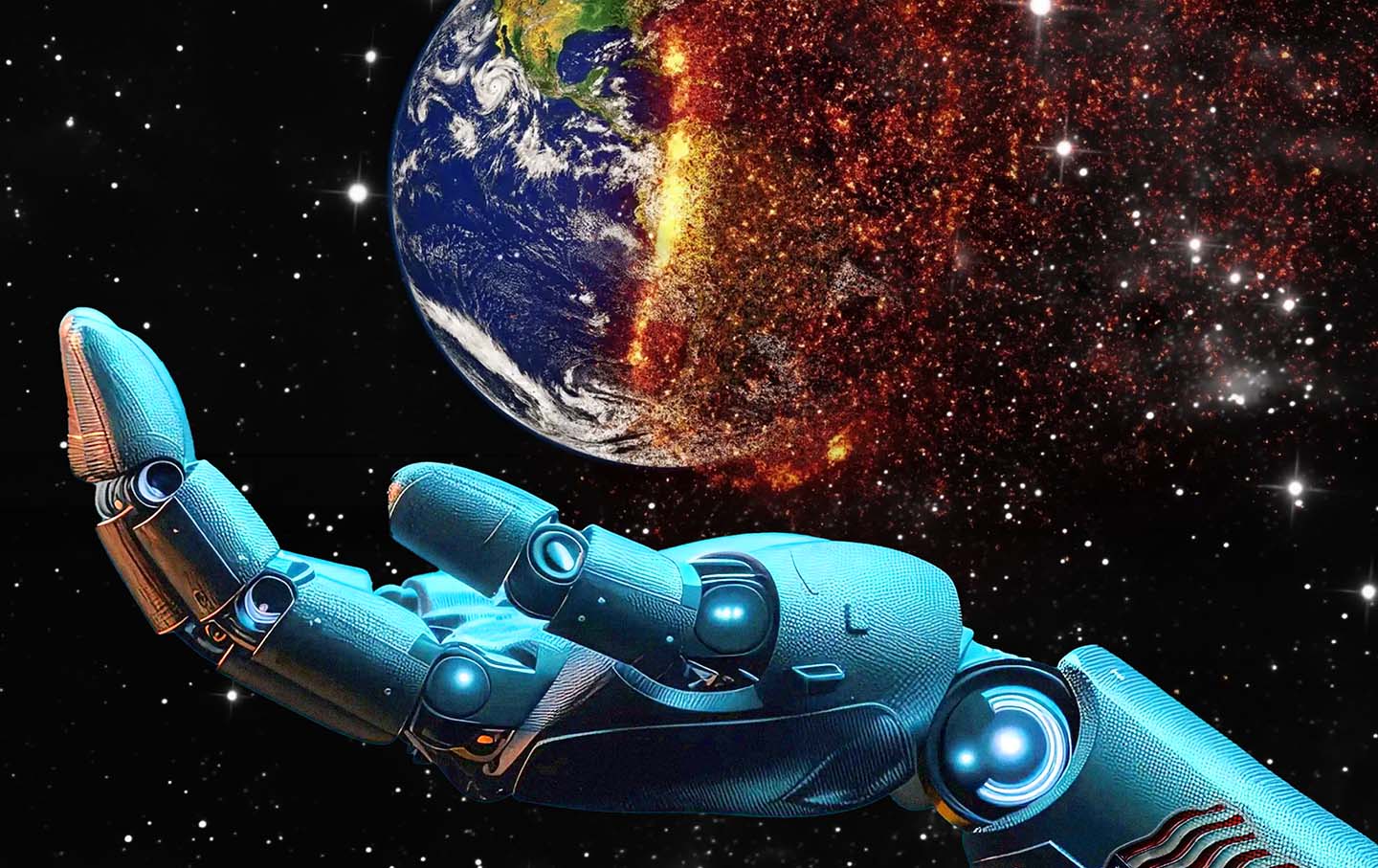
CEOs Are Losing Control of AI CEOs Are Losing Control of AI
With no slowdown from Trump’s administration.
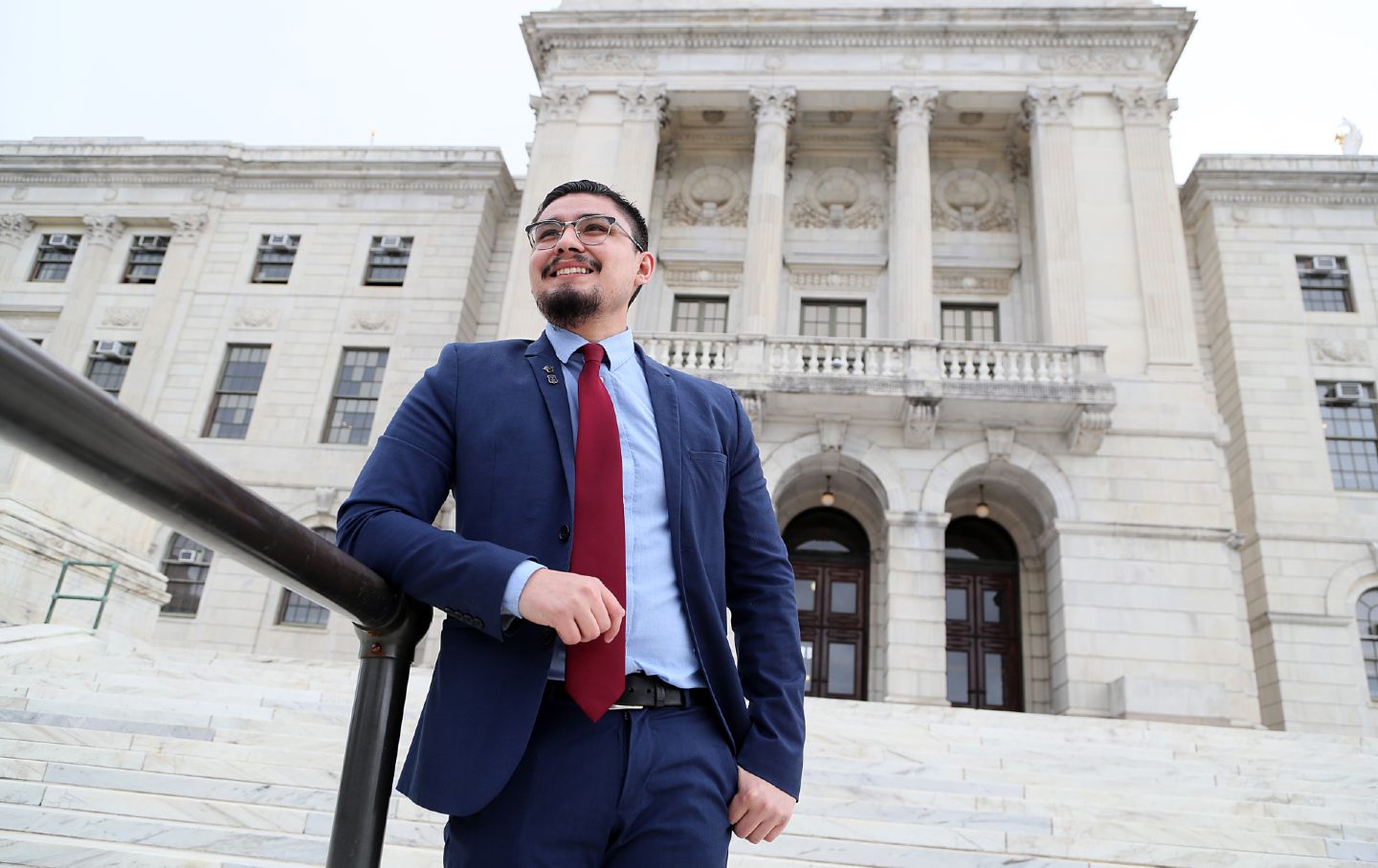
Gina Hinojosa: “We Flip Texas, and It’s Over” Gina Hinojosa: “We Flip Texas, and It’s Over”
Talking to Texas gubernatorial candidate Gina Hinojosa about what redistricting could mean and how a new generation of Democrats is speaking more directly to voters.
Trump Wants to Keep Journalists Out of the White House. He Should Get His Wish. Trump Wants to Keep Journalists Out of the White House. He Should Get His Wish.
The president has banned MS NOW, CNN, and Politico from attending press briefings. The rest of the media should respond with a boycott.

