
Loath as I Am to Agree With Marjorie Taylor Greene…
How the effort to bank TikTok is a fascinating case study in transpartisan politics.
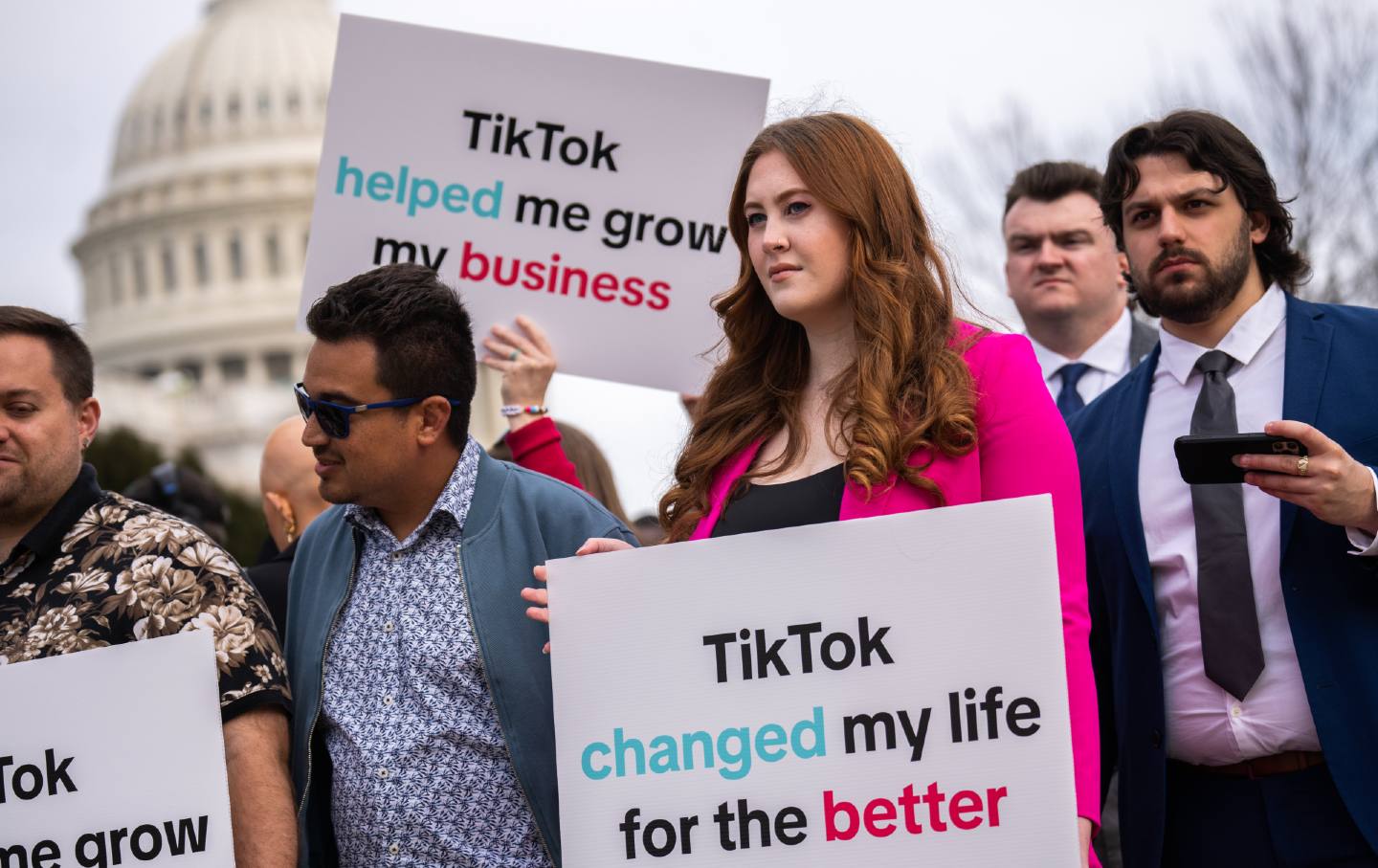
Earlier this month, millions of young Americans opened TikTok on their phones and were faced with a startling message: “Stop a TikTok shutdown,” it read. “Speak up now—before your government strips 170 million Americans of their Constitutional right to free expression.” A bright red “call now” button appeared at the bottom of the screen.
This rare call for direct action came in response to the Protecting Americans from Foreign Adversary Controlled Applications Act—a bill that would prevent any online application that is controlled by a “foreign adversary” from being hosted in the United States, unless said app is divested from said adversary. (In this case, America’s foreign adversaries are defined as China, Russia, Iran, and North Korea.) And just in case that was too subtle, it explicitly names TikTok as needing to be divested from its Chinese parent company, ByteDance.
While the bill overwhelmingly passed in the House 352-65, the members in opposition don’t fall neatly along party lines. The list includes progressive Democrats and Freedom Caucus Republicans who have come to the same conclusion, albeit from different presuppositions.
The effort to ban TikTok—and the backlash that has followed—has been a fascinating case study in transpartisan politics. Prominent figures on both sides of the aisle have cited a wide range of concerns, including data privacy, national security, freedom of speech—and, perhaps most saliently this election year, the transformative effect the bill could have on presidential power.
Advocates for the bill have insisted that it is not technically a ban—that TikTok could continue to be used in the United States so long as ByteDance sells it within six months of the law’s enactment. But that appears to be a nonstarter, as both ByteDance and China are highly unlikely to cooperate with such a requirement. All signs indicate that a signature from President Biden would result in the app’s disappearance in the United States.
What could be even more impactful than the non-ban ban, though, is the way it is enforced. The bill applies to any website or application with over a million monthly visitors that allows users to create accounts and share content. If it has so much as a comments section, it counts. No one is even sure how many apps the bill could ban as soon as it gets signed.
That would be up to the White House. The bill gives the president the authority to determine whether an app controlled by a foreign adversary poses a “significant threat to the national security of the United States.” It also requires him to approve its sale, which means that even if a given tech company tried to cooperate, he could stonewall indefinitely to effectively ban the app anyway.
Then there’s the vagueness of what constitutes “control” by a foreign adversary. The bill leaves that up to interpretation too. The company doesn’t even have to be based in a foreign adversary country to have its apps banned—it just has to be “subject to the direction or control” of someone who is.
As one technology lawyer put it: “The President really has the unchecked power to put another app on this list.”
The bill’s opponents include Democratic representatives like Ro Khanna, who represents Silicon Valley and would rather protect data privacy with a more “narrowly tailored law.” Jamaal Bowman thinks the bill is driven by “xenophobic anti-China rhetoric,” while Alexandria Ocasio-Cortez wants information about the alleged security risks to be made public. “This is putting the cart before the horse,” she said, on TikTok.
Meanwhile, on the other side of the aisle, Nancy Mace thinks it is “not the role of government to ban apps from the app store.” Matt Gaetz says the bill is “rushed” and “overbroad.” Marjorie Taylor Greene worries it would “open Pandora’s box” and lead to more censorship down the line.
Loath as I am to agree with Marjorie Taylor Greene, giving the president near-unilateral authority to ban free-speech platforms could very well backfire—especially if that president is Donald Trump. Imagine handing that kind of power to the man who recently called Facebook an “enemy of the people,” who is known for harboring personal vendettas, and who owns a competing social media platform of his own. What could go wrong?
Popular
“swipe left below to view more authors”Swipe →The concerns about TikTok are genuine, but so are the concerns of those opposing the bill. It would be more responsible—and more effective—to regulate how the company collects and uses Americans’ personal data. Last week, the Department of Justice sued to regulate Apple; the same could be done with TikTok.
Regulation would help curb misinformation, which spreads like wildfire on the app. It would also—as opposed to an outright ban—prevent backlash among young voters ahead of a close election. And it won’t set a precedent of unchecked executive power, so Trump can’t ban Twitch because he thinks its owner’s business interests in China count as foreign control.
One hundred and seventy million Americans use TikTok. That’s more than half the population, including one-third of adults and almost two-thirds of people under 30. Regulatory action would make the app safer to use, without banning one of the country’s most popular social media platforms—and angering most of the country in the process.
Support independent journalism that does not fall in line
Even before February 28, the reasons for Donald Trump’s imploding approval rating were abundantly clear: untrammeled corruption and personal enrichment to the tune of billions of dollars during an affordability crisis, a foreign policy guided only by his own derelict sense of morality, and the deployment of a murderous campaign of occupation, detention, and deportation on American streets.
Now an undeclared, unauthorized, unpopular, and unconstitutional war of aggression against Iran has spread like wildfire through the region and into Europe. A new “forever war”—with an ever-increasing likelihood of American troops on the ground—may very well be upon us.
As we’ve seen over and over, this administration uses lies, misdirection, and attempts to flood the zone to justify its abuses of power at home and abroad. Just as Trump, Marco Rubio, and Pete Hegseth offer erratic and contradictory rationales for the attacks on Iran, the administration is also spreading the lie that the upcoming midterm elections are under threat from noncitizens on voter rolls. When these lies go unchecked, they become the basis for further authoritarian encroachment and war.
In these dark times, independent journalism is uniquely able to uncover the falsehoods that threaten our republic—and civilians around the world—and shine a bright light on the truth.
The Nation’s experienced team of writers, editors, and fact-checkers understands the scale of what we’re up against and the urgency with which we have to act. That’s why we’re publishing critical reporting and analysis of the war on Iran, ICE violence at home, new forms of voter suppression emerging in the courts, and much more.
But this journalism is possible only with your support.
This March, The Nation needs to raise $50,000 to ensure that we have the resources for reporting and analysis that sets the record straight and empowers people of conscience to organize. Will you donate today?
More from The Nation
Celebrate Kristi Noem’s Firing. But Keep Protesting ICE. Celebrate Kristi Noem’s Firing. But Keep Protesting ICE.
Finally, someone in the administration is paying for their cruelty and incompetence.
We Don’t Need an Autopsy to Tell Us the Democrats Failed on Gaza We Don’t Need an Autopsy to Tell Us the Democrats Failed on Gaza
The DNC is allegedly hiding a report showing that Kamala Harris’s Gaza policy helped cost her the 2024 election. But that report won’t tell us anything we don’t already know.
Texas’s Senate Primary Has Already Made History—and It’s Not Over Yet Texas’s Senate Primary Has Already Made History—and It’s Not Over Yet
Democratic nominee James Talarico is getting national media attention, but the real story is sky-high voter turnout, even amid GOP bids to suppress balloting
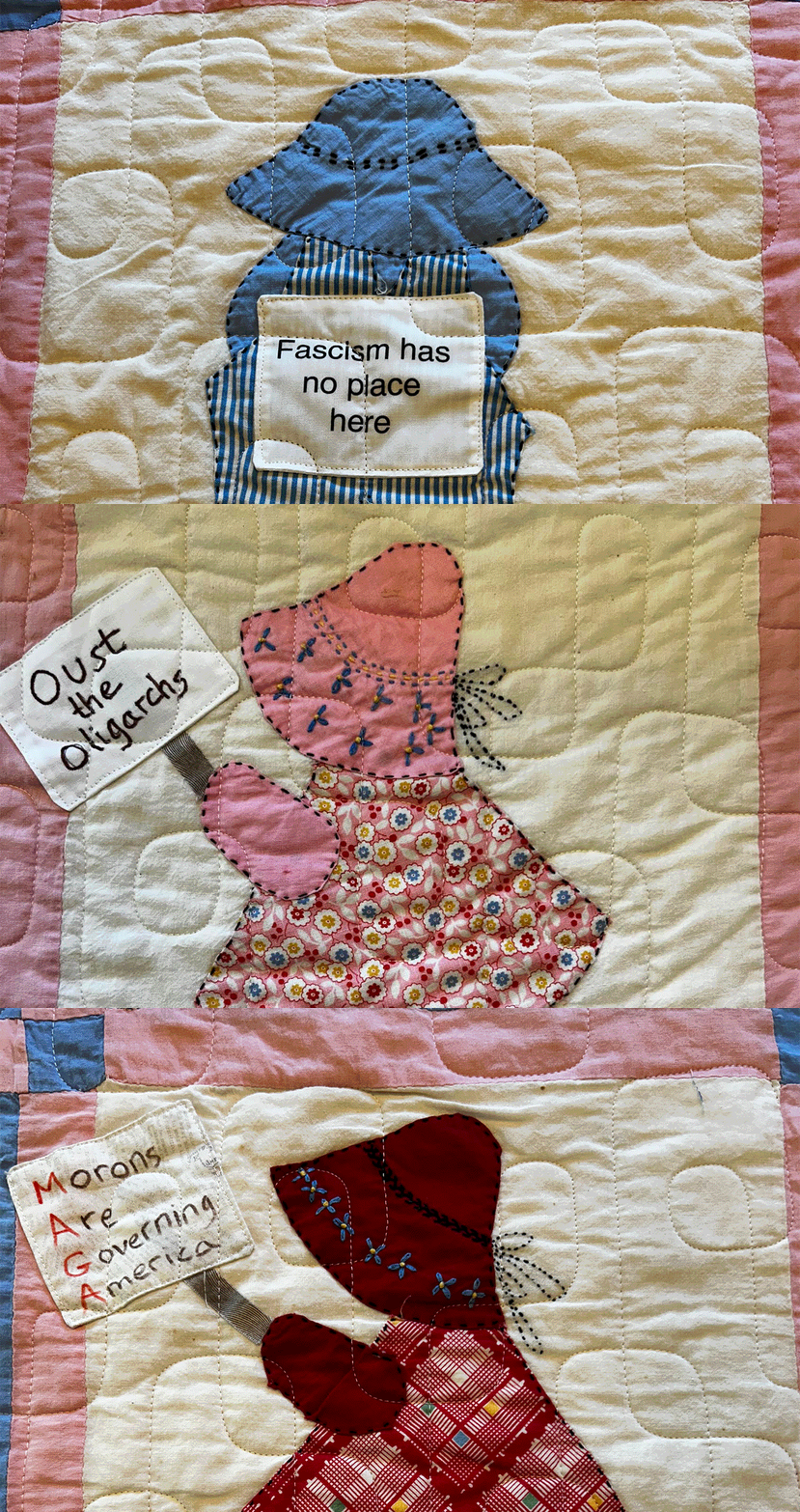
Quilted Messages Quilted Messages
Sunbonnets carrying not-so-sunny truths.
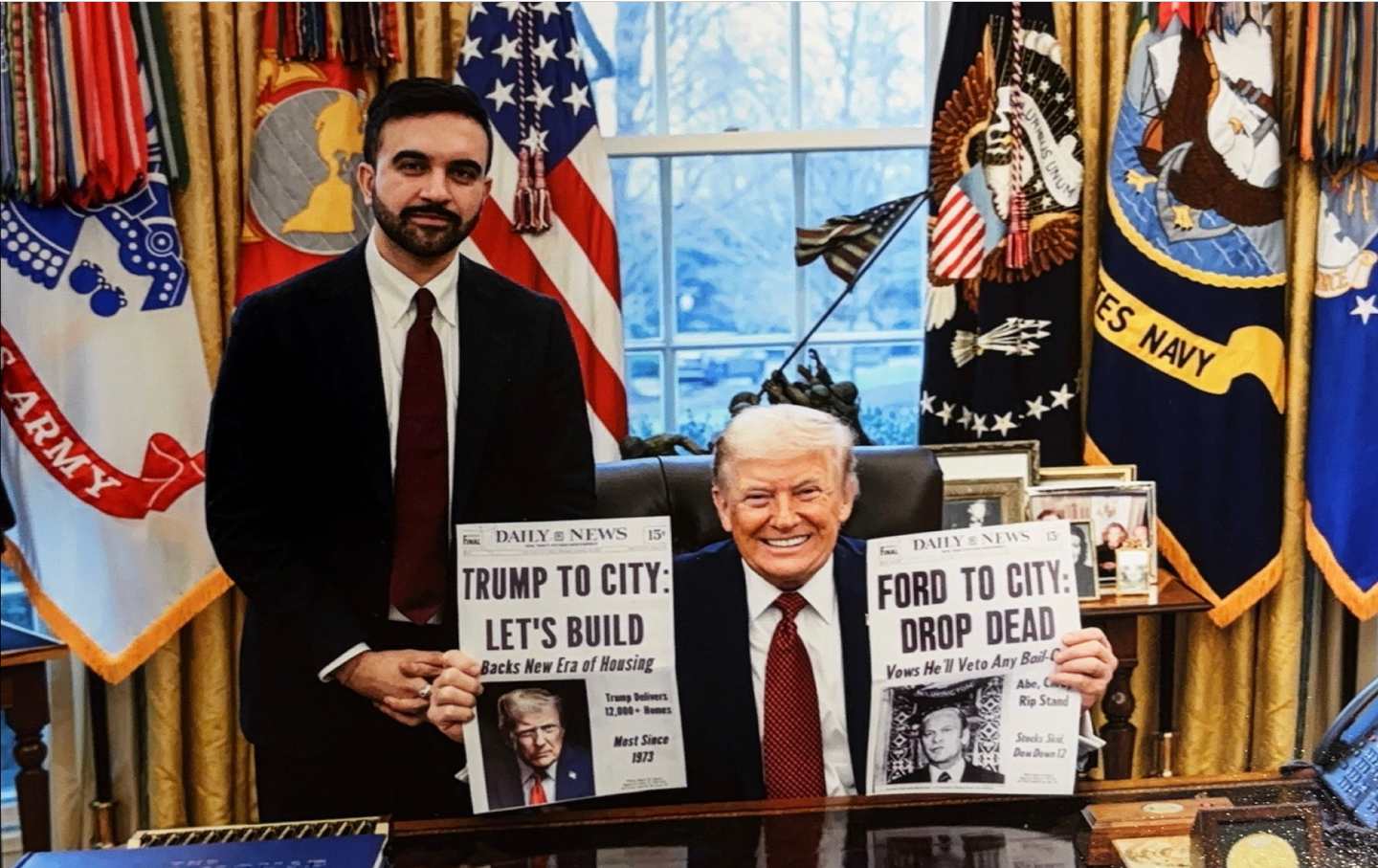
How the Theatrics of Mamdani’s Trump Meeting Backfired How the Theatrics of Mamdani’s Trump Meeting Backfired
By pandering to the president’s vanity, the New York mayor reinforced Trump’s image as a strongman commanding deference—an especially bad look on the eve of Trump’s war with Iran

Students in New York Are Going Hungry. How Can Mamdani Help? Students in New York Are Going Hungry. How Can Mamdani Help?
With plans for city-owned grocery stores and a focus on affordability, the new mayoral administration offers fresh hopes of successfully confronting the food crisis among students...

