
The Only Thing Worse Than Taking Rural Voters for Granted
… is dismissing them as out of reach for Democrats.
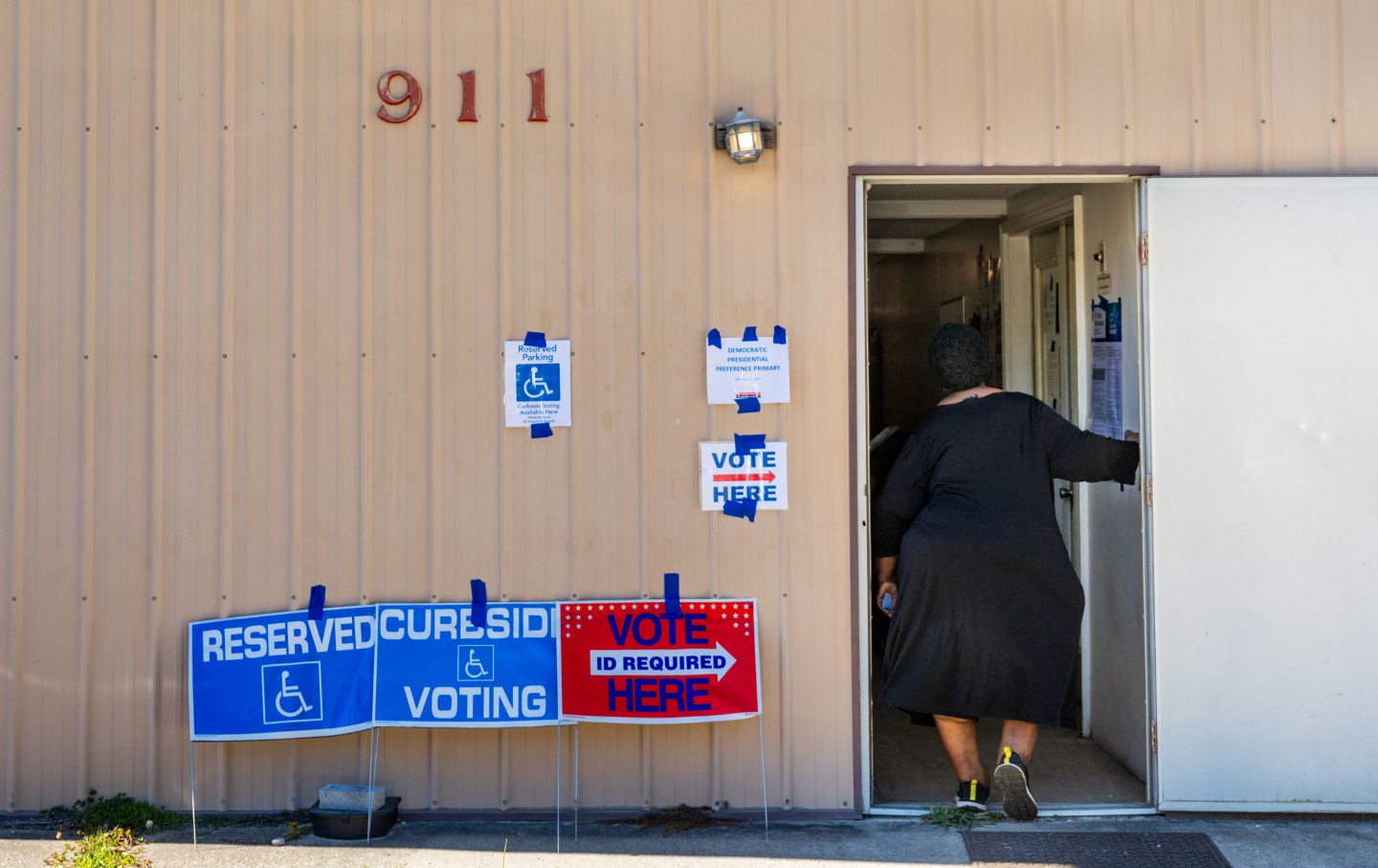
Donald Trump often tells rural folks that he loves them. Contrary to myth, not all of them love him back. According to The Rural Voter, a new book by the political scientists Nicholas Jacobs and Dan Shea, only about one in 10 rural people are what they call “rabble-rousers”—the kind of MAGA die-hards who tweet incessantly or raise a stink at school board meetings, often with an intimidating edge.
While more conservative on average than urbanites, rural Americans are far from monolithic—racially, culturally, or politically. Even among rural conservatives, about a third are less fans of Trump than they are people who’ve come to mistrust Biden.
Some of these folks are potential Biden voters. To win in November, the president needs every one of them he can get.
In 2012 and 2018, one of us (Anthony) ran for Congress in Virginia’s Ninth District, a mainly rural area in the southwestern corner of the state. The district previously had a Democratic congressman for 28 years and sent several Democrats to the state Legislature. While the Tea Party victories of 2010 ushered in what appeared to be sudden changes to the region’s politics, the underlying causes of that red wave had been festering for decades.
Southwestern Virginia’s shift from a politically purple region to one that votes more than 70 percent Republican is the story of much of the American countryside. Rural America is working-class country, and the decline of Democratic power there tracks the party’s broader failure to hang on to what was once its working-class base.
As recently as 2008, Barack Obama won 45 percent of rural and 46 percent of white working-class votes nationwide. In 2016, barely three in 10 rural Americans voted for the Democratic presidential candidate. Liberal pundits—most of them urban—often ascribe this shift to deep-seated racism and anger at being “left behind” by the so-called knowledge economy. That analysis misses the mark by a country mile.
Rural America hasn’t been left behind so much as it has been worn down: by timber, coal, gas, copper, and other metals extracted until what’s left is too expensive to reach; by companies pulling out and workers left holding the bag; by hogs, cattle, chickens, and grains produced and shipped out in abundance, with farmers getting only pennies on the dollar that consumers pay; by midsize textile and furniture factories steadily upgrading equipment and worker skills, only to be undermined by trade policies that favor cheaper labor anywhere it can be found.
As rural economies imploded, Democrats and Republicans alike stood idly by. But liberals added insult to injury by looking down on the “dank backwaters” of rural America or glibly insisting that people abandon their communities and go where the jobs are.
Rural Americans are angry because we’ve spent decades at jobs making homes warmer and food cheaper for our suburban and urban neighbors, only to be economically discarded and culturally vilified as racist rubes. As one Iowa Republican put it, “It was a huge insult to say that you support Trump because you’re racist. A lot of them here voted for Obama. Democrats see us as uneducated, simple thinkers who’ve got guns. It’s a huge boon for the Republican Party.”
Trump has a knack for stoking resentment, and in 2016, rural resentment was plentiful, mostly against the establishment and the political class. Nation contributing editor Christian Parenti sacrificed many hours of his life listening to countless Trump speeches. “Trump took the Bernie [Sanders]–style populism,” he wrote, “emptied it of real class politics, reduced it to a jumble of affective associations, and used it to beat up the smug liberals of the professional-managerial class. It worked.”
People in rural areas are overwhelmingly working-class—about 70 percent lack college degrees—as are voters in the swing states Biden must win (Michigan, Pennsylvania, Wisconsin, Nevada, and Arizona). Fortunately, working-class voters are swingy: Of the battleground-state voters who switched to the Democrats between 2016 and 2020, an estimated 72 percent were non–college graduates.
Biden won 32 percent of the rural vote in 2020, a small but crucial one-point improvement over Hillary Clinton’s performance in 2016. Clinton had a single, short-term rural outreach staffer, based—we kid you not—in Brooklyn. A Biden campaign spokesperson tells us the president will soon be hiring a rural engagement director, and we’re optimistic that person will actually visit people and places outside of the Acela corridor.
Popular
“swipe left below to view more authors”Swipe →Heading into November, Biden is well-positioned to capture rural swing voters because of his administration’s pro-rural, pro-labor accomplishments. From cracking down on monopolies that gouge consumers and shortchange farmers, to shoring up labor laws, to making massive investments in rural infrastructure and family farms, Biden has put his administration’s money where Trump’s mouth was. Indeed, his first term has been more progressive for working people than anything we’ve seen in over four decades. And if his State of the Union address is any indication, we can expect another round of investments that benefit working Americans during his second term.
Democrats won’t win a majority of rural voters anytime soon, but they absolutely must improve their numbers in the countryside. Significantly high defections among Latino, Black, and young voters mean that Democrats cannot rely on their base alone.
Yet Biden is already under enormous pressure from the campaign-industrial complex to blow off rural voters as irredeemable MAGA bigots. Recall Chuck Schumer’s 2016 game plan: “For every blue-collar Democrat we lose in western Pennsylvania, we will pick up two moderate Republicans in the suburbs in Philadelphia, and you can repeat that in Ohio and Illinois and Wisconsin.”
The result was not only victory for Trump but the collapse of the Democrats’ historic “blue wall.” That wall must be built back better, from the tribal lands to the Black Belt to the hollers of Appalachia. We rural Americans are once and future Democrats.
More from The Nation
We Don’t Need an Autopsy to Tell Us the Democrats Failed on Gaza We Don’t Need an Autopsy to Tell Us the Democrats Failed on Gaza
The DNC is allegedly hiding a report showing that Kamala Harris’s Gaza policy helped cost her the 2024 election. But that report won’t tell us anything we don’t already know.
Texas’s Senate Primary Has Already Made History—and It’s Not Over Yet Texas’s Senate Primary Has Already Made History—and It’s Not Over Yet
Democratic nominee James Talarico is getting national media attention, but the real story is sky-high voter turnout, even amid GOP bids to suppress balloting
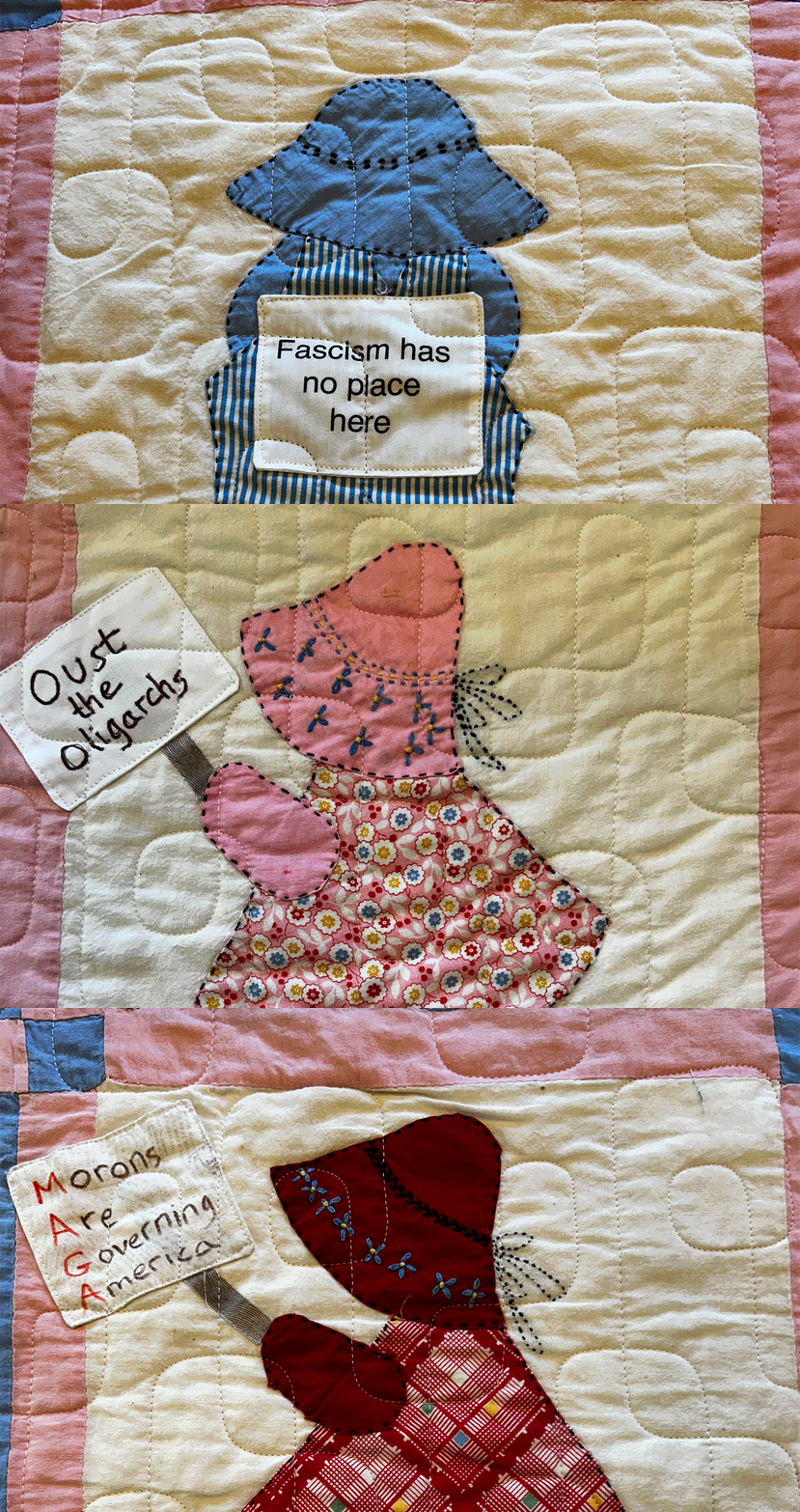
Quilted Messages Quilted Messages
Sunbonnets carrying not-so-sunny truths.
How the Theatrics of Mamdani’s Trump Meeting Backfired How the Theatrics of Mamdani’s Trump Meeting Backfired
By pandering to the president’s vanity, the New York mayor reinforced Trump’s image as a strongman commanding deference—an especially bad look on the eve of Trump’s war with Iran
Students in New York Are Going Hungry. How Can Mamdani Help? Students in New York Are Going Hungry. How Can Mamdani Help?
With plans for city-owned grocery stores and a focus on affordability, the new mayoral administration offers fresh hopes of successfully confronting the food crisis among students...
We Are the Fire That Melts the ICE We Are the Fire That Melts the ICE
Oaxaca, Mexico, street art.

