By His Endorsement of Donald Trump, Robert F. Kennedy Jr. Shows the Dark Side of Camelot
The complex Kennedy legacy has reactionary as well as liberal strands.
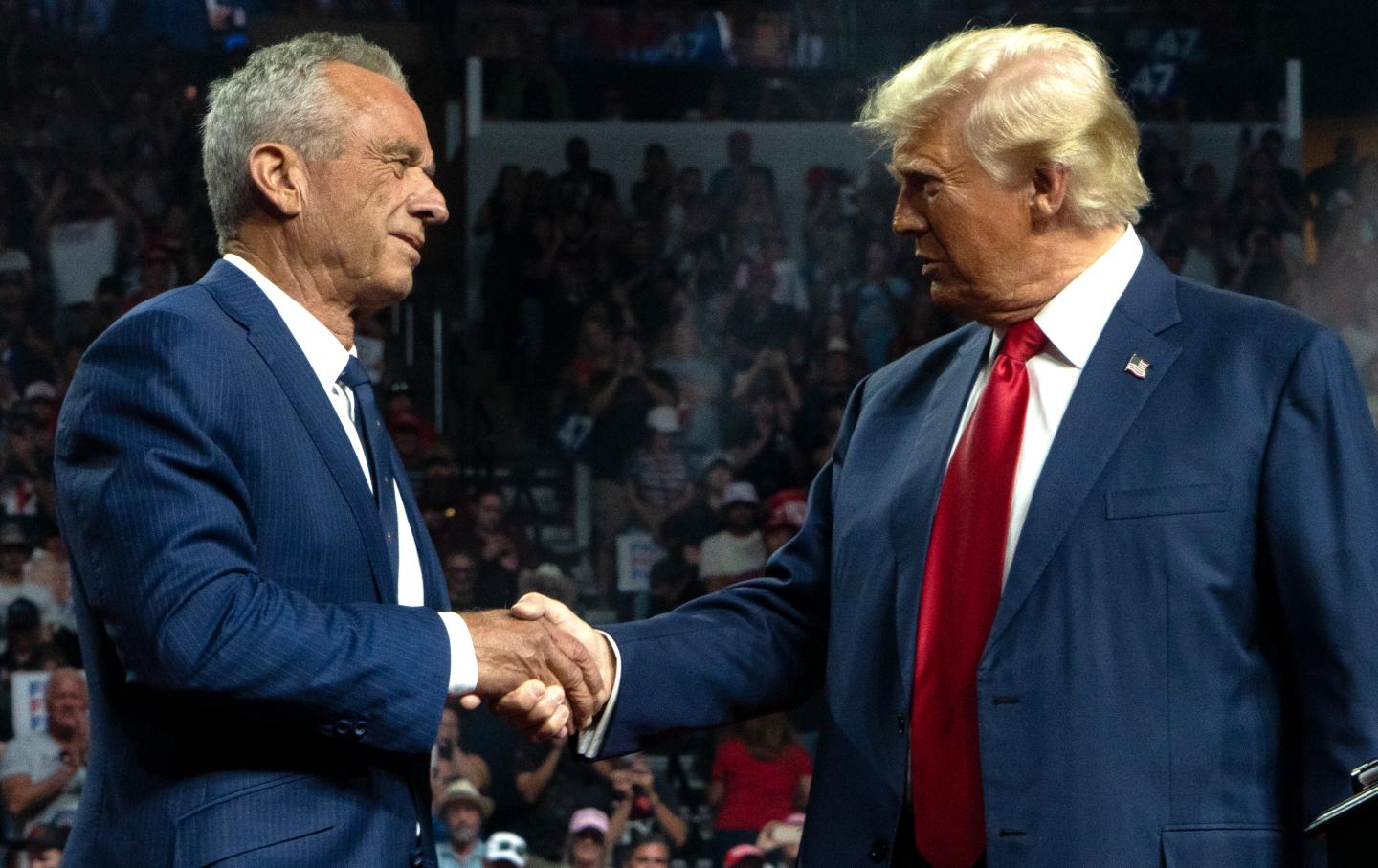
When he endorsed Donald Trump last Friday, Robert F. Kennedy Jr. (RFK Jr.) ignited a family drama. His famous family name is one of RFK Jr.’s main political assets, so it was not surprising that in explaining why he was suspending his campaign and backing Trump, he claimed the posthumous support of the two most famous members of his clan, his father, Robert F. Kennedy (RFK), and his uncle John F. Kennedy (JFK), both assassinated in the 1960s. RFK Jr. claimed that the two deceased statesmen “are looking down right now and they are very, very proud.”
This audacious and galling claim was too much for Kennedy’s family. Five of RFK Jr.’s siblings issued a statement saying the endorsement was a “a betrayal of the values our father and our family hold most dear.” This letter was signed by Kathleen Kennedy Townsend, Courtney Kennedy, Kerry Kennedy, Chris Kennedy, and Rory Kennedy. In an interview with MSNBC, Kerry Kennedy said she was “outraged and disgusted by my brother’s gaudy and obscene embrace of Donald Trump.” She added that her father “would have detested almost everything Donald Trump represents if he was alive today.”
Another RFK descendant, brother Max, wrote an op-ed in the Los Angeles Times that denounced RFK Jr.’s support of Trump as “sordid,” as well as “a hollow grab for power, a strategic attempt at relevance.” Max Kennedy noted that prior to backing Trump, his brother had unsuccessfully approached the Harris campaign with a quid pro quo, a possible endorsement in exchange for a position in her administration. It appears that Trump made the kind of deal RFK Jr. wanted, so if Trump returns to the White House there will be a position waiting for the black sheep of the Kennedy dynasty. RFK Jr. boasted to Tucker Carlson that he’ll be part of Trump’s transition team and “help pick the people who will be running the government.”
Writing in The Washington Post, columnist Karen Tumulty lamented that “RFK Jr. has sullied the Kennedy name and the dimming aura of Camelot.”
It’s undeniable that RFK Jr. has betrayed the liberalism that his family, in its best moments, embodied. Indeed, RFK Jr. also proved disloyal to his own stated values, since only a few years ago he condemned Trump as a “threat to democracy,” “a terrible president,” and “a sociopath” whose politics was based on “bigotry,” “hatred,” and “xenophobia.” Given this abrupt about-face, it’s not surprising that former close collaborators with RFK Jr., notably the investigative journalist Greg Palast, openly speak about the politician as someone who has “lost his mind”
But as manifestly corrupt as RFK Jr.’s behavior is, we should be wary of the narrative of Camelot betrayed, which relies on the attractive fiction that there is a unified and unsullied Kennedy legacy. In truth, the Kennedys, who have been national figures for more than a century, have been all over the map politically—not always in admirable ways. The family have long been Democrats, but at times very reactionary ones, in a manner that does decidedly show an affinity for Trumpism.
As the historian Garry Wills documented in his classic book The Kennedy Imprisonment (1982), the most searching of all books about the dynasty, the family’s patriarch, Joseph Kennedy (1888–1969), imprinted on his large brood a host of bad habits. The grandchild of Irish immigrants and son of a successful Boston politician, Kennedy rose to stratospheric wealth through the stock market and liquor (although not, contrary to popular myths, by bootlegging). But his plutocratic success didn’t win Kennedy many friends among Boston’s Brahmins—snooty WASPs who saw the Irish as inherently low-class. Stung by social rejection, Kennedy pursued alternative paths to status via Hollywood (taking, among many other starlets, Gloria Swanson as a mistress) and politics.
Although a Democrat who was appointed as ambassador to England from 1938 to 1940, Kennedy fought bitterly with President Franklin D. Roosevelt. During his disastrous term as ambassador, Kennedy threw in his lot with the aristocratic Cliveden set in England who wanted to accept Hitler as overlord of Europe in order to build a bulwark against communism. When his own government rejected this embrace of Nazi domination of Europe, Kennedy concluded that FDR’s mind had been poisoned by a cabal of wicked Jews (such as Felix Frankfurter and Sidney Hillman) who were dragging America to war.
A primordial patriarch, Kennedy saw the world in belligerent macho terms: All men were rivals; all women existed for sexual conquest. He passed along this attitude to many of his sons, sometimes, as Wills and other historians have documented, sharing his mistresses with his boys.
As Wills conclusively shows, this macho attitude was a pervasive part of the life of JFK and RFK (although RFK, who had a streak of devout Catholicism, was not a compulsive womanizer). During the 1950s both Kennedy brothers were classic Cold War militant anti-communists. JFK was pals with Joseph McCarthy, even going on double dates with the Wisconsin demagogue. RFK served on the staff of McCarthy’s Senate Subcommittee on Investigations and wanted to be chief counsel, a job that was won by Roy Cohn (who would go on to be Donald Trump’s mentor in the art of dirty politics). In 1960, JFK ran to the right of Richard Nixon on foreign policy, decrying a fictional missile gap.
As Wills notes, the failed invasion of Cuba in 1961 at the Bay of Pigs was a pure distillation of the Kennedy style of masculinist politics. The Bay of Pigs, Wills argues,
was taken to heart because it was so clearly marked with the new traits of Kennedy’s own government. It had for its target the man who obsessed Kennedy. It had for its leader the ideal of Kennedy’s “best and brightest.” It was a chess game backed by daring—played mind to mind, macho to macho, charisma to charisma. It was a James Bond exploit blessed by Yale, a PT raid run by Ph.D.s. It was the very definition of the New Frontier.
To the credit of the Kennedys, they also had a capacity to learn from their mistakes. During the Cuban missile crisis, JFK discovered how dangerous brinksmanship could be. A new openness to diplomacy can be heard in JFK’s address to American University, delivered on June 10, 1963, just five months before he was assassinated. JFK’s counterinsurgency program and meddling in South Vietnamese politics (including turning a blind eye to the assassination plot against President Ngo Dinh Diem) entangled the United States in a disastrous war.
But by the late 1960s, both RFK Jr. and Edward Kennedy were outspoken critics of that war. Edward Kennedy went on to be an outstanding liberal senator, although his role in the death of Mary Jo Kopechne, a manslaughter case covered by Kennedy cronies, is a reminder of the family’s outrageous license. And Edward Kennedy remained unchecked in his sexual harassment of women, a lasting family trait.
Last November, I appeared on the podcast Know Your Enemy to talk about Wills’s Kennedy Imprisonment. The show’s cohost Sam Adler-Bell noted that, on many points, the JFK in the book reminded him of Donald Trump: an aggressive and exploitive womanizer with vulgar taste who was saturated with media culture (Frank Sinatra and the Rat Pack in the case of JFK, reality TV in the case of Trump). The Kennedy presidency was the first really media-dominated administration, obsessed with “charisma” (an idea taken from the sociologist Max Weber but popularized in that era) and image-making (a concept expounded in 1962 by the historian Daniel J. Boorstin). The traits of charismatic leadership, as detailed by the sociologist Reinhard Bendix and distilled by Wills, are eerily prescient of the Trump era: a loose, personal style of leadership that prioritizes the loyalty of cronies and transactional deal-making above consensus building, democratic accountability, or following norms.
Further, the aristocratic ideals JFK inherited from his perversely Anglophilic father, the belief that strong societies require great leaders who can transcend the blindness of the masses, was the seedbed of antidemocratic impulses that still bedevil American society.
Popular
“swipe left below to view more authors”Swipe →The Kennedys, therefore, have a mixed legacy. If they have been leaders of American liberalism, they’ve also at times embodied anti-liberal impulses that are antithetical to democracy. One way to describe RFK Jr.’s politics is that in endorsing Trump he is abandoning the liberalism of Edward Kennedy and reverting to the America First authoritarianism of his grandfather.
It’s easy to understand why RFK, his siblings, and his cousins all remain haunted by the legacy of their family. To be the children of great men who were killed young is a heavy burden. This is part of what Wills means by the Kennedy imprisonment. But both the family and America would benefit from finding a way to escape this prison. The problem is not just that RFK Jr. has betrayed his father’s legacy, but also that he and America need to be more clear-eyed about how limited that legacy is. Camelot was always a myth. To move forward, that myth has to be left behind.
More from
Jeet Heer 
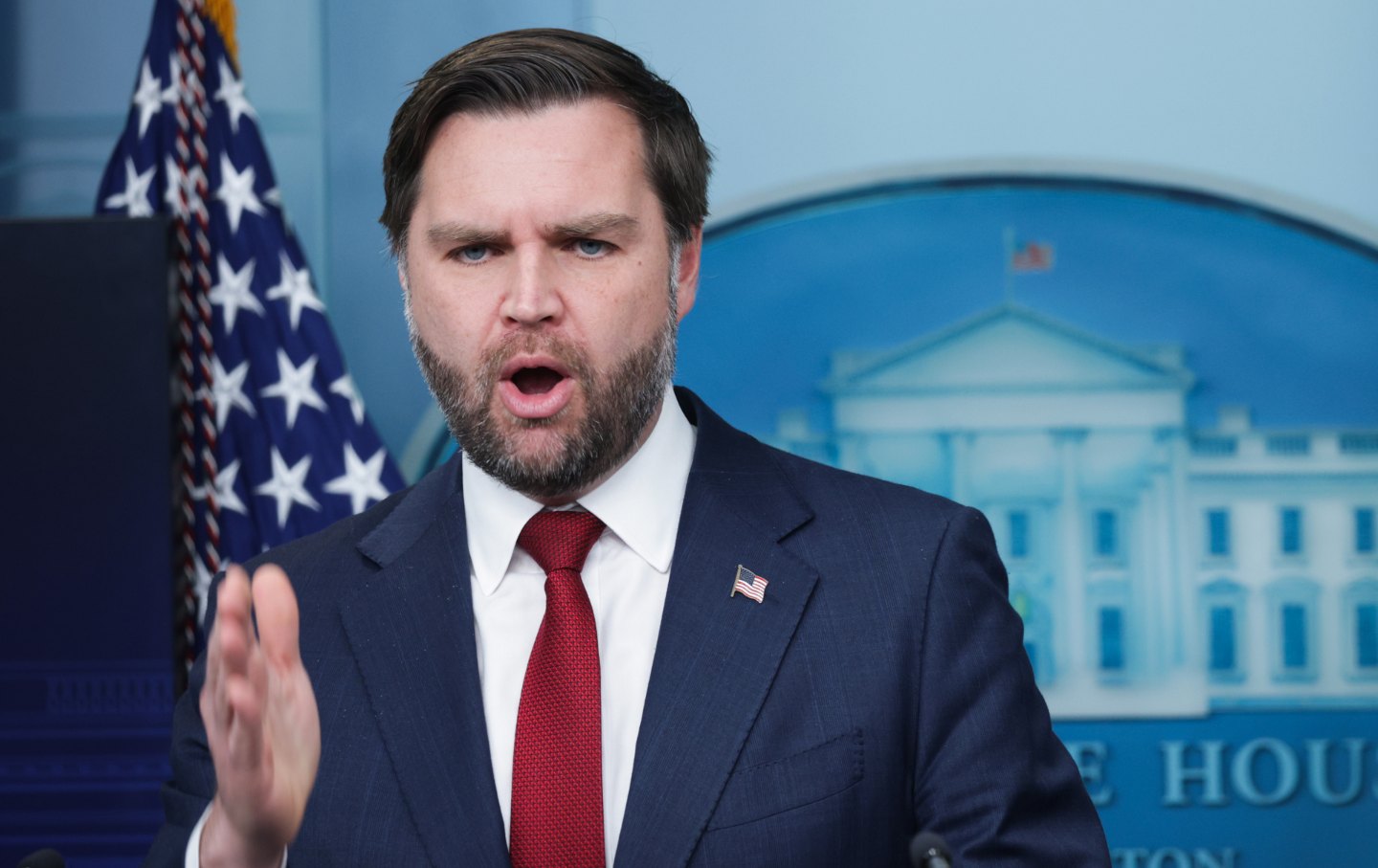
Renee Good’s Killing Has Unleashed MAGA’s Misogyny Renee Good’s Killing Has Unleashed MAGA’s Misogyny
To defend the indefensible, the right is going after white women as race traitors.
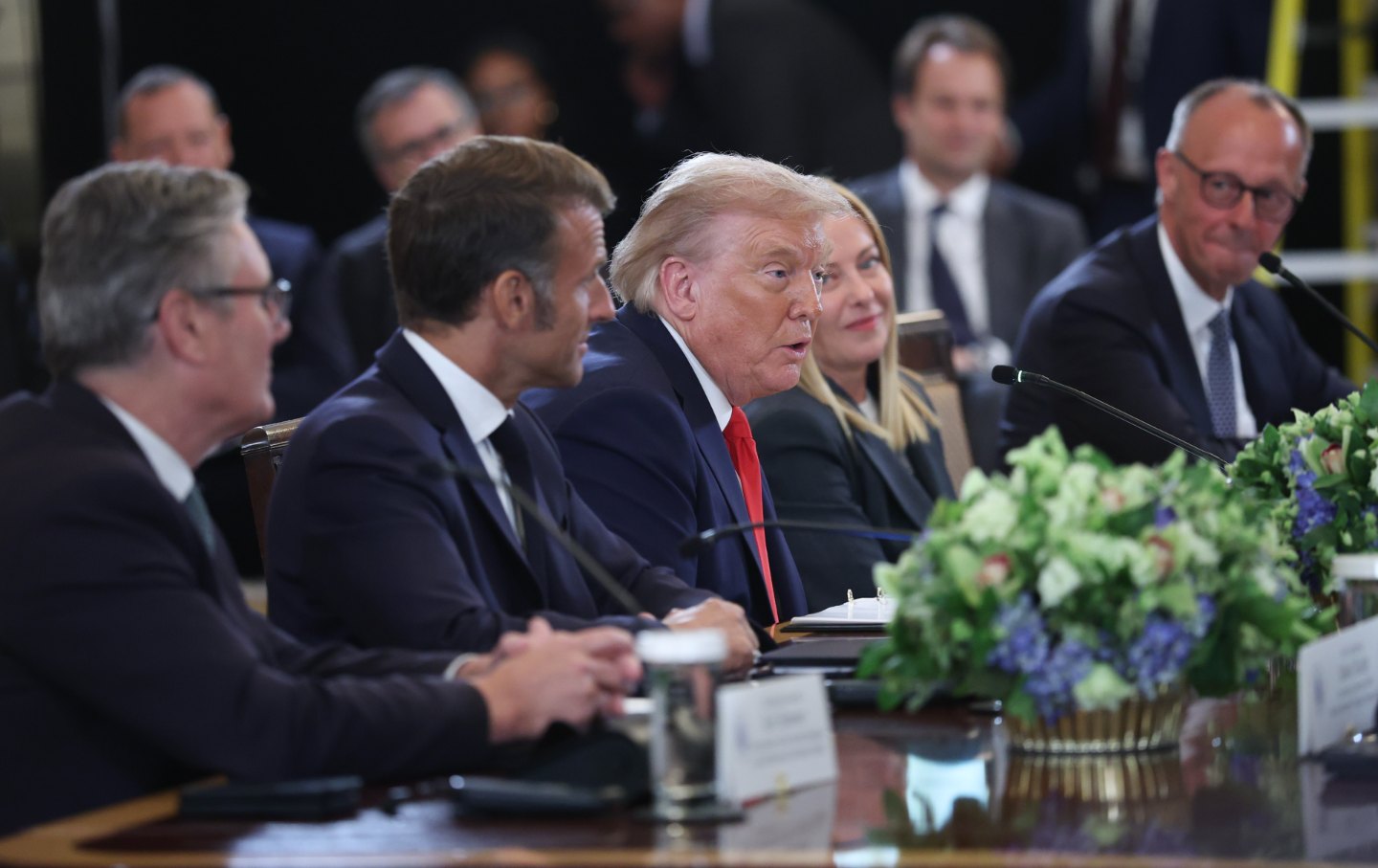
European Cowardice Is Empowering Trump’s New Imperialism European Cowardice Is Empowering Trump’s New Imperialism
NATO allies don’t want to confront Trump’s aggression. But they may ultimately not have a choice.
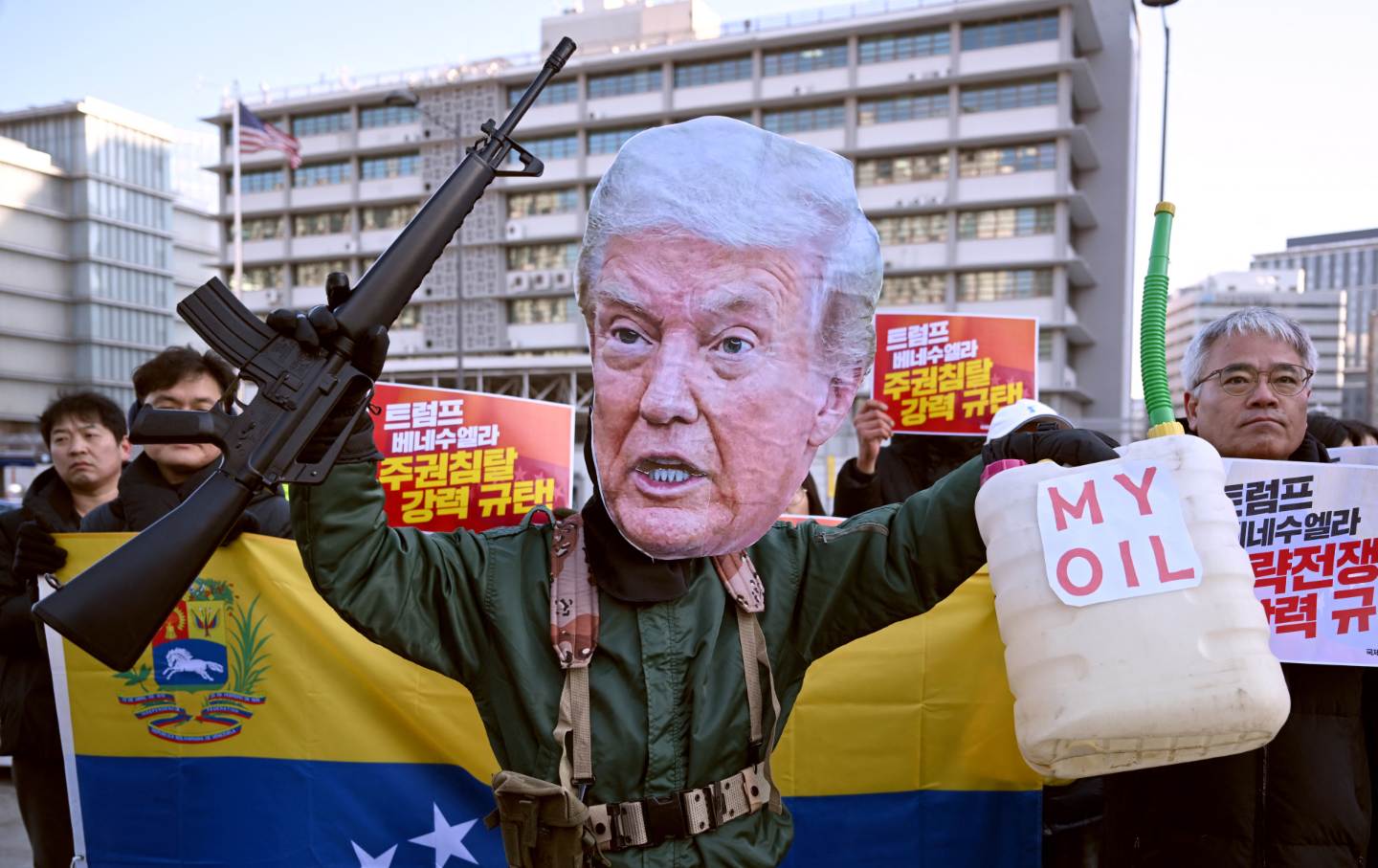
Donald Trump Is Drunk on War Donald Trump Is Drunk on War
The Venezuelan coup opens the gates to a new era of imperial plunder.
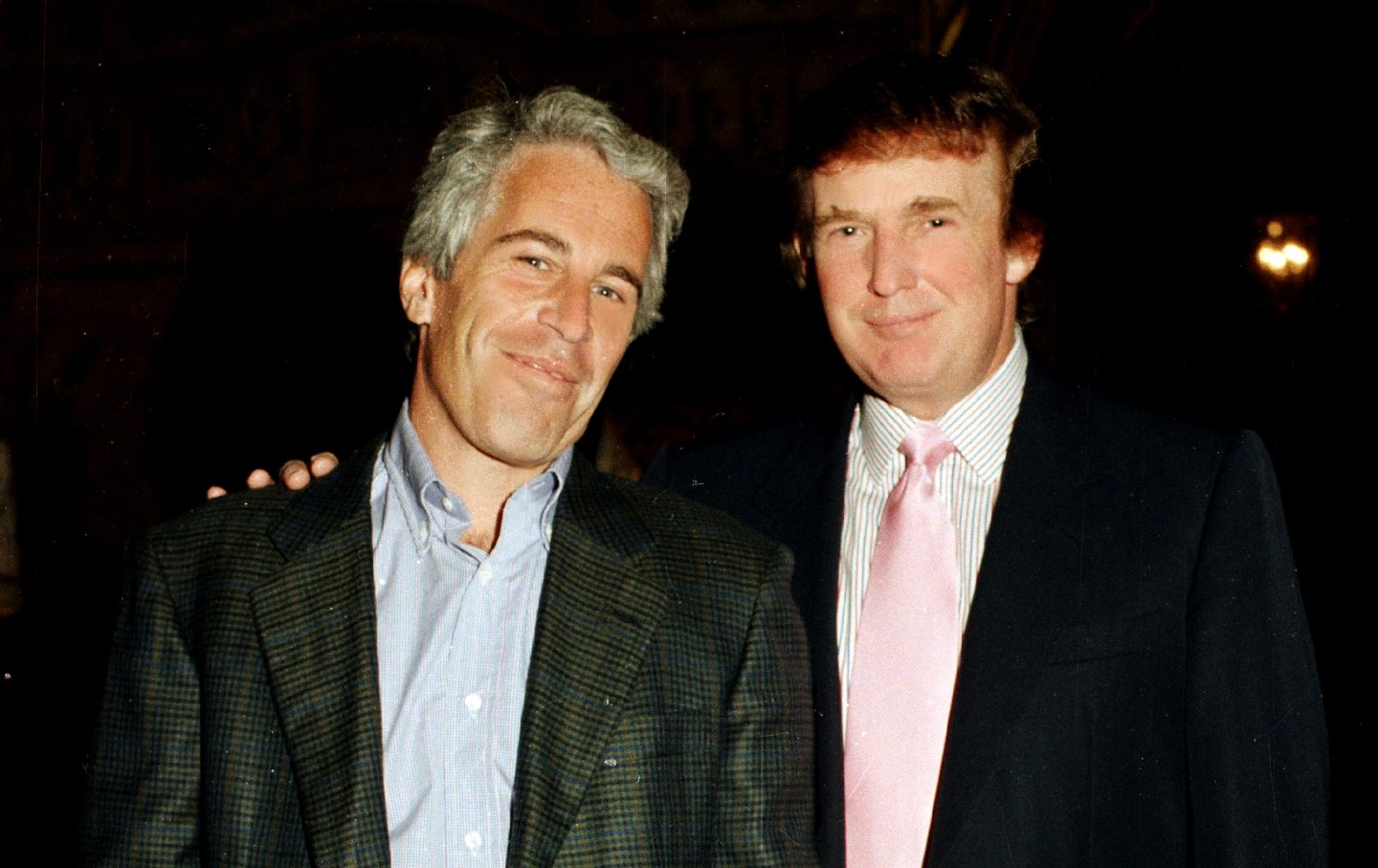
Mar-a-Lago Was Key to Jeffrey Epstein’s Criminal Enterprise Mar-a-Lago Was Key to Jeffrey Epstein’s Criminal Enterprise
New reporting shows that Trump’s split with his pedophile friend was opportunistic.
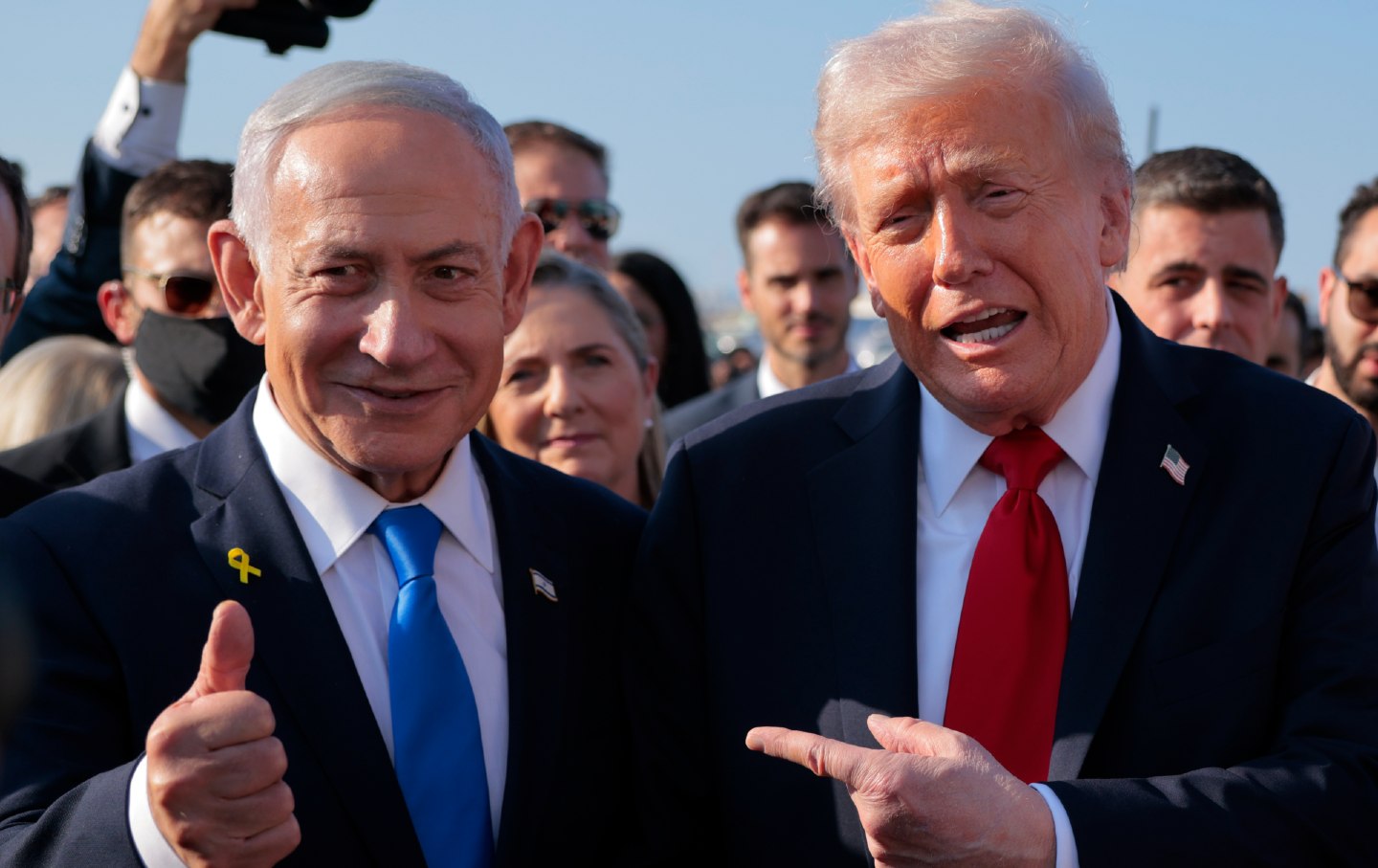
Netanyahu Is Destroying Trump’s Flimsy Peace Plans Netanyahu Is Destroying Trump’s Flimsy Peace Plans
The talk of a new Middle East is belied by Israel’s attacks on Gaza, Lebanon, Syria, and Iran.
Islamophobic Elites Lied to Destroy the Life of a Palestinian Brown Student Islamophobic Elites Lied to Destroy the Life of a Palestinian Brown Student
Plutocrats, pundits, and government officials joined together in a racist smear campaign against a queer Palestinian student at Brown University.

