
Mamdani and the DSA Just Sent a Seismic Message: The Revolution Is Here to Stay
A stunning trio of congressional victories proved that the political earthquake the mayor and his allies ushered in was no fluke.
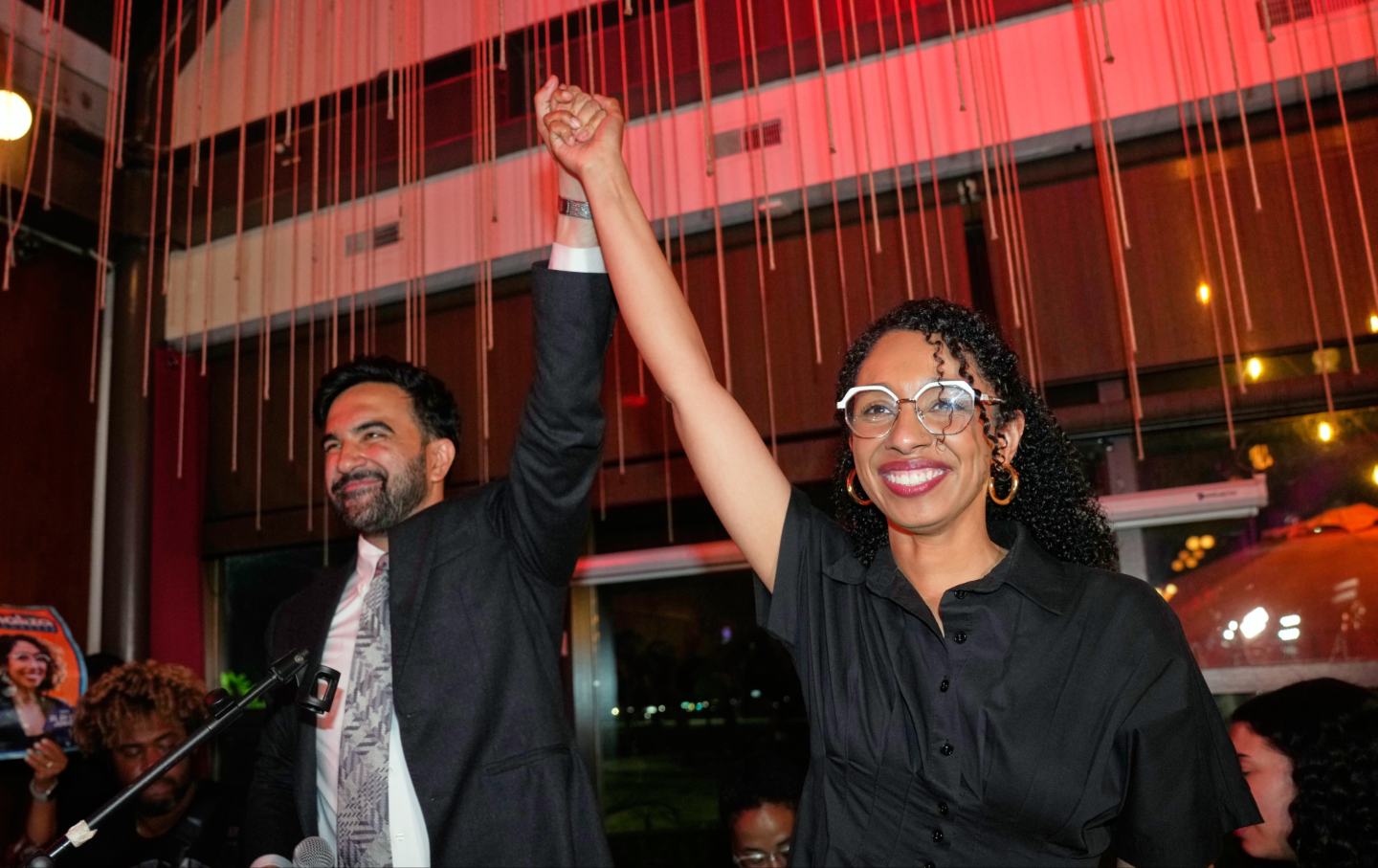
New York City Mayor Zohran Mamdani celebrates with Democratic congressional candidate Darializa Avila Chevalier during an election night watch party Tuesday, June 23, 2026, in New York.
(Seth Wenig / AP)A new mayor trying to flex his political muscle across New York City could hardly dream up a night this glorious.
Zohran Mamdani backed three insurgent candidates for Congress in high-profile primaries that enraged the Democratic establishment. All three—Brad Lander, Claire Valdez, and Darializa Avila Chevalier—won smashing victories. For Mamdani, it was proof that the political revolution he launched last year is still very much alive. For the Democratic Socialists of America, which put its organizational muscle behind most of these races, the results were evidence of its ever-increasing ascendancy in New York City politics. And for the city’s traditional political firmament, the night showed how frail its grip on power is becoming.
Lander’s victory over incumbent Dan Goldman in New York’s 10th Congressional District is the least surprising. Even without Mamdani, the former city comptroller and mayoral candidate might have dethroned Goldman, who was too much of an Israel hawk to represent the district, which spans Lower Manhattan and brownstone Brooklyn. Lander was a known, already-beloved quantity in the district, and he was well-positioned from the moment he announced his bid.
Valdez and Avila Chevalier were another matter entirely. The former had not even completed one term in the state Assembly, and the latter is a doctoral student at CUNY who had never run for office. Without Mamdani and the DSA machine, they would likely have been obliterated by their respective opponents, Brooklyn Borough President Antonio Reynoso and incumbent Representative Adriano Espaillat.
Both men were in seemingly formidable positions headed into the primary. Reynoso had the endorsement of the district’s legendary retiring congresswoman Nydia Velázquez, as well as the backing of most major labor unions and the Working Families Party. He grew up in the district, represented portions of it for eight years in the City Council, and in a pre-Mamdani world, would have breezed to victory.
While Reynoso was a de facto incumbent, Espaillat was the literal sitting congressman, having represented the 13th Congressional District, covering upper Manhattan and the Bronx, for a decade. Before that, he spent many years as a state legislator and had methodically built an uptown, Dominican American political machine that appeared, for a period, unassailable. In a potentially fateful decision, Espaillat supported Andrew Cuomo in the mayoral primary last year but flipped to Mamdani in the general, hoping that would be enough to save himself. (Disclosure: In 2018, when I ran for he state Senate, Mamdani was my campaign manager.)
It wasn’t. Mamdani did not initially support Avila Chevalier, but he kept a close eye on her campaign as it gained momentum and more and more of the DSA rank and file fell in behind her. A young, charismatic leftist with a checkered social-media history—she had disparaged Joe Biden and Kamala Harris, and made remarks she regretted about interracial relationships—Avila Chevalier was nevertheless able to press the case against Espaillat because, on foreign policy, he was deeply out of touch with the leftist currents coursing through the district.
Espaillat, like Goldman, is a proud Zionist who has taken many thousands of dollars from AIPAC, including in this latest campaign. When Mahmoud Khalil, the pro-Palestine activist at Columbia and a constituent of Espaillat’s, was abducted by the Trump administration, Espaillat said and did little. He was effectively useless. The younger voters of the district noticed, and they flocked to Avila Chevalier. Unlike Espaillat, she was an unapologetic leftist, a proud supporter of Palestinian rights who sounded, at times, like the version of Alexandria Ocasio-Cortez some DSA members wished would rear up more. She could also electrify crowds and shine on debate stages. In the race’s final days, Espaillat’s allies tried to portray Avila Chevalier as an outsider and usurper, lodging ugly racial attacks against her. (They claimed the Dominican American Avila Chevalier, without evidence, was Haitian, hoping to capitalize on anti-Haitian sentiment among older Dominican voters.) But Mamdani stuck by her, and was rewarded handsomely for his choice.
Valdez was less of a lightning rod, but she faced her own bitter struggle to the finish line. Reynoso, like Espaillat, hoped to dismiss her as a newly elected lawmaker who grew up in Texas—someone who wasn’t worthy of the seventh district. Valdez argued that Reynoso was insufficiently pro-Palestine and too beholden to the real estate industry. What mattered most, ultimately, was the fusion of DSA and Mamdani, who together turned Valdez into an electoral juggernaut. The district reaches through the heart of DSA territory—a mix of affluent, gentrifying, and working-class neighborhoods in Brooklyn and Queens—and the test for Mamdani was whether he could bring out enough voters for Valdez who had supported him last June.
The answer, resoundingly, was yes.
Down the ballot, DSA candidates also dominated in state legislative primaries, in some cases ousting incumbents. In a bid to appease Assembly Speaker Carl Heastie, Mamdani did not endorse any challengers to Assembly incumbents. Mamdani needs a strong working relationship with Heastie to deliver on his ambitious policy agenda, including universal childcare and free buses. But getting more DSA members into the Assembly is undoubtedly good news for him, especially as he faces off against Governor Kathy Hochul, who is not enthusiastic about raising taxes on the wealthy.
What all of this amounts to—from Mamdani’s surge to City Hall a year ago to these victories last night—is an upending of local politics as we’ve understood them over the last half century. For many decades, real estate and finance elites, labor unions, and establishment-aligned political clubs determined the course of events in New York City. To become a politician meant appeasing one or more of these factions, forging alliances, compromising yourself, and hoping that enough power brokers would find you acceptable. This state of affairs had both its advantages and its obvious pitfalls. Insurgents rarely broke through. Socialists, certainly, had no hope of sniffing power.
Popular
“swipe left below to view more authors”Swipe →Now DSA has arrived. City Hall, through Mamdani, is in its hands. The city’s congressional delegation will add two unabashed Mamdani allies in Valdez and Avila Chevalier. Ocasio-Cortez, who did not endorse either woman and has been increasingly caught between maintaining her democratic socialist bona fides while winning favor with Democrats in Washington, might have to bend left again.
Mamdani and DSA, of course, are not popular everywhere. There are working-class and poor neighborhoods that the democratic socialists have not organized. There are moderate, wealthier neighborhoods that will resist DSA indefinitely. Regardless, Democratic incumbents across the city must be on alert going forward. They will have to speak to DSA issues; they cannot ignore what’s pulsing below. The Israel hawks will be chased from the Democratic Party. This is inevitable.
Nights like these do not come along very often. Mamdani’s election was one realignment, and this is another. Mamdani, already a force to be reckoned with, will have even greater leverage now. He can get more ambitious, more freewheeling. He can punch back, harder than ever before. That’s the power of victory.
Become a Sustaining Donor This September
Between the reemergence of right-wing red-baiting and Donald Trump’s use of the chilling National Security Presidential Memorandum–7 to criminalize left political organizing, we’re seeing McCarthyism reborn before our eyes.
This assault on democracy cannot be ignored or wished away. Resisting it requires bravery in the face of threats and repression, a steadfast commitment to the truth, and the unwavering belief that we can—and will—overcome this darkness.
We must have an independent media that sets the record straight, unearths corruption and abuses of power, and advances a politics of justice and dignity for all if we’re to win this fight.
That’s why I’m writing to you today. This September, The Nation needs to add 100 monthly donors to sustain our progressive journalism. Your contribution makes the next investigative report, the next truth-speaking column, and the next pathbreaking essay all possible.
I hope you’ll support our work with a recurring donation today. If you donate $10 or more a month, we’ll send you a brand new “Hands Off the Free Press!” sticker to recognise your commitment to our cause. Please, donate today.
Onward,
Katrina vanden Heuvel
Editor and Publisher, The Nation
More from The Nation
Zohran Mamdani Hosts the World Zohran Mamdani Hosts the World
In a meeting with mayors from around the globe, Mamdani argued that the left must fix everyday problems—or the right will find someone to scapegoat for them.

Is There Any Good News Left? Is There Any Good News Left?
Despite what our algorithms suggest, there’s still news worth celebrating.
CEOs Are Losing Control of AI CEOs Are Losing Control of AI
With no slowdown from Trump’s administration.
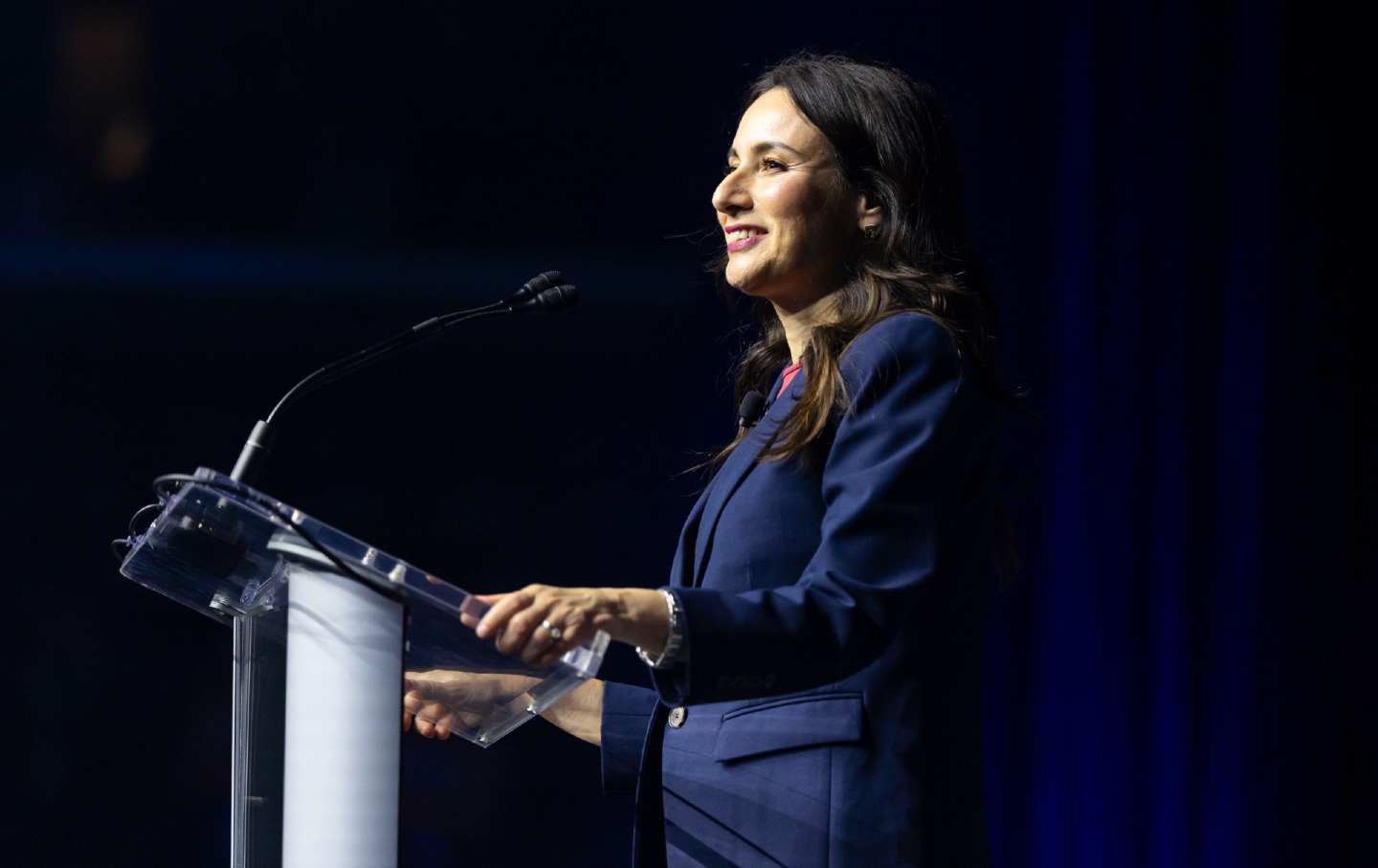
Gina Hinojosa: “We Flip Texas, and It’s Over” Gina Hinojosa: “We Flip Texas, and It’s Over”
Talking to Texas gubernatorial candidate Gina Hinojosa about what redistricting could mean and how a new generation of Democrats is speaking more directly to voters.
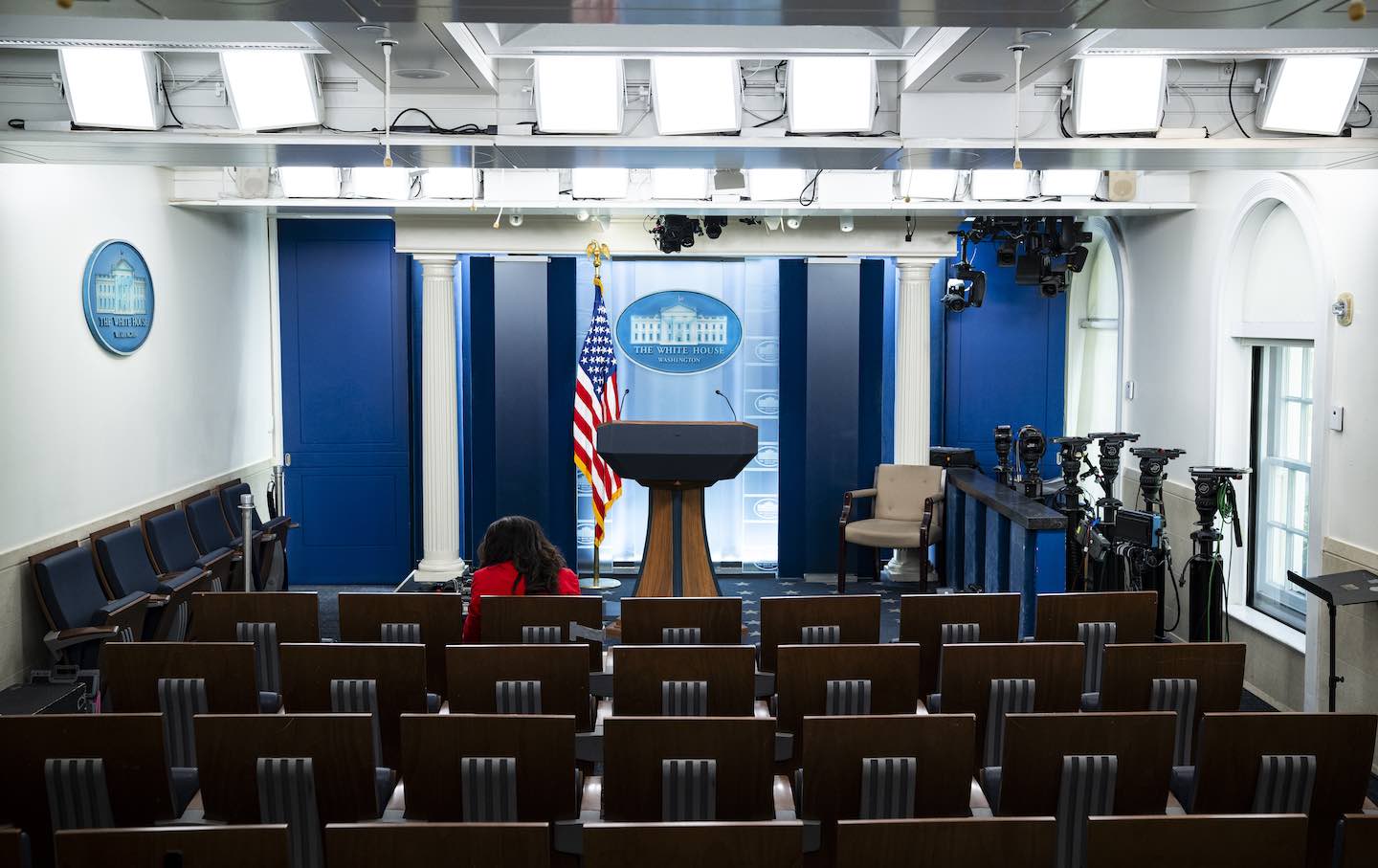
Trump Wants to Keep Journalists Out of the White House. He Should Get His Wish. Trump Wants to Keep Journalists Out of the White House. He Should Get His Wish.
The president has banned MS NOW, CNN, and Politico from attending press briefings. The rest of the media should respond with a boycott.

