
FDR Taught Us How to Talk Politics on Thanksgiving
The 32nd president used his holiday proclamations to call for “the establishment on earth of freedom, brotherhood, and justice.”
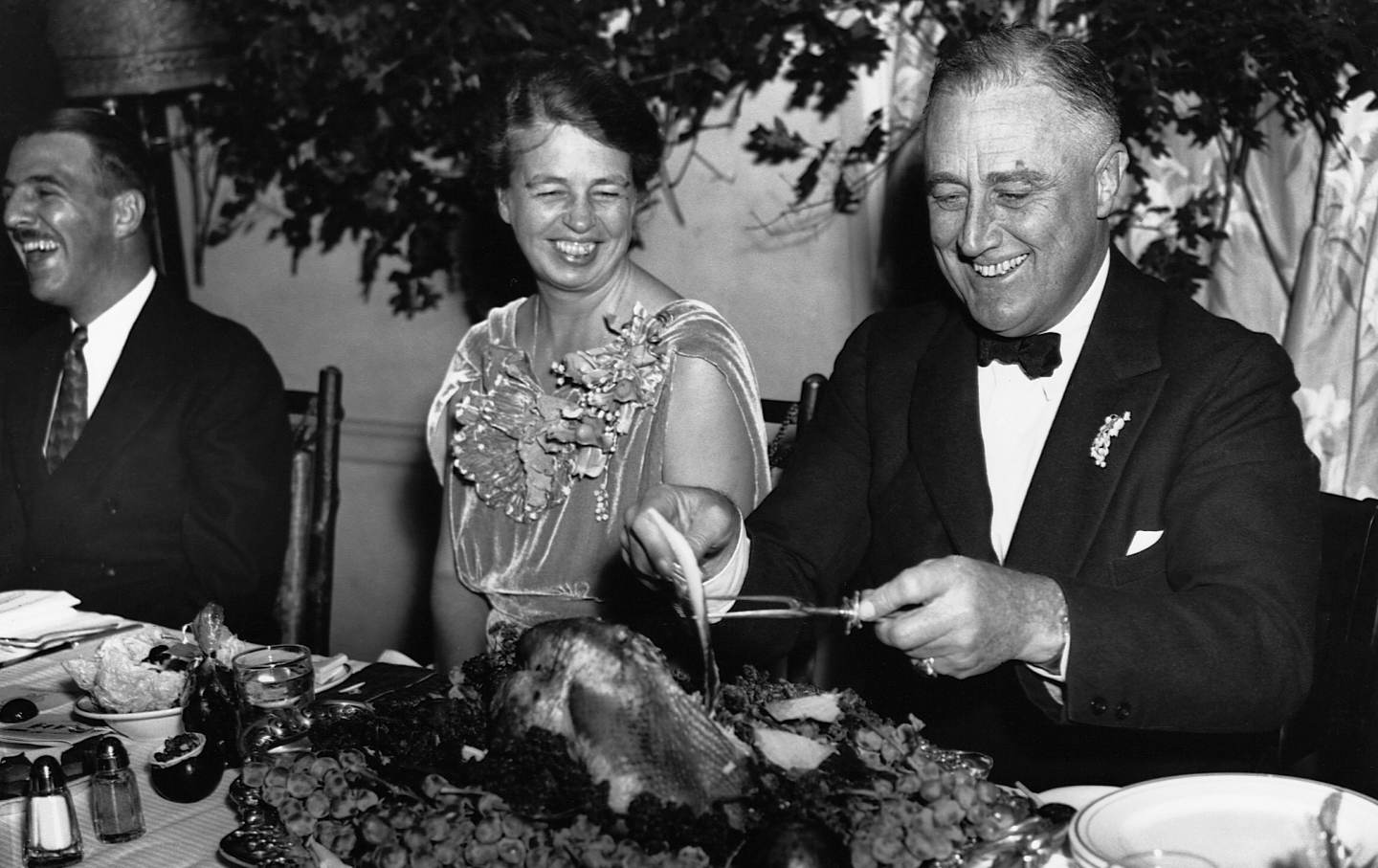
Thanksgiving 1933.
(Bettmann / Corbis / Bettmann Archive)Robert Reich offers advice for holiday gatherings with family members and friends who may not be aligned ideologically: Talk politics.
Just do it in a smart way.
The former secretary of labor doesn’t advocate launching into partisan arguments around the Thanksgiving dinner table. Rather, he suggests that, on days when we are supposed to be inclined toward fellowship and generosity, we should not hesitate to discuss how that might be achieved. “Name-calling will get you nowhere,” suggests Reich. Rather, he says, handle disagreeable tablemates with a good-spirited observation: “You know, we have much more in common than it seems. You care about America. I care about America. We all want a stronger economy. We all care about money in politics. We all want to leave a better world for our kids.”
That’s wise counsel as we enter into a holiday season when tensions are especially high in America. There is no point in denying the fact that ours is a deeply divided nation, buffeted by economic inequality and systemic injustice. This is a country where antisemitism and Islamophobia are on the rise, where racism and xenophobia and anti-trans hate are on open display not just on our streets but also in our legislative chambers; where former president Donald Trump is pulling words out of the fascist lexicon to refer to his critics as “vermin” and to claim that immigration is “poisoning the blood of our country,” and where social media platforms are flooded with crude stereotyping and vile hate-mongering.
The atomization of communications means that Americans no longer begin conversations—on holidays or most other days—with a common set of facts, or an inclination to hear one another out. It is easy to scoff that Reich is naive to imagine that we can still engage in a civil discourse that strives for not just common ground but justice.
Yet, we’ve been divided before. And, at our best, we have found our ways back to one another.
Franklin Delano Roosevelt recognized that longing for higher-ground connections and conversations. And he spoke to it in times when Americans were at odds with one another about economic fundamentals, when Jim Crow segregation and anti-immigrant sentiment were widespread, when fascism was on the rise at home and abroad, and when people worried that exploding tensions abroad would lead to globe-spanning warfare.
The 32nd president did not avoid these tensions. He addressed them, with every tool that was available—including the dozen Thanksgiving Proclamations he issued during his presidency.
Unlike most presidents, before his tenure and since, Roosevelt recognized that drafting a Thanksgiving proclamation should be more than just another perfunctory task on a mid-November “to do” list. The 32nd president’s proclamations were distinct statements that promoted liberal idealism and cooperation in struggles against economic turbulence at home and the rise of fascism in Europe.
Roosevelt broke new ground with his statements, using them to teach about religious diversity and to decry racial and ethnic divisions. As an example, Roosevelt’s proclamation for Thanksgiving Day 1941 appealed for “the establishment on earth of freedom, brotherhood, and justice.”
FDR’s most persistent theme in his Thanksgiving proclamations was the need to develop a new economic order.
His first Thanksgiving proclamation, written in the depths of the Great Depression, declared:
Popular
“swipe left below to view more authors”Swipe →“May we ask guidance in more surely learning the ancient truth that greed and selfishness and striving for undue riches can never bring lasting happiness or good to the individual or to his neighbors. May we be grateful for the passing of dark days; for the new spirit of dependence one on another; for the closer unity of all parts of our wide land; for the greater friendship between employers and those who toil; for a clearer knowledge by all nations that we seek no conquests and ask only honorable engagements by all peoples to respect the lands and rights of their neighbors; for the brighter day to which we can win through by seeking the help of God in a more unselfish striving for the common bettering of mankind.”
Here was a president seeking not to deny economic turbulence but to offer a vision for the country to respond to that turbulence as a united citizenry rather than as isolated individuals.
This message was a constant for Roosevelt as he implemented the New Deal.
During the past year we have been given courage and fortitude to meet the problems which have confronted us in our national life. Our sense of social justice has deepened. We have been given vision to make new provisions for human welfare and happiness, and in a spirit of mutual helpfulness we have cooperated to translate vision into reality,
he wrote in his 1934 proclamation.
More greatly have we turned our hearts and minds to things spiritual. We can truly say, “What profiteth it a nation if it gain the whole world and lose its own soul.” With gratitude in our hearts for what has already been achieved, may we, with the help of God, dedicate ourselves anew to work for the betterment of mankind.
A year later, concerned by the rise of European fascism, Roosevelt was at his most poetic, writing:
“In traversing a period of national stress our country has been knit together in a closer fellowship of mutual interest and common purpose. We can well be grateful that more and more of our people understand and seek the greater good of the greater number. We can be grateful that selfish purpose of personal gain, at our neighbor’s loss, less strongly asserts itself. We can be grateful that peace at home is strengthened by our growing willingness to common counsel. We can be grateful that our peace with other nations continues through recognition of our peaceful purpose. But in our appreciation of the blessings that Divine Providence has bestowed upon us in America, we shall not rejoice as the Pharisee rejoiced. War and strife still live in the world. Rather must America by example and in practice help to bind the wounds of others, strive against disorder and aggression, encourage the lessening of distrust among peoples and advance peaceful trade and friendship.”
The past, as they say, is prelude. And, if ever there was a time for binding wounds, striving against disorder and aggression, and lessening distrust among peoples, this is it. So, by all means, take Robert Reich’s advice—and let’s have another helping of FDR’s wisdom.
Support independent journalism that does not fall in line
Even before February 28, the reasons for Donald Trump’s imploding approval rating were abundantly clear: untrammeled corruption and personal enrichment to the tune of billions of dollars during an affordability crisis, a foreign policy guided only by his own derelict sense of morality, and the deployment of a murderous campaign of occupation, detention, and deportation on American streets.
Now an undeclared, unauthorized, unpopular, and unconstitutional war of aggression against Iran has spread like wildfire through the region and into Europe. A new “forever war”—with an ever-increasing likelihood of American troops on the ground—may very well be upon us.
As we’ve seen over and over, this administration uses lies, misdirection, and attempts to flood the zone to justify its abuses of power at home and abroad. Just as Trump, Marco Rubio, and Pete Hegseth offer erratic and contradictory rationales for the attacks on Iran, the administration is also spreading the lie that the upcoming midterm elections are under threat from noncitizens on voter rolls. When these lies go unchecked, they become the basis for further authoritarian encroachment and war.
In these dark times, independent journalism is uniquely able to uncover the falsehoods that threaten our republic—and civilians around the world—and shine a bright light on the truth.
The Nation’s experienced team of writers, editors, and fact-checkers understands the scale of what we’re up against and the urgency with which we have to act. That’s why we’re publishing critical reporting and analysis of the war on Iran, ICE violence at home, new forms of voter suppression emerging in the courts, and much more.
But this journalism is possible only with your support.
This March, The Nation needs to raise $50,000 to ensure that we have the resources for reporting and analysis that sets the record straight and empowers people of conscience to organize. Will you donate today?
More from The Nation
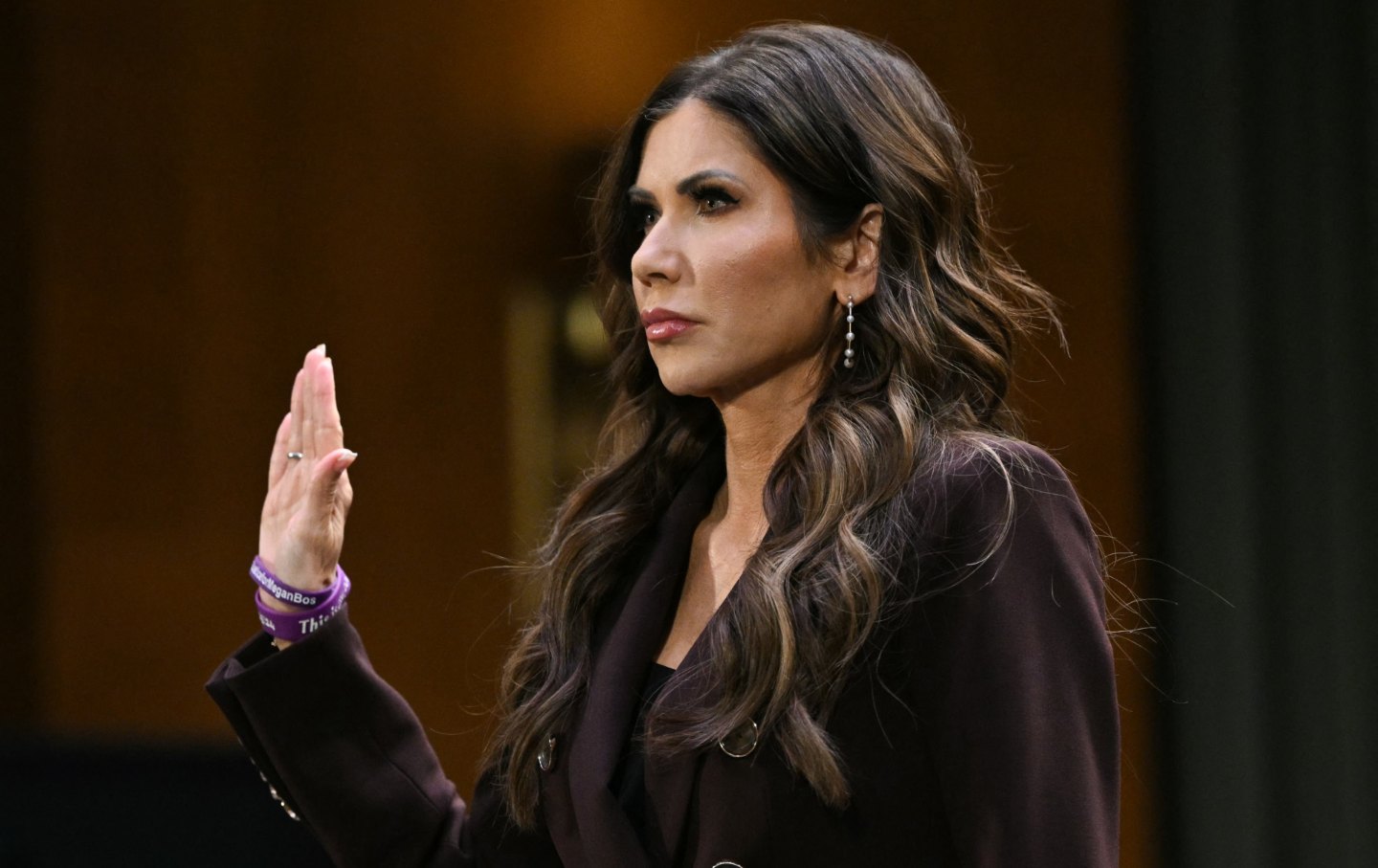
Celebrate Kristi Noem’s Firing. But Keep Protesting ICE. Celebrate Kristi Noem’s Firing. But Keep Protesting ICE.
Finally, someone in the administration is paying for their cruelty and incompetence.
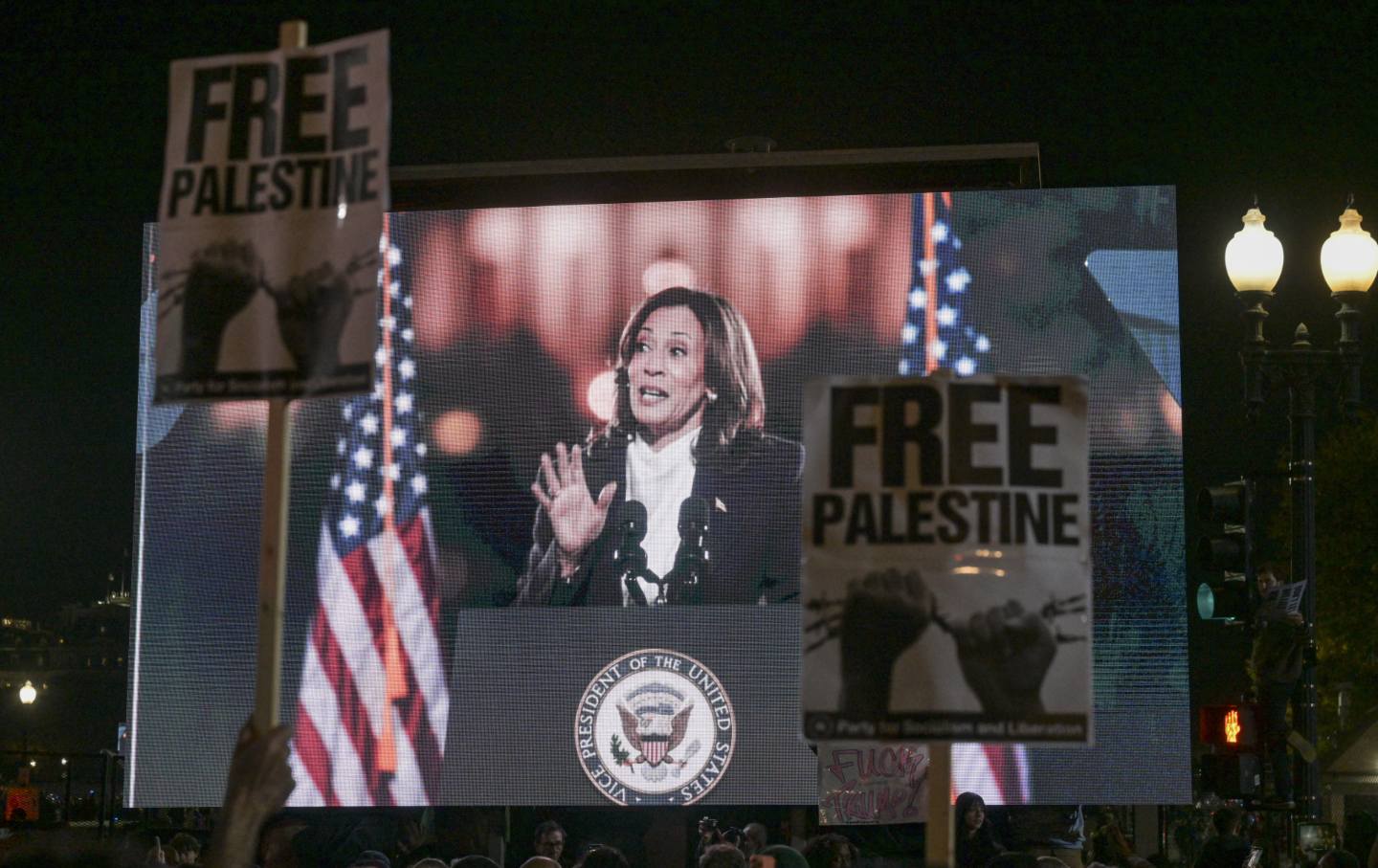
We Don’t Need an Autopsy to Tell Us the Democrats Failed on Gaza We Don’t Need an Autopsy to Tell Us the Democrats Failed on Gaza
The DNC is allegedly hiding a report showing that Kamala Harris’s Gaza policy helped cost her the 2024 election. But that report won’t tell us anything we don’t already know.

Texas’s Senate Primary Has Already Made History—and It’s Not Over Yet Texas’s Senate Primary Has Already Made History—and It’s Not Over Yet
Democratic nominee James Talarico is getting national media attention, but the real story is sky-high voter turnout, even amid GOP bids to suppress balloting
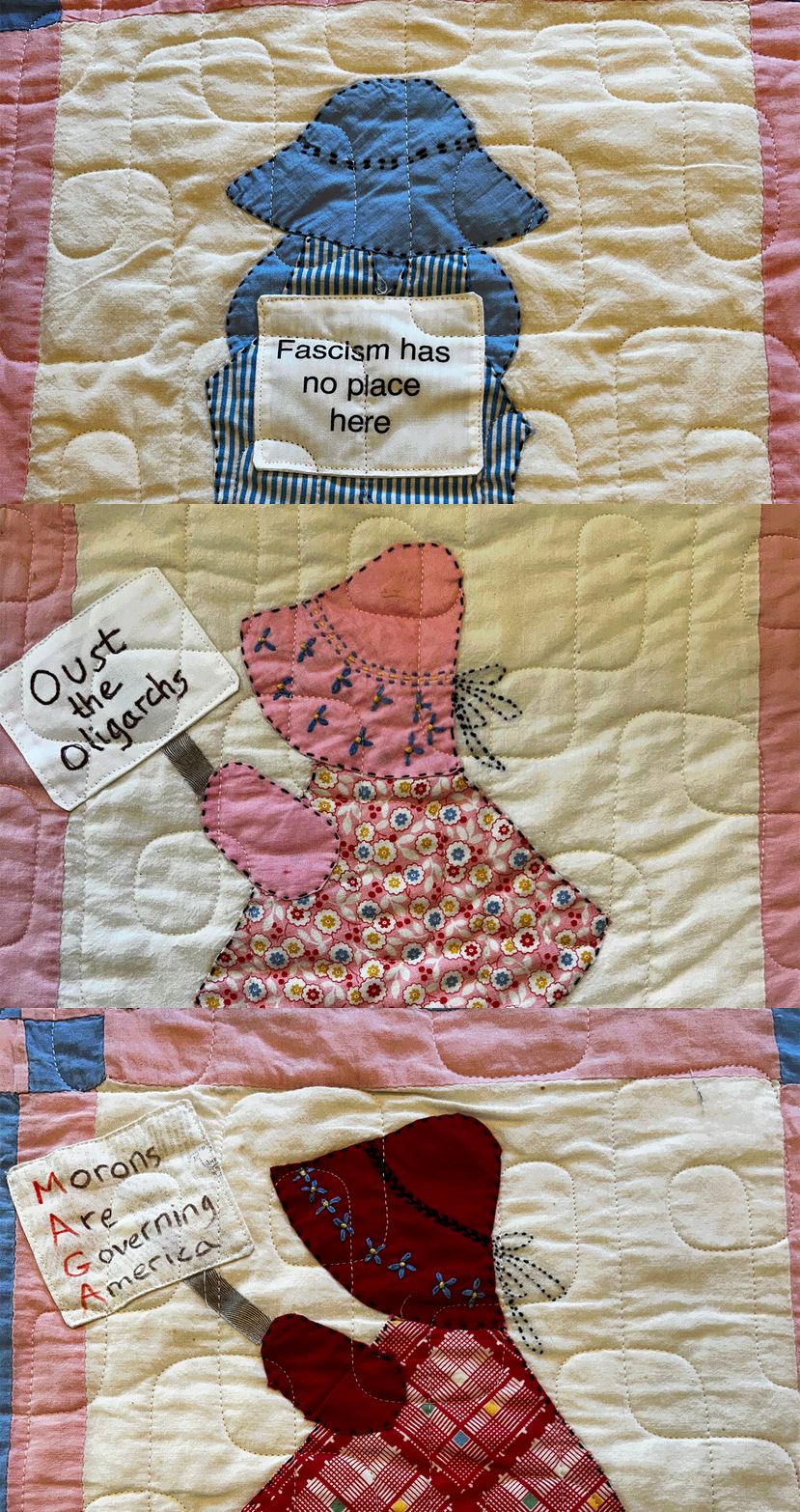
Quilted Messages Quilted Messages
Sunbonnets carrying not-so-sunny truths.
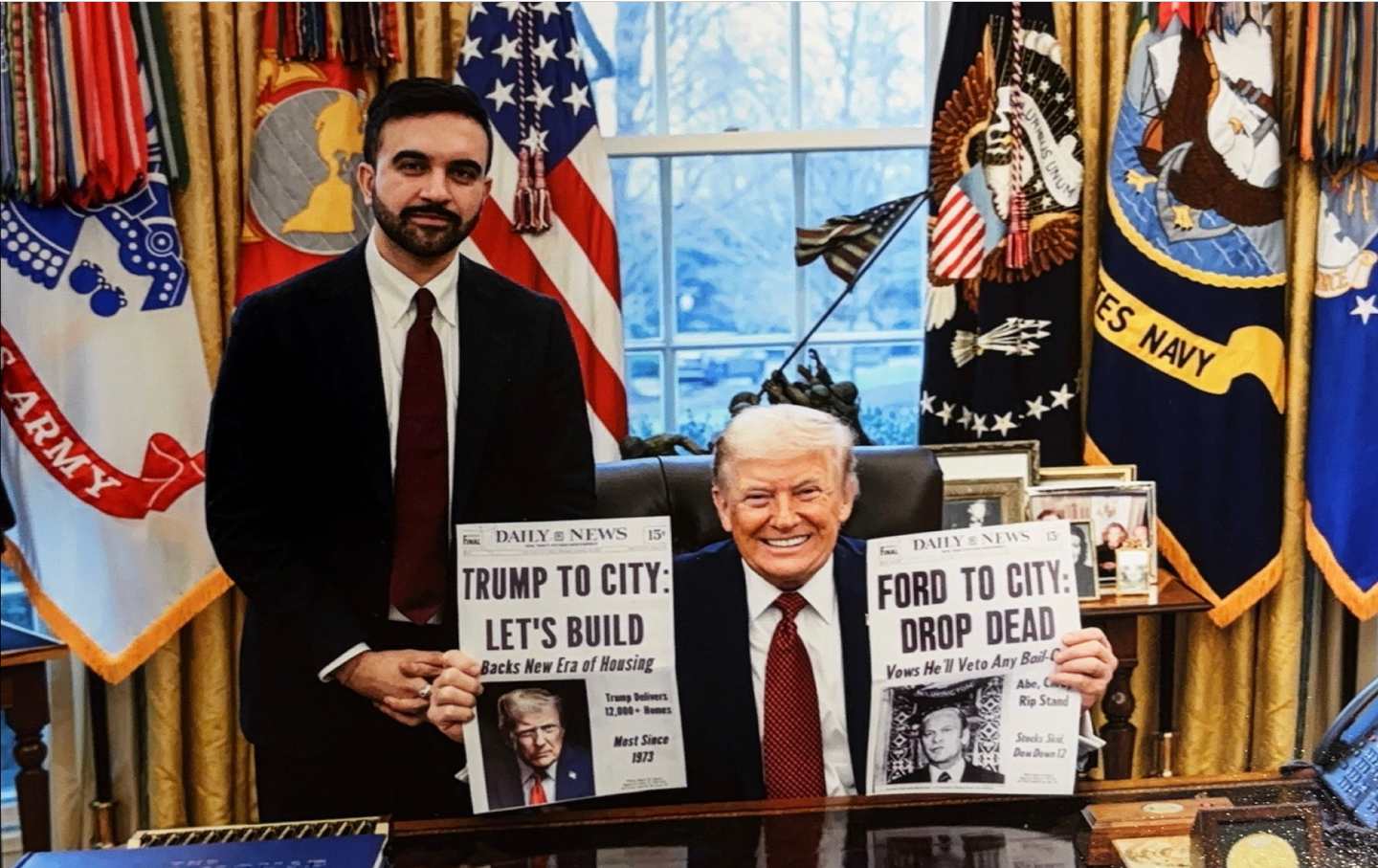
How the Theatrics of Mamdani’s Trump Meeting Backfired How the Theatrics of Mamdani’s Trump Meeting Backfired
By pandering to the president’s vanity, the New York mayor reinforced Trump’s image as a strongman commanding deference—an especially bad look on the eve of Trump’s war with Iran
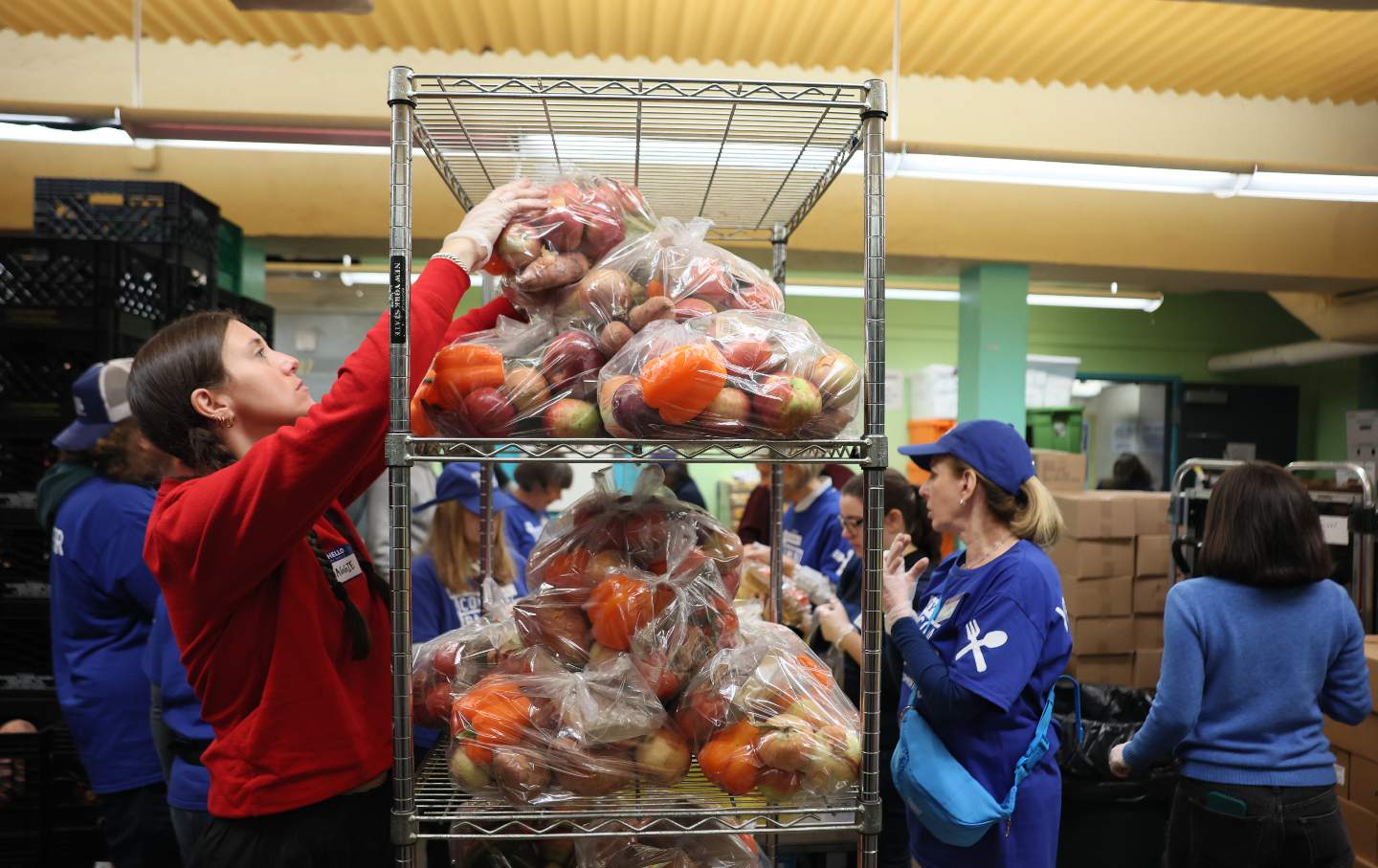
Students in New York Are Going Hungry. How Can Mamdani Help? Students in New York Are Going Hungry. How Can Mamdani Help?
With plans for city-owned grocery stores and a focus on affordability, the new mayoral administration offers fresh hopes of successfully confronting the food crisis among students...

