Time to Crack Down On Ozempic and Other Greedy Drug Prices
Taking on Big Pharma is just what the (electoral) doctor prescribes.
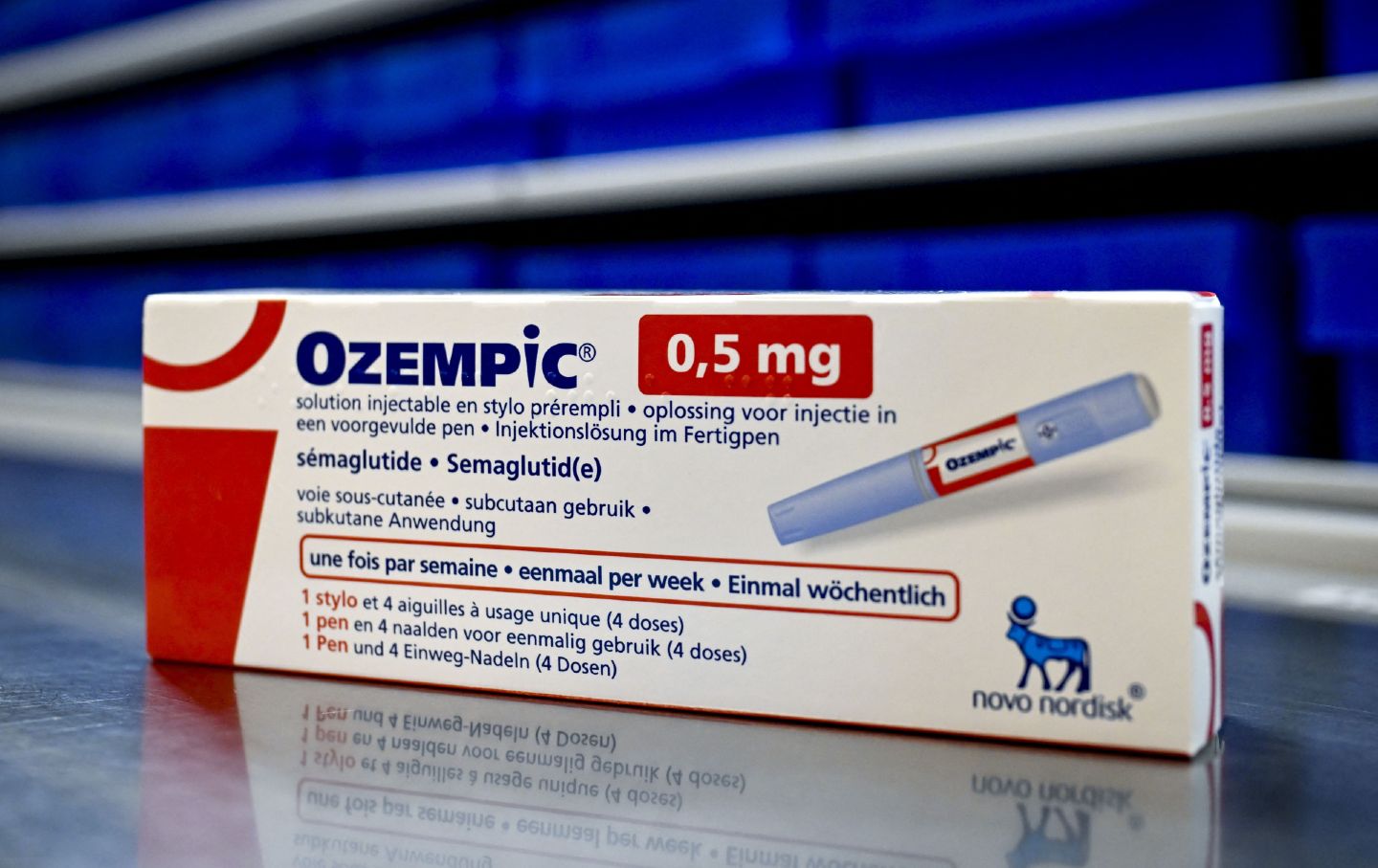
Finally, a polarized nation has found something to bridge its generational and geographic divides: Ozempic. One in eight American adults have now tried the injection or a similar weight-loss drug. And with the hashtag #ozempic pulling over 1.2 billion views on TikTok, there’s no sign that the craze is slowing down.
But like “calories in, calories out,” access to the drug has proven, in some cases, to be a zero-sum game. While it’s officially intended—and federally approved—to treat diabetes, reports have surfaced of diabetics being denied the medication due to a global shortage. And many people to whom the drug is available cannot actually use it because of the $969 price tag for a 2-milligram dose.
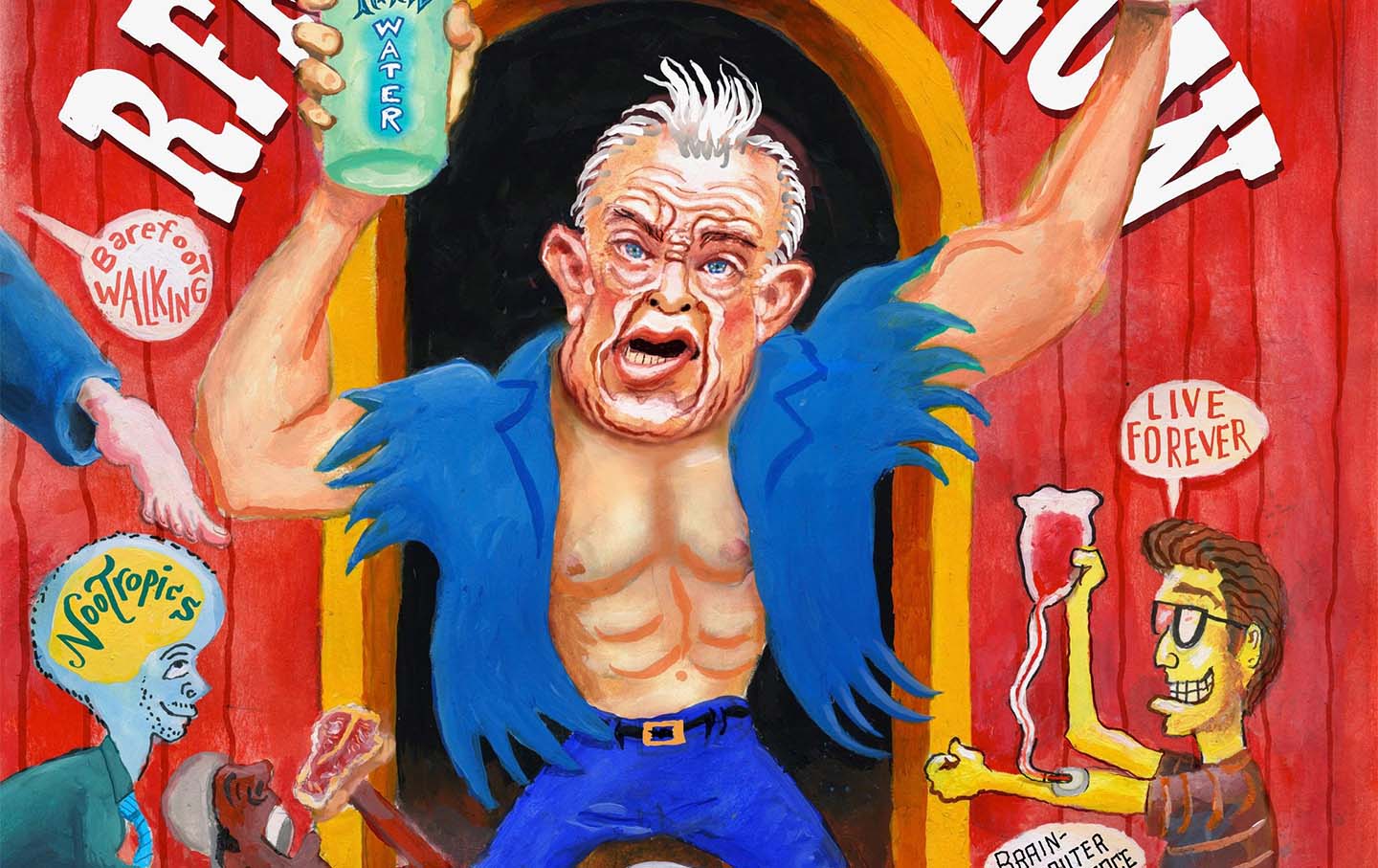
The astronomical cost of Ozempic and similar drugs reflects an ongoing crisis in America. Despite the Biden administration’s efforts to curb prescription drug prices for consumers, they remain nearly three times as expensive in the United States as in peer countries. It might be time for the government to put Big Pharma on a less gluttonous financial diet.
The company behind Ozempic has profited from diabetes treatment for a century. Novo Nordisk, a pharmaceutical manufacturer in Denmark, pioneered the commercial sale of insulin in the early 1920s and today produces half of the world’s supply of the medication. Its fortunes have skyrocketed since Ozempic launched in 2018. It recently became Europe’s most valuable company, with a market cap of over $600 billion—bigger than the entire Danish economy.
Much of that value has been driven by the United States, where 66 percent of Ozempic sales came from in 2023. For Wegovy, another weight loss drug from the same company, that figure is over 90 percent. As it happens, Novo Nordisk charges type 2 diabetics over 15 times more for Ozempic in the United States than it does in Germany, where patients can get a monthly dose for just $59.
Part of the reason it can charge outrageous prices in America is because it has a patent monopoly on semaglutide—the active ingredient in Ozempic and Wegovy—preventing other companies from producing generic alternatives. The United States is unique among wealthy countries in allowing drug companies to charge whatever they see fit for life-saving medication. Perhaps that has something to do with Big Pharma outspending all other industries on lobbying: Washington, DC, is home to over 20 lobbyists for each member of Congress, and Big Pharma does more than its part by paying for three lobbyists per senator and representative.
But greed is a condition that can be treated. And while President Biden hasn’t exactly engaged in Teddy Roosevelt–style trust busting, he has taken promising first steps. The Inflation Reduction Act empowered Medicare to negotiate drug prices directly with manufacturers. Even amid Big Pharma lawsuits crying “unconstitutional” (when they really mean “unprofitable”), the administration moved forward on securing lower prices for drugs like Eliquis, a blood thinner deemed an “essential medicine” by the WHO and taken by 3 million Americans. And the administration’s policies have moved the needle for Novo Nordisk itself, which last year announced steep price cuts for its insulin after the IRA scaled back the hormone’s out-of-pocket cost for Medicare recipients to $35 per month.
But truly taming drug prices requires bolder reform, as other countries demonstrate. The European Union keeps pharma in check with shorter patent periods, bans on ads for prescription drugs, and, perhaps most consequentially, negotiations for the launch price of drugs. Meanwhile, earlier this year, Colombia issued the country’s first compulsory license to allow for generic versions of the HIV medicine dolutegravir to be produced without the patent owner’s permission. The advocacy group Public Citizen has argued that the Biden administration has a similar authority to break up prescription drug monopolies in the United States.
And it seems the American public would overwhelmingly support more ambitious pharmaceutical regulations. Biden’s drug price policies are universally popular: His capping of insulin prices is even supported by 90 percent of Republicans, and three quarters of voters want Medicare to negotiate prices on more drugs. Yet this has failed to translate to support for the president and party responsible, with less than half of older voters reporting that they know Biden secured drug price negotiation in the first place.
That’s why Bernie Sanders’s recent push to haul pharmaceutical executives in front of Congress is critical. Already, this pressure has compelled the CEO of Novo Nordisk to agree to testify. The eventual hearing promises to revive a much-missed tradition: After the 2008 financial crisis, for example, executives from Goldman Sachs faced blistering questions and condemnation from Republicans and Democrats alike, informing the American public and holding seemingly untouchable plutocrats accountable. Sanders can do the same for Big Pharma, all while foregrounding drug prices in election year discourse. The Biden campaign would be wise to follow suit.
The contrast is stark: While Donald Trump brags about protecting American trade and putting America first, his administration allowed, and even abetted, pharmaceutical price gouging. If President Biden wants to drive up his electoral margins, cracking down on drug prices might be just what the doctor ordered.
Support independent journalism that does not fall in line
Even before February 28, the reasons for Donald Trump’s imploding approval rating were abundantly clear: untrammeled corruption and personal enrichment to the tune of billions of dollars during an affordability crisis, a foreign policy guided only by his own derelict sense of morality, and the deployment of a murderous campaign of occupation, detention, and deportation on American streets.
Now an undeclared, unauthorized, unpopular, and unconstitutional war of aggression against Iran has spread like wildfire through the region and into Europe. A new “forever war”—with an ever-increasing likelihood of American troops on the ground—may very well be upon us.
As we’ve seen over and over, this administration uses lies, misdirection, and attempts to flood the zone to justify its abuses of power at home and abroad. Just as Trump, Marco Rubio, and Pete Hegseth offer erratic and contradictory rationales for the attacks on Iran, the administration is also spreading the lie that the upcoming midterm elections are under threat from noncitizens on voter rolls. When these lies go unchecked, they become the basis for further authoritarian encroachment and war.
In these dark times, independent journalism is uniquely able to uncover the falsehoods that threaten our republic—and civilians around the world—and shine a bright light on the truth.
The Nation’s experienced team of writers, editors, and fact-checkers understands the scale of what we’re up against and the urgency with which we have to act. That’s why we’re publishing critical reporting and analysis of the war on Iran, ICE violence at home, new forms of voter suppression emerging in the courts, and much more.
But this journalism is possible only with your support.
This March, The Nation needs to raise $50,000 to ensure that we have the resources for reporting and analysis that sets the record straight and empowers people of conscience to organize. Will you donate today?