Résumés Don’t Win Elections
The Democratic Party has a habit of staking its electoral hopes on its candidates’ credentials. Do voters care?
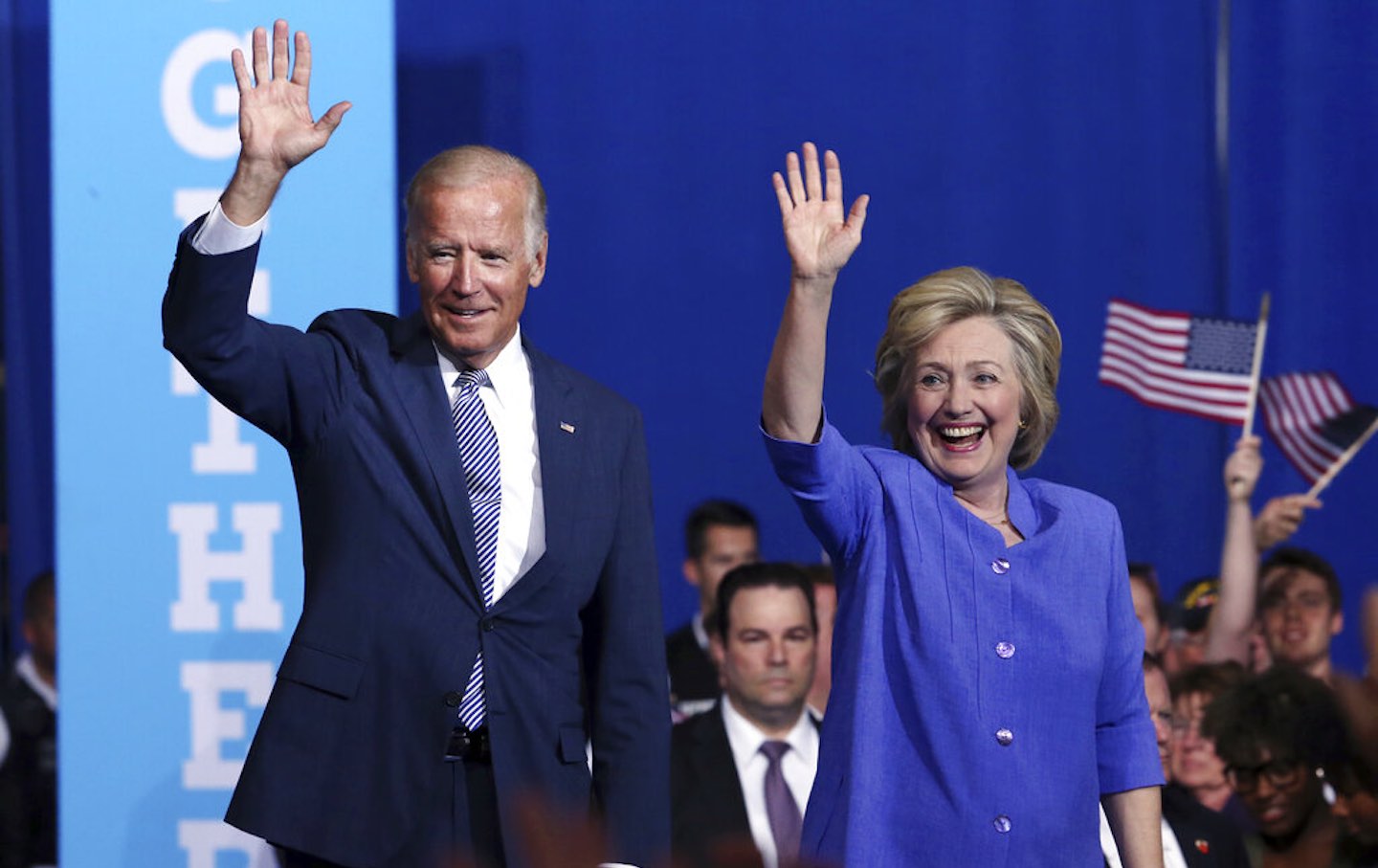
During the run-up to the 2008 presidential primaries, a Washington press colleague of mine summed up why he thought Hillary Clinton already had a lock on the Democratic presidential nomination with a glib formula: “The Clintons know a lot more about this stuff than we do.”
The tacit reasoning fueling that wayward prediction is a de facto slogan for the modern Democratic Party: Power equates to knowledge—which in turn translates into a righteous and unassailable foothold in the arbitration of the basic terms of engagement in political life. There’s a reason that the cult of savviness has taken firm hold in all redoubts of Democratic politics, from the party’s centers of financial and intellectual influence to its core messaging around the rival horrors of MAGA authoritarianism: The Democratic Party is both the prime beneficiary and arguably the most potent disseminator of the great myth of meritocratic rule through credentialed wisdom.
That its current standard-bearer is the first public university graduate to ascend to the presidency since Jimmy Carter doesn’t alter the Democrats’ vision of high office as the summit of credentialed achievement. Thanks to his nearly 40-year tour in the Senate and his two terms as vice president, Joe Biden personifies the insiders-first model of Democratic power—and the elite orchestration of his 2020 nomination against the insurgent candidacy of Vermont Senator Bernie Sanders stands as a monument to the far-reaching clout and influence of the Democrats’ credentialed class.
But in the 2024 general election cycle, it appears that the party’s meritocratic brain trust is dangerously high on its own supply. On paper, Biden enjoys a clear advantage by virtually every traditional campaign metric—from the robust performance of the jobs economy to the criminal and characterological deficiencies of his major-party opponent. Biden is, moreover, what every Democratic Party professional craves most in a presidential candidate, even with his unglamorous University of Delaware degree and advanced age. As an accomplished Capitol insider with a half-century-long résumé, Biden is seen by party colleagues as singularly well-practiced in pitching policy and messaging alike, particularly to the centrist swing constituency that traditionally determines close elections.
Yet so far, American voters refuse to sit still for sage policy and political instruction from on high. Since the fateful 2016 cycle, they’ve shown a pronounced distrust of the centers of responsible policy consensus—and with good reason. These are the wise men and women who gave us the forever war in Afghanistan, the 2003 Iraq invasion, the 2008 financial meltdown, the continued cartelization of the economy, and the general debauch of public life at the hands of neoliberal grifters. Disenchantment with the traditional rites of meritocratic rule was so rampant in 2016 that Donald Trump—Donald Trump—became the face of insurgent anti-elite sentiment.
But the precepts of omnicompetent meritocratic savvy have remained deeply ingrained in the Democratic Party’s leadership caste. By late spring, as a clutch of polls showed Biden trailing badly in the critical swing states likely to shape the election’s outcome, campaign officials rallied to a reassuring mantra: The polls are wrong, and the momentum is turning in our favor. Democratic strategist Simon Rosenberg, in an interview with The New Yorker’s Isaac Chotiner, threatened to storm out of their conversation when Chotiner continued to cite contradictory data from 538. After he was lured back, Rosenberg delivered this gloss on Biden world’s stay-the-course strategy:
Our theory of the case is that the more informed voters are about their choices, the more we gain. We are consistently performing better in the likely-voter polls than we are with registered voters. We have also seen Nikki Haley continuing to outperform expectations since she got out.
No wonder Rosenberg’s Substack on election trends goes by the title Hopium. This formulaic appeal is a shibboleth dating from presidential election cycles in a political universe that no longer exists. What lazy pundits describe as the acute polarization of American politics is actually the emergence of negative partisanship: the political situation in which the unfavorables of an opposition party and candidate vastly outweigh the positive appeal of your own candidate. The logic of negative campaigning has scrambled the 2024 race in a deranged way.
Just as Biden, for all his invocations of his “Scranton Joe” past, represents an insider DC vision of the country that voters instinctively distrust, Trump’s derisive dismissal of the traditional institutional choreographing of power has made him the age’s premier anti-meritocratic candidate.
In this environment, the persuadable, information-hungry voters on which Rosenberg and his colleagues are staking their election hopes are an endangered demographic cohort. The winning strategy for the Biden campaign would be to aggressively develop policy and messaging aimed at expanding its own base rather than praying that Haley’s primary voters will grit their teeth and vote Democratic in the general. And a strategy to expand the Democratic base would exploit the inherent weaknesses in Trump’s own exceedingly limited cross-party appeal.
But base expansion was exactly what Bernie Sanders offered Democrats in 2016 and 2020, and the party could not have rejected that approach more forcefully. In broad terms, the controlling interpretation of the 2024 election appears to be that the GOP embraced its base and its restive agenda, for better or worse, in the decisive 2016 campaign, while the Democrats kicked theirs to the curb. That’s one explanation, at any rate, for another revealing trend in this cycle: Democratic candidates for the House and Senate polling well ahead of the president. The core appeals of the party’s premier avatar of meritocratic leadership, despite a roster of distinguished policy achievements and political victories during his first presidential term, aren’t registering with voters in the way that those of other candidates are. It turns out, in other words, that for all the self-advertised savvy of the Democratic Party’s duly credentialed best and brightest, they really don’t know more about this stuff than we do.
Support independent journalism that does not fall in line
Even before February 28, the reasons for Donald Trump’s imploding approval rating were abundantly clear: untrammeled corruption and personal enrichment to the tune of billions of dollars during an affordability crisis, a foreign policy guided only by his own derelict sense of morality, and the deployment of a murderous campaign of occupation, detention, and deportation on American streets.
Now an undeclared, unauthorized, unpopular, and unconstitutional war of aggression against Iran has spread like wildfire through the region and into Europe. A new “forever war”—with an ever-increasing likelihood of American troops on the ground—may very well be upon us.
As we’ve seen over and over, this administration uses lies, misdirection, and attempts to flood the zone to justify its abuses of power at home and abroad. Just as Trump, Marco Rubio, and Pete Hegseth offer erratic and contradictory rationales for the attacks on Iran, the administration is also spreading the lie that the upcoming midterm elections are under threat from noncitizens on voter rolls. When these lies go unchecked, they become the basis for further authoritarian encroachment and war.
In these dark times, independent journalism is uniquely able to uncover the falsehoods that threaten our republic—and civilians around the world—and shine a bright light on the truth.
The Nation’s experienced team of writers, editors, and fact-checkers understands the scale of what we’re up against and the urgency with which we have to act. That’s why we’re publishing critical reporting and analysis of the war on Iran, ICE violence at home, new forms of voter suppression emerging in the courts, and much more.
But this journalism is possible only with your support.
This March, The Nation needs to raise $50,000 to ensure that we have the resources for reporting and analysis that sets the record straight and empowers people of conscience to organize. Will you donate today?