
Deep Canvassing in Philadelphia: A Love Story
While hoping to change the way people feel about voting—and inspire them to take action on Election Day—the writer also learned something about himself.
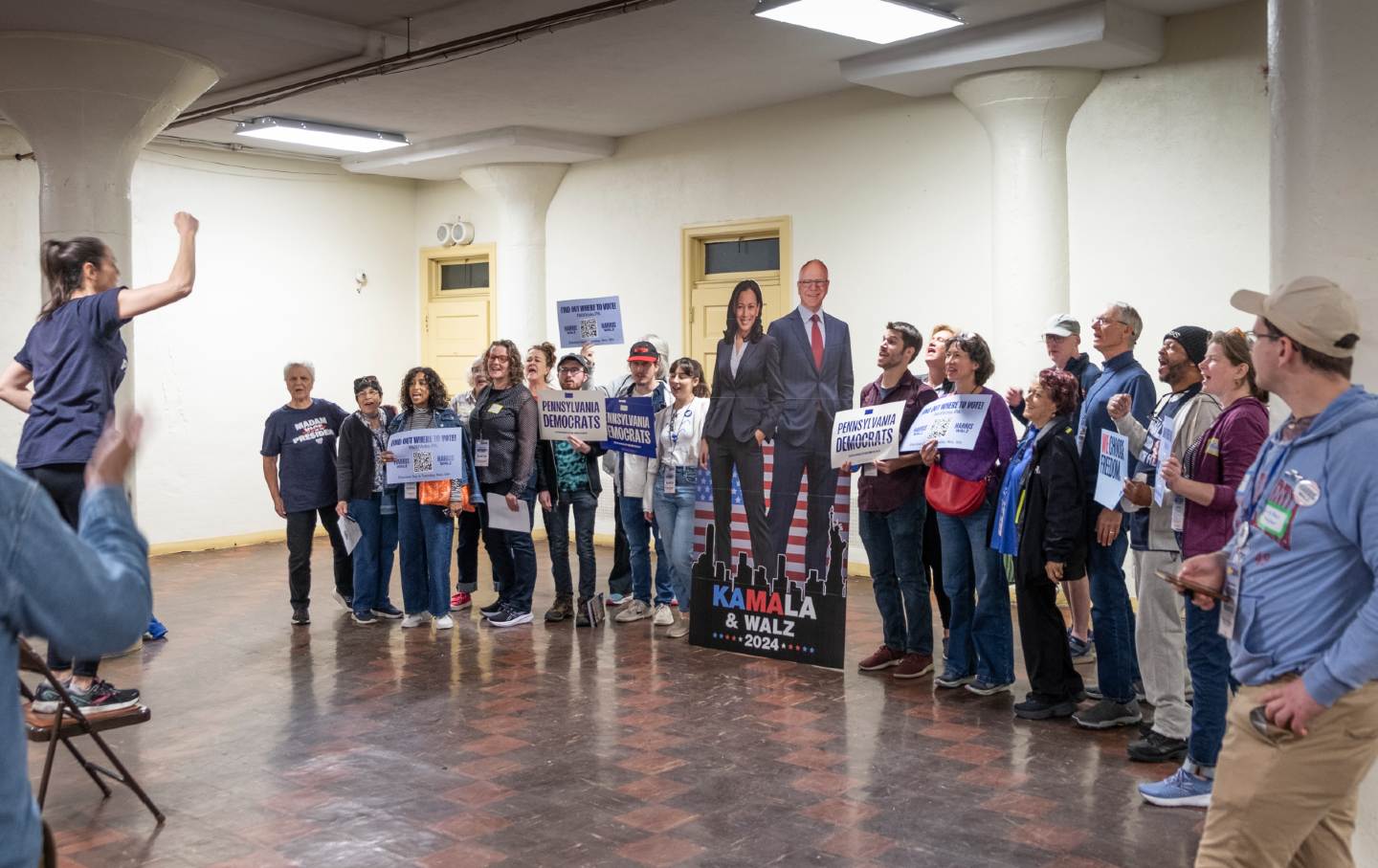
“Tell me about someone you love…”
This is the request I have made of dozens of people during the past five weeks while canvassing in Southwest Philadelphia, an area that is over 80 percent Black, where some houses were immaculately cared for, while others were on the verge of collapse. It’s a request I have never made of my own family, my friends, my lovers. Yet here I was, day after day, asking perfect strangers to do exactly that on behalf of Changing the Conversation Together (CTC), a Brooklyn-based nonprofit specializing in what’s known as “deep canvassing.”
I’ve done it while sitting on a porch in the hot sun, peering through an open door at a reluctant voter, and passing the time with someone waiting at a bus stop. A man told me his love story as he sat in an easy chair while, separated by a window screen, I leaned over on the top step of his stoop.
I asked people who took time away from watching the Eagles game, and a group of old friends passing a joint while hanging out on a Saturday afternoon, and a woman resting after returning from the hospital. I asked it through the window of a car while someone was waiting at the drive-through line at a McDonald’s. A young man shared the story of his cousin who had died while serving in the military, while 50 feet away from us a group of people argued in the street.
There was the heavily tatted twentysomething son who loved his mama because she bailed him out of jail late one night. The woman who loved her severely disabled child because he made her smile each day. The man who had been married to his wife for 40 years—who love her because she brought home an air fryer so that he would eat healthy. Story after story, love upon love, from stranger to stranger.
This is the process of deep canvassing: sharing your own story of love, eliciting their stories of love, and in the process making a connection, and then reflecting on which candidate embodies that kind of love. We hope to get people who have not voted in the past to make the effort this year, because casting a ballot is more than a civic duty: It is an act of love.
The idea for this campaign emerged from the Leadership Lab, a Los Angeles–based nonprofit that believes that real and lasting change can only come out of “deep canvassing,” which involves having extended conversations with people who, in this case, have a poor history of voting. A 2016 study published in Science magazine showed that a single, 10-minute conversation could reduce transgender prejudice for at least three months.
Along with hundreds of other CTC volunteers, I hope these conversations will change how people feel about voting, and, more important than that, inspire them to take action and save our democracy from a terrible outcome. We are not charged with changing voters’ minds about who they vote for; our intent is to get those who agree that Donald Trump is the candidate who doesn’t embody feelings of love and empathy to go out on Election Day and vote with their hearts.
At the same time, I’ve come to see how this work has also changed me—and along with it, my understanding of people. The neighborhoods I canvassed were very different from the middle to upper class, predominantly white enclave where I live in Brooklyn. There were many boarded-up houses, crumbling sidewalks, and littered streets. I was instructed to approach people with humility and respect, and through my conversations, I developed a deep love for them, for they entrusted me with their own stories of loving and being loved. I also felt regret that I didn’t know the neighbors in my very own community in the way I came to know the people who live 100 miles away.
As I was walking up Third Avenue in Manhattan today, I also came to understand this: We all have stories of love, including that person who shoved me aside on the subway, or the driver who cut me off at the crosswalk. I now have a superpower: I can get people to tell me a story about love, because I know everyone has one. When I walk down the sidewalk, I envision a little red heart magically appearing above each person’s head as they hurry by.
Later that day I stopped into a small coffee shop, and as the barista made my drink, I leaned over, looked him in the eyes and asked him if he could tell me about someone he loved. He thought for a moment, and said he could think of two, and I coaxed him into choosing one. He told me about his mother, Denise, and how hard she had worked as a single mom to raise him and his brother, and how he loved her strength and care. Then he handed me my drink, we smiled at each other, and went on with our days.
Support independent journalism that does not fall in line
Even before February 28, the reasons for Donald Trump’s imploding approval rating were abundantly clear: untrammeled corruption and personal enrichment to the tune of billions of dollars during an affordability crisis, a foreign policy guided only by his own derelict sense of morality, and the deployment of a murderous campaign of occupation, detention, and deportation on American streets.
Now an undeclared, unauthorized, unpopular, and unconstitutional war of aggression against Iran has spread like wildfire through the region and into Europe. A new “forever war”—with an ever-increasing likelihood of American troops on the ground—may very well be upon us.
As we’ve seen over and over, this administration uses lies, misdirection, and attempts to flood the zone to justify its abuses of power at home and abroad. Just as Trump, Marco Rubio, and Pete Hegseth offer erratic and contradictory rationales for the attacks on Iran, the administration is also spreading the lie that the upcoming midterm elections are under threat from noncitizens on voter rolls. When these lies go unchecked, they become the basis for further authoritarian encroachment and war.
In these dark times, independent journalism is uniquely able to uncover the falsehoods that threaten our republic—and civilians around the world—and shine a bright light on the truth.
The Nation’s experienced team of writers, editors, and fact-checkers understands the scale of what we’re up against and the urgency with which we have to act. That’s why we’re publishing critical reporting and analysis of the war on Iran, ICE violence at home, new forms of voter suppression emerging in the courts, and much more.
But this journalism is possible only with your support.
This March, The Nation needs to raise $50,000 to ensure that we have the resources for reporting and analysis that sets the record straight and empowers people of conscience to organize. Will you donate today?
More from The Nation
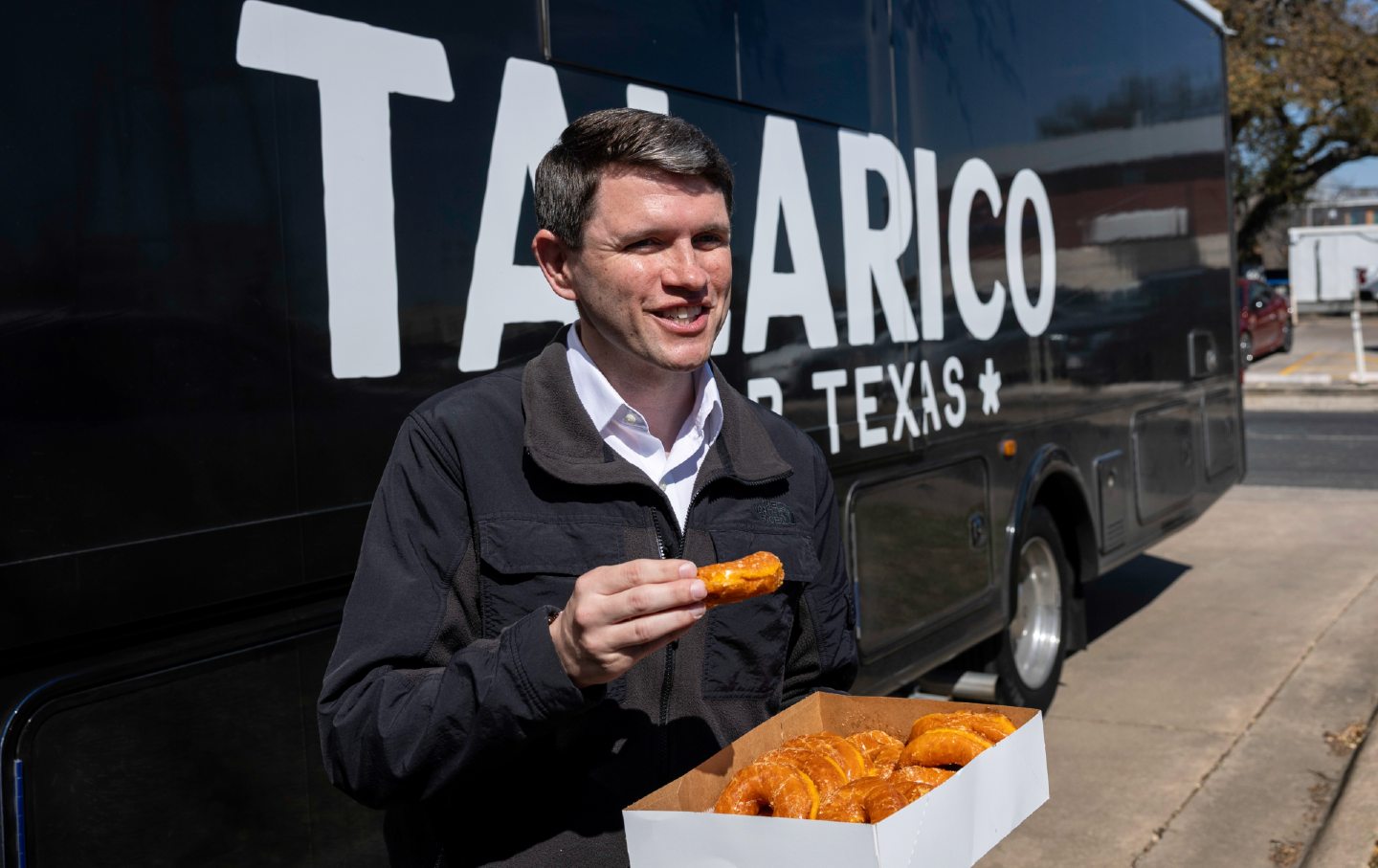
An Argument Against Voting for the “Electable” Guy An Argument Against Voting for the “Electable” Guy
In this week’s Elie v. US, The Nation’s justice correspondent shares his thoughts on the Texas primaries. Plus, a terrible Supreme Court decision and a bad play by Major League Ba...
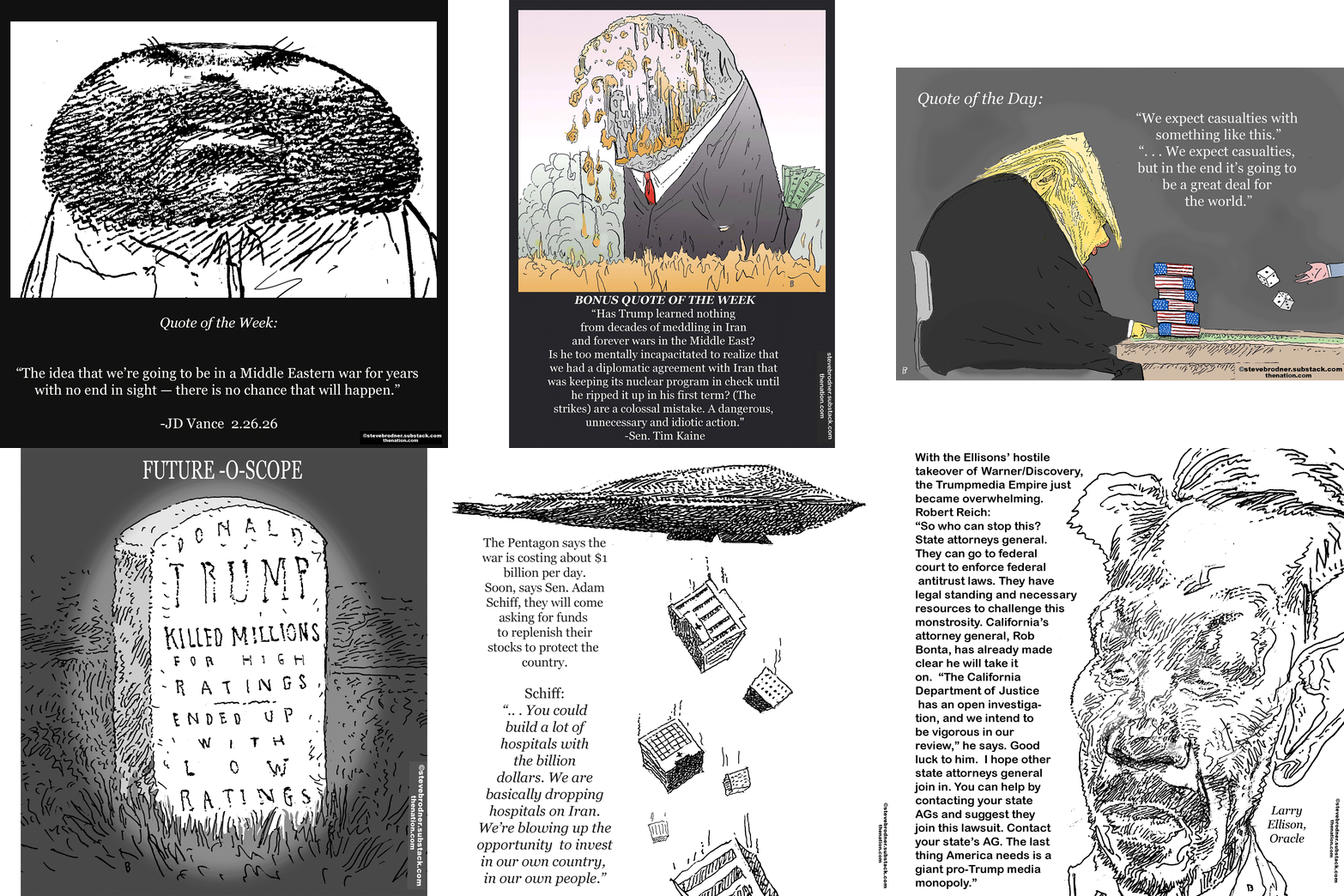

A Conflict Without Reason Has Become a Dangerous Holy War A Conflict Without Reason Has Become a Dangerous Holy War
Lacking a clear rationale for the attack on Iran, Trumpists are increasingly talking like crusaders.
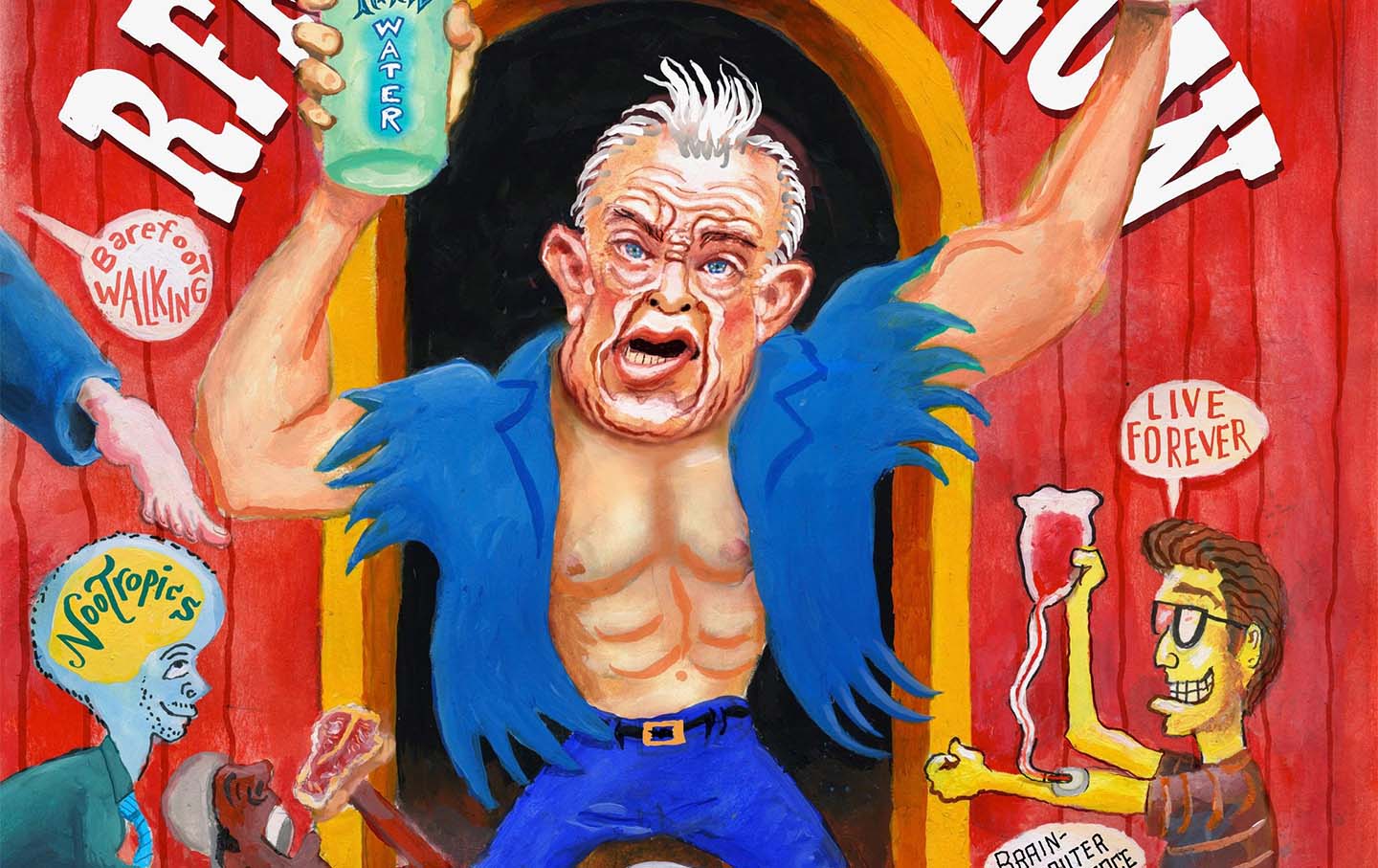
RFK Jr.: America’s Snake Oil Salesman RFK Jr.: America’s Snake Oil Salesman
Raw truth: MAHA is NUTS.
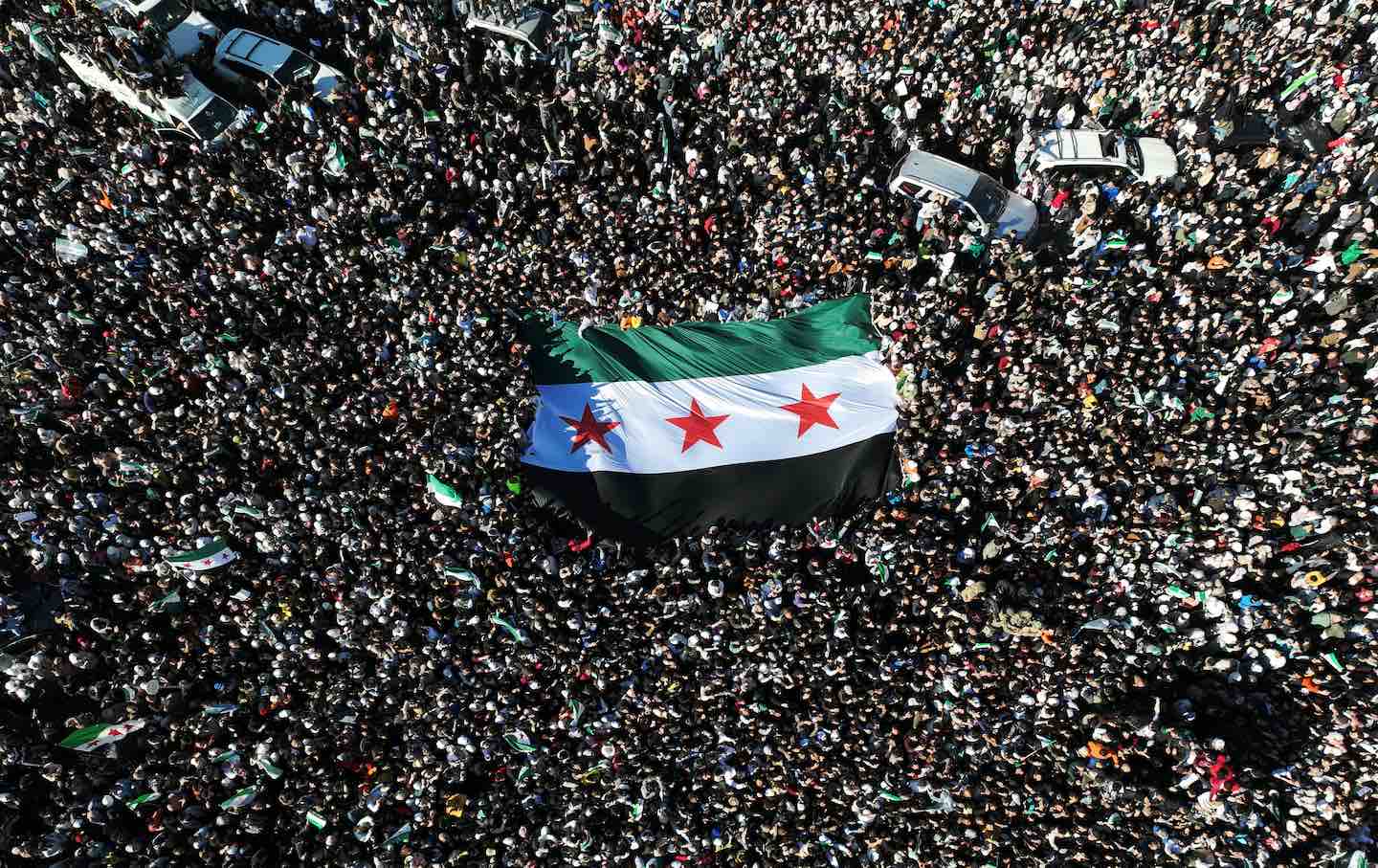
The Unfathomable Toll of the Syrian Civil War The Unfathomable Toll of the Syrian Civil War
How to make sense of the 13-year conflict?
Celebrate Kristi Noem’s Firing. But Keep Protesting ICE. Celebrate Kristi Noem’s Firing. But Keep Protesting ICE.
Finally, someone in the administration is paying for their cruelty and incompetence.

