Why I’m Running for Commissioner of Agriculture in North Carolina
The health of our state’s democracy depends so much on its agriculture and rural economics.
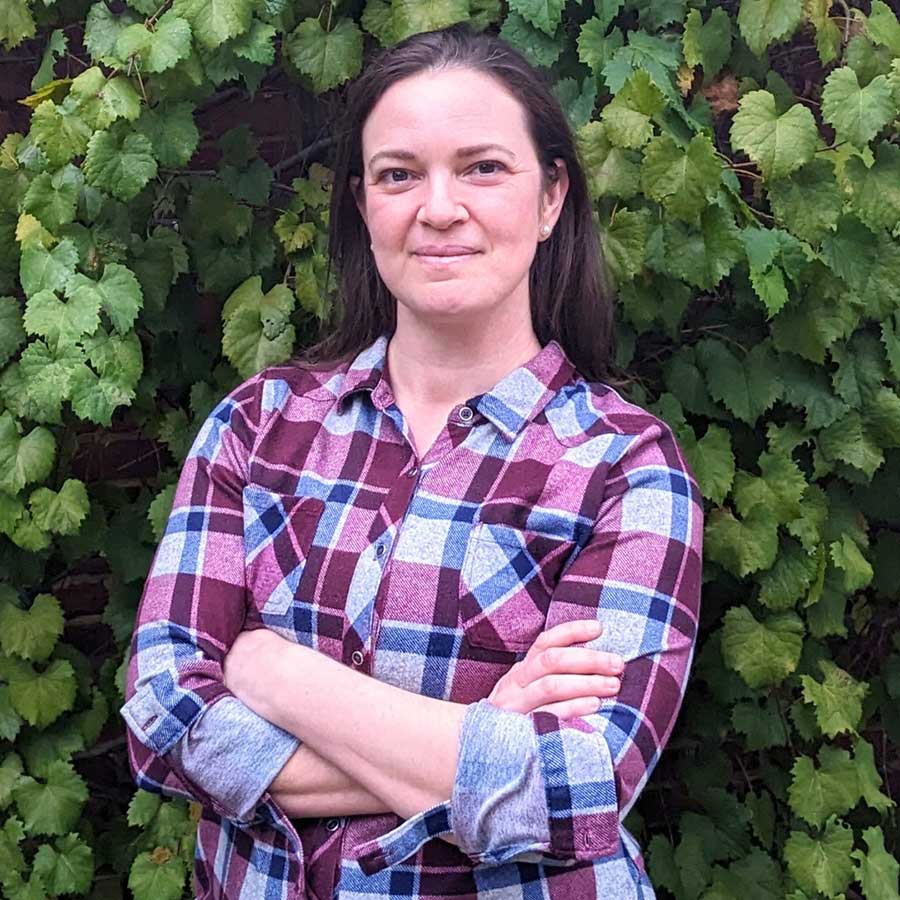
I’m a crop scientist who’s been working in agriculture for 26 years, and here’s why I’m running for commissioner of agriculture in North Carolina.
Commissioner of agriculture is usually an overlooked role—but it matters tremendously for a state’s economic health, the food system, and democracy at large. Let’s talk about what this job does, why it matters, and why Democratic women with a strong economic message win these races—as Nikki Fried did in Florida in 2018.
In North Carolina, the commissioner of agriculture has two jobs. First, we’re supposed to help our state’s farm economy grow. Second, we handle the health and safety needs related to agriculture. Local meat packing plants? We inspect those. Pesticide use, manure, and other farm materials that can cause trouble when not used properly? We enforce those standards. Bird flu outbreak in our state? We work with farmers to keep it contained.
You can think of a state’s commissioner of agriculture as the shepherd of its food system. But it’s more than that. The health of a state’s democracy depends so much on its agriculture and rural economics.
Rural poverty causes radicalization. So does pollution from farms. Farm radicalization isn’t just a local problem. Farm outfits that hire undocumented workers put serious money behind hard-right legislators and sheriffs who pledge to collaborate with ICE. That means local country politics can get ugly. And those ugly politics don’t stay local. They can undermine democracy for the whole state—as happened here in North Carolina. The ballot fraud in 2018 that made national headlines here? The fraudsters got their start years earlier in an effort to elect an unpopular hardline sheriff in that county—a majority-minority area dominated by the largest hog slaughterhouse in the world.
A commissioner of agriculture who understands both livelihoods and civil rights can make a huge difference. They can build regional and local food systems that grow broad-based wealth. That’s good for a state’s economy and it’s good for democracy. Or like our current state leadership, they can mismanage and dawdle while farm country goes broke. Much of North Carolina’s rural crisis traces straight back to leadership. Our leadership isn’t developing new crops and markets fast enough to keep up with those that are fading out, like tobacco. This drives poverty, farm loss, rural despair, and radicalization in North Carolina—a critical swing state in national elections.
For all the power they hold, commissioner of agriculture races get shockingly little attention. In states like North Carolina where this position is elected, commissioners can run again and again for decades with little real opposition. We’ve had the same commissioner of agriculture for 20 years, despite a series of fumbles and corruption scandals on his watch. He presided over the largest crop insurance fraud ring in US history. His department tipped off meat plants suspected of animal abuse before a “surprise” inspection. His greatest success was encouraging China to buy North Carolina-grown tobacco—only for Trump, for whom the incumbent helped raise funds and votes, to destroy that market with a trade war. Running out of options due to poor leadership, North Carolina’s farmers are resorting to organized crime. And while all this was happening, the incumbent and his aides misspent taxpayer dollars on high-end lodgings and dining.
For all this, urban politicos in North Carolina seem to assume our current commissioner of agriculture will be in office forever. After all, if he keeps winning, farmers must love him, right?
Wrong.
I’m struck by how eager North Carolina’s farmers are for change. It’s not hard to see why. After you account for inflation and population growth, North Carolina’s farm economy has shrunk by 19 percent in the last 20 years. Our farmers and ranchers feel it. And they know what the problem is: corrupt leadership. One hog farmer put it to me this way: “Politicians are a bit like piggies. They’re frisky when they’re little. But then they discover corn and become hogs.” He paused and went on. “Maybe it’s time to put this one in the smokehouse.”
A map of rural North Carolina’s votes bears this out. In 2020 several North Carolina farm counties voted for the Democratic candidate for commissioner of agriculture, and not by a little: Anson. Bertie. Northampton. Hertford. Vance. Hoke. Chatham. Watauga. Halifax. Warren. Edgecombe. Our incumbent doesn’t win because of the farmer vote. After all, farmers are less than 1 percent of North Carolina’s population. Why does he keep winning, then? Suburbs. In 2020, hundreds of thousands of suburban North Carolinians voted for both Joe Biden and a Republican commissioner of agriculture who’s wildly unpopular in much of our actual rural farm country.
It’s one of the greatest ironies of politics. Even when Democrats win the presidential and governor’s seats in North Carolina, suburban voters keep us locked in with a corrupt Republican commissioner of agriculture who’s wildly unpopular in much of rural North Carolina. Why? Because he looks and sounds like what suburbanites think a farmer should look like.
So let’s talk about what I bring to the table. I’ve worked in agriculture and food for 26 years. My job is to sit down with farmers, help them understand their options, and do what’s best for their own livelihood. In that job, I’ve helped family farms and food businesses start growing vegetables in greenhouses. That’s a great livelihood if you get it right—but if you get one detail wrong, you’ll lose your shirt. I’m proud to say every single one of my farm clients is still in business. Altogether, they’re now worth $4 billion. I’ll go toe-to-toe with anyone in North Carolina on that track record.
I know how to help farmers be successful working for themselves—not corporations. I know firsthand the difference that adequate, fair lending makes to every farmer. I know treating workers right makes businesses work better, because people have a chance to put down roots and build skills in their jobs. Bottom line: I know how to do business.
People ask me if it’s hard to work in agriculture as a woman. I wouldn’t know. I haven’t tried it any other way. But I do know that nobody in farm country is surprised that I know how to do business. Rural women have long held the line on making farms work. We’re the ones who balance the family books, take outside jobs, handle invoicing, and turn raw crops and livestock into goods ready for people to buy. We are the business backbone that makes farm country work. I’m proud of what we do. And I’m ready to do it for all of North Carolina.
Support independent journalism that does not fall in line
Even before February 28, the reasons for Donald Trump’s imploding approval rating were abundantly clear: untrammeled corruption and personal enrichment to the tune of billions of dollars during an affordability crisis, a foreign policy guided only by his own derelict sense of morality, and the deployment of a murderous campaign of occupation, detention, and deportation on American streets.
Now an undeclared, unauthorized, unpopular, and unconstitutional war of aggression against Iran has spread like wildfire through the region and into Europe. A new “forever war”—with an ever-increasing likelihood of American troops on the ground—may very well be upon us.
As we’ve seen over and over, this administration uses lies, misdirection, and attempts to flood the zone to justify its abuses of power at home and abroad. Just as Trump, Marco Rubio, and Pete Hegseth offer erratic and contradictory rationales for the attacks on Iran, the administration is also spreading the lie that the upcoming midterm elections are under threat from noncitizens on voter rolls. When these lies go unchecked, they become the basis for further authoritarian encroachment and war.
In these dark times, independent journalism is uniquely able to uncover the falsehoods that threaten our republic—and civilians around the world—and shine a bright light on the truth.
The Nation’s experienced team of writers, editors, and fact-checkers understands the scale of what we’re up against and the urgency with which we have to act. That’s why we’re publishing critical reporting and analysis of the war on Iran, ICE violence at home, new forms of voter suppression emerging in the courts, and much more.
But this journalism is possible only with your support.
This March, The Nation needs to raise $50,000 to ensure that we have the resources for reporting and analysis that sets the record straight and empowers people of conscience to organize. Will you donate today?