This Summer’s Heat Is Only the Beginning
Temperatures in France this week have reached 112 degrees Fahrenheit. This may be one of the coolest summers to come.

People jump in the Trocadero Fountain near the Eiffel Tower during a heat wave in Paris on June 22, 2026.
(JUL(Julien de Rosa / Getty Images)
This week, a brutal heat wave is shattering heat records in Europe. It’s but it’s worth recalling however that last summer the same thing happened in Asia: China, Japan, and Korea suffered their hottest summers on record in 2025, the World Meteorological Organization noted in a new report. Now it’s France’s turn. And maybe Belgium, Spain, and Britain’s as well. As global warming driven mainly by burning fossil fuels continues to intensify, scientists say that record breaking heat will become increasingly frequent throughout the world.
Temperatures in France this week have been the hottest ever recorded, exceeding 44 degrees Celsius (112 degrees Fahrenheit) on June 23. French authorities placed more than half the country on “red alert” and warned that the extreme heat would continue for days to come, Agence France-Presse reported. The Guardian quoted the French health minister explaining that “many people are going to suffer, because bodies suffer from an accumulation of high temperatures.” In the first of what will surely be more death reports, The Guardian shared the especially tragic news that “two children aged two and four have been found dead in their family’s car in south-eastern France.”
The intensity, scope, and projected duration of this extreme heat has drawn comparisons to the catastrophic heat wave that scorched Europe in 2003. That heat wave is a landmark event in the history of human-caused climate change for two reasons. First, it was the first extreme weather event that scientists authoritatively attributed to climate change; a team of British scientists published a study concluding that global warming was responsible for 45 percent of the excessive heat that punished Europe that summer. Second, the 2003 heat wave was global warming’s first mass casualty event: It killed a staggering 71,000 people in six weeks, considerably more than the number of US war deaths throughout all the years of the Vietnam War. (Initial reports estimated that 15,000 people died, a figure sometimes still repeated today, but subsequent epidemiological analysis concluded that the actual death toll was nearly five times higher.)
The current heat wave need not injure or kill that many people, and civic-minded journalism can help limit the suffering—by alerting the public to impending extreme weather and sharing tips for how to be safe, such as staying hydrated and checking on elderly neighbors. Much will also depend on the effectiveness of government policies and social infrastructure. Are authorities issuing clear weather alerts that reach everyone in harms’ way, including people living on the streets and speakers of non-native languages? Are there enough cooling stations where people who lack air conditioning can find temporary relief? Aware of these challenges since 2003, France and neighboring countries have implemented countermeasures; the current heat wave will test how well they perform under pressure.
The best news coverage of the June 2026 European heat wave has balanced how extreme heat impacts people’s daily lives with the larger scientific and social context: the fact that this kind of heat is exactly what scientists have long said would happen if humans continued burning fossil fuels, destroying forests, and otherwise pumping planet-warming gases into the atmosphere. In AFP’s June 22 story, headlined “Europe sweats through new heat wave, with worse to come,” the third paragraph plainly states. “Scientists have shown that recurring heat waves are a clear marker of global warming, primarily caused by burning coal, oil and gas—and warn they are set to become more frequent, longer, and more intense.”
But as with other recent extreme weather disasters, much of the coverage has omitted the climate connection. In 2026, given the advanced state of climate attribution science, that is simply not journalistically defensible. As my colleague Kyle Pope and I wrote in January 2025 after most coverage ignored the climate connection to the mega-fires that engulfed Los Angeles, “When a house is on fire, by all means let journalism show us the flames. But tell us why the house is burning, too.”
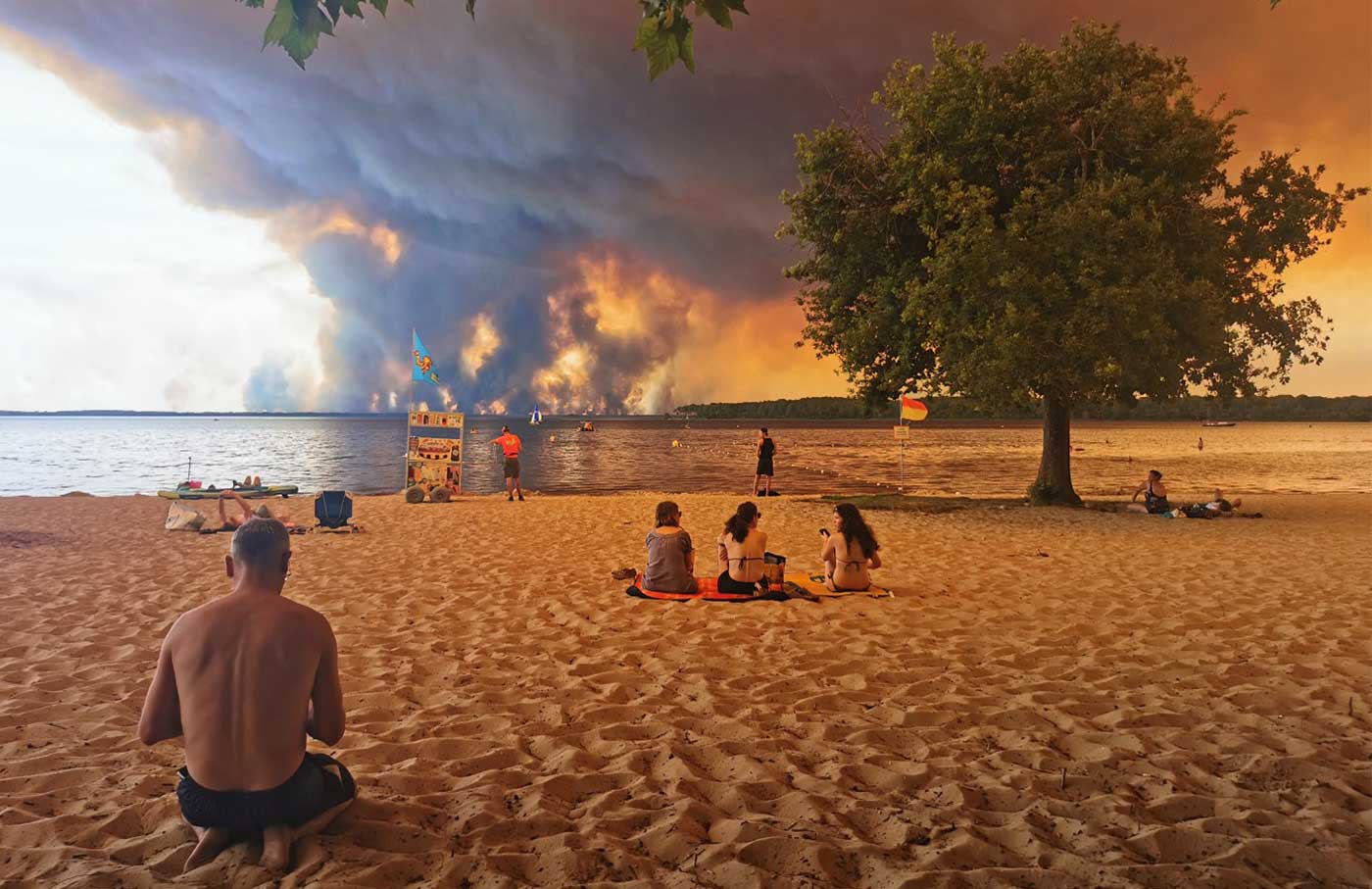
Unfortunately, there will be lots of opportunities to get this story right. The summer of 2026 is only just beginning and a Super El Niño promises to further supercharge temperatures across much of the planet in the coming months, with North America due to swelter next week. And as hot as 2026 is in Europe and 2025 was in Asia, in the future these will be seen as some of the coolest years in people’s lifetimes.
The science is unequivocal: Until fossil fuels are phased out, global temperatures will keep going up and up and up. Though not much discussed these days, what our civilization decides to do about that is among the most consequential questions of our time.