What the Fire Left Behind: Scenes From Los Angeles
The Nation’s Western correspondent, Sasha Abramsky, captures the destruction of the Palisades fire and the relics of the people who used to live in one debris zone.
The weather was beautiful in Los Angeles on Sunday. The sky was blue, the temperature balmy, the winds calm, and the smoke from the fires had largely blown out to sea. Life had finally returned to the weather-beaten city; cafés, bars, and restaurants were open, people were walking their dogs, and drivers were cruising down main thoroughfares.
In the debris zones, however, the wildfires’ epic destruction was on full display.

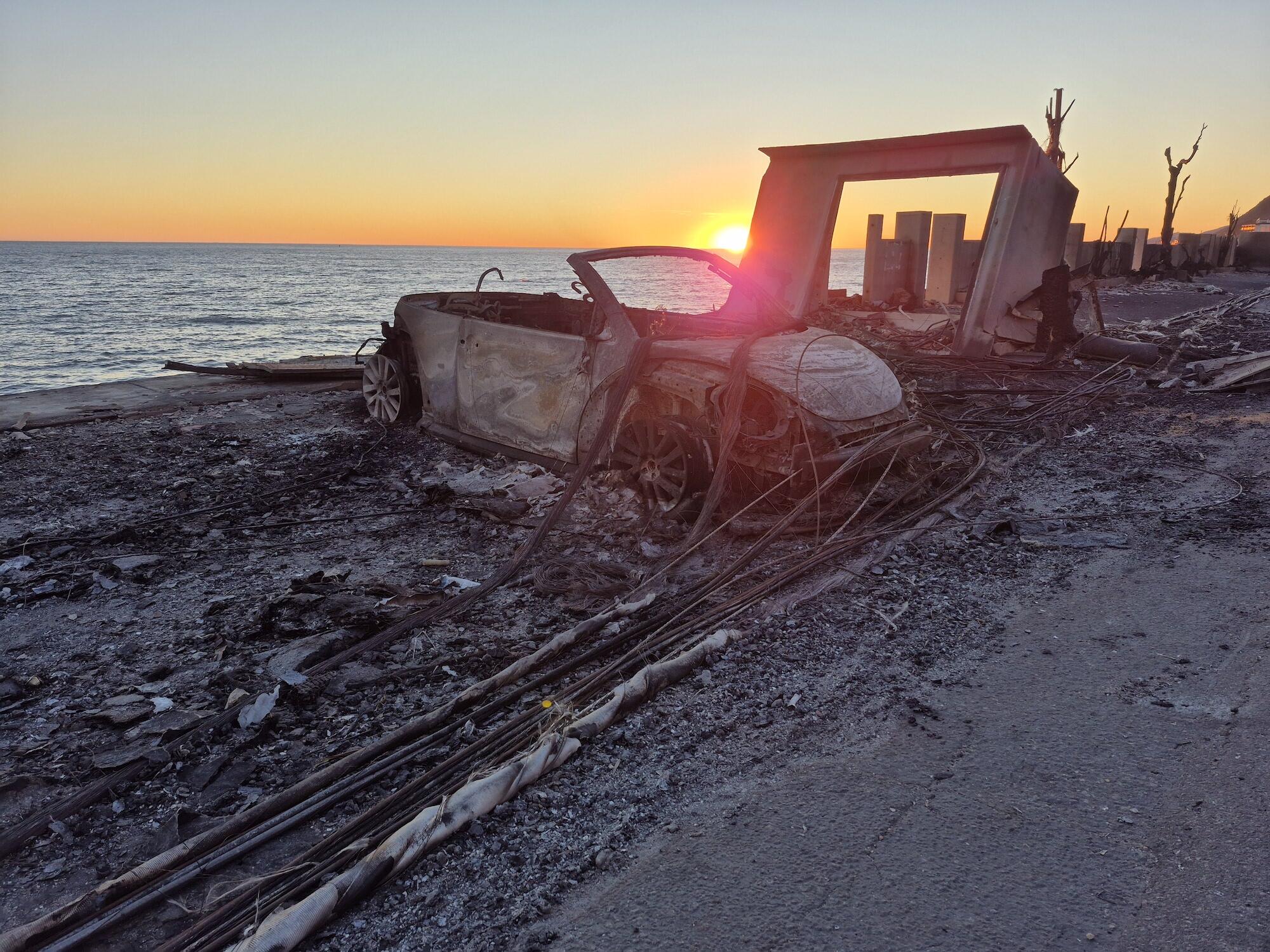
While in the LA region reporting a story on the fires and the insurance industry that is slated to come out later this week, I was able to spend a couple hours at the northern end of the Pacific Coast Highway’s restricted region. It was a ghastly, surreal scene from just south of Malibu to just north of Santa Monica, along a stretch that until a few days ago contained some of the most valuable real estate in North America.

When I was a child and a young adult, my grandmother, who lived in the San Fernando Valley, would take me to Gladstones, a wonderful seafood restaurant on the corner of the Pacific Coast Highway and Sunset Boulevard. We would drive over the canyons from the valley, turn right onto Sunset Boulevard, drive down through the Palisades area, and finally park in the lot abutting the Pacific. After eating lunch on the Gladstones deck overlooking the ocean, we would then walk down to the beach, take off our shoes, and walk along the sands for half an hour. It was one of the great rituals of my youth.

Last week, the Palisades were destroyed by flames. Gladstones somehow survived; but pretty much every other business and home along that stretch of the PCH was obliterated. Ashes are all that remain, along with twisted piles of metal and strange, out-of-place relics of the people who used to live there.
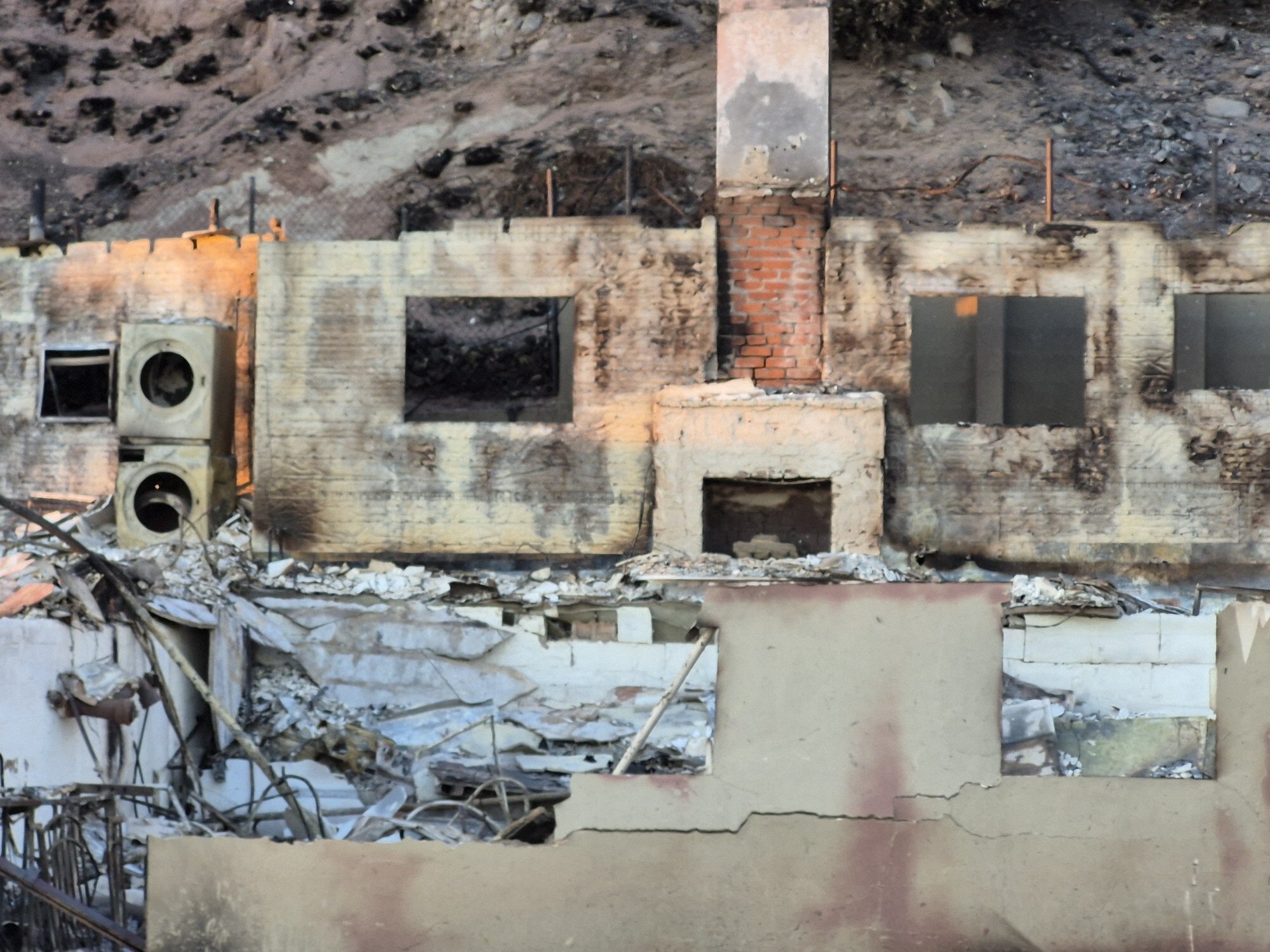
In the debris piles of everyday personal items that the fires left behind, one can imagine all of the dreams and homes that were destroyed, and one can see ghostly hints at what once was. There was the warped, burned exercise bike, now grotesquely perched in front of ruined walls. There were the mailboxes that stood intact outside of homes that were annihilated, and the street number signs glued to what were now front-wall skeletons. There were the washer and dryer staring out into the sunset like two stuck-open eyes, the laundry room that once surrounded them now ash. There were the melted cars and the stubbornly still-existent barbecue grills. And, to cap it all, there was the young couple, walking south hand in hand along the sands of the beach that my grandmother and I used to walk decades ago; to their right was the glorious ocean, the sun setting over its waters, to their left was unbridled destruction.
Those scenes will, I am confident, stay in my mind’s eye for the rest of my life.

With the exception of watching Manhattan’s Twin Towers burn and fall in 2001, I can’t recall ever seeing anything that left me quite literally gasping in shock in the way that these miles of destruction did.
After leaving the restricted region, I continued driving south, and, just as suddenly as I had entered the fire zone, I was out of it. The world around me looked as normal as it had been before the fires and the fierce Santa Ana winds scourged the hills and coastline to the north. For those who lost their homes, however, I doubt that their lives will ever be quite the same again.
Support independent journalism that does not fall in line
Even before February 28, the reasons for Donald Trump’s imploding approval rating were abundantly clear: untrammeled corruption and personal enrichment to the tune of billions of dollars during an affordability crisis, a foreign policy guided only by his own derelict sense of morality, and the deployment of a murderous campaign of occupation, detention, and deportation on American streets.
Now an undeclared, unauthorized, unpopular, and unconstitutional war of aggression against Iran has spread like wildfire through the region and into Europe. A new “forever war”—with an ever-increasing likelihood of American troops on the ground—may very well be upon us.
As we’ve seen over and over, this administration uses lies, misdirection, and attempts to flood the zone to justify its abuses of power at home and abroad. Just as Trump, Marco Rubio, and Pete Hegseth offer erratic and contradictory rationales for the attacks on Iran, the administration is also spreading the lie that the upcoming midterm elections are under threat from noncitizens on voter rolls. When these lies go unchecked, they become the basis for further authoritarian encroachment and war.
In these dark times, independent journalism is uniquely able to uncover the falsehoods that threaten our republic—and civilians around the world—and shine a bright light on the truth.
The Nation’s experienced team of writers, editors, and fact-checkers understands the scale of what we’re up against and the urgency with which we have to act. That’s why we’re publishing critical reporting and analysis of the war on Iran, ICE violence at home, new forms of voter suppression emerging in the courts, and much more.
But this journalism is possible only with your support.
This March, The Nation needs to raise $50,000 to ensure that we have the resources for reporting and analysis that sets the record straight and empowers people of conscience to organize. Will you donate today?