
The Farmland Revolt
America’s farmers are fuming over Trump’s tariffs. Democrats need to channel their anger.
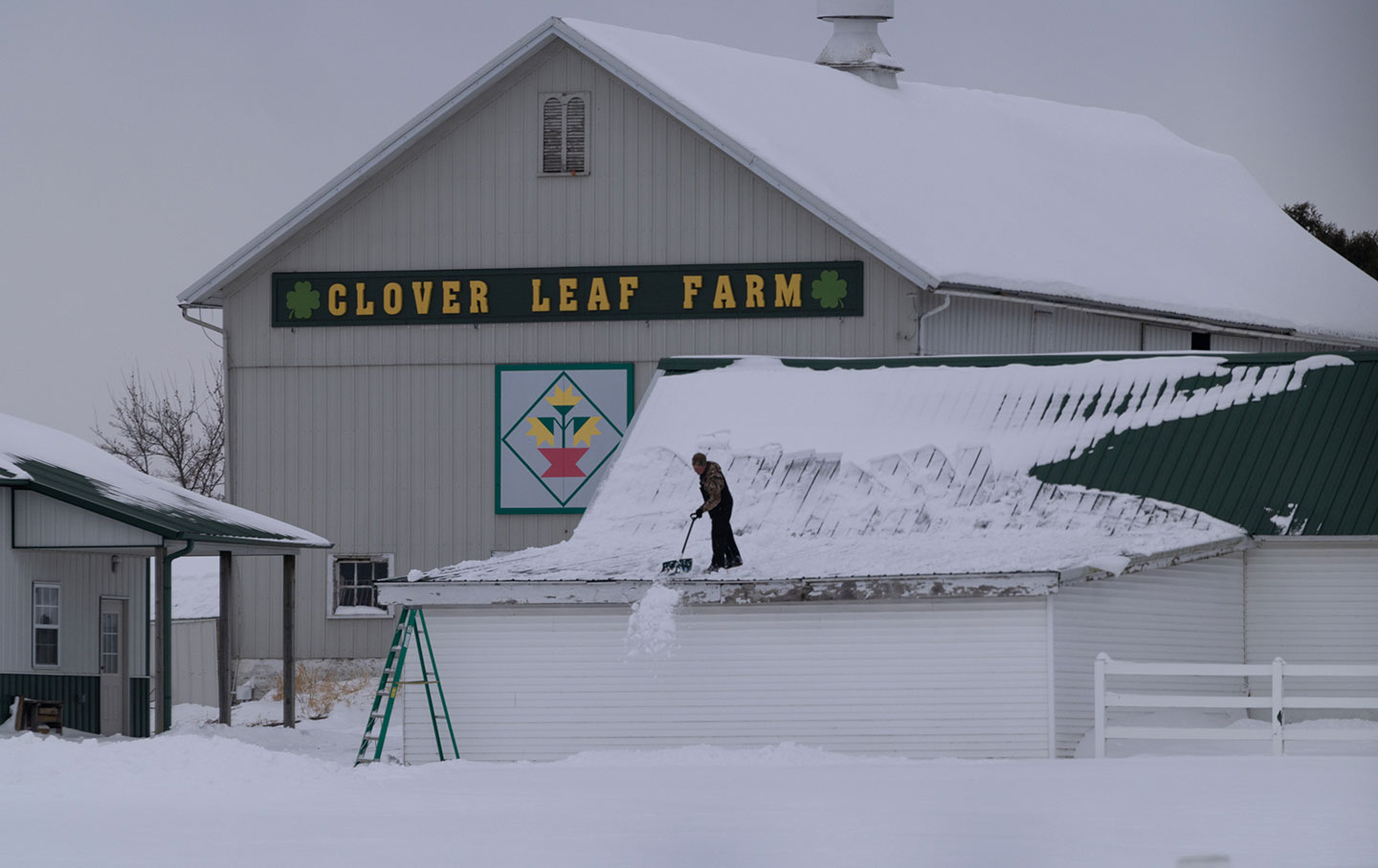

America’s farmers are starting to realize how badly Donald Trump has betrayed them, and they’re stewing in anger and despair. These are the ingredients for a populist moment that Democrats can meet by offering an explanation for what has gone wrong and a plan to address the crisis.
As far as what’s gone wrong, they can start with Trump’s whiplash-inducing announcement of a $40 billion bailout to Make Argentina Great Again. After months of cruel and arbitrary cuts to spending on domestic and foreign aid, the Trump administration is creating an economic lifeline to prop up Argentina’s corrupt anarcho-capitalist president, Javier Milei.
Argentina is the third-largest producer of soybeans in the world, behind Brazil and the United States. Seizing the opportunity presented by the US-China trade war, Argentina dropped its export tax and is now selling shiploads of soybeans to China, a country that used to buy them from US farmers.
Anger about Trump’s tariffs—and with it, the prospect of a political reckoning in farm country—has grown so intense that the president announced a $12 billion payout to compensate farmers for what they’ve lost in the trade war with China. But that Band-Aid bailout amounts to barely a third of farmers’ losses in 2025 alone and won’t even begin to pay off the $560 billion in debt that burdens US farmers.
It’s not just soybean producers who are in trouble. Farmers all over the country are struggling with dramatic increases in input costs (fertilizer, seed, equipment, etc.), even as key markets disappear and the prices for their products stagnate or decline. This is an issue that Democrats should seize on.
America’s farmers, inspired by the New Deal, were once reliably Democratic voters. Now they skew heavily Republican. The losses they’ve suffered, thanks to Trump’s tariffs and other disastrous policies, provide fertile ground for defection. And the bailing out of Argentina, a major agricultural competitor, offers Democrats a golden opportunity. A serious opposition party would be railing nonstop about this. It would be barnstorming every farming community in the country with a message of solidarity: “Trump has left American farmers high and dry. He may have wanted to hurt China with the tariffs, but it’s US farmers who are getting punished. He’s promising to throw some money at farmers, but we all know where that money’s going to end up—with the banks that hold half a trillion dollars in farm debt.”
The message from Democrats should be blunt and politically robust. It should say that this country needs to get behind farmers in a way that it hasn’t in decades. Instead of a trade war with China, we need to rebuild our food system for the good of farmers and the 340 million Americans they feed.
If any high-profile Democrat has said anything of the sort, we’ve missed it. The same goes for the resistance: We’ve seen almost no pro-farmer signs at the massive No Kings protests.
Instead, Democrats have left the field open to right-wing populists like former US representative Marjorie Taylor Greene, who rightly condemned the Argentine bailout as a betrayal of “America First.” This is the same mistake that top Democrats made in 2015 and ’16, when they failed to acknowledge the devastating impact of NAFTA on US factory towns, leaving an opening for Trump to do just that in the battleground states. After decades of neglect, the Midwest’s “blue wall” finally crumbled.
You would think that the collapse of farm country’s support for Democrats would be a high priority for those seeking to rebuild the party. But we’ve actually seen examples of liberal social-media clicktivists mocking the pleas from farmers as “MAGA tears.”
We’re confident that the vast majority of urban liberals do not relish farmers’ suffering. But neither have they busted a gut to learn about or advocate for what would help them: curtailing the power of the big meat processors and other food and nonfood agricultural monopolies; investing in regional food-system infrastructure to enable farmers to diversify their markets and increase their share of the food dollar; reinstating country-of-origin labeling; and passing a “right to repair” law allowing farmers to fix their agricultural implements themselves.
A lack of focus on the plight of farmers has helped solidify the widespread sense in rural America that Democrats and liberals neither understand nor care about us. It’s also a huge missed opportunity. The conditions are ripe for an agrarian populist uprising: It wouldn’t take more than a 3 percent shift in the rural vote to flip a number of red states and congressional districts. Farmers and their rural neighbors could give Democrats the votes they need. But these voters need a reason to make that shift.
Vague gestures toward middle-class prosperity, and the promise of a return to a “normalcy” that was never that great for farm country to begin with, don’t have much meaning for people who are going broke trying to feed America. But an unapologetic agrarian populism that tells farmers that “Trump and those who came before him (Democrats included) sold you out”—and that offers a bold program for investing in rural America—could transform the politics of 2026.
More from The Nation

How Brothel Workers in Nevada Just Made Labor History How Brothel Workers in Nevada Just Made Labor History
The courtesans at Sheri’s Ranch were staring down a horrifying new contract. So they did what workers everywhere do: They got organized.
Don’t Let Trump Fool You. The Economy Is Bad, and He Is to Blame. Don’t Let Trump Fool You. The Economy Is Bad, and He Is to Blame.
The Trump administration’s efforts to distract from the bad economy just divert attention from one dumpster fire to another.

Why Elon Musk’s Latest Mega Merger Is Little More than Vaporware Why Elon Musk’s Latest Mega Merger Is Little More than Vaporware
The tech mogul and would-be space pioneer is mashing up his properties once more in a deal that's unlikely to achieve escape velocity .
We Need Radical Abundance We Need Radical Abundance
If we want abundance we have to ask, an abundance of what exactly, and produced under what economic logic?
Zohran Mamdani Takes on the Gig Economy’s Wage Thieves Zohran Mamdani Takes on the Gig Economy’s Wage Thieves
New York City is suing a delivery app for stealing workers’ pay—signaling that under Mamdani, gig companies can no longer break the law with impunity.
How Trump’s Immigration Crackdown Chills Organizing and Erodes Conditions for All Workers How Trump’s Immigration Crackdown Chills Organizing and Erodes Conditions for All Workers
When one group of workers is terrorized or disappeared, it threatens all workers’ ability to fight for their labor rights.

