
Letters From the January 2024 Issue
Behind the beat… Unequal outrage… Small farmers’ rights… A present danger… Just say “communist”…
Behind the Beat
Ethan Iverson gives us the best sentence I have ever read about my passion: “In jazz, the human is indistinguishable from the music” [“Louis Armstrong’s Last Word,” Nov. 13/20, 2023]. Thank you for his in-depth experience of the Louis Armstrong House Museum. Archives such as Master Armstrong’s appeal to all the senses. I think I even got a little whiff of mildew and dust.
Starflower Thomson
joshua tree, calif.
Unequal Outrage
Haggai Matar’s article “Time to Change Course” [Oct. 30/Nov. 6, 2023] should be required reading for all on either side who are dismayed by the current situation in Palestine. This key sentence ought to appear on giant billboards everywhere: “The terror Israelis feel right now—myself included—is a sliver of what Palestinians have been feeling on a daily basis under the decades-long military occupation of the West Bank and Gaza.”
The October 7 attack in Israel by Hamas has indeed called forth justifiable moral outrage. But where has the moral outrage been for Israel’s actions against Palestinians trying to live peacefully in the West Bank? These include killing, on average, one Palestinian per day, leveling Palestinian homes, and shooting small children for throwing rocks. Palestinians are also human beings and should be treated as such.
John Raymonda
florence, ore.
Small Farmers’ Rights
Alexsander Zaitchik gets the big picture right in “Seeding Disaster” [Oct. 2/9, 2023]: Big Ag corporations, the World Trade Organization, and allied philanthropies are hell-bent on forcing small farmers in Africa to grow genetically modified seeds and on persecuting those who exchange or sell locally adapted seeds from their harvests. However, the little-known UPOV is not, as Zaitchik states, an “industry-dominated NGO.”
The International Union for the Protection of New Varieties of Plants (always referred to by its French acronym) is an intergovernmental organization. States that accede to the UPOV Convention must create a system of protection for “distinct, uniform and stable” seed varieties, either through patenting or breeders’ rights. The 1991 revision of the UPOV treaty obliged the states party to it to require agriculturalists to purchase seeds only from a “national catalog” and to prohibit them from exchanging or selling the seeds that they produce. In recent decades, developed countries have relentlessly pressured countries in the Global South to sign and ratify UPOV ’91. This treaty has almost certainly played a greater role in limiting small farmers’ seed options than the similarly retrograde WTO.
Marc Edelman
Professor of Anthropology
Hunter College and the Graduate Center
City University of New York
new york city
A Present Danger
Adam Hochschild’s admirable review of James and Thomas Risen’s new book, The Last Honest Man [“The Senator Who Took On the CIA,” Sept. 18/25, 2023], omits the FBI’s main domestic covert operations that were uncovered by Frank Church’s Senate committee in the 1970s.
The FBI did far more than “monitor the legitimate activities of thousands of Americans.” It infiltrated hundreds of civil rights, anti-war, and feminist groups not just to gather information but, in the words of its own internal directives, to “disrupt, misdirect, discredit, or otherwise neutralize” them. It forged correspondence, published fake pamphlets, burglarized offices, destroyed records and equipment, and was an accessory to the murder of Fred Hampton and other Black, Puerto Rican, and Indigenous leaders. Though the Church Committee’s revelations slowed these activities for a few years, they’ve mainly continued with less of a paper trail and more use of advanced technology. They remain a danger today.
Popular
“swipe left below to view more authors”Swipe →Brian Glick
Clinical Associate Professor
Fordham Law School
new rochelle, n.y.
Just Say “Communist”
Alexis Grenell’s essay “Just Say ‘Jewish’” [Sept. 4/11, 2023] reminds us of the vital role that Jewish activists have played in US labor history, an important story for today’s reawakening labor movement. Of course, one could include other ethnic groups who made admirable contributions as well, but Grenell seems to have erased another part of the story: the critical role that socialists and communists—many of whom were Jewish—played not only in the creation of industrial unionism in the United States but also in the accompanying and intertwined civil rights movement. One doesn’t have to disregard the problems and failures of the Communist Party USA in order to recognize their profound contributions: bringing class consciousness and the concept of class struggle to workers fighting for survival and to the progressive elements in society supporting them and other campaigns for justice. Many of the key CPUSA leaders in labor were Jewish. Why that was so is another history lesson.
Robert Park
cincinnati
The neglect of the contributions of Jewish women—and Jewish socialists in general—in US labor history is not accidental. That history was buried once assimilation and eventual New Deal reforms claimed the loyalty of Jewish activists and organizations. Celebrating Jewish labor activism was later avoided by many in the wake of rabid McCarthyism and antisemitism. Restoring that history—largely of Yiddish-inflected democratic socialism—is currently an important project for today’s Jewish labor activists, including members of the Workers Circle/Arbeter Ring and other secular Jewish humanists. Sustaining solidarity not only with members of SAG-AFTRA, for example, but with Google workers now protesting the sharing of AI “cloud” technology with the Israeli military for the repression of Palestinians, and with other nations’ police and military forces for political monitoring and repression, extends the arc of Jewish labor activism through to our own times.
Diana Scott
san francisco
Support independent journalism that does not fall in line
Even before February 28, the reasons for Donald Trump’s imploding approval rating were abundantly clear: untrammeled corruption and personal enrichment to the tune of billions of dollars during an affordability crisis, a foreign policy guided only by his own derelict sense of morality, and the deployment of a murderous campaign of occupation, detention, and deportation on American streets.
Now an undeclared, unauthorized, unpopular, and unconstitutional war of aggression against Iran has spread like wildfire through the region and into Europe. A new “forever war”—with an ever-increasing likelihood of American troops on the ground—may very well be upon us.
As we’ve seen over and over, this administration uses lies, misdirection, and attempts to flood the zone to justify its abuses of power at home and abroad. Just as Trump, Marco Rubio, and Pete Hegseth offer erratic and contradictory rationales for the attacks on Iran, the administration is also spreading the lie that the upcoming midterm elections are under threat from noncitizens on voter rolls. When these lies go unchecked, they become the basis for further authoritarian encroachment and war.
In these dark times, independent journalism is uniquely able to uncover the falsehoods that threaten our republic—and civilians around the world—and shine a bright light on the truth.
The Nation’s experienced team of writers, editors, and fact-checkers understands the scale of what we’re up against and the urgency with which we have to act. That’s why we’re publishing critical reporting and analysis of the war on Iran, ICE violence at home, new forms of voter suppression emerging in the courts, and much more.
But this journalism is possible only with your support.
This March, The Nation needs to raise $50,000 to ensure that we have the resources for reporting and analysis that sets the record straight and empowers people of conscience to organize. Will you donate today?
More from The Nation

“I Refused to Let the Genocide Steal My Dreams” “I Refused to Let the Genocide Steal My Dreams”
For these medical students in Gaza, completing their studies was an act of defiance.
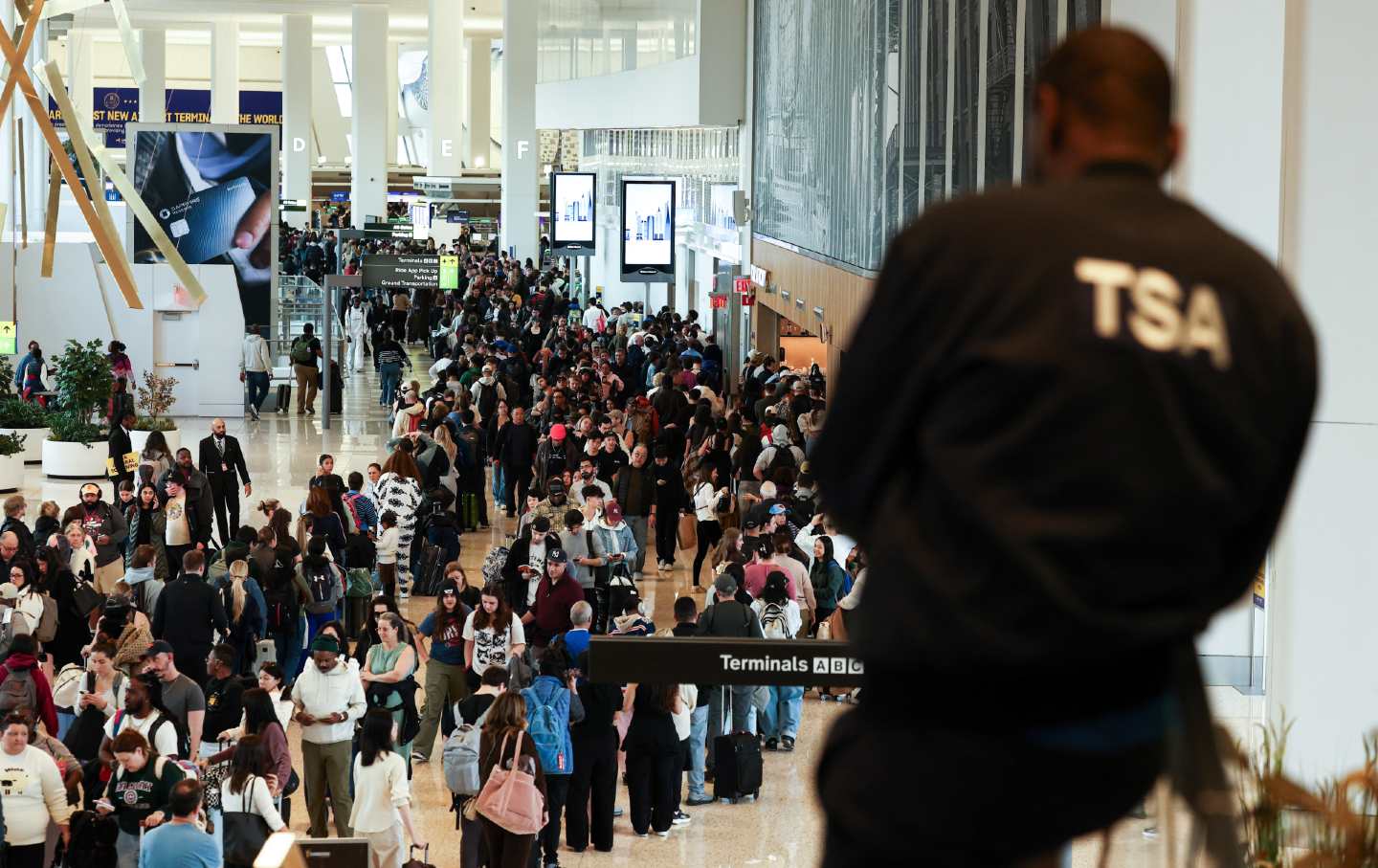
Nothing Works in Trump’s America—Except for Racism Nothing Works in Trump’s America—Except for Racism
In this week’s Elie v. US, our justice correspondent explores Trump’s stunning incompetence. Plus: baseball is back—for now.
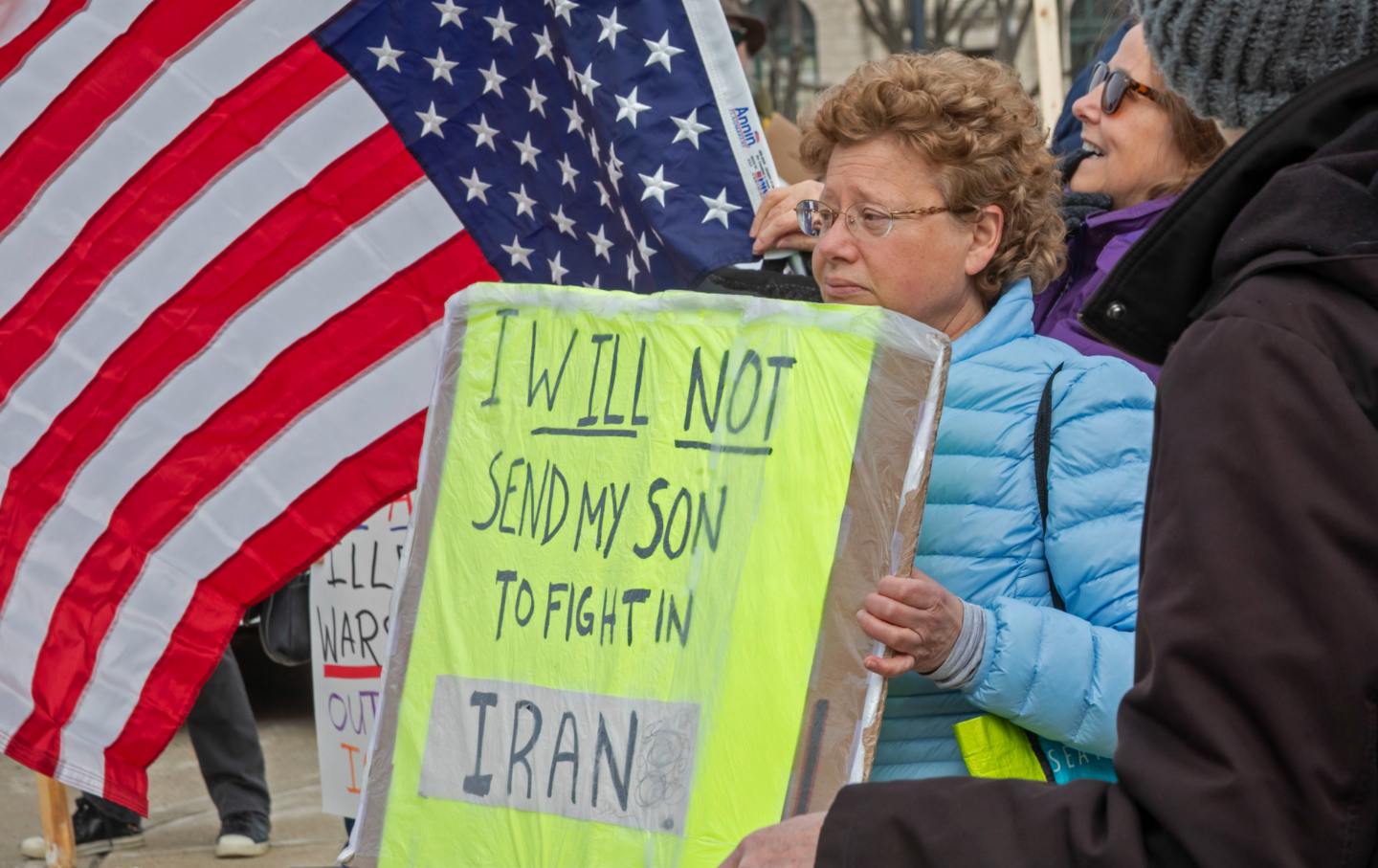
The Politicians Won’t Stop This War. Only the People Can. The Politicians Won’t Stop This War. Only the People Can.
The No Kings movement needs to become a mass anti-war movement.
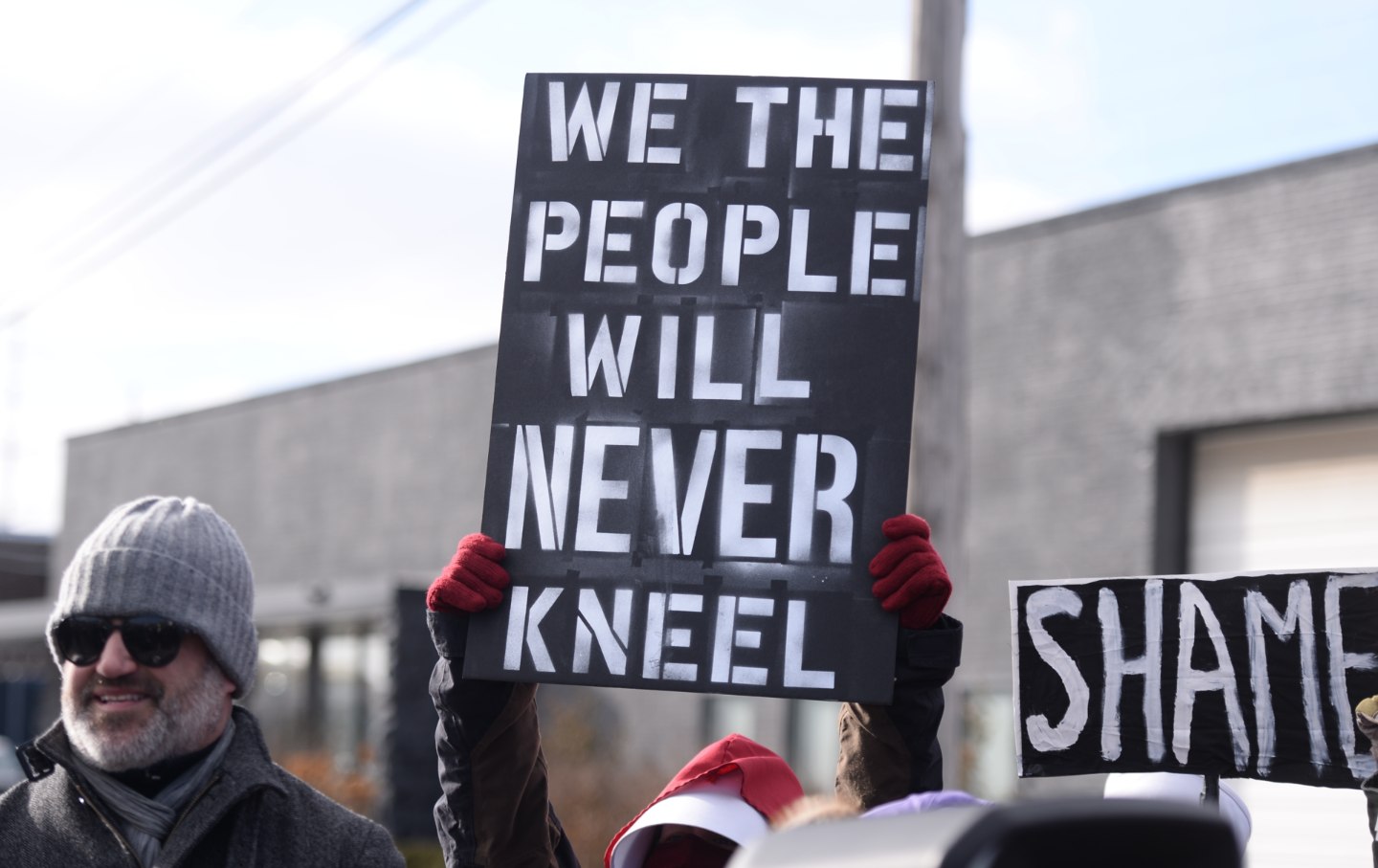
No Kings! No Wars! No Kings! No Wars!
The founders of the United States feared monarchically inclined presidents who could wage wars of whim.

The New Order? The New Order?
Government sanctioned violence on Americans spreads.

