
Donald Trump and Elon Musk’s Man in Buenos Aires
Argentine President Javier Milei is chainsawing his way through his country’s social safety net. That could be a preview of things to come in the United States.
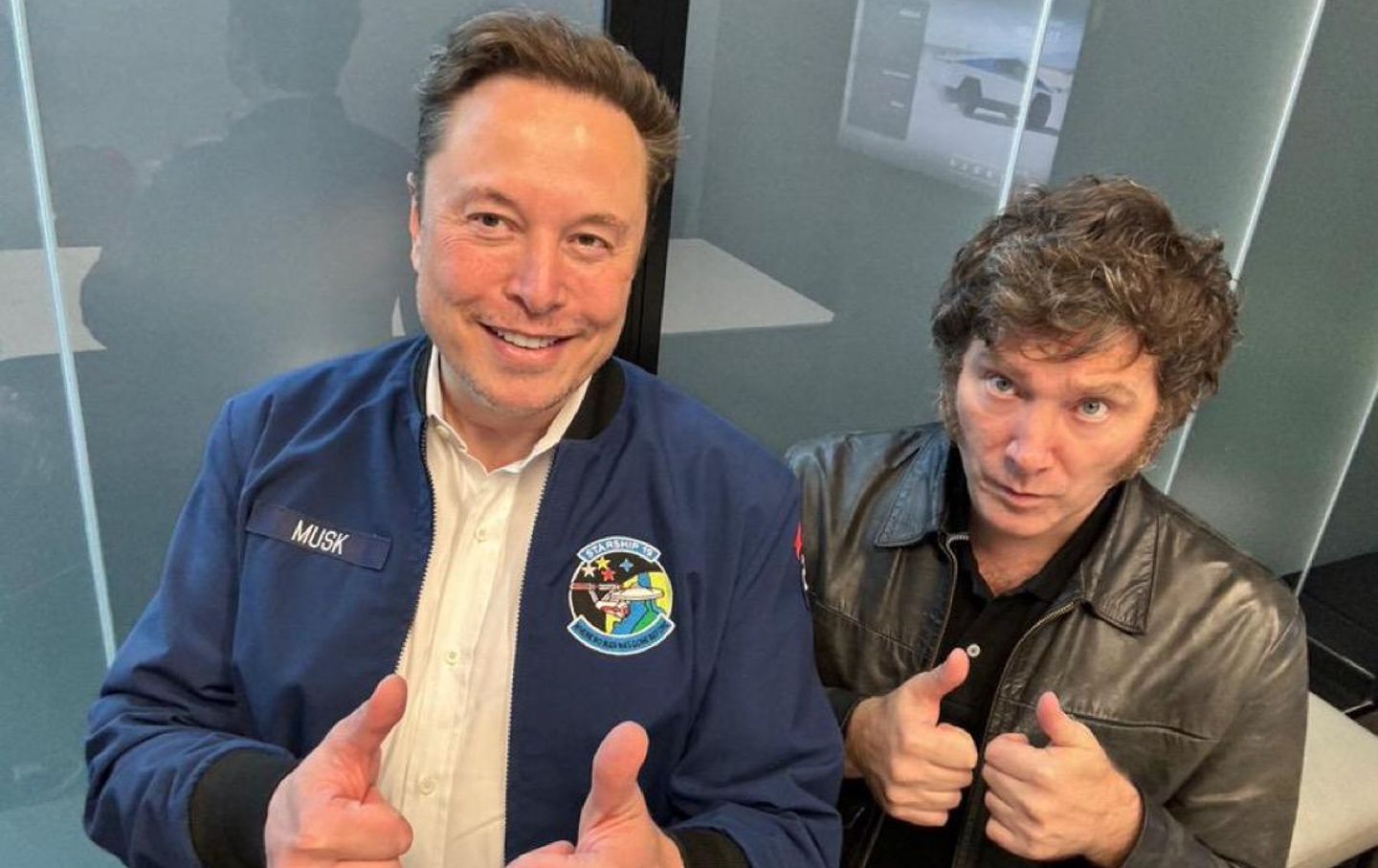
Buenos Aires—Late last month, two images went viral on Argentine social media. The first captured a wild-eyed Javier Milei wielding a wooden mallet at the New York Stock Exchange like Joaquin Phoenix in Joker: Folie À Deux. The second, taken several hours later, showed the Argentine president grinning broadly and flashing two thumbs up next to X CEO and Donald Trump megadonor Elon Musk. The latter wore a black suit and matching black-on-black “Dark MAGA” hat.
One day after telling some 200 Wall Street traders about his government’s “unwavering commitment to fiscal balance,” Milei addressed his fellow world leaders at the 79th General Assembly of the United Nations with the fervor of an evangelist, branding the body’s 2030 Agenda for Sustainable Development a “socialist supra-nationalist government program.”
“The woke agenda’s collectivism and moral posturing have collided with reality and no longer offer credible solutions to the world’s real problems,” he said. Milei was subsequently accused of plagiarizing The West Wing in a separate portion of his speech.
Eight hundred miles away in Savannah, Georgia, Trump, who has called the Argentine president a “great gentleman,” promised his supporters that he would create “millions and millions of jobs” through punitive tariffs on the United States’ trade partners, although he was characteristically short on specifics.
If the last three election cycles have taught us anything, divining Trump’s policy proposals is a fool’s errand. This is a candidate who has suggested he would use those same tariffs to pay for childcare and that he has “concepts of a plan” to replace the Affordable Care Act. Should Trump prevail this November, however, it seems clear that Elon Musk will play a pivotal role in his administration—either as his most powerful propagandist or in a more formal capacity, as the head of a “government efficiency commission.” (Ever the Internet memelord, Musk has dubbed it the Department of Government Efficiency.)
Trump has already signaled a willingness to cut Medicaid and Social Security. To understand what this might look like in practice, one need only gaze toward Latin America, where Milei’s austerity policies are chainsawing their way through the social fabric—or, as Musk calls it, “bringing prosperity to Argentina.”
Eduardo Barneix, 78, was not so much a demonstrator as he was a human placard. In his hand, he carried a sign that read on one side, “Milei. I’m a retiree! You’ve taken away my money, medicine, and food, but you can’t take away my dignity” and on the other, “Milei go home! I’ll tell you in English because you don’t understand in Spanish. Enough repression!” Around his neck, he wore another smaller sign with the message, “If you’re not a coward, join our side.”
Less than 24 hours before Milei’s trip to New York, several hundred people gathered in front of the Casa Rosada on National Retiree’s Day to protest a presidential veto of legislation that would have ensured that government pensions covered the rising cost of the nation’s basic basket of goods. (Milei subsequently held an asado dinner for the 87 members of the lower house who voted to uphold his veto, hailing them as “heroes” who had stood up to the nation’s “fiscal degenerates.”)
“We’ve worked all these years, and we can’t even enjoy a miserable little sum in our retirement,” Barneix lamented. “We’re going without food and medicine. It’s truly a disaster what’s happening here.”
While representatives from organizations ranging from Aerolineas Argentinas, which is currently facing privatization, to the Teachers Union Association of the University of Buenos Aires to the Confederation of Retirees and Pensioners railed against Milei’s economic agenda, Silvia Perreyra, 72, listened on a nearby bench with downcast eyes behind a pair of sunglasses. A former employee at the Ministry of the Interior, she told The Nation that she “doesn’t recognize herself in this country.”
“I’m always stressed,” Perreyra said, acknowledging that she’s had to give up certain “luxuries” to survive in the new, libertarian Argentina. “I can’t take a short trip to the beach like I used to. I don’t eat out or buy pre-prepared food, and even basic medicines like antibiotics cost a fortune. I’m keeping it together, but my life has gotten smaller.”
“We’re violated all the time,” she continued. “I’m worried about what happens inside our heads when we accept that kind of violence.”
Last month, during an address by Chief of Staff Guillermo Francos to the lower house of Congress, approximately 100 opposition lawmakers walked out in protest as security forces fired tear gas and pepper spray on demonstrators outside. The overwhelming majority were retirees.
Shortly after assuming office in December of 2023, Milei removed price controls on private insurance and supermarket goods via executive decree. He has since launched an all-out war on the Argentine state, slashing public spending on education and healthcare, along with federal subsidies for utilities and transportation, all while eliminating tens of thousands of government jobs.
More recently, Milei vetoed legislation that would have allowed university funding to keep pace with inflation. Thousands of students and educators took to the streets in protest nationwide. The increased spending represented just 0.14 percent of GDP according to Argentina’s Congressional Budget Office, or less than 1/15 of the amount the Economy Ministry identified in 2023 as expenditures in the form of tax breaks for select business sectors. Like Trump, the Argentine president has called for a complete review of the program’s federal financing despite one already being provided by the office of the National Auditor General.
Milei’s signature achievement to date is a mammoth reform package, the Ley [Law] Bases, that eliminates preexisting labor protections, including sanctions on companies that do not legally register their employees, weakens unions’ ability to strike, and privatizes a raft of state-owned enterprises. It also grants the president emergency legislative, administrative, and economic powers until 2025. The Milei administration, for its part, has defended these measures as necessary to avoid hyperinflation.
Milei’s gamble, like that of the putatively center-right Mauricio Macri before him, is that by radically reducing government spending, he can create the conditions for foreign investment and, perhaps, a new deal with the International Monetary Fund. (During Macri’s presidency, Trump helped facilitate a $57 billion loan to Argentina—then the largest in the fund’s history.) The IMF has been complimentary of the administration’s measures to date, although it has declined to comment on future arrangements.
What makes the Milei government so uniquely merciless is the scale of its cuts and the groups they have targeted. According to the National Institute of Statistics and Censuses, poverty in Argentina climbed 11.2 points to just under 53 percent through the first six months of 2024. Nearly two in three children (66.1 percent) were living below the poverty line in July, and a recent report from UNICEF found that more than 1 million were forced to skip at least one meal per day amid reduced funding for soup kitchens. The Center of Argentine Political Economy, meanwhile, puts unemployment at 7.6 percent—a full point higher than in the first half of 2023.
Few segments of Argentine society have been hit harder than retirees, whose minimum monthly pension has decreased nearly 20 percent in value over the same period. In August, that amount was 295,540 pesos, including a 70,000-peso bonus the government began issuing in March, or just over $300 at the official exchange rate.
Milei, who claims that he governs with the “forces of heaven,” has offered no indication that he is willing to change course. On the contrary, he pledged while presenting his 2025 budget proposal to Congress last month to strike down any law that increases the fiscal deficit.
“Argentina was already in a recession,” said Daniel Artana, chief economist at the Foundation for Latin American Economic Research and a professor at the National University of La Plata in Argentina. “Printing money to finance deficits always generates inflation sooner or later. Reducing spending has been one of the principal achievements of this administration.”
Others, like Chaco province’s former minister of planning, economy and infrastructure, Santiago Perez Pons, are more skeptical about Milei’s preoccupation with the deficit at the expense of the country’s greater economic health.
“It’s entirely valid to defend austerity as a tool to lower inflation,” he said. “The problem for Argentina, which has been the case for the past 10 years, is that its economy is not growing in terms of GDP. The Milei administration is pursuing policies that we know don’t work. Argentina tried to eliminate its fiscal deficit in 2001, and the economic devastation led to social collapse.”
“On the campaign trail, Milei promised to cut off an arm if he raised taxes,” Pons added. “Argentina is paying more today than in 2023, and the only taxes he has cut have been for the country’s wealthiest 100,000.”
While monthly inflation has fallen precipitously since peaking at 25.5 percent in December 2023, it was still at 3.5 percent in September, and some believe that trend is coming to an end.
“The reality is that this government has failed to accumulate dollar reserves,” explained Guido Zack, director of the Argentine economic think tank Fundar. “Milei has brought inflation down to three and a half percent. That sounds impressive until you remember that the monthly number was the same under [former Economy Minister] Martín Guzmán in 2021. Inflation may be contained for now, but it won’t drop much further so long as reserves are low and restrictions on the purchase of foreign currency remain in place.”
“Milei inherited a broken economy—that is undeniable,” he said. “But the poorest have borne the brunt of these austerity measures, and things are unlikely to improve. We’re really living in the worst of all worlds.”
Ana Santos, 78, owns a small apartment in the Palermo neighborhood of Buenos Aires, which she shared with her husband, Paul, until he died of cancer in July. She has always lived frugally, but less than a year into Milei’s presidency, she is struggling to make ends meet.
“What Milei is doing is perverse,” she told The Nation. “How are you supposed to survive on 225,000 pesos a month? I live in an older building, and my expenses alone are 40,000 pesos. My electricity bill this month was 50,000. There’s barely any money left over for food.”
Santos noted that the National Institute of Social Services for Retirees and Pensioners, better known as PAMI, once provided several medications for free. Now she must pay for many of these prescriptions out of pocket—some, including her late husband’s cancer medications, at dollar prices. (Last week, the Ministry of Health announced that it had reached a deal to reduce the cost of these drugs by 50 percent.)
Popular
“swipe left below to view more authors”Swipe →“Were it not for my son’s help, I wouldn’t have been able to pay for anything,” she said. “I come from the generation that helped overthrow the dictatorship. We have a lot of character, but he’s killing us.”
Despite their shared sense of showmanship and contempt for social justice, Milei and Trump are different breeds of right-wing demagogue, just as Argentina and the United States have radically different economies. Whereas Milei is a true believer in free markets and a disciple of the anarcho-capitalist Murray Rothbard, Trump, if he has an ideology at all, is a protectionist and ethno-nationalist. Still, it’s not difficult to imagine how tapping the CEO of X Corp. and Tesla to “eliminate fraud and improper [government] payments” might impact state spending—and the country’s most vulnerable.
Several weeks before their latest meeting in New York, Musk praised Milei on X for “restoring Argentina to greatness.” After the head of state thanked him for his words, Musk went one step further. “You are most welcome!” he responded. “The example you are setting with Argentina will be a helpful model for the rest of the world.”
Support independent journalism that does not fall in line
Even before February 28, the reasons for Donald Trump’s imploding approval rating were abundantly clear: untrammeled corruption and personal enrichment to the tune of billions of dollars during an affordability crisis, a foreign policy guided only by his own derelict sense of morality, and the deployment of a murderous campaign of occupation, detention, and deportation on American streets.
Now an undeclared, unauthorized, unpopular, and unconstitutional war of aggression against Iran has spread like wildfire through the region and into Europe. A new “forever war”—with an ever-increasing likelihood of American troops on the ground—may very well be upon us.
As we’ve seen over and over, this administration uses lies, misdirection, and attempts to flood the zone to justify its abuses of power at home and abroad. Just as Trump, Marco Rubio, and Pete Hegseth offer erratic and contradictory rationales for the attacks on Iran, the administration is also spreading the lie that the upcoming midterm elections are under threat from noncitizens on voter rolls. When these lies go unchecked, they become the basis for further authoritarian encroachment and war.
In these dark times, independent journalism is uniquely able to uncover the falsehoods that threaten our republic—and civilians around the world—and shine a bright light on the truth.
The Nation’s experienced team of writers, editors, and fact-checkers understands the scale of what we’re up against and the urgency with which we have to act. That’s why we’re publishing critical reporting and analysis of the war on Iran, ICE violence at home, new forms of voter suppression emerging in the courts, and much more.
But this journalism is possible only with your support.
This March, The Nation needs to raise $50,000 to ensure that we have the resources for reporting and analysis that sets the record straight and empowers people of conscience to organize. Will you donate today?
More from The Nation

“I Refused to Let the Genocide Steal My Dreams” “I Refused to Let the Genocide Steal My Dreams”
For these medical students in Gaza, completing their studies was an act of defiance.
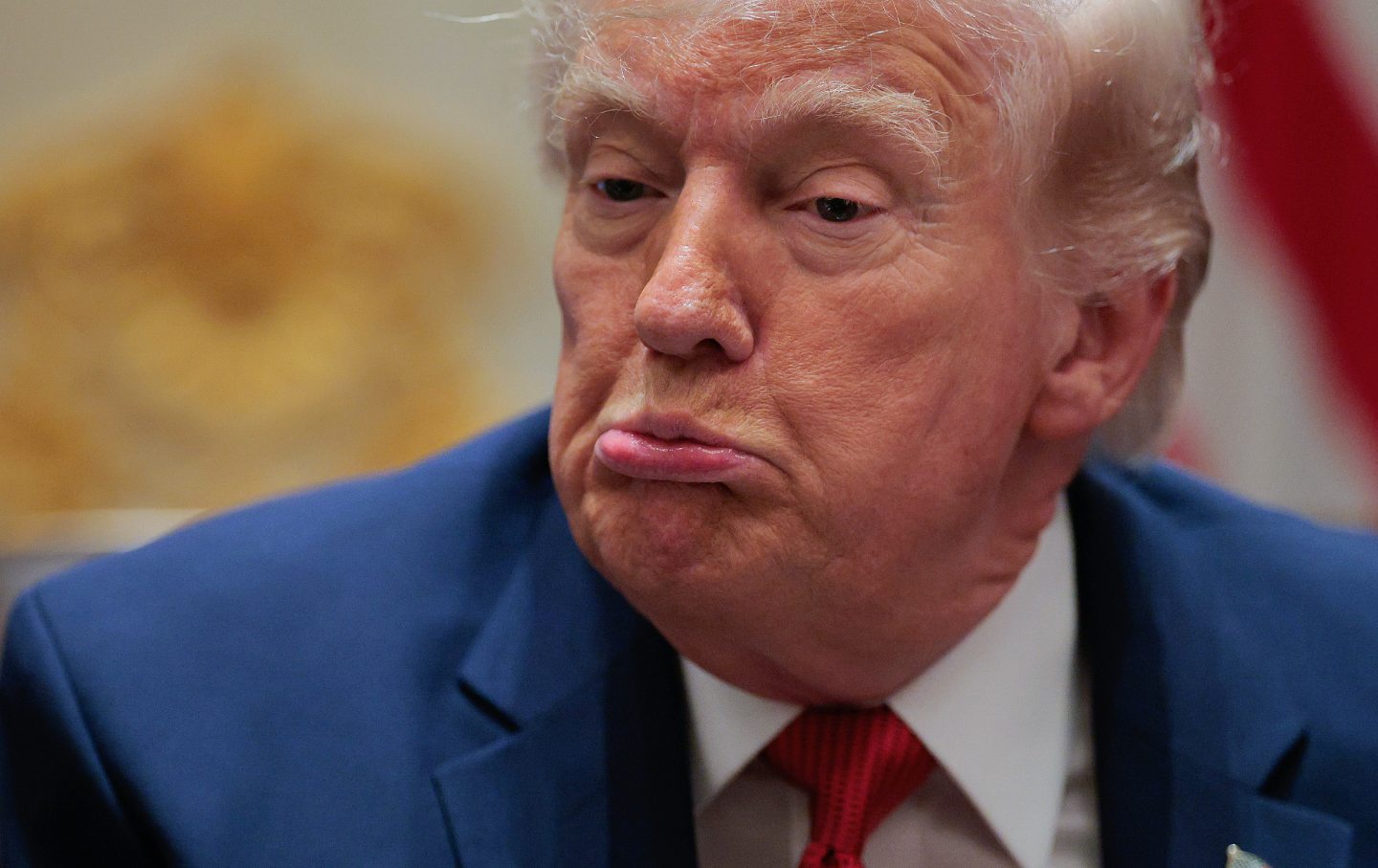
Donald Trump Is Losing the Iran War Donald Trump Is Losing the Iran War
Despite his constant declarations of victory, the truth about this conflict is clear.

Israel Is Also Committing Genocide In the West Bank Israel Is Also Committing Genocide In the West Bank
It’s not just Gaza—Israel wants to exterminate all Palestinians, everywhere. We are one people being destroyed as one people.
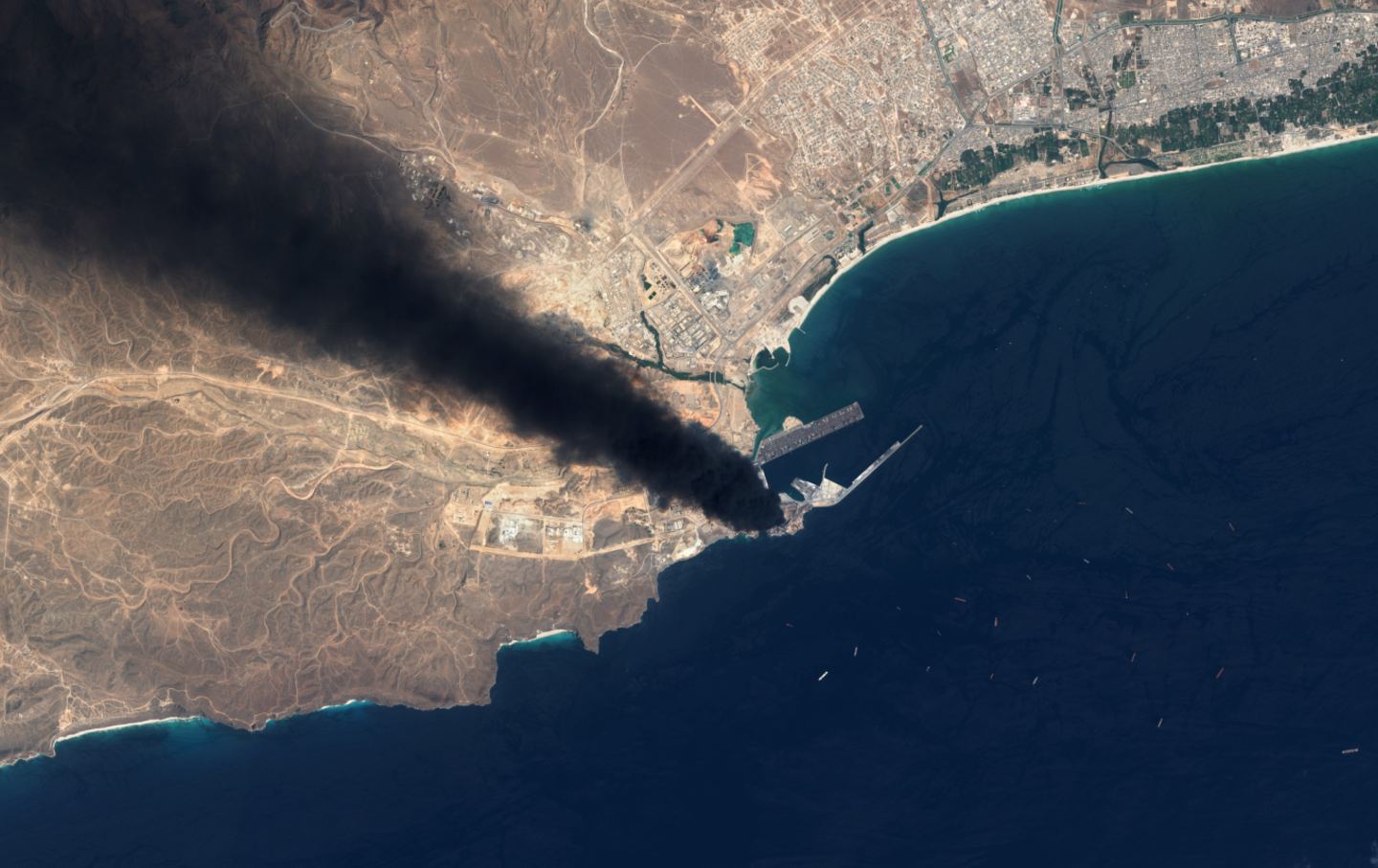
How the War Has Led to the Largest Disruption of Energy Supplies in Decades How the War Has Led to the Largest Disruption of Energy Supplies in Decades
Unless a resolution is found, the impact is likely to grow.
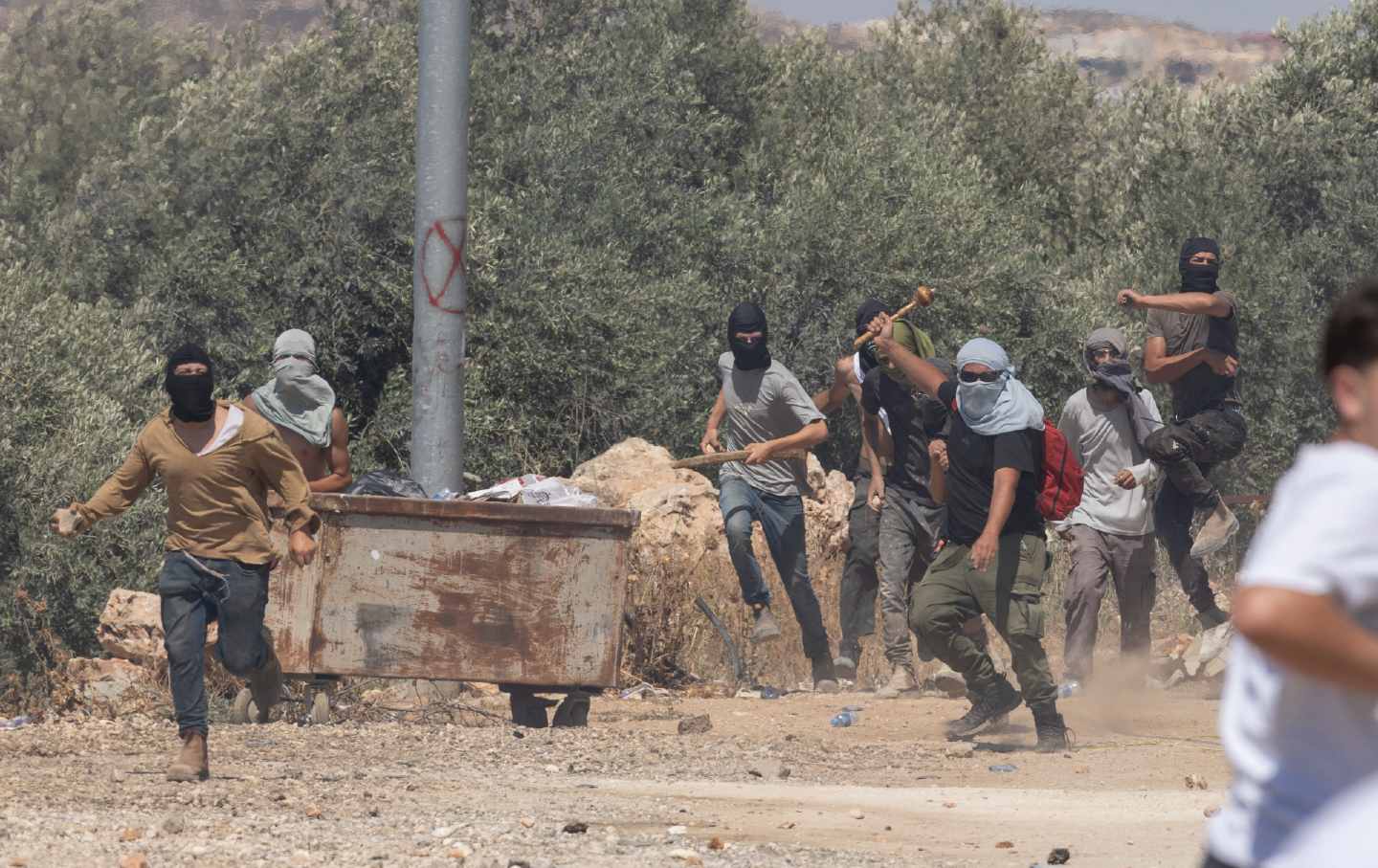
“Erasing the Lines”: How Settlers Are Seizing New Regions of the West Bank “Erasing the Lines”: How Settlers Are Seizing New Regions of the West Bank
After decades consolidating their control over Area C, Israeli settlers are expanding into Areas B and A—nominally under Palestinian Authority jurisdiction—and displacing communit...
Feature / Oren Ziv with Ariel Caine
In Gaza, Eid Is an Act of Resistance In Gaza, Eid Is an Act of Resistance
This year, Eid was a declaration: We are here. We pray. We dress in our best. We love, even when the world tries to convince us that we have nothing to love or to live for.

