
The Cost of Making Cesar Chavez the Face of a Movement
The harrowing revelations about Chavez expose how much Latino history in the United States has been made to rest on one man.
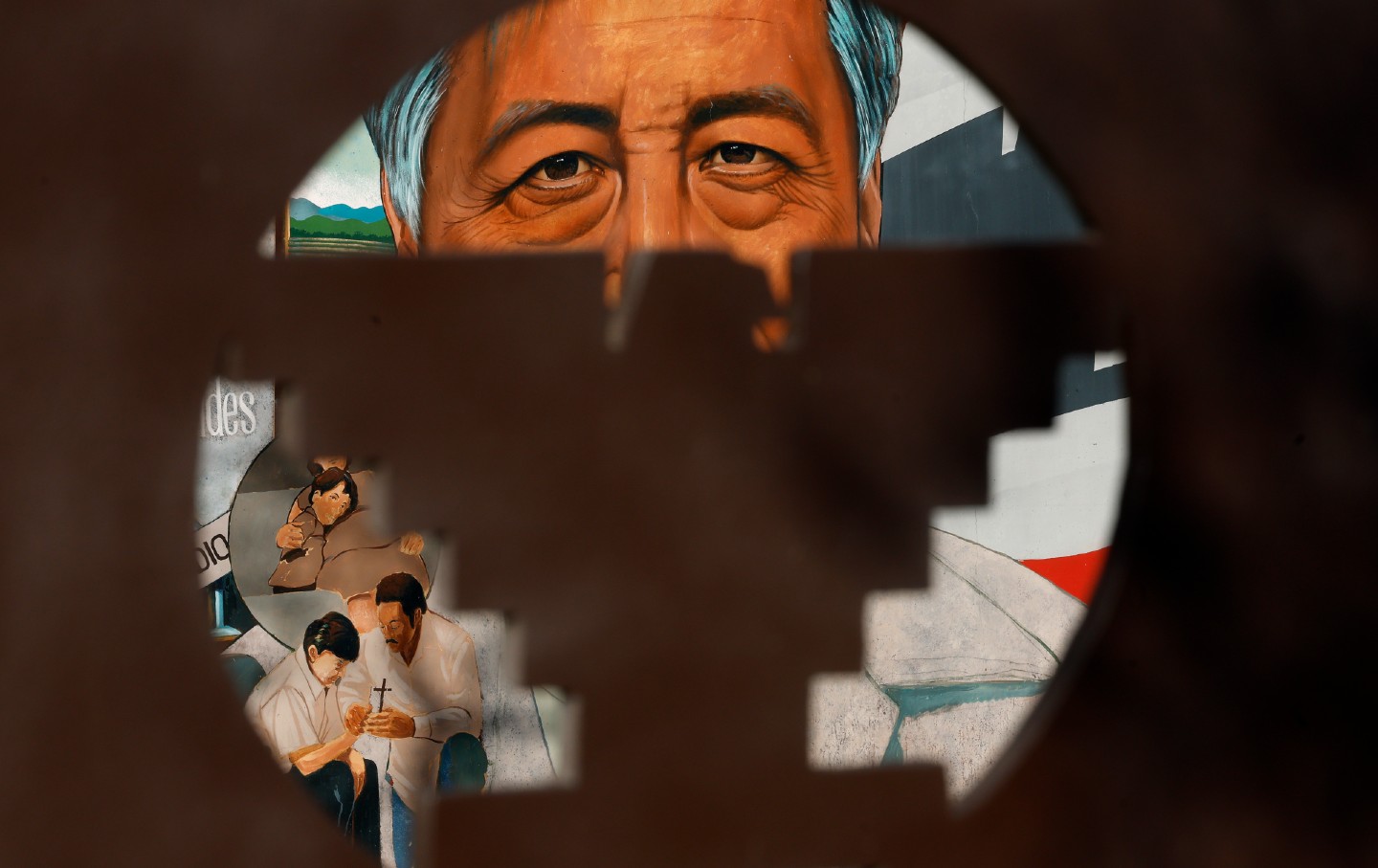
Sexual-abuse allegations against Cesar Chavez, the Chicano civil-rights and labor leader, have reverberated across the Latino community and beyond. A New York Times investigation published in March includes accounts from two women who were 12 and 13 when Chavez abused them, and from Dolores Huerta, Chavez’s longtime collaborator and cofounder of the United Farm Workers. In a statement, Huerta said she had two sexual encounters with Chavez, both of which led to pregnancies: “The first time I was manipulated and pressured. The second time I was forced, against my will, and in an environment where I felt trapped.”
These allegations are deeply disturbing and should not be minimized or explained away. They have rightfully prompted a reexamination of Chavez’s legacy. They also expose how much Latino history in the United States has been made to rest on one man.
For many Americans, including Latinos, Chavez is the only Latino civil-rights leader they can name. That overreliance on a single, legible figure has flattened a much richer and more complex history, and we are seeing the consequences of that. When one man is made to stand in for an entire movement, the destruction of his legacy can be used to dismiss the movement’s larger history and impact.
Chavez’s legacy has long been more complicated than the mythology surrounding him. In a Los Angeles Times review of Miriam Pawel’s biography, he is described as “paranoid and dictatorial,” with the organization he built characterized as resembling a “cultish commune.” It was within that warped world that women like Ana Murguia and Debra Rojas say they were abused for years when they were girls.
Chavez also opposed undocumented workers, whom he viewed as threats to the labor movement, and in the 1970s he led efforts to report them to immigration authorities—a stark contradiction for a leader now widely remembered as a champion of the marginalized.
And yet schools, streets, and Chicana/o Studies departments all bear Chavez’s name. In a number of states, including California, Arizona, and Texas, Cesar Chavez Day has been celebrated as a state holiday. Hollywood has immortalized him.
Latinos have long struggled to have our contributions, history, and culture recognized. Chavez—the charismatic leader who organized some of the country’s most exploited workers, who prayed and fasted, who led the grape strikes that captured the country’s attention—became a figure we could rally around. Through him, we could be seen. So we organized, marched, and legislated to cement his place in US history. We rallied around a version of him that could be taught, honored, and defended—a version that was uncomplicated. But that came at a cost.
One of the reasons many of the women who spoke to the Times gave for their decades-long silence was a “fear of tarnishing the image of a man who has become the face of the Latino civil rights movement.” Huerta kept her own experiences private because she “believed that exposing the truth would hurt the farmworker movement,” which she had dedicated her life to.
That weight should never have been theirs to carry. And yet it was. It meant women who were harmed felt responsible for protecting the very man who harmed them. “It makes you rethink in history all those heroes,” Esmeralda Lopez told the Times. “The movement—that’s the hero.”
She’s right. The movement is what we must now continue to uphold. It was the collective effort of people who marched, organized, and stood alongside its leaders that made it possible for farmworkers to unionize, bargain for better wages, and secure safer working conditions. Now, as some of those gains come under attack, and as Latino contributions to this country are being broadly contested, the challenge is not just how we judge one man but how we expand the story beyond him—because our history and contributions are far bigger than any one figure.
Right-wing politicians like Texas Governor Greg Abbott have already moved to halt this year’s observance of Cesar Chavez Day and signaled that they intend to remove the holiday from state law. Chavez’s name should come off schools and streets. But we cannot allow that removal to become another way our history disappears.
This moment should push us to expand what we remember. It should push us to learn about the many leaders—within both the UFW and other movements—who were overshadowed because we placed so much weight on one man.
Some are already beginning to offer a way forward. In California, lawmakers quickly passed a bill to rename Cesar Chavez Day as Farmworkers Day, shifting the focus away from one man and back to the people who made the movement possible.
For years, I’ve heard Huerta stand before a crowd and ask, “Who’s got the power?”
“We’ve got the power!” the crowd would reply.
Popular
“swipe left below to view more authors”Swipe →“What kind of power?” she’d ask again.
“People power!”
I hear it differently now. The farmworkers movement was never one man. It was never Cesar Chavez alone. It was always the people.
Become a Sustaining Donor This September
Between the reemergence of right-wing red-baiting and Donald Trump’s use of the chilling National Security Presidential Memorandum–7 to criminalize left political organizing, we’re seeing McCarthyism reborn before our eyes.
This assault on democracy cannot be ignored or wished away. Resisting it requires bravery in the face of threats and repression, a steadfast commitment to the truth, and the unwavering belief that we can—and will—overcome this darkness.
We must have an independent media that sets the record straight, unearths corruption and abuses of power, and advances a politics of justice and dignity for all if we’re to win this fight.
That’s why I’m writing to you today. This September, The Nation needs to add 100 monthly donors to sustain our progressive journalism. Your contribution makes the next investigative report, the next truth-speaking column, and the next pathbreaking essay all possible.
I hope you’ll support our work with a recurring donation today. If you donate $10 or more a month, we’ll send you a brand new “Hands Off the Free Press!” sticker to recognise your commitment to our cause. Please, donate today.
Onward,
Katrina vanden Heuvel
Editor and Publisher, The Nation
More from The Nation
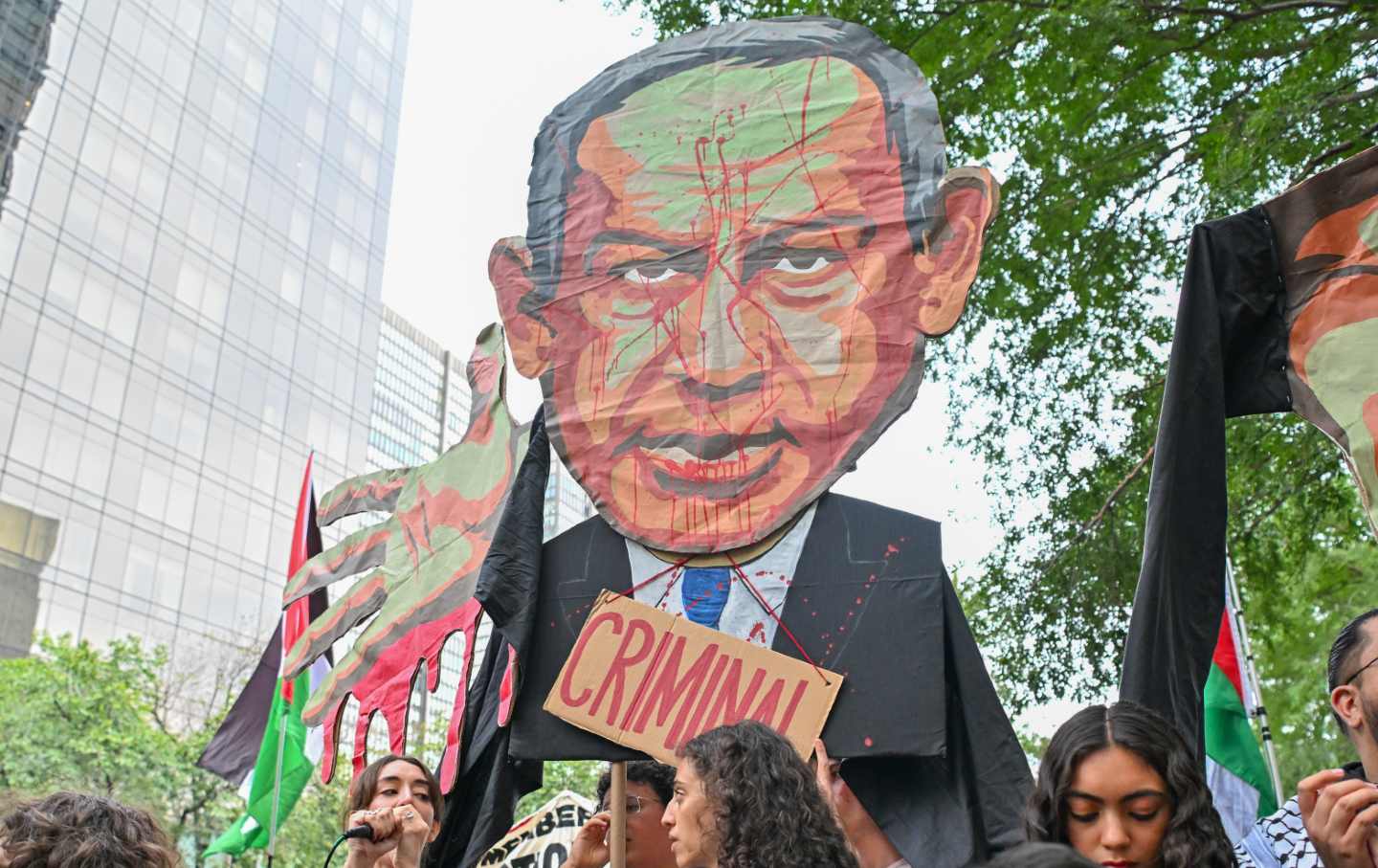
Netanyahu Came to New York. New Yorkers Were Ready for Him. Netanyahu Came to New York. New Yorkers Were Ready for Him.
Scenes from the defiant protest against the genocidal leader’s UN speech.
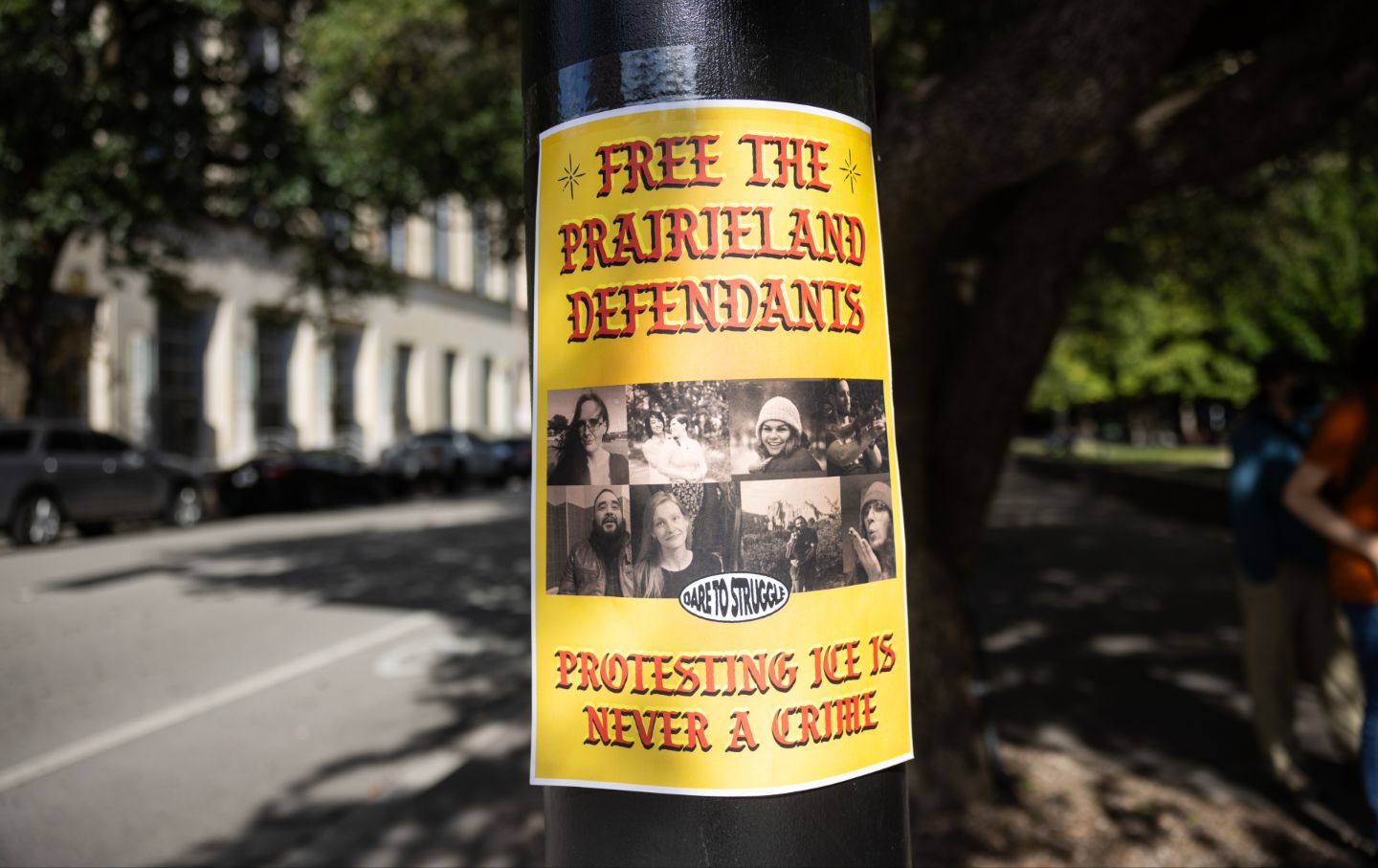
A Message From Prairieland Prisoner Autumn Hill: “Don’t Be Afraid” A Message From Prairieland Prisoner Autumn Hill: “Don’t Be Afraid”
I talked to the political prisoner about the politics of love, her case, surviving as a trans woman in a men’s prison, and how she makes it through the day.
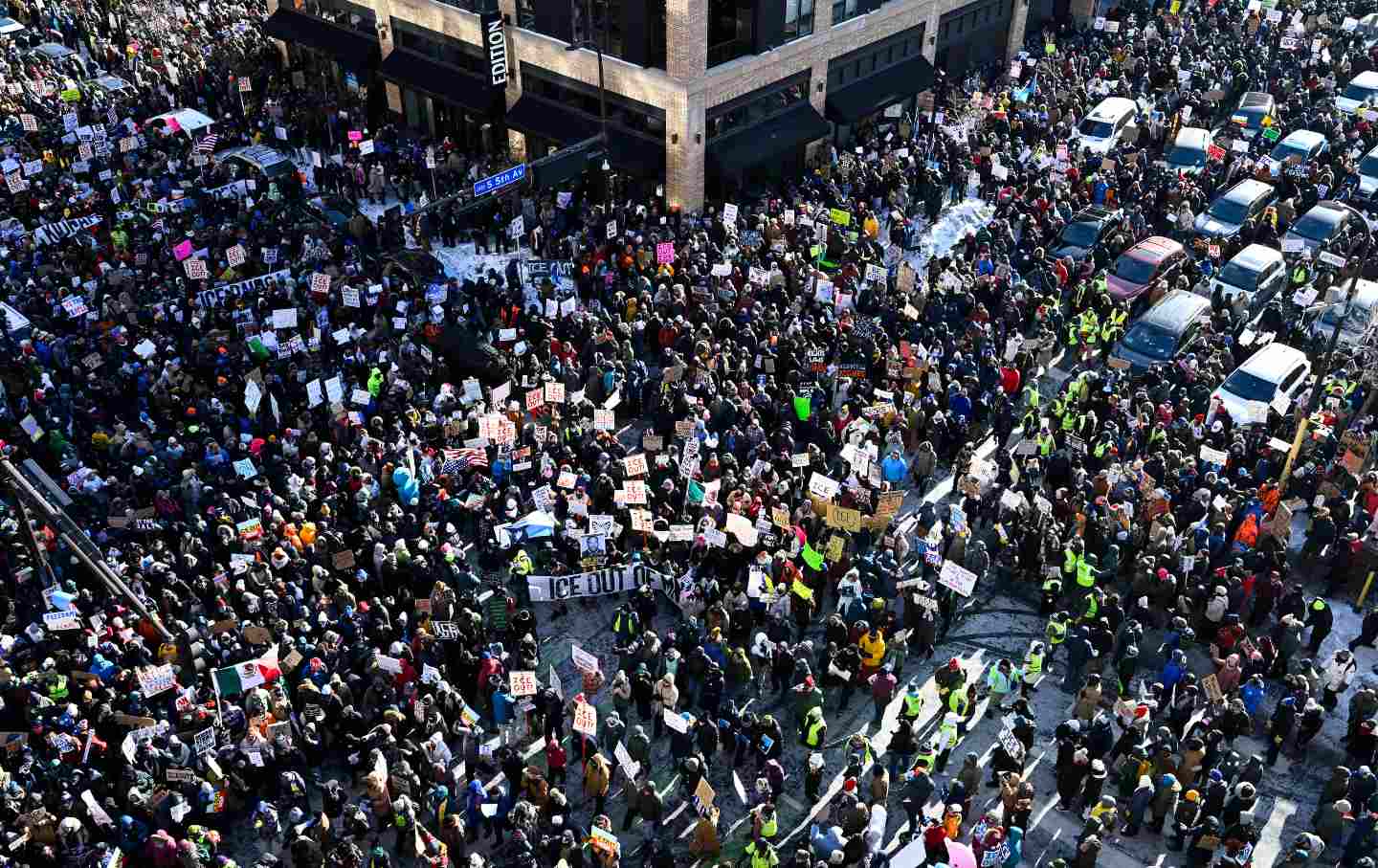
The Impossible Will Take a Little While: The Power of Persistence The Impossible Will Take a Little While: The Power of Persistence
In troubled times, history offers a lesson: Seemingly impossible change can begin with ordinary people who refuse to give up.
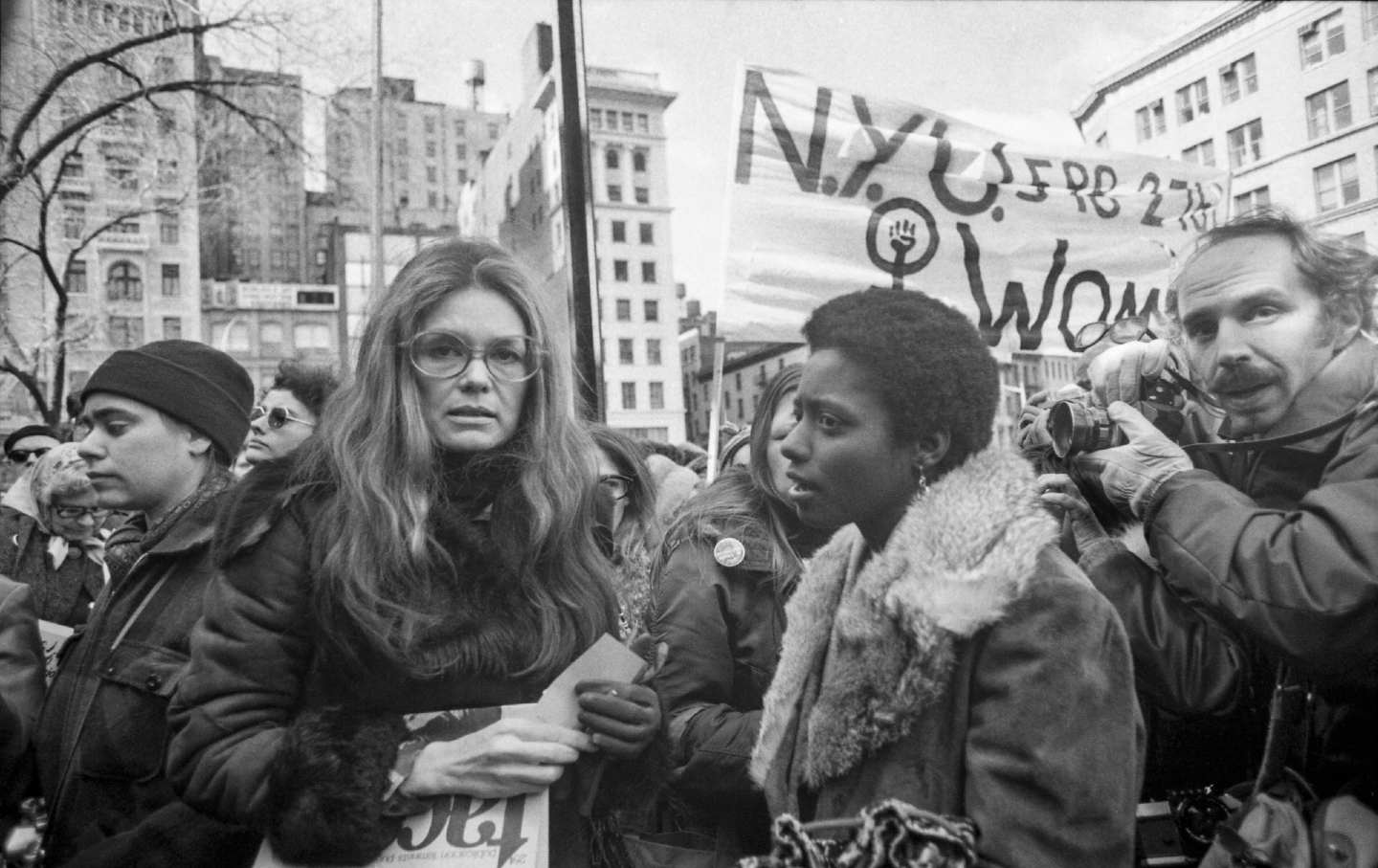
Gloria Steinem’s Many-Splendored Feminist Life Gloria Steinem’s Many-Splendored Feminist Life
The feminist icon lived the struggle for gender equality and always found time to lend support and solidarity to other women leaders, even in her final days.
No, Woke 1 Was Not Crazy No, Woke 1 Was Not Crazy
AOC and others are laughing off 2020 as a wild, isolated moment. None of that is true.
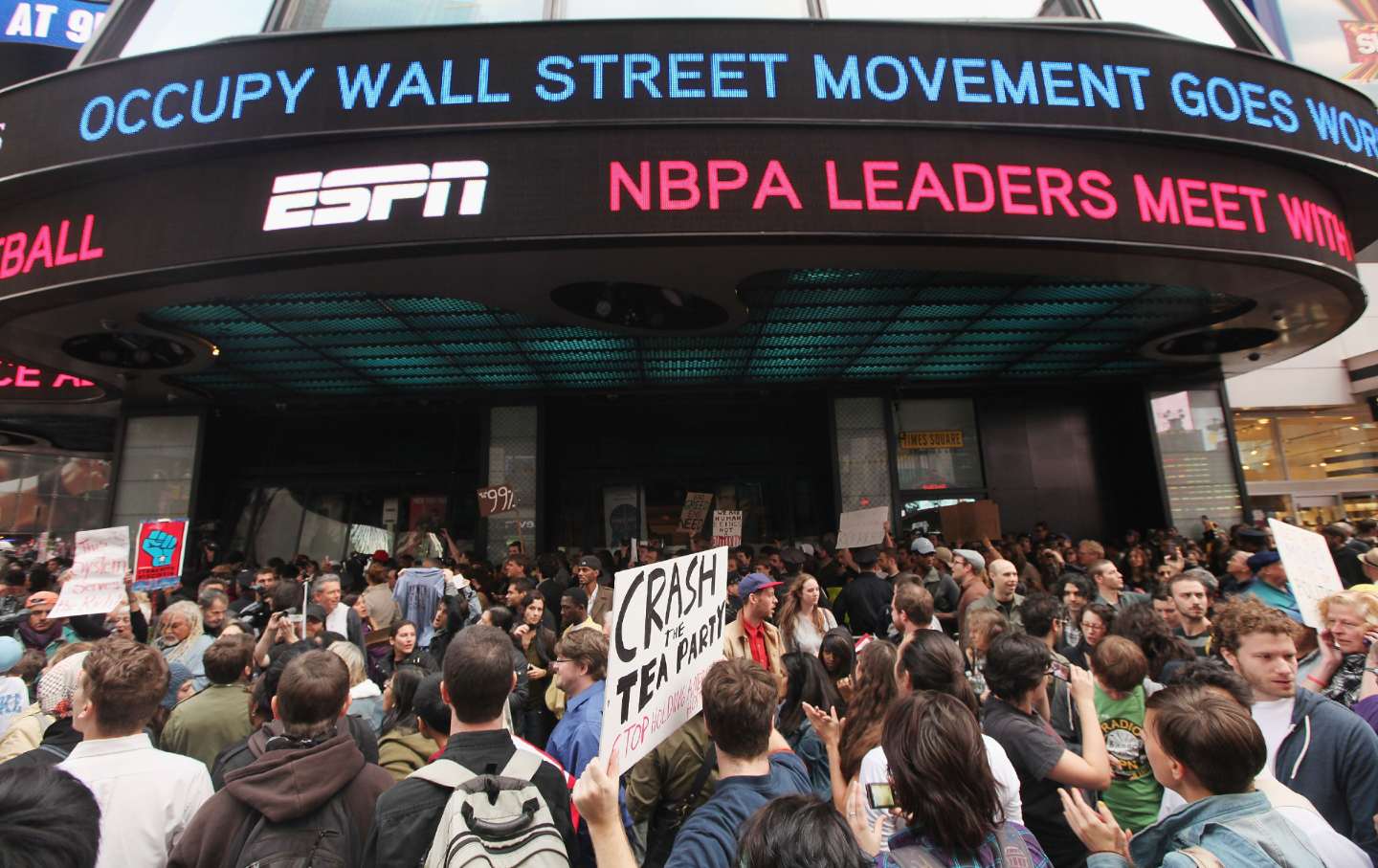
How Occupy Wall Street Still Explains Politics Today How Occupy Wall Street Still Explains Politics Today
It sowed the seeds for a new era of social movements—but its politics of powerlessness should act as a cautionary tale.

