Trump Is Making Deals With Big Oil
Democrats and the press should be paying attention to how this pay-to-play behavior relates to the midterms
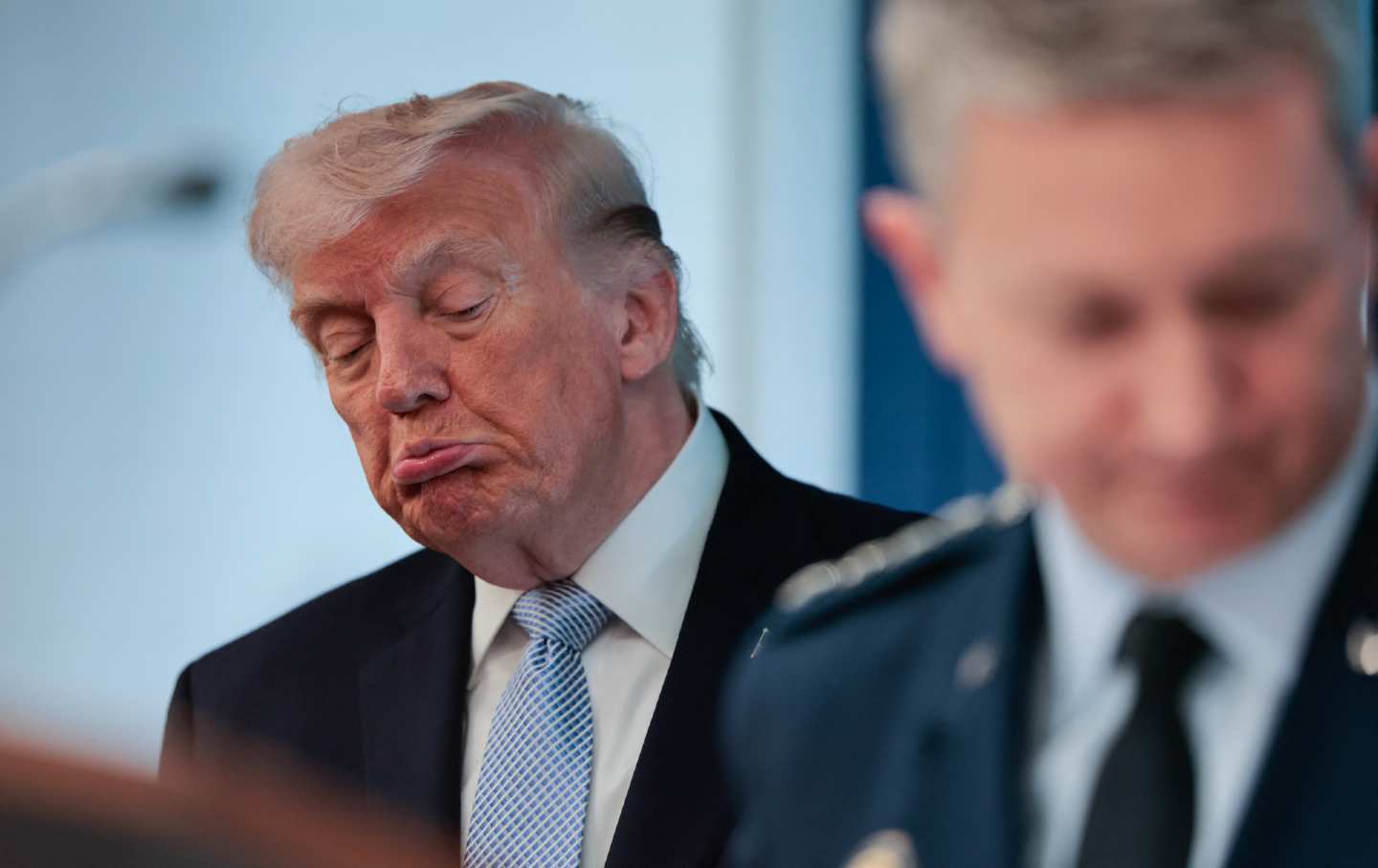
President Donald Trump stands alongside Chairman of the Joint Chiefs of Staff Dan Caine at an April press conference on the Iran War.
(Kent Nishimura / AFP via Getty Images)With the US midterm elections less than three weeks away, is it any surprise that corruption has emerged as voters’ top concern? “Corrupt” was the adjective most often chosen when registered voters were asked for a single word to describe President Donald Trump, according to a survey conducted in September by The Economist and the market research firm YouGov, with 53 percent of respondents calling Trump corrupt and only 23 percent saying he is “honest.” A Pew Research Center poll in early October found that nearly seven in 10, or 69 percent, of Americans are “not confident” that Trump keeps his business interests separate from his presidential decisions.
Americans can thank diligent investigative reporting for alerting them to much of Trump, his family, and aides’ self-dealings. For example, The Washington Post has reported that Trump’s sons, Don Jr. and Eric, were investors in 15 companies that “collectively generated at least $3.2 billion in direct government business since the sons invested and an additional $3.1 billion in future contract options.” And on Tuesday, in a rare retreat, the White House asked Kimberly Guilfoyle to resign as US ambassador to Greece after a Wall Street Journal investigation revealed that Guilfoyle promised political favors to a Trump donor if he would quietly pay off her $100,000 American Express credit card bill.
Throughout the history of modern polling, voters have usually ranked the economy (or its proxies, such as “the cost of living”) as their top issue. Now, linking corruption with the cost of living, “Democrats Are Making Corruption Messaging a Pocketbook Issue,” a recent Politico headline declared. The Democrats’ claim, The New York Times reported, “that rampant corruption in Congress and the administration is directly costing average citizens who are paying more for necessities like groceries, gas, and medicin.”
Both Democrats and the press however are so far overlooking one of the most overt and consequential examples of Trump’s pay-to-play behavior. On May 24, 2024, Josh Hawley and Maxine Joselow of The Washington Post published a blockbuster expose, reporting that Trump privately told a group of oil company CEOs they should donate $1 billion to his 2024 presidential campaign: It would be a good “deal” for the industry, Trump reportedly said, because of the tax and regulation benefits they would receive if he returned to the Oval Office.
Specifically, Trump reportedly said he would reverse the Biden administration’s pause on new liquified natural gas export permits, approve more drilling for oil in the Gulf of Mexico and Alaska, and roll back environmental regulations that the industry didn’t like, including electric vehicle purchasing mandates and vehicle emissions limits. Hawley and Joselow then published a follow-up, reporting that Trump also promised to soften Federal Trade Commission scrutiny of industry mergers and acquisitions.
Two and a half years later, his administration has delivered on each of these promises and then some. The Brennan Center has published a well-documented summary of Trump’s assault on climate policy—including his administration’s repeal of the “endangerment finding” that has granted the federal government the authority to regulate greenhouse gas emissions—that connects the dots between Trump’s actions and the many billions of dollars the oil industry has reaped as a result, including the millions of dollars that benefit oil executives individually.
What makes all this relevant to the midterm elections—beyond the fact that the leader of the Republican Party is directly implicated—is that many of Trump’s accomplishments were only possible because of rubber-stamp support from Republicans in Congress. Now, those same Republicans must face the voters. How will they explain themselves?
To be clear, Democrats don’t get a pass here; corruption has been part of politics forever, and one of the press’s central obligations is to expose and hold its perpetrators to account, whoever they may be. That requires following the facts where they lead. But it also requires challenging the practice, still common among old school newsrooms, of false equivalence—or of portraying both sides as equally culpable for a given transgression for fear that an accurate portrayal would look like “taking sides.” If most of the facts point in one direction, our reporting should have the integrity and courage to say so.
Most voters don’t have access to directly question candidates seeking their votes. It’s our job as journalists to ask questions on their behalf so they can make informed decisions about their leaders.
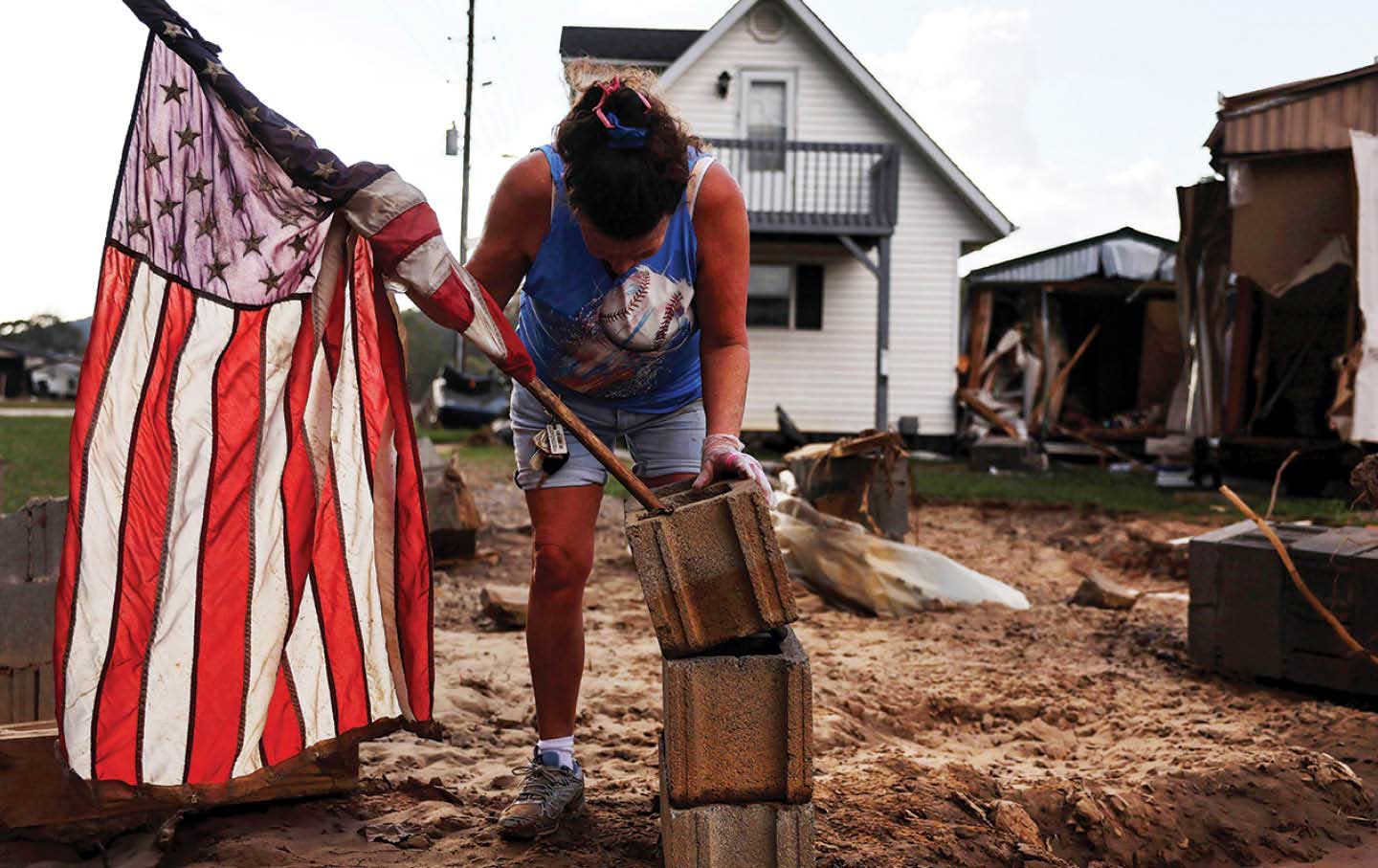
Corruption is understandably a hot issue these days. Meanwhile, new scientific analysis from the nonprofit Climate Central shows that every congressional district in the country is hotter than it was in 1970, thanks to climate change. No surprise, then, that polling also shows that the vast majority of people want their government to take stronger climate action. Journalism that connects those dots—accurately and fairly, and without pulling any punches—is a true public service.