The Magical, Mysterious World of Archives
Archives are where forgotten lives, hidden histories, and unfinished stories wait to be rediscovered.
I have been thinking about archives lately. (Don’t laugh.) A few things sparked my interest. When I wanted to find the papers of Helen Gahagan Douglas—the late California congresswoman whom Richard Nixon called “the Pink Lady” in their infamous 1950 Senate race—I was puzzled. The next thing I knew I was flying to Oklahoma to the Carl Albert Library on the college campus. There was a lone woman working, and I asked her why Helen’s papers ended up there. She explained that House Speaker Albert walked by Douglas’s office while she was cleaning out her materials. He offered his library as a safe storage place. I spent a full day photocopying—all of which helped the play I cowrote about that election.
I recently covered the Rancho Mirage Writers Festival in Palm Springs, which featured virtually every important historian of these times (Jon Meacham, Rick Atkinson, Ken Burns, H.W. Brands, Douglas Brinkley, Erik Larson, Doris Kearns Goodwin, etc.). And there was not a discussion during which the challenges of their research—archives, documents—did not come up. Even an author who was discussing her new book about New York’s legendary Plaza Hotel said it was extremely difficult since the hotel has no archives. Todd Purdum discussed his new book on Lucille Ball and Desi Arnaz, the couple who pretty much changed television history. For that one, he was aided by their daughter, Lucie Arnaz, who had done most of the personal archiving.
New York University historian Michael Koncewicz is close to completing a book on the late Tom Hayden, arguably the country’s most prominent radical, who later became a California assemblyman. “Archives are incredibly important,” Koncewicz told me. “Tom’s papers are stored at the University of Michigan, which is one of the archives of radical history in the US. I’ve also visited the Wisconsin Historical Society, the California State Archives, the Richard Nixon Library, Smith College, Swarthmore, and UMass Amherst. I’ve also retrieved materials from the Briscoe Center at UT and the Carl Albert Center. Archivists don’t do enough to promote their valuable work!”
Bob Spitz wrote a legendary book on the Beatles, and his new one, on the Rolling Stones, has just arrived and is getting rave reviews. His research seemingly never ends. “Archives are extremely valuable,” says Spitz. “I’m also negotiating right now to be the first person allowed access into the John Lennon archives [a sequel?], which includes his private papers and journals. You usually negotiate for access with a lawyer representing the family.”
Spitz also took on political figures. “When I wrote the Reagan biography, Nancy Reagan allowed me to be the first person to have access to RR’s private papers,” he says, “not those in the Reagan Library but the ones that were in his desk in the White House. Just by reviewing what was there, I got intense insight into how he thought and came to various issues he promoted. So not everything is public, and if you can get your hands on archives, they can be invaluable to researching a subject.”
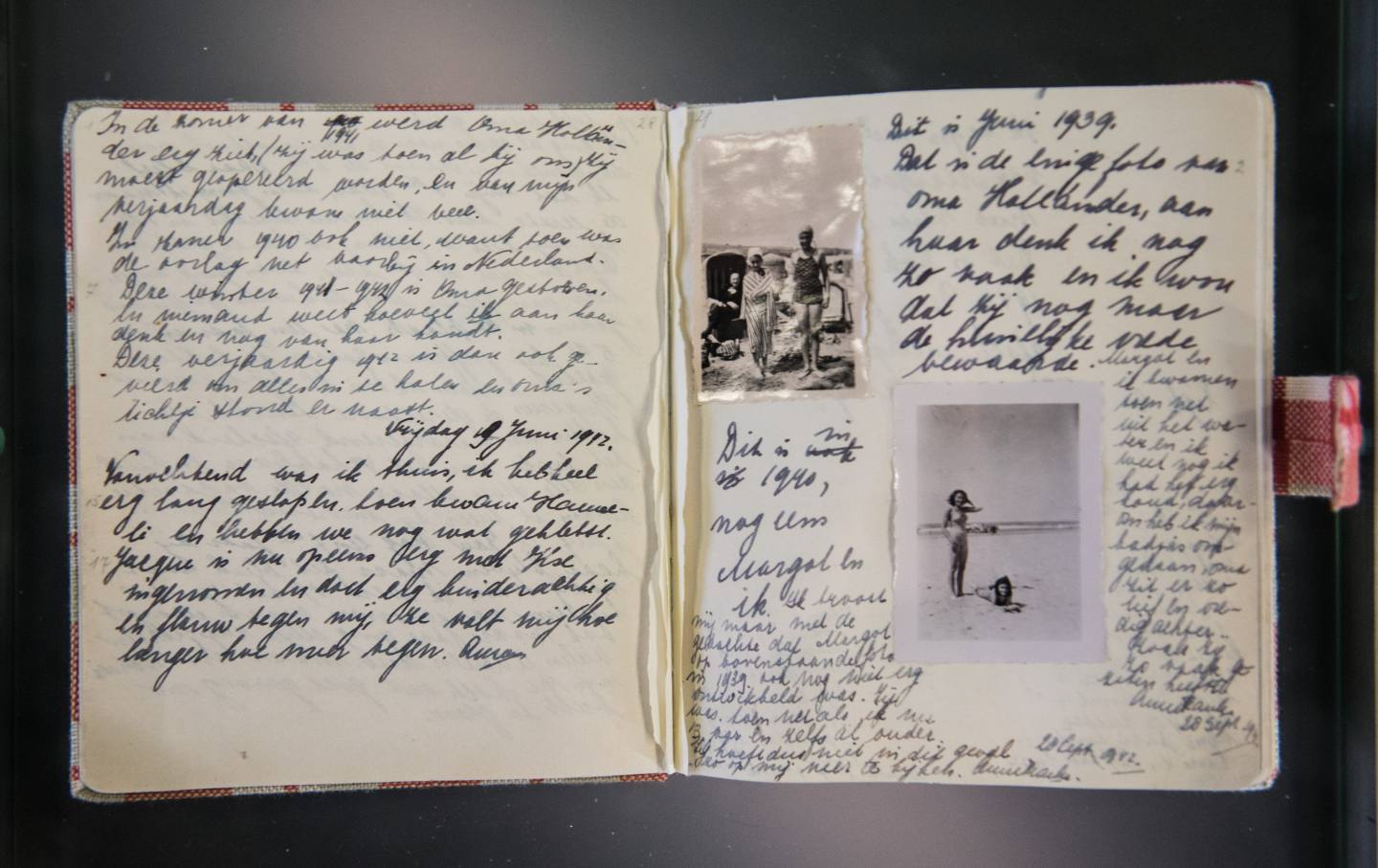
The ultimate archival heroine? George Stevens Jr. recalls meeting Otto Frank when Stevens’s director-father was beginning the film The Diary of Anne Frank. “Otto told us about when the Germans came to the house to confiscate everything they thought might have value for the Frank family,” recalls Stevens Jr. What did they leave behind? A teenage girl’s seemingly irrelevant hand-scrawled diary.
Become a Sustaining Donor This September
Between the reemergence of right-wing red-baiting and Donald Trump’s use of the chilling National Security Presidential Memorandum–7 to criminalize left political organizing, we’re seeing McCarthyism reborn before our eyes.
This assault on democracy cannot be ignored or wished away. Resisting it requires bravery in the face of threats and repression, a steadfast commitment to the truth, and the unwavering belief that we can—and will—overcome this darkness.
We must have an independent media that sets the record straight, unearths corruption and abuses of power, and advances a politics of justice and dignity for all if we’re to win this fight.
That’s why I’m writing to you today. This September, The Nation needs to add 100 monthly donors to sustain our progressive journalism. Your contribution makes the next investigative report, the next truth-speaking column, and the next pathbreaking essay all possible.
I hope you’ll support our work with a recurring donation today. If you donate $10 or more a month, we’ll send you a brand new “Hands Off the Free Press!” sticker to recognise your commitment to our cause. Please, donate today.
Onward,
Katrina vanden Heuvel
Editor and Publisher, The Nation