
Peggy Flanagan Is Running for the Senate to “Avenge Minnesota”
The lieutenant governor of the state is ramping up her Democratic Senate primary campaign as her state battles Trump’s brutal assault.
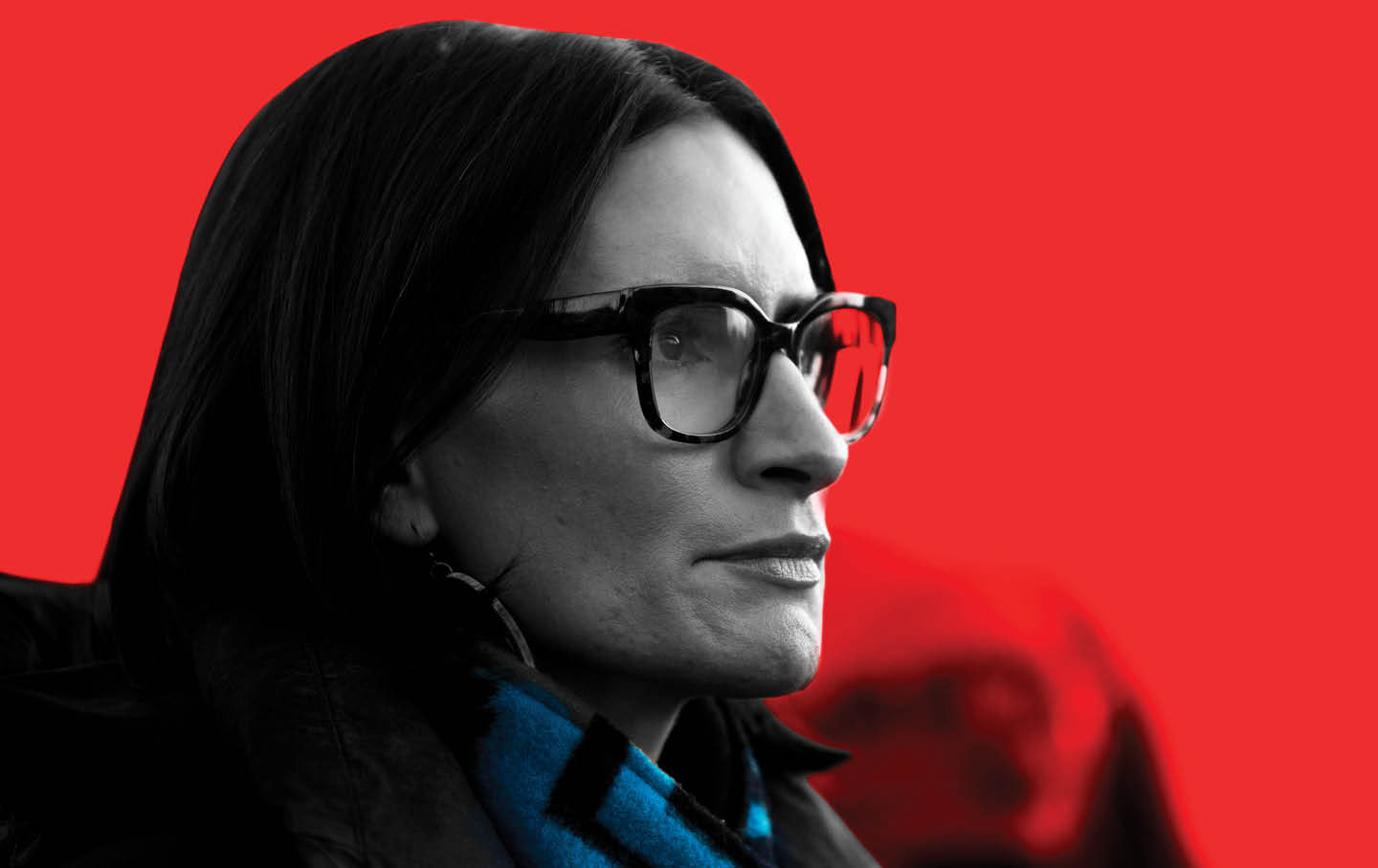
Minneapolis—In 2013, Minnesota Lieutenant Governor Peggy Flanagan was the 34-year-old director of the state chapter of the Children’s Defense Fund. That year, she and the nonprofit’s partners met to discuss strategies for the upcoming legislative session. One question was whether to prioritize funding for the state’s early-learning scholarships, which usually paid for half-day preschool programs, or for its Child Care Assistance Program (CCAP), which provides financial assistance for families for use in daycare programs. Flanagan, who is now running in Minnesota’s US Senate primary to replace retiring Democrat Tina Smith, took the firm position that children’s advocates had to back both.
“Even if you have an early-learning scholarship and your kid can go to preschool, they still need childcare while their parent is at work, right?” she tells me over dinner at Hai Hai, one of her favorite Southeast Asian restaurants in Northeast Minneapolis. “It was very controversial at the time. Now it’s common sense.”
The meeting included community groups and local foundation leaders. “A high-powered lobbyist said to me, ‘Well, Peggy, let’s be honest. People would rather have an early-learning scholarship than CCAP because CCAP is welfare, and people on welfare feel like losers,’” she recalls. “I didn’t know what to do other than say, ‘Time out. You know, my mom used the childcare-assistance program. She used it to go back to school and to get a better-paying job. You know what she didn’t feel like? A loser. She felt like a good mom.’
“And I stood up and walked out of the room,” Flanagan continues, nearly tearing up at the memory 13 years later.
When she returned, the lobbyist apologized. Flanagan told her, “If you want to just focus on early-learning scholarships, it’s absolutely your choice. We are clear that making sure that low-income families have access to childcare is our priority. So we’ll see you at the capital.” Both CCAP and the early-learning scholarships were funded, as they are to this day.
Flanagan’s mother, Pat, who was prominent in local Democratic-Farmer-Labor Party politics, didn’t just receive childcare assistance. After she separated from Flanagan’s father, the renowned White Earth Ojibwe leader Marvin Manypenny, the family relied on a number of government support programs: the Minnesota family-assistance program, food stamps, Medicaid, and Section 8 housing vouchers. Flanagan recalls carrying home boxes of government cheese under her arm “like a football.” To this day, she describes herself as “the girl with the different-colored school-lunch ticket,” proof that she qualified for free lunches.
That conversation with the lobbyist, Flanagan recalls, represented a turning point. “That was the moment where I fully stepped into: ‘I was a kid who grew up on public programs. I am here because of them and not in spite of them, and I will be unashamed that that is part of my identity.’ That has now completely informed how I do policy work, how I try to show up.”
In the years since, that staunch defense of public programs has won her the unflagging support of women like Kris Erickson, a nurse in rural Brainerd caring for her 14-year-old son, Bentley, who lives with hydrocephalus, among other disabilities. Bentley has health insurance through Medicaid, which pays for the specialized medical devices and therapies he needs, but the family is on its own for his daily care. Erickson spoke at Flanagan’s rally last August, after Republicans cut Medicaid in the so-called One Big Beautiful Bill Act. “One of the things I really admire about Peggy is she has lived experience with Medicaid usage. So she truly understands from within how important that is,” Erickson says.
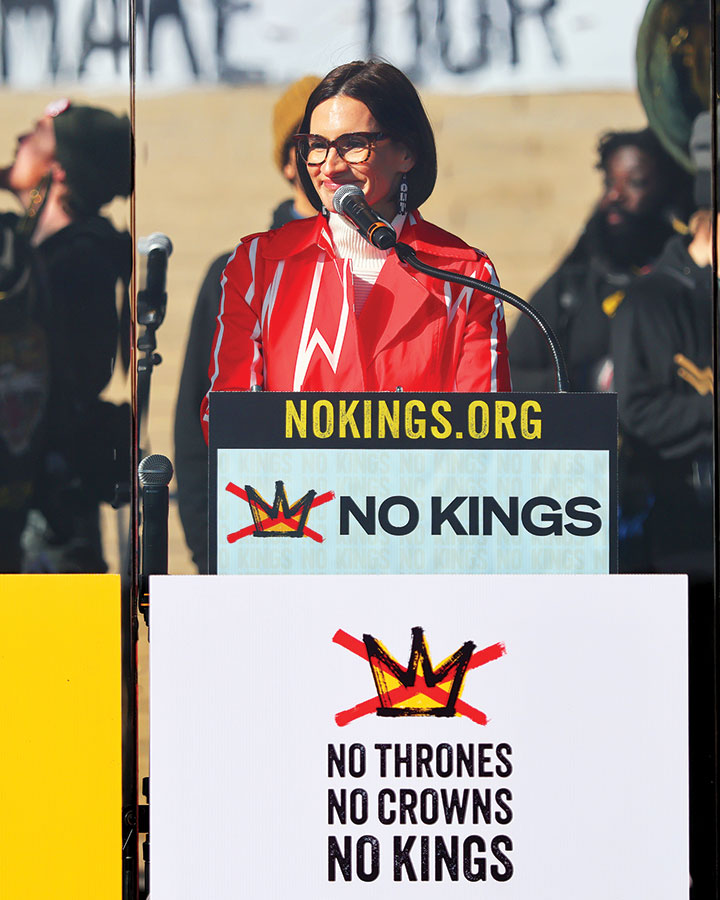
The working-class Flanagan would be the first Native woman elected to the US Senate, though she faces a competitive primary race with Representative Angie Craig in August. Flanagan’s many years as an activist, which predate her elected work, place her solidly in the state’s progressive tradition, as she’s fought for a higher minimum wage, more childcare funding, abortion protection, a broader social-safety net, rights for Indigenous Minnesotans, and the protection of Minnesota’s large and well-integrated immigrant community. The Twin Cities’ “No Kings” protest, held at the capitol in St. Paul on March 28, was named by national organizers as the flagship event of the day’s thousands of demonstrations, and Flanagan was a keynote speaker.
Addressing a crowd of 200,000, she turned to her Ojibwe heritage, as a member of the Wolf Clan, to explain Minnesota’s resilience: “The role of our clan is to insure that we leave no one behind. You have been showing what it means to leave no one behind.”
The state will have a reliable liberal voice in the Senate if Craig prevails; it will have a battle-tested progressive warrior if Flanagan does. Minnesota Attorney General (and Flanagan friend) Keith Ellison says, “I think she’s the change agent we need right now.”
Itraveled to Minneapolis to meet Flanagan in late February, as the city was still reeling from Operation Metro Surge, the Department of Homeland Security’s aggressive deployment of Immigration and Customs Enforcement and Customs and Border Protection agents to arrest and detain undocumented immigrants in the state. I arrived a month after the murders of the poet and mother Renée Nicole Good and the nurse Alex Pretti at the hands of ICE and CPB agents. The beleaguered city felt like a sacred site of profound grief and trauma. Day and night, there were visitors to the memorials that residents had erected to Good and Pretti.
Flanagan reminded me that the siege of Minneapolis didn’t begin with Operation Metro Surge. In many ways, it goes back to the murder of George Floyd in 2020 and the weeks of protest that followed—Floyd was killed just blocks from where Good was murdered, and within two miles of Pretti’s fatal shooting. In the wake of the unrest in 2020, Minnesota officials had initially resisted President Donald Trump’s demands to call in the National Guard, but as the arson and destruction spread, Governor Tim Walz succumbed, and his call to the National Guard represented its largest deployment since World War II. Then in June 2025 came the fatal shootings of Democratic state House Speaker Emerita Melissa Hortman and her husband Mark, and the mortal wounding of their dog, by an assassin who also had Flanagan’s name on his hit list.
Organizing to resist the coming assault by ICE began in January and February of 2025. A first meeting to train “raid responders,” sponsored by Unidos MN, an immigrant advocacy group, was expected to gather 150 people, Flanagan says; 1,500 showed up. Some 30,000 people have been trained since. It’s been clear from the start of Operation Metro Surge that the administration wanted to trigger violence on the part of the protesters, which would have allowed Trump to invoke the Insurrection Act and let his personal army go wild. Minnesotans never gave him the excuse.
Over dinner in late February, I ask Flanagan whether the administration’s recent announcement that it would “draw down” federal immigration agents felt like a victory for the community. “Did we win? I think we demonstrated that we’re not powerless,” she replies. “And I think that that’s really important right now. But it is clear to me that Trump’s mass-deportation agenda continues. The fact that they are spending $45 billion to create detention centers to warehouse people tells me that they’re not done yet.”

Representative Angie Craig, a popular purple-district congresswoman elected in the 2018 anti-Trump blue wave, could be a tough opponent. Like Flanagan, Craig is an outsider, raised by a single mother in an Arkansas trailer park, and she’s the first lesbian mother in Congress and has been endorsed by many LGBTQ groups. But their race has become the kind of progressive-versus-corporate-friendly-centrist battle that has played out in many Democratic primaries. After college, when Flanagan was following the activist path, Craig worked for a medical-device company, building up a net worth of more than $9.5 million. Her campaigns have been funded by some sources that are controversial among progressives, including medical-device manufacturers, cryptocurrency interests, and AIPAC.
Craig’s record on immigration has also given progressives in the state pause. She was one of 46 House Democrats who voted for the Laken Riley Act, which allows ICE to detain undocumented immigrants accused but not convicted of theft, burglary, shoplifting, or assaulting law enforcement. Named for a Georgia woman murdered by an undocumented person, the law made it easier for ICE to pick up immigrants accused of low-level crimes. Last June, Craig also voted for a nonbinding resolution praising the work of ICE. “I think voting for Laken Riley back then was basically saying that you didn’t have any faith that what happened in Minnesota later could happen,” says Javier Morillo, the codirector of state programs for the Movement Voter Project and a close friend of Flanagan’s. “That people would rise up, that people would resist, that people would stand up for their neighbors and not turn them in.” Flanagan agrees: “You’re telling on yourself—that you’re not actually in relationship with people who will be impacted by that decision,” she says. When Operation Metro Surge began, Craig rushed to advocate for the people who had been detained, but even after the killing of Renée Good, the congresswoman told The Minnesota Star Tribune that she stood by her vote on Laken Riley. But less than a week after my dinner with Flanagan, Craig wrote an op-ed for the Star Tribune titled “I Regret My Vote on the Laken Riley Act.”
“As I watched the Trump administration and the murder of Alex Pretti and Renée Good,” Craig told me, “and standing outside the Whipple building [a facility that held many of the people detained by ICE], how could I not regret giving this administration any additional authority?”
Craig has also made an issue of Minnesota’s welfare-fraud scandal, in which nearly 100 people, many of Somali descent, have been charged with stealing funds allocated for poor children, seniors, and people with disabilities. Trump and his cronies have exaggerated the degree of fraud, but the federal prosecutions are real and ongoing, and in the wake of the scandal, Walz decided not to seek reelection. Republicans say voters’ concerns over the issue could help them win the Minnesota Senate seat this November. When I spoke with Craig in late March, she concurred, saying, “The number-one issue for general-election voters is fraud here in Minnesota.” I did not hear that from any other political source.
The endorsements racked up by the two candidates reflect the political differences within the Democratic Party. Progressive members of Congress have been lining up behind the lieutenant governor, including Senators Bernie Sanders, Elizabeth Warren, Chris Van Hollen, and the retiring Tina Smith. By mid-April, in advance of the Democratic-Farmer-Labor Party’s statewide convention, Flanagan had won more DFL delegates than Craig in over 90 percent of the 117 local-unit conventions, her campaign reported, all but giving her a lock on the DFL’s endorsement. Craig, for her part, has been endorsed by Senators Jacky Rosen and Tammy Baldwin, a Wisconsin progressive who is also gay. As The New York Times’ Lisa Lerer reported, it’s widely believed that Senators Chuck Schumer and Kirsten Gillibrand are “quietly signaling support for and pushing donors toward specific Senate candidates,” including Craig, although they haven’t officially endorsed her. Whoever wins the primary in August will face the victor from an unimpressive list of Republican primary candidates led by Michele Tafoya, a former NFL broadcaster turned conservative commentator. The Cook Political Report rates the seat as “likely Democratic.”

Javier Morillo, a gay, bearded activist of Puerto Rican descent who has called himself a “thug in pastels”—a hard-charging organizer who’s known for being nattily dressed—wants me to know that Flanagan’s confrontation with her Children’s Defense Fund allies back in 2014 was no one-off. He recalled teaming up with Flanagan at the CDF the following year, while he was the president of SEIU Local 26, to push for a hike in the state’s minimum wage. A coalition of unions, Democratic legislators, faith leaders, and other community groups had agreed on a minimum-wage rate but were divided over whether it should be indexed to inflation.
“That was the first time that we had a trifecta [Democratic control of the governorship and both branches of the statehouse] in my time in politics,” Morillo says. “And it was a trifecta that was defined by Democrats overly concerned with not doing anything that would be considered overreach.”
Morillo, Flanagan, and their allies insisted that indexing was crucial. And even though they argued that they had the votes in the Legislature for indexing, a number of their partners—including some Democratic-Farmer-Labor elected officials and labor leaders—thought they should leave it out. At a meeting to discuss a proposed compromise, Morillo recalls, Flanagan—who stands all of 5-foot-4—threw herself in front of a cabinet containing a whiteboard in order to block the presentation of the compromise plan that was written there. “Peggy literally puts her body over the door and says, ‘No.’ They were about to present this compromise that [had] no indexing to inflation. And she said, ‘Absolutely not. We cannot even consider this.’” Morillo and Flanagan’s side won.
As Morillo recounted their many shared political battles, I found myself wondering over the fact that Flanagan is only 46. She got started early. In her senior year in college, she joined the progressive Senator Paul Wellstone’s campaign as a volunteer and wound up leading his urban Native-organizing work. After Wellstone died in a plane crash, she organized in Native communities around education issues for the Greater Minneapolis Council of Churches.
In 2004, Flanagan ran for the Minneapolis School Board. “The first time she wanted to run for office, I was actually surprised,” Morillo tells me. “I kind of thought of her as one of us, the people who stay in the background. But no, she’s a policy geek.” The battle over the minimum wage also showed Morillo that Flanagan was willing to buck the state’s Democratic leaders, he says, something she would continue to do over the coming years.
Minnesota’s Democratic-Farmer-Labor Party was formed in 1944 when state Democrats, led by Hubert Humphrey, made common cause with leaders of the more radical Farmer-Labor Party, which had emerged in the 1920s as a populist force defending farmers and union members and promoting public ownership of railroads and utilities and robust social-welfare programs. Before the merger, the Farmer-Labor Party regularly won statewide and local offices on its own. Today, the DFL still gives Minnesota Democrats more of a progressive grounding than other state parties have.
Flanagan became the youngest person ever elected to the school board and has continued to work on issues related to the education of Indigenous kids. She also became a trainer with Camp Wellstone, a political-leadership development program established by the late senator’s friends and family to train a new generation of progressive candidates and operatives.
In 2013, Marian Wright Edelman, the founder of the Children’s Defense Fund, recruited Flanagan to run the Minnesota chapter. “It’s like your childhood hero calls you out of the blue,” Flanagan recalls, still starstruck at the memory. She had just given birth to her daughter Siobhan and felt underqualified to take on such a big job. But Edelman prevailed. Two years later, Flanagan ran unopposed for an open seat in the state House. Next came her run for lieutenant governor with Tim Walz.
Despite her bravado during the minimum-wage showdown, Flanagan confesses to having doubted herself before the meeting when the question of indexing was to be discussed. “The night before that meeting, I called my mom, and I was like, ‘I don’t know what we’re gonna do, Mom. Folks think we have to compromise tomorrow.’ She was like, ‘Peggy, I wish that there were people like you fighting for us when you were growing up. Go in there and stand up for people.’” So Flanagan did, and she and Morillo and their allies prevailed, hiking the rate to $9.50, indexed for inflation. Today, Minnesota’s minimum wage is $11.41.
Flanagan is a proud leader in the Ojibwe community, a tribe with a reservation on White Earth, in northern Minnesota. An advocate of Native rights throughout her career, she’s been the force behind groundbreaking bills and executive orders signed by Walz that have strengthened the rights of the state’s 11 tribal communities, including legislation that affirmed tribal sovereignty and required agencies to appoint tribal liaisons. Flanagan also spearheaded the creation of the nation’s first state-level Office of Missing and Murdered Indigenous Relatives. As of last year, thanks largely to Flanagan, the flags of all of Minnesota’s federally recognized tribal nations, including White Earth, hang at the state capitol to honor tribal sovereignty.
As the birthplace of the American Indian Movement (AIM) in 1968, Minneapolis itself has a proud Indigenous activist heritage, and Flanagan’s father, Marvin Manypenny, was among the people involved in launching the movement. Manypenny fought both American officials and tribal leaders to reclaim land, and rights, for the White Earth Ojibwe, who call themselves the Anishinaabe, and other tribes. He also struggled with substance-abuse issues, and he and Pat Flanagan separated in 1979 (Peggy Flanagan was born later that year). Marvin and Peggy didn’t get close until she was older. In 2024, Flanagan recalled to the MinnPost, “He said, ‘My girl, it’s a good thing I wasn’t in your life until I got healthy and sober.’ I got the benefit of having my dad when he was ready to be my dad.” Still, “my mother enrolled me in his tribe,” Flanagan tells me. “She kept me close to my father’s family.”
Pat also made sure that her daughter knew her Irish Catholic roots, raising her with the help of Pat’s three sisters. “Basically, Peggy was raised by a pack of wild feminists,” Morillo told me. Flanagan agrees: “There just weren’t a lot of men around. It was a bunch of single moms and lesbians who were taking care of us. I grew up basically hanging out a lot with my mom and my Auntie Peggy, doing things that women in their 30s did in the ’80s, like going to Kenny Rogers and Dolly Parton concerts,” she says, laughing.
And learning about politics. “I had no idea that women didn’t just run shit, because that was what I saw,” she says. Keith Ellison calls the Flanagan women “DFL legends.” Peggy’s grandmother, Mary, was one of the few women involved in forming the original DFL alliance, and both she and Pat worked for Hubert Humphrey’s presidential campaign in 1968. Meanwhile, Peggy’s Aunt Mary ran for the state Senate in 1982 and lost narrowly (Flanagan would later represent a nearby House district), while her Aunt Kathy remained active in Hennepin County politics.
Flanagan has jokingly called herself “O’jibwe” to note her Irish and Native heritage. Pat told Peggy that she would raise her as a Catholic from the sacraments of baptism through confirmation, and then her religious allegiances would be her own choice. Peggy agreed to be confirmed but told her mother it had to be on her own terms. She took the confirmation name Kateri, in honor of the Mohawk/Algonquin Saint Kateri Tekakwitha. But because Tekakwitha had only been beatified, not yet canonized, at the time of Flanagan’s confirmation, the teenager had to appeal to the archdiocese to use the name.
As she got older, and especially at the University of Minnesota, where she majored in child psychology and American Indian studies, Flanagan grew closer to her Ojibwe roots, and to her father. “My girl, I think you have to burn the system down,” he told her. “You think you can change it from the inside out. We need both.” But she also kept her Catholic ties, which grew stronger after she lost her mother in November 2022. She and her family are congregants at the multiracial, multilingual Ascension Catholic Church in North Minneapolis. Ascension’s pastor, Father Dale Korogi, tells me he met Flanagan when she came to the church to help plan her Aunt Peggy’s funeral. “Then I remember visiting [her] and Tom when they were in the hospital with her mom.” Tom is Flanagan’s husband, Tom Weber, a journalist at Minneapolis Public Radio, whom she married in 2019. Now she’s a parishioner who attends services weekly.
On the day I meet Korogi at Ascension, multiple bags of groceries fill the church’s reception area, yellow Cheerios boxes peeking out the top. Ascension has been a hub for collecting food for immigrant neighbors who fear that ICE might apprehend them while they shop. “I just want to take care of the person who’s in front of me,” Korogi says. “And Peggy’s like, ‘Well, let’s do that for like 1 million people. How can we scale it out so that we care for all these people?’ That’s what organizers do.”
Flanagan tells me that Ascension’s pews are normally packed for Mass, including with many immigrant families. “Christmas Eve, usually it is wall-to-wall people, but there were only 45 people at Christmas Eve Mass this year,” she says. “Our parishioners have been directly affected by [the ICE surge],” Korogi tells me. The church has rallied its congregation in response. “I’ve never seen anything like it—where you’d ask for volunteers and 200 people would sign up.” Without commenting on Flanagan’s electoral contest with Craig, Korogi notes, “Peggy, even before I knew her personally, was just a champion for everything that we honor in our Catholic social teaching.”
More than one person described the Senate seat sought by Flanagan and Craig as the “Paul Wellstone seat.” Since the still-revered senator died with his wife and daughter in a plane crash on the eve of the November 2002 election, the seat has almost always been held by Wellstone-style progressives like Al Franken and Tina Smith. Flanagan got a big boost when Smith, who announced in early 2025 that she wouldn’t run again, endorsed her in February. “I have nothing negative to say about Angie Craig. This is all about my positive support for Peggy,” Smith says when she calls me from the road after a local meeting in suburban Willmar, Minnesota. “I just think that Peggy is built for the United States Senate, and she is built for this moment.”
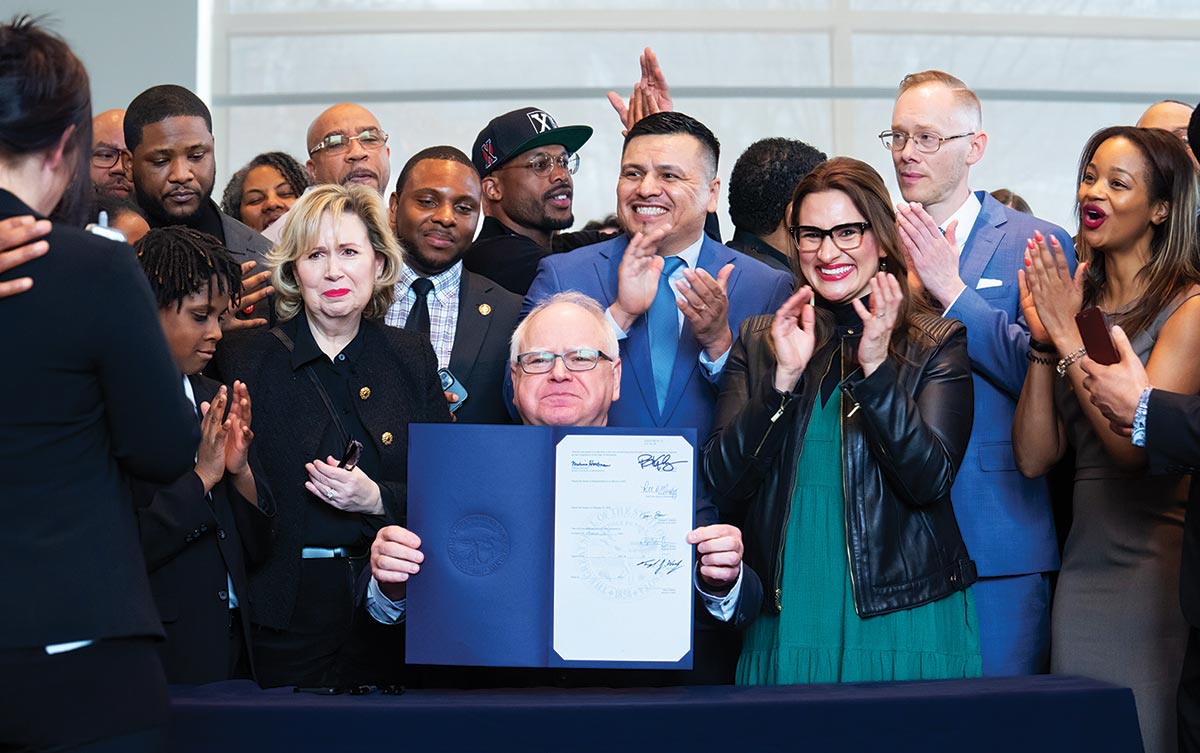
One of the reasons Minnesota found itself in Trump’s crosshairs may be the extraordinary suite of progressive laws the state Legislature has passed—with narrow Democratic margins—in the past three years, including free school breakfast and lunch, paid family and medical leave, abortion protections, and a child tax credit. Flanagan was critical to those achievements, Smith says: “Having been in the Legislature, having had those strong relationships, the role that she played in passing that legislative agenda was really essential.” Before photos of Walz signing the free breakfast and lunch bills, surrounded by adoring children, went viral in 2024, Flanagan, the girl with the different-colored lunch ticket, had doggedly worked the Capitol in support of the legislation.
Flanagan’s background as a child receiving public assis- tance means that “it is kind of baked into her,” Smith says, “how we help each other here in Minnesota.”
On my last day in Minnesota, I attended a congressional candidates’ forum in rural Hackensack, population 300, in Minnesota’s Eighth District. It’s a red redoubt, but the Cass County Democratic Party has been enjoying a bit of a resurgence, says Sandra Shirek, a local activist. More than 100 people showed up at the forum on a 13-degree Saturday to hear the five Democrats vying to replace Trump sycophant Pete Stauber. Nobody thinks that defeating Stauber will be easy, but, Shirek says, “I’m hoping if we can get the Native vote out for Peggy, it will help all along the ballot.”
Shirek has been involved in local politics since Cass County’s DFLers “were a group of maybe six. We had no money—we used to pass the hat around the table,” she tells me. She says their membership has been buoyed by retirees moving up from the Twin Cities, as well as by young families looking for more affordable homes. Shirek also suggests that Trump’s tariffs, ICE’s cruelty, and, most recently, the war with Iran are eroding his support. She sees fewer Trump signs around, and other locals told me the same thing.
It will take all of that—changing demographics, Native turnout, disaffection with Trump—to power Flanagan, if she wins the primary, and other Democrats across the finish line in November. Former DFL research director Will Davis tells me the white suburban women’s vote will likely be as crucial as a buoyed Native vote. “I just think the white suburban women generally have been radicalized” by the ICE invasion, he says. Davis also believes that the state’s sizable Muslim population, especially Somalis, will be mobilized. “I think a large part of the Muslim population in Minnesota didn’t show up at all [in 2024] because of Gaza,” Davis adds, although Kamala Harris and Walz won the state.
Holly Cook Macarro, a Native activist and member of the Red Lake tribe who was part of a team that finally got the AIM activist Leonard Peltier released from prison under President Biden, believes that Flanagan’s tribal ties will give her an edge. Flanagan’s campaign, Cook says, “is the first time I’ve seen a candidate paying real attention to making sure that the connections are being built between the Flanagan for Minnesota campaign and the get-out-the-vote operations with the 11 tribes in Minnesota.” Tribal leaders are automatically delegates to the state convention, “and Peggy has made sure everyone knows that…. She is building the sort of infrastructure that is the foundation of political power for Indian Country.”
If she’s elected to represent her state in Washington, Flanagan says she will elevate Native issues and fight to hold ICE to account. “I want to avenge Minnesota!” she told me that night at Hai Hai, raising her voice. “You don’t get to just leave; you have to repair this. The love, the solidarity here has been great, but you don’t just get to do this to us. God willing, when we get power back, everything they’ve done has to be undone. Everybody has to be prosecuted.”
Become a Sustaining Donor This September
Between the reemergence of right-wing red-baiting and Donald Trump’s use of the chilling National Security Presidential Memorandum–7 to criminalize left political organizing, we’re seeing McCarthyism reborn before our eyes.
This assault on democracy cannot be ignored or wished away. Resisting it requires bravery in the face of threats and repression, a steadfast commitment to the truth, and the unwavering belief that we can—and will—overcome this darkness.
We must have an independent media that sets the record straight, unearths corruption and abuses of power, and advances a politics of justice and dignity for all if we’re to win this fight.
That’s why I’m writing to you today. This September, The Nation needs to add 100 monthly donors to sustain our progressive journalism. Your contribution makes the next investigative report, the next truth-speaking column, and the next pathbreaking essay all possible.
I hope you’ll support our work with a recurring donation today. If you donate $10 or more a month, we’ll send you a brand new “Hands Off the Free Press!” sticker to recognise your commitment to our cause. Please, donate today.
Onward,
Katrina vanden Heuvel
Editor and Publisher, The Nation
More from The Nation


The First Amendment Lives for Another News Cycle—Maybe The First Amendment Lives for Another News Cycle—Maybe
In this week’s Elie v. U.S., our justice correspondent parses Trump’s attacks on CNN, MS NOW, and Politico. Plus: it’s time to impeach the judges!
Susan Collins Is Corrupt. She Still Might Be Reelected. Susan Collins Is Corrupt. She Still Might Be Reelected.
Despite being embroiled in scandal, the Maine senator is benefiting from Democratic Party divisions.


Trump Impersonated Hitler at the United Nations Trump Impersonated Hitler at the United Nations
It was just one more of many examples of the president mirroring a fascist leadership.
Trump Is Destroying Public Health. Democrats Need to Fight Back. Trump Is Destroying Public Health. Democrats Need to Fight Back.
If they win in the midterms, the party must move quickly and aggressively to undo the harm Trump and his cronies have caused.

