Louisiana’s Disregard for Pregnant People and Black Voters Must Not Be Ignored
The stakes are undeniable when voting rights are diminished and abortion access is on the line.
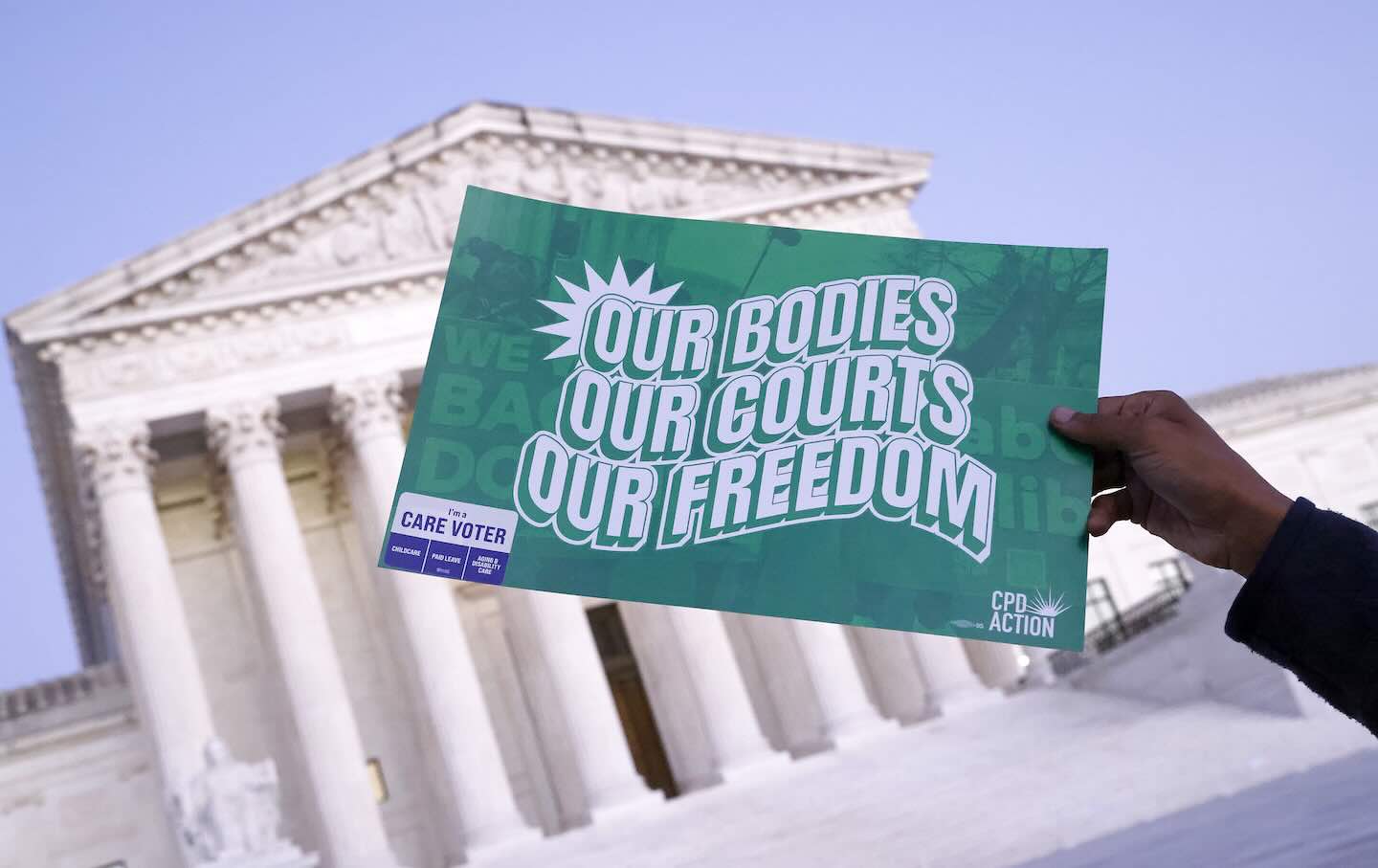
On Monday, the Supreme Court cleared the way for the abortion pill mifepristone to be mailed across the country, treating it like thousands of other drugs available through the United States Postal Service. The Supreme Court’s order, which is temporary, was released on the heels of emergency petitions filed by the pharmaceutical companies Danco and GenBioPro, after a three-judge panel at the US Court of Appeals for the Fifth Circuit issued an order “blocking the mailing of mifepristone prescriptions” across the country, no matter whether abortion is legal in the state. Both requested that the Supreme Court issue an administrative stay to prevent the lower court’s order from taking effect.
The case is part of an ongoing effort launched by conservative lawmakers, anti-abortion groups, and emboldened attorneys general intended to eviscerate nationwide access to abortion, by prohibiting access to medication abortion through telehealth providers. This specific effort has been taken up by Louisiana Attorney General Liz Murrill and Rosalie Markezich, who says she was manipulated into taking mifepristone by her former boyfriend in his effort to end her pregnancy.
While the Supreme Court’s order, signed by Justice Samuel Alito, eases immediate concerns, especially for those seeking to end their pregnancies, the underlying conceit and harm posed by Louisiana’s litigation is devastating and should not be ignored. Its potential harmful reach mirrors that in the Supreme Court’s recent voting rights decision in Louisiana v. Callais, which gutted the Voting Rights Act. Both cases seek to expand Louisiana’s permissive view of discrimination and cramped stand on sex and race equality, justice, and liberty to the entire nation. The Supreme Court has already granted Louisiana its imprimatur on voting rights. Will it do the same on access to mifepristone and telehealth?
In a telling lesson for the rule of law and American democracy, both cases hail from a state with a vivid and troubling past on both race and sex discrimination. Louisiana’s toxic history of gender and racial inequality dates back to the nation’s founding and with too many examples in the present.
In recent years, Representative Danny McCormick introduced HB 813, a law that if enacted would allow for the criminal punishment of “life without parole” against women who have abortions. Louisiana’s House Committee on the Administration of Criminal Justice voted 7–2 for McCormick’s proposed legislation. Notably, the bill was considered so barbaric that even the antiabortion group Louisiana Right to Life opposed it.
As I noted in the The University of Chicago Law Review in 2024, Louisiana state lawmakers rejected efforts to add incest and rape exceptions to the state’s “near-total abortion ban,” despite clear public support. In authoring one of the two bills to amend Louisiana’s dangerous antiabortion laws, Louisiana state Representative Delisha Boyd explained that her mother experienced rape and pregnancy at 15 years old, but “never recovered,” dying “before she was 28 years old, because no one took time to take care of the child that had been violated by a predator.”
During a lengthy hearing on Boyd’s proposed legislation, lasting several hours, survivors of rape and incest along with physicians and psychologists offered gut-wrenching testimony, including about a 14-year-old girl who “became pregnant after being repeatedly raped by an uncle.” Another story involved an 11-year-old girl. Not even the testimony of a doctor highlighting the rape and pregnancy of an 8-year-old child moved conservative Louisiana lawmakers to consider an exception to its abortion ban. Notably, this is the same legislature that originally drew the gerrymandered map creating only one majority-Black voting district in Louisiana. The Supreme Court gave its blessing to that decision, weakening a major provision of the Voting Right Acts, so much so that Justice Elena Kagan called the law “a dead letter.”
Already, since that ruling, Governor Jeff Landry has signed an executive order seeking to “suspend Louisiana’s congressional House primary elections after voting had already begun.” According to the American Civil Liberties Union, which along with the Legal Defense Fund and others is suing to block the governor’s executive order, “This illegal executive order threatens the integrity of our democratic system and disregards the voices of voters who have already participated in the May primary election in good faith. By attempting to suspend an ongoing election, state officials are creating confusion, undermining public trust, and placing partisan interests above the constitutional rights of Louisiana voters.”
The bottom line? Those who care about reproductive health, justice, and freedom should remain concerned and attentive to the draconian efforts to upend gender and racial equality at all costs—because it won’t stop if or when Louisiana gets its way. And to be clear, getting its way would include permitting a barbarous level of disregard for pregnant women who might die in miscarriage, rape victims who are denied abortion care, and pregnant little girls deprived of sane, safe, and compassionate healthcare in the wake of incest and rape.
Simply put, the risks for women and gender expansive people are undeniable. And more, they are diabolical for Black women. The ACLU explains it this way: “Black voters and communities that have long fought for equal political representation should not be forced to bear the burden of unlawful power grabs designed to silence their voices. Elections belong to the people—not to politicians seeking to manipulate the rules.”
The stakes are undeniable when voting rights are diminished and abortion access is on the line. In their petition, Danco expressed that the Fifth Circuit’s order “inflicts substantial, certain,” and “unrecoverable harm” on the drug maker and the public that relies on the medication. Further, they noted that the lower-court order “mandates nationwide chaos.” They are right.
The overturning of Roe v. Wade has brought chaos, confusion, and death. For now, at least, the Supreme Court has stepped in and extended access to telehealth abortion. But the fight for reproductive rights and justice is far from over.
Become a Sustaining Donor This September
Between the reemergence of right-wing red-baiting and Donald Trump’s use of the chilling National Security Presidential Memorandum–7 to criminalize left political organizing, we’re seeing McCarthyism reborn before our eyes.
This assault on democracy cannot be ignored or wished away. Resisting it requires bravery in the face of threats and repression, a steadfast commitment to the truth, and the unwavering belief that we can—and will—overcome this darkness.
We must have an independent media that sets the record straight, unearths corruption and abuses of power, and advances a politics of justice and dignity for all if we’re to win this fight.
That’s why I’m writing to you today. This September, The Nation needs to add 100 monthly donors to sustain our progressive journalism. Your contribution makes the next investigative report, the next truth-speaking column, and the next pathbreaking essay all possible.
I hope you’ll support our work with a recurring donation today. If you donate $10 or more a month, we’ll send you a brand new “Hands Off the Free Press!” sticker to recognise your commitment to our cause. Please, donate today.
Onward,
Katrina vanden Heuvel
Editor and Publisher, The Nation