Why Black People Can’t Earn Our Way Out of Racism in Maternal Care: A Q&A With Khiara Bridges
In her new book, Bridges found that healthcare provided through private markets leaves more room for discrimination and unequal care to take root than in a public program like Medicaid.
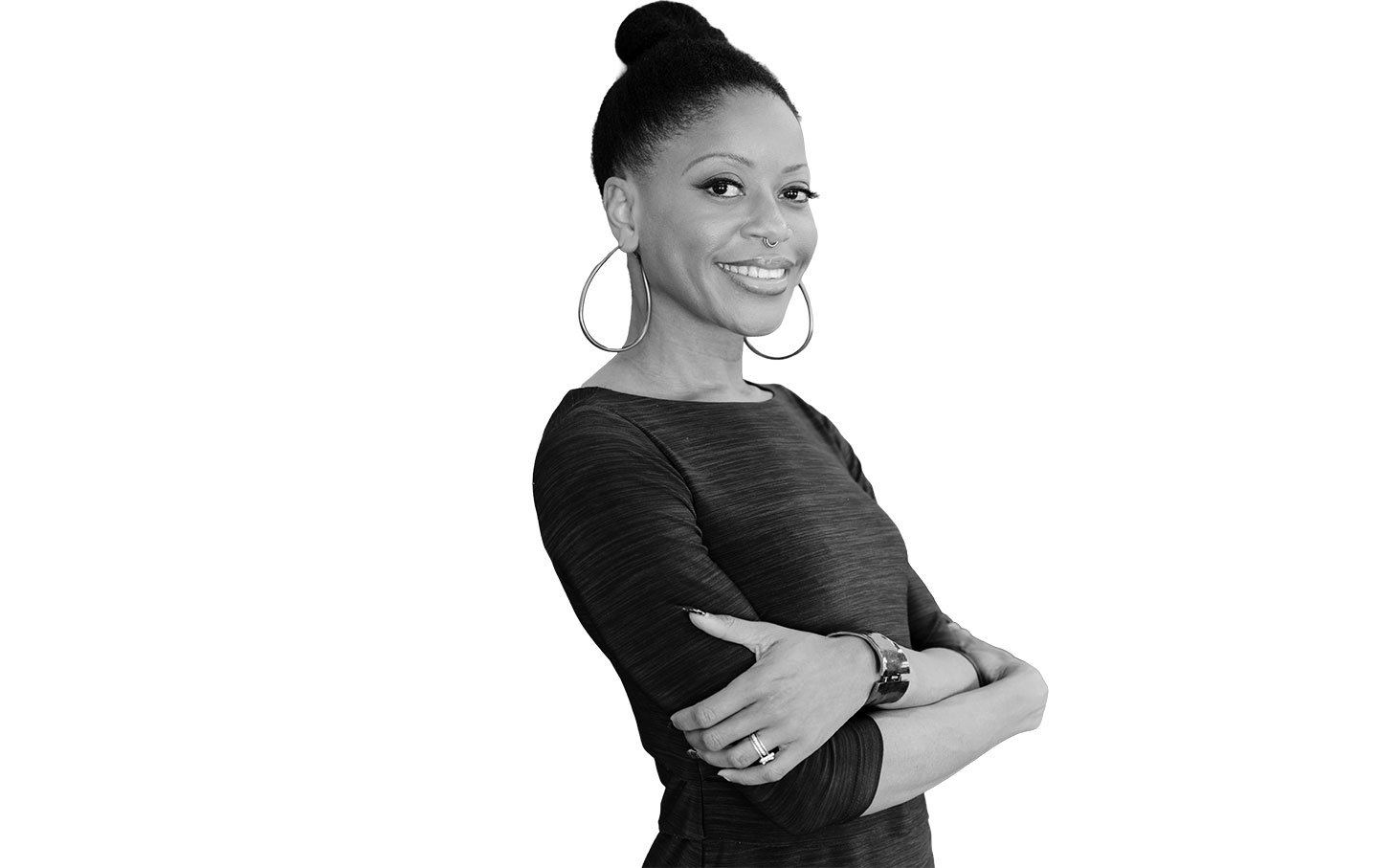
Khiara M. Bridges’s newest book, Expecting Inequity, “has been a long time coming,” the UC Berkeley law professor told The Nation in early March. Bridges, who earned a PhD in anthropology at Columbia University, where she also received her JD, first studied the roles of class and race in maternal healthcare in her 2011 book Reproducing Race, offering what she now calls a “scathing critique of Medicaid and its program of prenatal care…that completely disregards the desires of the pregnant person and also completely disregards the discretion of the provider,” especially compared with people who receive commercial insurance and can make a lot more choices about their care. This system treats the poor, she wrote, as a “fictional uniform population” and erases their unique desires and needs, undermining their agency while allowing inequality, and racial inequality in particular, to continue unabated. But people attending her book talks questioned whether the dehumanization that low-income people of color experience is really due to their race or primarily a function of their poverty. They were right, Bridges says, that poor people in the United States are treated unjustly. “But implicit in that question was the assumption that racism doesn’t show up when you have class privilege—that you [can] escape dehumanization and negative outcomes if you are a person of color with some degree of wealth or affluence.” Expecting Inequity is Bridges’s investigation into whether that is possible.
The answers are surprising. As Bridges was reviewing CDC data on pregnancy-related deaths, she noticed, as she writes in her new book, that while “black people with less than a high school education are 1.8 times as likely as white people with less than a high school education to die from a pregnancy-related cause…black people with a college education or more were 5.2 times as likely as white people with a college education or more to die from a pregnancy-related cause.” In other words, the disparity in maternal mortality rates between educated Black people and their educated white counterparts is greater than the disparity between uneducated Black people and their uneducated white counterparts.
The result of two years of investigation, Expecting Inequity exposes structural inequities within the healthcare system that are inescapable no matter your income or wealth.
Bridges conducted studies at two San Francisco hospitals—Golden Health, a world-renowned private hospital, and the nearby “poor people’s hospital,” the Zuckerberg San Francisco General Hospital—and interviewing 200 pregnant or newly postpartum people, including 75 “unicorns” or class-privileged Black people, residing in San Francisco. She found that when the healthcare is provided through private markets—as it is in commercial insurance programs—there’s more room for racism and unequal care to take root. While Black people with class privilege can access a higher tier of healthcare than the Medicaid system, which comes with standards and regulations that overemphasize the medicalization of pregnancy, the lack of government oversight of the “profit-maximizing, discretion-packed processes found in the profit-generating side” is leaving “socioeconomically fortunate black people susceptible to race-based harm.” Meaning that, for example, their concerns about life-threatening conditions may be dismissed as they are subjected to anti-Black discrimination due to racist assumptions and stereotypes made by providers. As Bridges says, Black people are not able to earn or educate our way out of anti-Blackness. Still, in our conversation, Bridges discussed why she remains hopeful about the United States getting this right. This interview has been edited for length and clarity.
—Regina Mahone
Regina Mahone: In explaining why maternal and infant health disparities are starker for people with commercial insurance—who are, on average, higher-income—than for those who are on Medicaid, you write that “Medicaid delivers a uniform program of prenatal care for the poor…. While this standardization problematically limits patient and provider autonomy, it also reduces racial disparities in infant and maternal mortality. In doing so, Medicaid serves antiracist goals.” Can you talk more about this finding and how, as you say, Medicaid makes “race matter just a little less” when we look at infant and maternal mortality data?
Khiara Bridges: I’m so fascinated by contradictions, and that was one of the contradictions that motivates this project. When I was researching this book, the contradiction became apparent: The rates at which Black and white pregnant folks [on Medicaid], as well as the babies that they birth, die are actually closer than the rates at which Black babies and Black parents and their white counterparts die when there is class privilege. So the gaps are actually higher at the higher end of the socioeconomic ladder. The critiques that I made in Reproducing Race about Medicaid are valid critiques, but how do I reconcile that with the fact that these features that one ought to criticize are actually producing outcomes that are more racially equitable than what we see with regard to the commercially insured? It is the program of prenatal care that one can’t opt out of—Medicaid—that reduces the racial disparities in maternal and infant mortality and morbidity. The question that I ask in the book is, given that fact, what does racial justice look like? Should we be fighting for Medicaid for all, even though that means that we will be denied choices around what care to receive and who to receive it from and what procedures to undergo? I don’t resolve this tension in the book, but it’s a question that we need to ask ourselves. If we are fighting for a world in which one’s ability to survive does not depend on one’s race, what sort of institutions should we produce? And it seems like when we’re talking about maternal and infant mortality and morbidity, we need to be thinking about the universal healthcare that removes some of the discretion that providers make in our current kind of regime.
RM: You write about how the healthcare system is profoundly segregated, but not only that: The hospitals that primarily serve uninsured patients or patients receiving Medicaid make it possible for hospitals that serve class-privileged patients to offer superior care. You draw a parallel between healthcare and housing, and how redlining and other forms of housing discrimination have made it possible for wealthier neighborhoods to exist. Why was it important to you to make those connections and the observation that, in general, “poor people make it possible for wealthier people to have nice things”?
KB: One of the things that I wanted to do with this book was to denormalize the fact that there are poor people’s hospitals and hospitals for everybody else. People in the US tend to think that it is just normal and natural for there to be institutions for poor people and institutions for nonpoor people. We have poor neighborhoods, we have the ghetto, and then we have the suburbs and we have nice neighborhoods. That geography is present in every single region in the United States. Even though the book is set in San Francisco, it could have been set anywhere.
We also know that the hospitals for poor people are delivering, in a lot of ways, substandard care. And that’s just something that should strike all of us as a fundamental injustice: that your health is compromised when you are poor because of the environments in which you’re forced to live. You’re living next to a highway, which spews pollution on you. You don’t have access to healthy foods, perhaps because you live in a food desert. And even if you don’t, fresh fruits and vegetables are expensive. Your health is compromised when one is poor in this country. That is a fundamental injustice that I’m trying to denormalize in this book.
But the other thing that I wanted to do was to make explicit that there is a symbiotic relationship between the two. The features that make the institutions that cater to those with class privilege in this country nice are made possible by the chaos and the lack of nice things that are found in the institutions that cater to low-income people.
In the book, I describe how, when I was researching Reproducing Race, one of the most obvious features of the public hospital [in New York City] where I was working and observing was that the pregnant folks would wait hours for their appointments. And then when I got to Golden Health, the well-resourced institution where I did the research for this book, waiting times were nonexistent. If patients had to wait for their provider, it was no more than 15 minutes, or 20 minutes on a bad day. I was trying to figure out why this is, and I found that it isn’t because, oh, it’s just that Golden Health and these institutions that cater to high income people are just better organized or the patients are just better in terms of showing up on time. But rather, it is a matter of fiscal survival for the places that see low-income people to accommodate folks who are late. The hospitals desperately need to be reimbursed for the care that they provide because of their shoestring budgets. And these hospitals care for low-income people whose lives are made more contingent because of their poverty, which makes it difficult for them to show up to their appointments on time. So the low-income hospitals are caring for these people, and that allows the places that care for wealthier people to not see those low-income people. Therefore, those spaces can be orderly, and those places can be non-chaotic and can promise that you’ll be seen by your provider within 20 minutes of your arrival.
At the end [of the chapter], I invite the reader to think about how all the nice things that wealthier people have are contingent on low income people’s discomfort. If you live in a nice neighborhood, how is the clean air and clean water and lead free soil found in your neighborhood made possible by the unclean air and unclean soil and unclean water found in low income communities? How are the benefits that you get at your job, whether it’s paid vacation days or health insurance, made possible by the contingency found in these low wage jobs? You’re lucky if you have access to some healthcare at low income jobs.
RM: Yet even when wealthier people have nice things, Black people with class privilege cannot escape racism in healthcare. Can you talk about the role of neoliberalism and the market-based approach to healthcare in the United States in the Black maternal health crisis?
KB: When one’s health insurance is Medicaid, the government regulates Medicaid very strictly. But when one has class privilege, one enters into this commercial insurance realm that is not regulated to the extent that Medicaid is and where market logics dominate.
The idea is that the market is going to generate exceptional healthcare at the lowest cost. But as I talk about in the book, the US is falling short on both accounts. Our healthcare is incredibly expensive. It’s more expensive than the nations that we like to consider our peers in Western Europe, Canada, and New Zealand. But also our outcomes are dicey at best, and especially dicey when we’re talking about maternal health. We’re failing all people in the US, but it’s especially bad for Black people.
The statistic that drives the book is the one that shows how these racial disparities in maternal mortality persist across income levels. So even if one is incredibly privileged, if one has a high educational level, if one has status, as a Black person, you’re still three to four times as likely to die from a pregnancy related cause as your white counterpart. That means, to me, that Black people are not able to educate themselves out of anti-Blackness. We’re not able to earn ourselves—in terms of our income—out of anti-Blackness. We’re not able to acquire status that will allow us to escape anti-Blackness. And so it’s true that low-income people make it possible for wealthier people to have nice things, but then the ability to acquire those nice things for Black people is made difficult by racism.
What I show in the book is that Black people with class privilege lean on that class privilege in order to try to buy themselves out of racism and escape from anti-Blackness. And so they pay gobs of money for doula care so that they can have an advocate in the labor and delivery room that can hopefully help them avoid dehumanization or, in worst case scenarios, death. I tell stories about Black women who I interviewed whose fingers were swollen from pregnancy. They’re in their second and third trimesters, but they refuse to remove their wedding rings because they don’t want to be a Black pregnant person who is perceived as unmarried. This is in society generally, but also in their appointments when they go to the doctor. They don’t want their doctor, they don’t want their midwives, they don’t want their healthcare providers to perceive them as Black and unmarried and pregnant because they know that that might have consequences for the healthcare that they receive.
One of the chapters is titled “Going to the Doctor in Yale Sweatpants.” People dress up to go to the doctor because they’re trying to signal that they are not low-income, that they are educated, that they are deserving of quality healthcare. I argue that this is consistent with neoliberalism—this idea that the government has no obligation to care for vulnerable people, no obligation to provide goods or services for its citizenry as a general matter. Neoliberalism argues that freedom is to be found in strong, robust markets, and you have to purchase your freedom in the market. And when Black folks are forced to participate in this neoliberal logic, they’re trying their damnedest purchase freedom in the market. They’re trying their damnedest to buy all the doula care and all the Yale sweatpants and all the accoutrements of privilege that will allow them to survive their pregnancies. And the point I make in the book is that people shouldn’t have to do that. It’s such a failure of the US to require people to attempt to survive a natural biological process—one that needs to happen if humanity is to persist—by expending resources and strategizing about how to receive healthcare that will allow them to survive pregnancy. We should be embarrassed as a country.
RM: Can you talk about how hospitals are profiting from the Black maternal health crisis?
KB: What became apparent to me when I was conducting research for this book is that it is not inaccurate to think of the healthcare ecosystem in any particular region as a market. And just like with other markets, institutions are in competition with one another and hospitals are in competition with one another for patients and patient dollars. Medicaid reimburses at a fraction of the rate [of commercial insurance]. So hospitals aren’t really competing for low income patients. Instead, they’re competing for commercially insured patients. And how do they compete for these patients? They offer amenities, state-of-the-art care, luxurious birthing rooms, postpartum suites, and all of those things.
When I was observing the healthcare ecosystem in San Francisco, I started thinking about this analogy to HBCUs. So I went to an HBCU, I went to Spelman. But when I was in high school, thinking about what college to attend, there were certainly folks who were advising me, go to Harvard, go to Columbia, go to Yale, don’t go to Spelman, don’t go to Howard, because while they might be great Black colleges and universities, they’re not great colleges and universities in the grand scheme of things. I would get more opportunities by being able to rub elbows with the folks who attend and teach at schools like Harvard, Yale, Columbia, so on and so forth. But the reality is that Spelman was the best choice for me for many, many reasons. One of those reasons was that it was an institution that was designed for Black women. It gave me an opportunity to not think about my race and gender all the time while trying to get an education.
So Spelman was the best choice for me, even though when you compare Spelman’s endowment with the endowments of Harvard and Yale and Columbia, Spelman’s endowment pales in comparison; when you compare some of the amenities found at Spelman to the amenities found at Columbia, Harvard, Yale… I’m laughing because it wasn’t until I got to Columbia that I was like, wow, y’all got options around food.
So Spelman can’t match up in a lot of ways with these well-funded, well-resourced institutions. But Spelman is still the best choice for many, many, many Black women.
I was thinking about that in conversation with these healthcare systems in San Francisco and just generally in the US. While it’s true that institutions like Golden Health and these hospitals that cater to wealthier folks might have more amenities and more resources, and while they might even be able to offer more technologically sophisticated care, are they really better for Black people and other people of color? Because I can tell you, they’re not orienting themselves to care for Black people and other people of color. They’re not designing themselves as institutions for Black people and other people of color. Meanwhile though, the low income hospitals, the hospitals that cater to low income folks in San Francisco, [including]the General [where I researched the book], the General is like, We are here for people of color. What do people of color need? We will give it to you. We take racism seriously, we take xenophobia seriously, we take heteronormativity and cis-normativity [seriously].
These are institutions that have as their kind of reason for existence caring for marginalized people. So I ask the question: are Black people really better off at these institutions that cater to wealthier folks? However, as a strategy for surviving the Black maternal health crisis, Black people are avoiding institutions that cater to people of color and low income people. And I question whether they actually would receive better outcomes if they went to these institutions that actually are designed for marginalized people. How does that speak to the profit motive? Well, that means that these institutions that are catering to wealthier people, they have kind of a captured audience essentially. They have a patient population who might be better served elsewhere, but they’re going to come to these institutions that cater to wealthier folks because they think that that is their best chance for survival. It helps these hospitals compete for patients and accrue the sort of wealth that comes from the patient or that comes from the insurance reimbursements that these patients bring. So yeah, the Black maternal health crisis, I argue in the book, it’s good for the bottom line for wealthier institutions.
RM: You also raise important questions about ongoing news coverage of the maternal health crisis, which can start to feel like “trauma porn.” Can you elaborate on your argument that “the nation exists in the space between raising awareness and action”?
KB: One of my favorite chapters to write was the chapter on media coverage of the Black maternal health crisis. While I was researching the book, I had a Google alert that would notify me of stories about Black people dying or nearly dying during pregnancy. It was overwhelming the number of stories that would come through, and I would read the stories and learn nothing new.
Why was so much coverage of Black maternal deaths or near deaths just so bad? I make this structural argument about the contraction of news media generally. We just lived through the Washington Post reducing its staff by a third. When that happens, these outlets hire fewer people and the people that they do hire might not have expertise in [different] areas. These structural issues contribute to subpar reporting on many issues, but specifically very complex issues including maternal health in the US and Black maternal health and healthcare.
But two other things were happening while I was researching this book. The first thing that was happening was this war on critical race theory. I don’t talk about this in the book, but one of my books is called Critical Race Theory: A Primer. I had written this book before the right discovered critical race theory, and so to reporters’ great credit, they would reach out to me and ask me, what exactly is critical race theory? I would give these really, I would say, good answers about critical race theory, the origins of the theory and its arguments. And yet the stories that would come out about critical race theory that I had contributed to, again, were not very good. I was disappointed, and then I was like, “So why are you writing these stories if they’re not going to be nuanced and sophisticated and honest about what the right was doing with critical race theory?” And it seemed to me like that the label of clickbait described some of it. It’s like these outlets wanted to run a story so that they could get the eyes on their site so that advertisers know that people are coming to their sites or to advertise their wares so that the outlet can make money. So, really, it wasn’t about disabusing the public of these incorrect notions of critical race theory. Rather, it was to talk about critical race theory so that people would click on it and the advertising dollars would flow from it.
The second thing that was also happening was Black deaths at the hands of police officers and the proliferation of these videos of Black people dying, getting shot, or otherwise killed by police officers. And the reality is that the existence of those videos is good for media outlets because people click on it, they want to see the video, it’s salacious coverage, it’s disturbing coverage. Those videos are also good for social media platforms because it drives up user engagement.
I started to think about Black maternal deaths in conversation with this critical race theory hullabaloo, as well as with the ubiquity of these videos of Black people being killed by police. And I concluded that a lot of outlets are just going to run stories on Black maternal deaths because it drives up user engagement. These stories are heartbreaking, but they’re also trauma porn when not done well. It’s trauma porn when the structural conditions that produce Black maternal deaths are not made explicit. It doesn’t do good if a reader reads a story and they learn another Black lady died while pregnant, but they don’t learn why.
But the other thing that makes me sad is that Black people who are pregnant or desiring pregnancy have to live within this onslaught of being told that they are more likely to die. It’s so cruel to [those who are] pregnant or to want to be pregnant and then have to read constantly about your lower likelihood of surviving the event. And it’s also bad for your health. I mean, we’ve known for at least a generation now that stress has negative physiological consequences. And we are creating conditions under which Black people are going to have to endure chronic stress just because of racism generally, but then Black pregnant people particularly have to live with the fact that they’re less likely to survive their pregnancies. Then we turn around and are surprised that Black people have higher rates of maternal mortality and morbidity. It’s like, of course they do. We are creating the conditions under which we should expect as much.
So yeah, I’m calling out media outlets that are doing check-the-box journalism that are just writing these stories and posting them as clickbait. But it’s also a call to action to media outlets to do the work, hire the people who will be able to write nuanced, smart, well-researched stories about Black maternal health, so that audiences can actually learn about what’s causing this phenomenon and we can actually do something to eliminate the phenomenon.
RM: Finally, we have to address the DEI of it all. You share an example of what researchers call a“racially concordant care system” that allows Black patients to see Black providers, which data shows can have a positive impact on birth outcomes. But programs like this are few and far in between, and becoming fewer; we are currently in the midst of a profound rollback of initiatives to address unequal and racially discriminatory care and the structural issues that have brought us to this point. It’s another indication that centering Black experiences is really, really hard for this country. Yet, you remain hopeful, or at least suggest that you haven’t yet given up hope that we can one day get this right. Tell me why.
KB: I think that it would be disrespectful to my ancestors for me not to be hopeful. My grandmothers on both my mom’s and dad’s side were maids in the Jim Crow South. They’re not alive today, but I think if they were, they would look at me and this book and conclude that their wildest dreams had come true. And so I think it’s disrespectful to them for me to look at the way things are and say, “I have no hope.” Because if they had hope and they got to see—they both were alive when I was born and they got to see what was possible. They got to dream about what was possible through my little tiny body and I can dream about what is possible.
I was attending a talk two weeks ago by Loretta Ross, one of the primary founders of the reproductive justice framework. I take what she says as gospel truth. Loretta Ross described this particular sociopolitical moment as the last gasp of a particular form of white supremacy. The description of it as a last gasp gave me reason [to hope]—I was like, so Loretta Ross is optimistic. She doesn’t think that this is inaugurating a new normal, but rather that this is aberrational and it will die, and then we will have a future in which we at least don’t have to wrestle with the old forms of white supremacy. All of that to say, I am optimistic.
I think that a lot of people are going to die unnecessary deaths, and a lot of suffering is going to be inflicted. But I also do believe that this sociopolitical moment will come to an end, and then we will have this opportunity to create something new and better. I hope that we are thinking about a universal healthcare system. If not that, I hope that we are thinking about pouring funding into Medicaid. In the book, I say that if we really wanted to solve the Black maternal health crisis, we would start taking racism seriously. We have to stop denying that it exists.
I’m excited to see what comes next. What I’m worried about is that we’re just going to try to restore what was before. We need to be Afro-futuristic with this. Let’s imagine a future that we’ve never seen and then let’s take steps towards realizing it.
Become a Sustaining Donor This September
Between the reemergence of right-wing red-baiting and Donald Trump’s use of the chilling National Security Presidential Memorandum–7 to criminalize left political organizing, we’re seeing McCarthyism reborn before our eyes.
This assault on democracy cannot be ignored or wished away. Resisting it requires bravery in the face of threats and repression, a steadfast commitment to the truth, and the unwavering belief that we can—and will—overcome this darkness.
We must have an independent media that sets the record straight, unearths corruption and abuses of power, and advances a politics of justice and dignity for all if we’re to win this fight.
That’s why I’m writing to you today. This September, The Nation needs to add 100 monthly donors to sustain our progressive journalism. Your contribution makes the next investigative report, the next truth-speaking column, and the next pathbreaking essay all possible.
I hope you’ll support our work with a recurring donation today. If you donate $10 or more a month, we’ll send you a brand new “Hands Off the Free Press!” sticker to recognise your commitment to our cause. Please, donate today.
Onward,
Katrina vanden Heuvel
Editor and Publisher, The Nation