The Conflicted Origins of Sociology
Kwame Appiah Anthony’s Captive Gods examines how the founders of the discipline responded to a widespread decline in Christianity in the late 19th century.
The presidential call for “unity” is a bipartisan tradition. After Donald Trump was elected in 2016, Barack Obama urged Americans to cultivate “a sense of unity.” Joe Biden made a “plea for national unity” the centerpiece of his 2021 inauguration, and Trump referred to unity as the theme of both his inaugural addresses. Trump was criticized for his hypocrisy in being so divisive himself, but I take him at his word: The Trumpist fantasy is premised on the creation of a particularly cruel united front in which his foes are liquidated, leaving behind only his ardent supporters. (Indeed, his proud declaration of hate for his enemies at the memorial for Charlie Kirk might as well amount to a call for togetherness in the conservative ranks.)
Books in review
Captive Gods
Buy this bookWhen discussing unity, presidents will often couch it in religious terms, as if longing to dissolve into some great national oneness. Trump, hardly the most devout figure, presented unity as a Christian ideal at his first inauguration: “The Bible tells us how good and pleasant it is when God’s people live together in unity.” Biden, a practicing Catholic who liked to talk about healing the “soul of the nation,” told the crowd at the National Mall, “Today, on this January day, my whole soul is in this. Bringing America together, uniting our people.”
Unity may seem on its face to be socially and spiritually beneficial, and, of course, nobody should want violence, division, or chaos. It’s entirely plausible, though, that we shouldn’t pursue national unity right now; perhaps we should want class conflict, upheavals to an unjust social order, dramatic outpourings of productive disunity. In the wrong hands, ideals like unity—especially when infused with religious sentiment—can distract from a focus on justice and the material struggle needed to improve our societies.
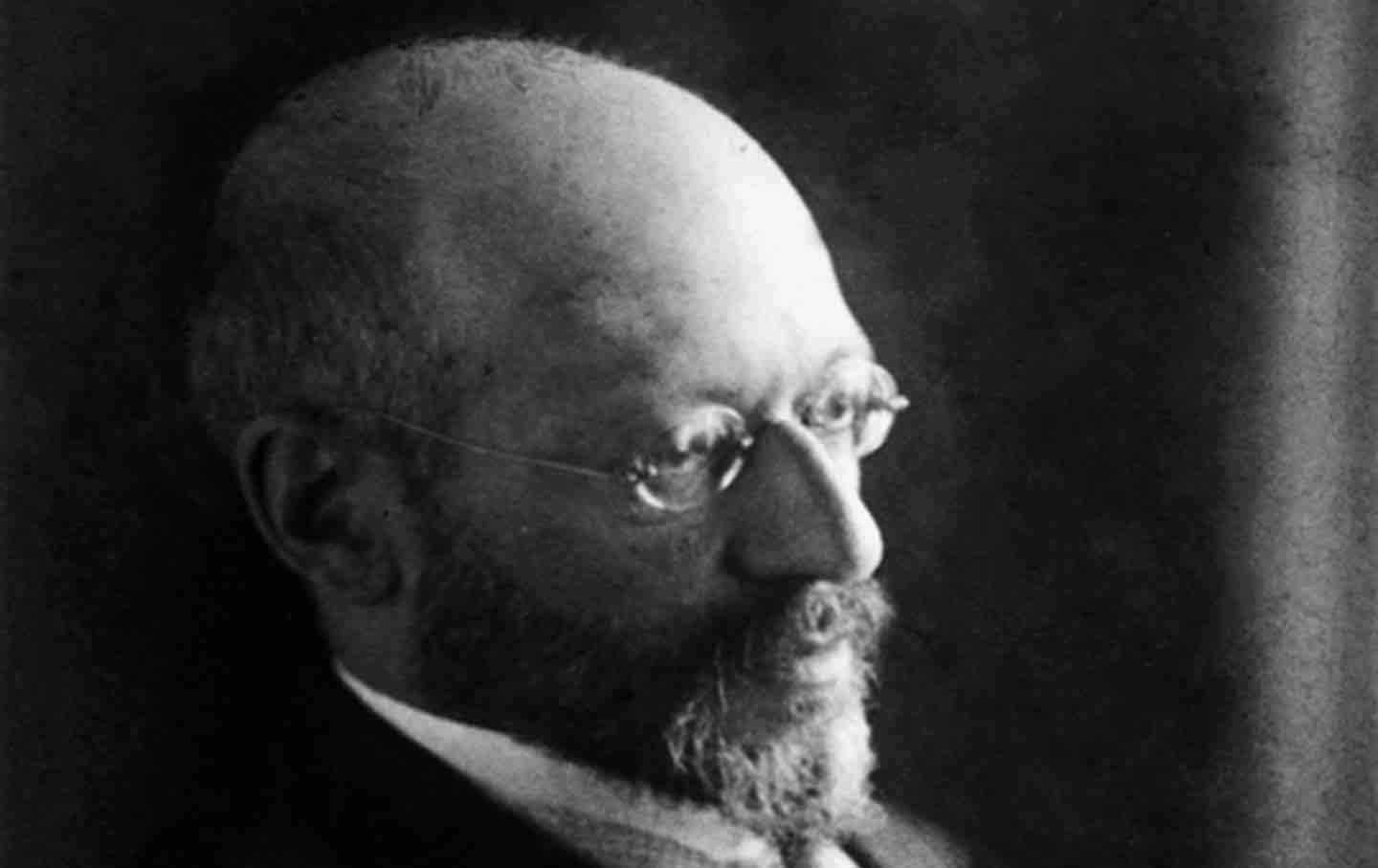
Sociologists have long studied how religious ideals and sentiments permeate social and political norms. In the late 19th and early 20th centuries, the discipline was founded by intellectuals who argued that religious impulses had shaped how we organized our communities, the capitalist economy, and much else. Kwame Anthony Appiah’s Captive Gods: Religion and the Rise of Social Science, which examines the spiritual kernel present in secular society, focuses on four pioneering social scientists who helped invent the field of sociology: the French intellectual Émile Durkheim, the German philosopher Georg Simmel, the English anthropologist Edward Burnett Tylor, and the German social theorist Max Weber. These thinkers proposed that “the social and religious…were inextricable categories,” Appiah writes, interwoven in such a way that hidden spiritual impulses could be found in all aspects of society.
In their personal lives, these theorists came themselves to exemplify the uneasy marriage of the social and the religious. When World War I broke out, for example, Simmel and other social scientists saw the conflict as an engine of “spiritual renewal,” becoming rabid champions of the transcendent unity that the war brought to German society. Nationalist politics met their spiritual hunger for collective ecstasy, as the MAGA movement does for Trump supporters, who see him as a messiah. “When we think about society, we still use their lenses,” Appiah writes of his book’s subjects. What can we learn from the mistakes these men made in responding to their times?
Appiah begins from the premise that sociology emerged in the late 19th century in response to the decline of Christianity throughout Europe. As industrialization, urbanization, and the attendant dissolution of traditional communities advanced, some scholars were tempted to see the emergence of an entirely secular realm, divorced from religious influence. But to Durkheim—the son, grandson, and great-grandson of rabbis—every aspect of social life could be understood as religious. Durkheim critiqued scholars who suggested that religion mainly played an “explanatory role” on the nature of the cosmos that was being filled in modern times by science; he argued instead that religion was essentially a social force, binding communities around shared symbols and rituals. As the power of traditional religions over European societies eroded, those societies were still behaving in ways that Durkheim saw as fundamentally religious, even when they didn’t realize it.
To Durkheim, the heart of religion is a division between the sacred and the profane, a division he saw running through all of society. In his view, an object, symbol, or person becomes sacred by representing a people or community. For example, a flag acquires its status as a sacred object—ringed around with prohibitions against its being burned or even touching the ground—by signifying a shared land, history, and identity. Organizing themselves around these symbols, groups gather for shared rituals—the singing of the national anthem at a baseball game, the Pledge of Allegiance at the start of a school day—and experience what Durkheim famously termed “collective effervescence,” an experience of mutual bodily attunement that leaves participants feeling charged with energy, caught up in one another’s emotions. A congregation singing a hymn and that patriotic crowd at the baseball game are, in Durkheim’s telling, both engaging in the same—and fundamentally religious—activity because, as he saw it, religion isn’t about the supernatural; it’s about the experience of being lifted out of one’s isolated self and dissolving into a larger social whole. The very function of religion is to produce experiences of social unity.
In a sense, Durkheim’s sociological project can be understood as making the case that a culture facing the decline of traditional religiosity was still, at its core, knit together by experiences that mimicked faith. Like Durkheim, the other thinkers that Appiah profiles lived during a time—the late 19th and early 20th centuries—when institutional religious influence was waning in Europe. For Simmel, the erosion of religious structures of spiritual nourishment and meaning led to a “feeling of life’s emptiness and worthlessness,” which he contrasts with a religious person’s “fullness of being.” In a famous lecture, the stern, impassioned Weber bemoaned the “disenchantment of the world,” the loss of the “prophetic pneuma that once swept through congregations like a firestorm, welding them together.” In Germany and France, Simmel, Weber, and Durkheim all observed the weakening of traditional religious authority, but also the stubborn persistence of religious longings for meaning, moral clarity, and transcendence.
While religious communities were in decline, industrialization was tearing at Europe’s social fabric. Factories drew people from villages into cities, weakening rural kinship networks and communities. Simmel was profoundly influenced by a theorist, Gustav Schmoller, who anticipated that “the division of labor” in industrialized, capitalist societies would threaten social “cohesion” via “the creation of social classes,” Appiah writes, which proved prescient as urban poverty and unrest grew. Anarchist violence—bombings in public places, high-profile assassinations—soon sowed fears of wholesale social upheaval. European elites became terrified of fracture and public violence.
Nationalism represented a countervailing force of cohesion. France had lost Alsace-Lorraine to Germany in the Franco-Prussian War (1870–71), and politicians, newspaper editors, and social reformers pushed the need for national pride in the pursuit of revanchisme, or revenge. With Germany unified under Prussian leadership, German elites also promoted nationalism to bind the country’s various states. Primed for nationalist enthusiasm, the French and German people welcomed the eruption of World War I in 1914.
One of the most striking facts presented in Captive Gods is how much Appiah’s cast of thinkers shared in celebrating the war. Simmel thought of war as a “spiritual” force orienting German society “toward something nobler than money” and providing a “restoration of fullness.” Weber felt that the “just-arrived war was something wonderful,” Appiah writes. When Weber extended his condolences to his publisher, whose son had been killed in combat, he praised “the most beautiful death that fate has to offer us,” a martyrdom “for the existence of our state and our culture,” and wrote elsewhere that the war is “great and wonderful despite all its horrors.”
Long fearful of public speaking, Weber found himself so inspired by the war—and by his hostility toward Social Democrats and Pan-Germanists alike—that he became an impassioned orator, offering what Appiah calls “an elevated form of nationalism.” In the famous lecture in which Weber introduced the concept of disenchantment, he “depict[ed] the enmity of French and German civilization as an arena of clashing values, clashing gods,” lending the horrors of war a spiritual grandeur. Similarly, Durkheim was thrilled by France’s battlefield successes and welcomed the defeat of the Austro-Hungarian Empire, while one of his chief disciples wrote breathlessly of the war as “a fantastic experience of collectivism.”
“Mass mobilization meant the assertion of a collective will that offered a way to leave self-interest behind and experience transcendence, securing an absolutized social unity,” Appiah writes. Simmel, Durkheim, and Weber were at best slow and at worst unwilling to weigh the costs of such unity, instead allowing themselves to be caught up in what Appiah calls the “religion of inhumanity,” the pursuit of spiritual fulfillment through mass destruction and patriotic violence.
In charting the complex interrelationships that these pioneering sociologists found between the social and the religious, Appiah is a nimble, learned guide, and Captive Gods, which grew out of a series of lectures he delivered at Yale in 2017, is a fascinating exploration of the birth of sociology. Appiah asks memorably, “Are we too quick to talk about the social construction of things without a sense of how the social has been constructed?” And in examining the construction of the social sphere through the religious, he offers wide-ranging insights into both.
Popular
“swipe left below to view more authors”Swipe →The book’s engagement with the present is limited to a summary of how contemporary sociology remains in dialogue with the themes raised by these early thinkers. In its apparent effort to be exhaustive, this section gets sidetracked on issues without much relevance to the book’s central themes, such as Jürgen Habermas’s attempt to resolve the old tensions between religion and science. Appiah knows that the topics he is addressing are pertinent to current affairs, gesturing in the book’s final paragraph to how “our own crises…unleash stormy quarrels” that are “infused with religious fervor.”
Just as in the late 19th and early 20th centuries, we live in a time when the divisions in society are felt acutely. This state of discord is dangerous, in large part, because of the putative antidotes that people might crave—if not the nationalist solidarity of war, then efforts like those celebrated on the right to quell demonstrations with the National Guard or to silence dissenting comedians. Voters enable politicians to quash division and dissent in part because the spiritual longing to belong to a unified whole—to a oneness that soothes the anxieties and insecurities of our lonely individuality—runs so deep in us.
After finishing Captive Gods, one begins to see spiritual forces everywhere in our politics—in the feeble call of Hakeem Jeffries to “pick up bipartisan plowshares,” or in the MAGA movement’s hope that Trump can return Americans to a lost golden age. Of course, exposing the spiritual forces shaping our politics isn’t the same as banishing those forces, which seems unlikely—if not, as Durkheim would argue, impossible. In all likelihood, Americans will continue to be eager to find spiritual fulfillment through politics, to be caught up in movements whose transcendent experience of collectivism helps them escape “life’s emptiness.” If American politics is fated to be a battleground for the souls of its denizens, may the better angels win.
More from The Nation

The Carnival of Venice Biennale The Carnival of Venice Biennale
That so much of the art of “In Minor Keys” is muted in effect is ironic, because so much of it is overproduced, aspirationally eye-catching, and so big.
America Without the NFL America Without the NFL
Chuck Klosterman’s Football is a eulogy for the sport on the eve of its decline.

Edward Said: Between Worlds Edward Said: Between Worlds
A new film biography depicts the Palestinian writer as still out of place—and ahead of his time.
Imani Thompson’s Grad-School Thriller Imani Thompson’s Grad-School Thriller
In Honey, the novelist offers a different take on the campus satire.