A World on Fire Needs More Climate Reporting—Not Less
War is a climate story, but billionaire media owners don’t want to tell it.
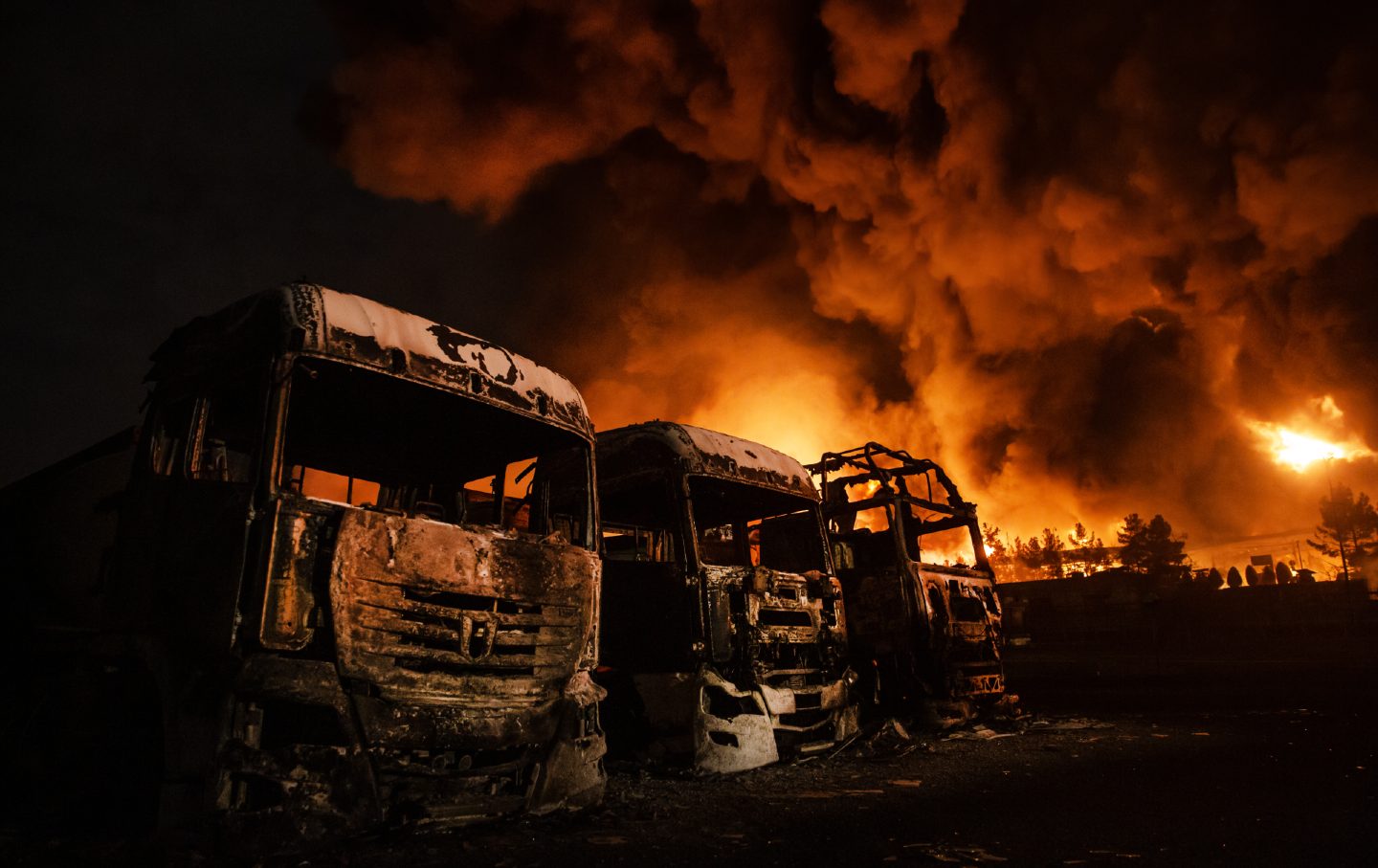
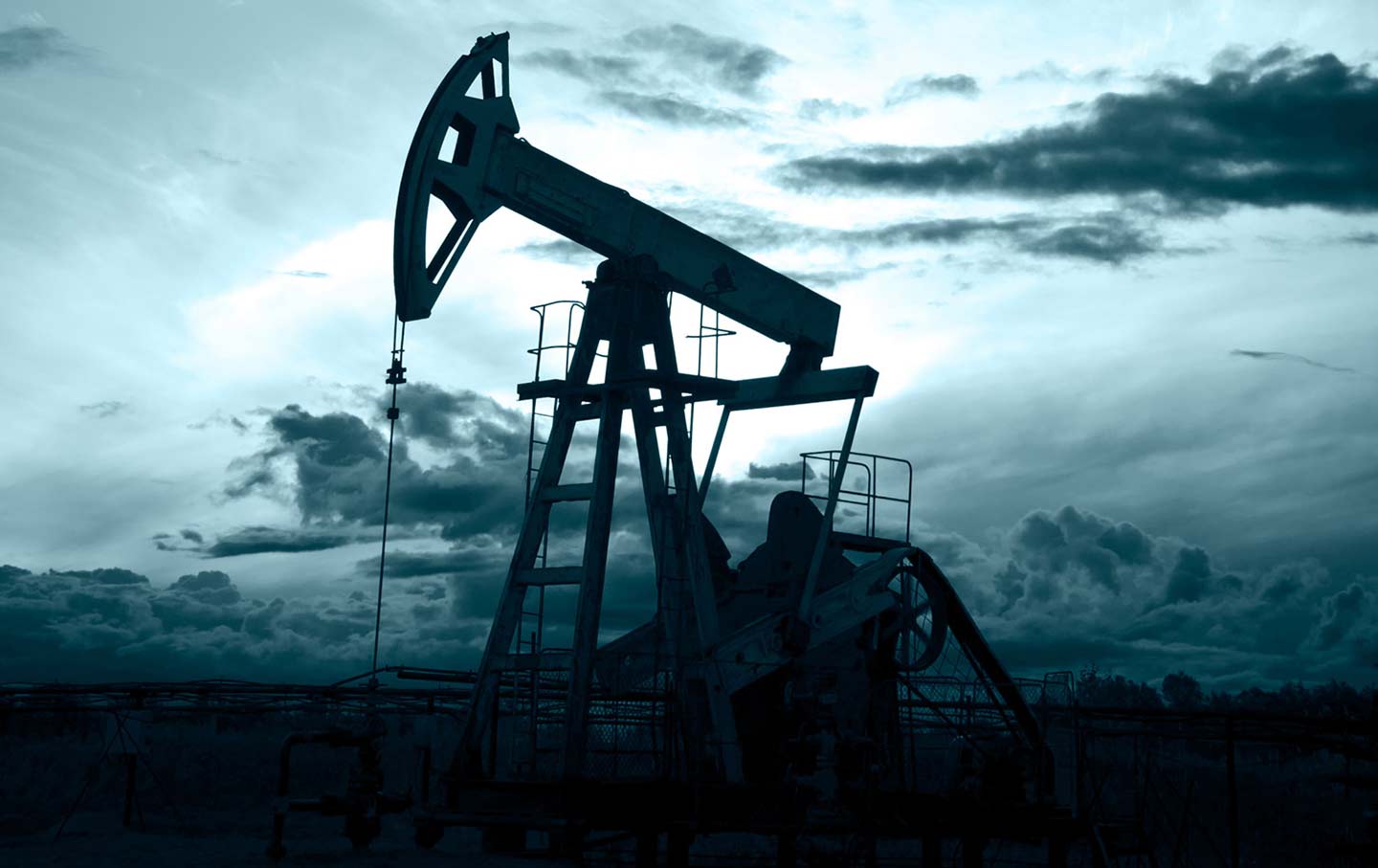
Fire breaks out at the Shahran oil depot after US and Israeli attacks in Tehran, Iran on March 8, 2026.
(Hassan Ghaedi / Anadolu via Getty Images)The effects of a warming Earth are worsening. Climate disinformation is rampant. Wars around the world are pitting petro-states against one another. So why are much of the world’s media backsliding when it comes to the coverage of climate change?
Covering Climate Now was formed in 2019 in response to the climate silence that then prevailed in much of the press, especially in the United States. Over the years that followed, hundreds of newsrooms joined our effort, and press coverage of the story began to reflect the scale of the crisis. Newsrooms beefed up their climate reporting teams; they confronted misinformation that sought to play down the problem; they thought creatively about how to find the climate connection on every beat. Finally, newsrooms were giving the story the attention it deserved.
That all changed in the run-up to the 2024 US presidential election. Even though the stakes of that election were clear—everyone knew what Donald Trump would do to climate policy if he returned to power—climate never made it near the top of the list of journalistic priorities during the campaign. A September 2024 debate between Trump and Kamala Harris was typical: Climate change got only one question from the moderators, near the end of the debate. Trump used the moment to reiterate that he sees global warming as a hoax (an unequivocal falsehood, science has proven), and Harris reminded voters of her previous support for gas fracking.
The storyline was set. Just over a year into Trump’s second term, it is now clear that many newsrooms see the climate story as a slog, and are scaling back. In the United States, The Washington Post gutted its climate team as part of its ongoing series of layoffs, and CBS, NBC, and ABC cut back on their coverage.
There are important exceptions to the trend: The Guardian, The New York Times, the Associated Press, Agence France-Presse, and CNN continue to cover the climate story, maintaining and, in some cases, expanding their reporting teams.
More common, unfortunately, is the experience that Chase Cain, NBC’s former national climate reporter, recounted in an interview last week with the climate newsletter, HEATED. Cain, who recently left NBC, said he was ground down by having to constantly remind his bosses of the importance of the story. “I was just kind of exhausted by the sales, by the constant trying to explain and remind, like, hey, this is important. Please run this story,” Cain said. Cain joined Tracy Wholf, HEATED’s producer and a veteran of climate coverage at ABC and CBS, who also has been forced to strike out on her own. According to Media Matters, an industry watchdog group, coverage of climate on the three big broadcast networks fell by 35 percent last year, compared to 2024.
Let’s look at the facts: Carbon dioxide levels are higher than they’ve been in 2 million years, even as many newsrooms are pulling back on their climate coverage. Here is our sense of why that has happened:
- A firehose of other news has pushed climate off the agenda. Many of the stories fighting climate for attention are urgent and compelling, from war to immigration crackdowns to rising authoritarianism. Almost every newsroom is trying to do more with fewer people. But this struggle also reflects a failure to understand how urgent, and far-reaching, the climate story is. As long as it’s seen as peripheral, it will always fall off the agenda.
- Politics took precedence over science. Climate change and its solutions have long been contentious politically, but the science explaining the problem has never been more clear. Newsrooms, nevertheless, have allowed Trump to scare them off of more ambitious coverage. Knowing that the president, and his online army, will go after outlets that cover the climate story aggressively has been enough to convince some newsrooms they don’t need the hassle. Meanwhile, a consolidation of media into the hands of fewer billionaires (many of whom crave Trump’s blessing for their expanding empires) has created newsroom cultures where climate coverage is a risk.
- Newsrooms fell out of step with their audience. As the number of journalists in the world has declined in the face of a business-model collapse, reporters have increasingly lost track of who cares about the climate story and why. Many still see the climate audience as a fringe and alternative minority. Peer-reviewed science shows that view to be false.
- Newsrooms grew bored of the story. This, to us, is the hardest to understand. We see this story as one of the richest, most pressing on Earth. Yet we increasingly hear reporters tell us their newsroom bosses see the story as stale, played out, predictable. The dramatic effects of climate change are here, daily, for us all to see and chronicle. Our problem is a lack of journalistic imagination.
Our 89 Percent Project, launched last year, highlights the fact that a majority of the world’s people are worried about the climate crisis and want their leaders to address it. Let’s stop treating climate coverage as an afterthought or a luxury. CCNow will continue to help newsrooms through training, webinars, and one-on-one counseling. Our awards will continue to spotlight climate journalism at its best. Perhaps more than anything, all of us as journalists need to reinforce the idea that telling the climate story needn’t be a downer.
Become a Sustaining Donor This September
Between the reemergence of right-wing red-baiting and Donald Trump’s use of the chilling National Security Presidential Memorandum–7 to criminalize left political organizing, we’re seeing McCarthyism reborn before our eyes.
This assault on democracy cannot be ignored or wished away. Resisting it requires bravery in the face of threats and repression, a steadfast commitment to the truth, and the unwavering belief that we can—and will—overcome this darkness.
We must have an independent media that sets the record straight, unearths corruption and abuses of power, and advances a politics of justice and dignity for all if we’re to win this fight.
That’s why I’m writing to you today. This September, The Nation needs to add 100 monthly donors to sustain our progressive journalism. Your contribution makes the next investigative report, the next truth-speaking column, and the next pathbreaking essay all possible.
I hope you’ll support our work with a recurring donation today. If you donate $10 or more a month, we’ll send you a brand new “Hands Off the Free Press!” sticker to recognise your commitment to our cause. Please, donate today.
Onward,
Katrina vanden Heuvel
Editor and Publisher, The Nation