
Trump’s War Is Destroying the Global Economy
Spiraling financial chaos might be the only thing that can force the president to pull back from this conflict.
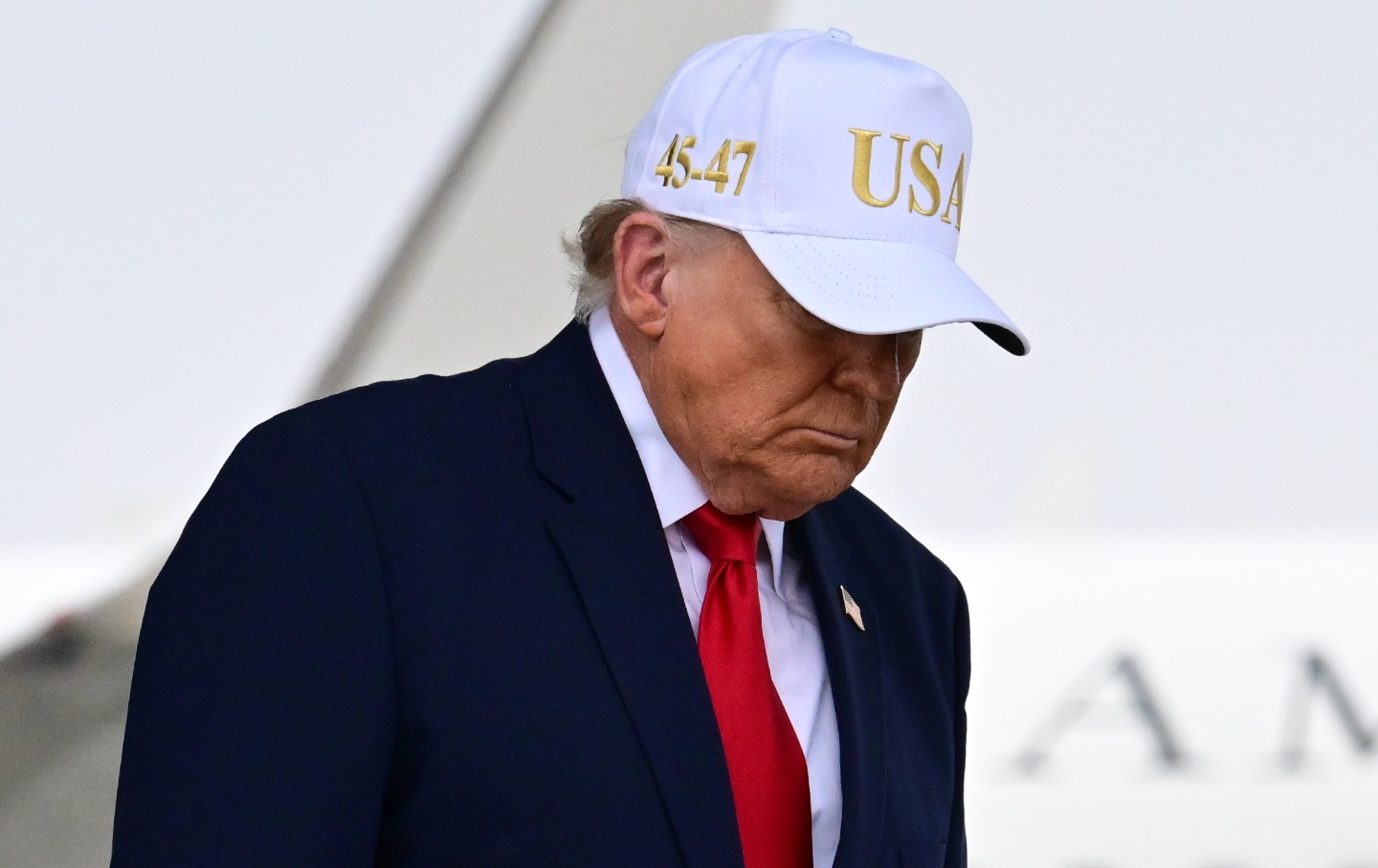
Donald Trump at Dover Air Force Base in Dover, Delaware, on March 7, 2026.
(Kyle Mazza / Anadolu via Getty Images)Donald Trump’s war against Iran is already turning out to be a military, diplomatic, environmental, and humanitarian disaster. But none of this seems to matter to the president, who has been remarkably complacent and dishonest about the crisis he has caused. Last Sunday, in a video about the death of US soldiers, Trump said, “And sadly, there will likely be more [deaths] before it ends. That’s the way it is. Likely be more.” Asked if Iran could possibly retaliate with attacks on US soil, Trump said, “I guess.” He added, “Like I said, some people will die. When you go to war, some people will die.” When asked about the bombing of a primary school in Minab that killed at least 165 people, mostly children, Trump simply lied, saying, “That was done by Iran.” In fact, all available evidence overwhelmingly points to US guilt in the atrocity.
As a narcissistic authoritarian, Trump is naturally indifferent to the human costs of war. Nor does he show any concern for how his reckless aggression is alienating US allies in the region and around the world. As Iran has proven surprisingly resilient in hitting back at US military bases and allies, Trump has thrown out any regard for the rules of war, with horrific strikes on oil depots making the air above Tehran and other cities unbreathable.
But if human misery has no effect on Trump, the economic shock caused by his war is another matter—not because Trump cares about the suffering caused by a sputtering economy, but because he understands that economic chaos is a political problem for him. In the past, Trump has shown that while he is happy to ignore Congress or other outside critics, he pays attention to the stock market. It was a steep market correction in the spring of 2025 that first convinced Trump to temper his initial aggressive push for steep tariffs.
The White House has good reason to worry now. On Sunday, the price of crude oil surged to $110 a barrel (and then went down slightly). This is nearly 50 percent higher than it was before the war. Analysing this surge and the sharp fall in stock market futures around the globe, The Wall Street Journal argued that the war is “unleashing the most severe energy crisis since the 1970s and threatening the global economy.”
This is why, in typical Trump fashion, the president is trying to wave away the economic impact of the war. In a Truth Social post on Sunday, he tried to sound blasé about rising oil prices, writing, “Short term oil prices, which will drop rapidly when the destruction of the Iran nuclear threat is over, is a very small price to pay for U.S.A., and World, Safety and Peace. ONLY FOOLS WOULD THINK DIFFERENTLY! President DJT”
It’s hard not to read this as a case of whistling past the graveyard. Trump knows very well that one of the major reasons he won the 2024 election is that Joe Biden’s presidency had been derailed by a cost-of-living crisis, sparked in large part by Russia’s invasion of Ukraine in 2022. Politico reported on Thursday, “White House aides and Cabinet officials are coming under intense pressure to reverse the spike in energy prices caused by the start of the war in the Middle East.”
The combination over the weekend of a steep rise in oil prices and a tumble in stock market futures vindicates the warnings made on Friday by Saad al-Kaabi, Qatar’s energy minister. Speaking to the Financial Times on Friday, Kaabi said, “This will bring down the economies of the world. If this war continues for a few weeks, GDP growth around the world will be impacted. Everybody’s energy price is going to go higher. There will be shortages of some products and there will be a chain reaction of factories that cannot supply.”
To be sure, Kaabi is not speaking as a disinterested observer. Qatar, like other Gulf-state US allies, is extremely vulnerable in the current conflict. Iran, with its considerable stocks of drones and missiles, is more than capable of hitting the oil refineries and desalination plants of neighboring countries. Those attacks could easily bring these countries to their knees and perhaps make them uninhabitable for many residents. Aside from oil, nations such as Dubai rely heavily on tourism as a source of income and guest workers as a source of labor. Now that these places have been turned into war zones, tourists and workers are fleeing, with no likelihood of a quick return.
But the very fact that the oil-rich monarchies are fragile also means they are likely to be pressure points that might force Trump to change his policy. Indeed, that is the very reason Iran has been attacking them.
With typical braggadocio, Trump has boasted that he’s convinced the Gulf states to invest “trillions” in the US economy. Like so much of what Trump says, these claims have little basis in reality. What is more real is that the personal coffers of Trump and his family have been enriched to the tune of billions by Gulf-state money.
What would happen if Gulf-state money suddenly started to move away from the United States? According to the Financial Times,
Pressure on the Gulf states’ budgets could cause them to review their overseas investments and future commitments as they consider options to ease the financial strain caused by the US-Israeli war against Iran.
A Gulf official said it could have an impact on anything from investment pledges to foreign states or companies, sports sponsorships, contracts with businesses and investors, or sales of holdings.…
An adviser to a Gulf government said the prospect of an investment review by the wealthy states had caught the White House’s attention. They manage some of the world’s largest and most active sovereign wealth funds, and Saudi Arabia, the UAE and Qatar last year pledged to invest hundreds of billions of dollars in the US after President Donald Trump visited the region.
The noteworthy phrase is “caught the White House’s attention.” The whole point of advertising this possible shift in investment funds is to scare Trump.
Popular
“swipe left below to view more authors”Swipe →The best-case scenario for ending the war quickly is that Trump is spooked enough by bad economic news to change course. Even then, it will be difficult to find an easy off-ramp. The Iranian government, having twice been humiliated by Trump’s attacking them during ongoing negotiations, is clearly not in the mood for a ceasefire. Rather, it seems eager to inflict as much damage as possible in order to restore respect for its deterrence capability.
Trump has created a global catastrophe, and it’s not clear that he will be able to end this mess. The fear of losing money is a powerful incentive, but perhaps not enough to lead the US to climb out of the quagmire created by Trump’s imperial hubris.
Become a Sustaining Donor This September
Between the reemergence of right-wing red-baiting and Donald Trump’s use of the chilling National Security Presidential Memorandum–7 to criminalize left political organizing, we’re seeing McCarthyism reborn before our eyes.
This assault on democracy cannot be ignored or wished away. Resisting it requires bravery in the face of threats and repression, a steadfast commitment to the truth, and the unwavering belief that we can—and will—overcome this darkness.
We must have an independent media that sets the record straight, unearths corruption and abuses of power, and advances a politics of justice and dignity for all if we’re to win this fight.
That’s why I’m writing to you today. This September, The Nation needs to add 100 monthly donors to sustain our progressive journalism. Your contribution makes the next investigative report, the next truth-speaking column, and the next pathbreaking essay all possible.
I hope you’ll support our work with a recurring donation today. If you donate $10 or more a month, we’ll send you a brand new “Hands Off the Free Press!” sticker to recognise your commitment to our cause. Please, donate today.
Onward,
Katrina vanden Heuvel
Editor and Publisher, The Nation
More from The Nation
Kash Patel Stands Up For “Victims” Of Bestiality Kash Patel Stands Up For “Victims” Of Bestiality
In a bizarre Senate committee hearing, the FBI director defends his tenure and disrespects Democrats.
Remembering Jina Mahsa Amini and the Woman, Life, Freedom Movement Remembering Jina Mahsa Amini and the Woman, Life, Freedom Movement
In 2022, Amini was murdered by Iran’s Morality Police for removing her hijab in public.
Populists Can’t Be Populist if They Suppress the Vote Populists Can’t Be Populist if They Suppress the Vote
The crusade against ballot access, like virtually every other facet of Trump’s agenda, does nothing to serve the interests of “the people,” but our press is too brain-dead to noti...
The Gaping Hole at the Heart of Financial Journalism The Gaping Hole at the Heart of Financial Journalism
Beyond the Epstein scandals.
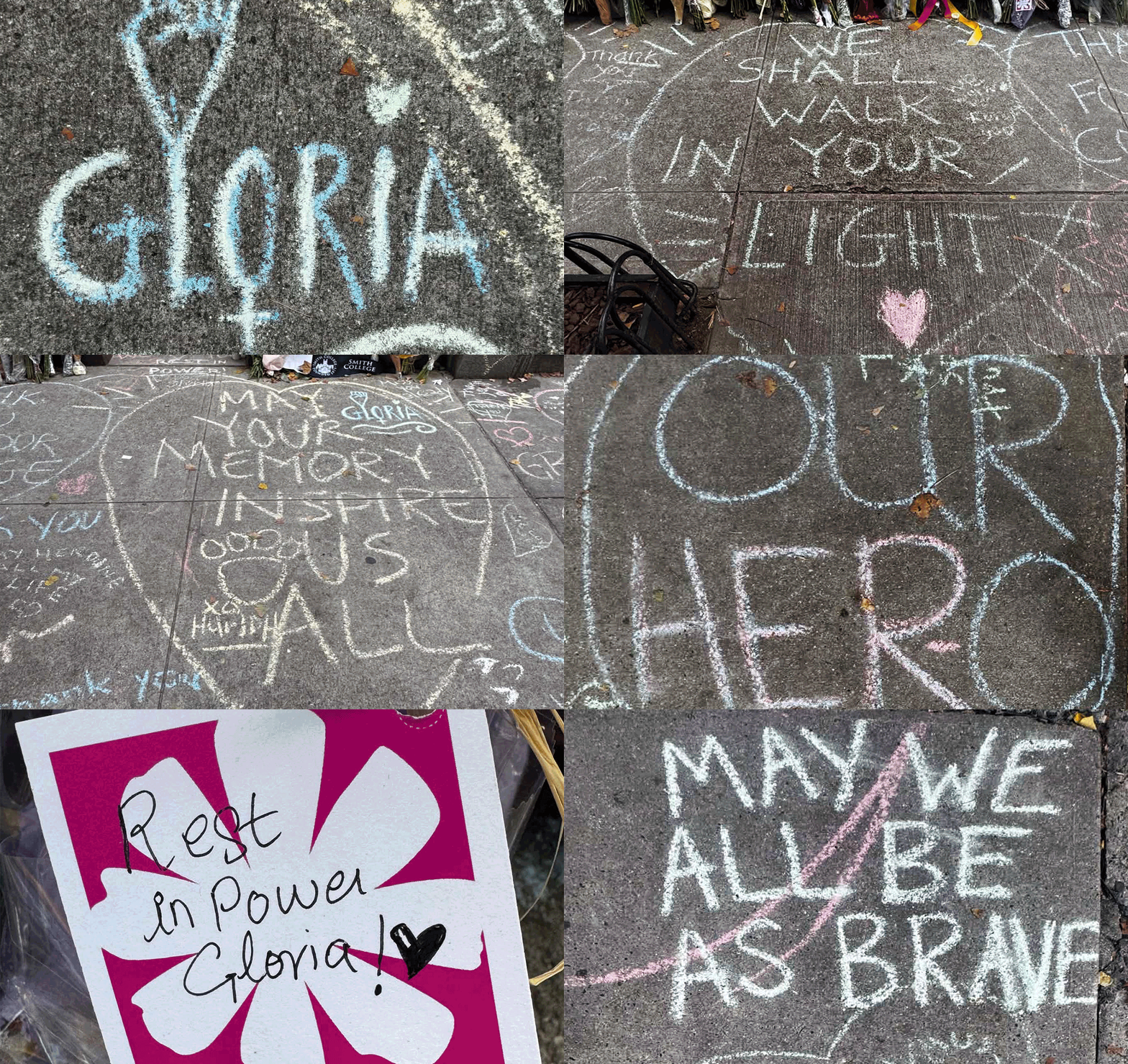
In Memory of Gloria Steinem In Memory of Gloria Steinem
A spontaneous memorial honoring Gloria Steinem (March 25, 1934–September 2, 2026), an extraordinary woman, leader, and lifelong force for equality. New York City, September 2026.
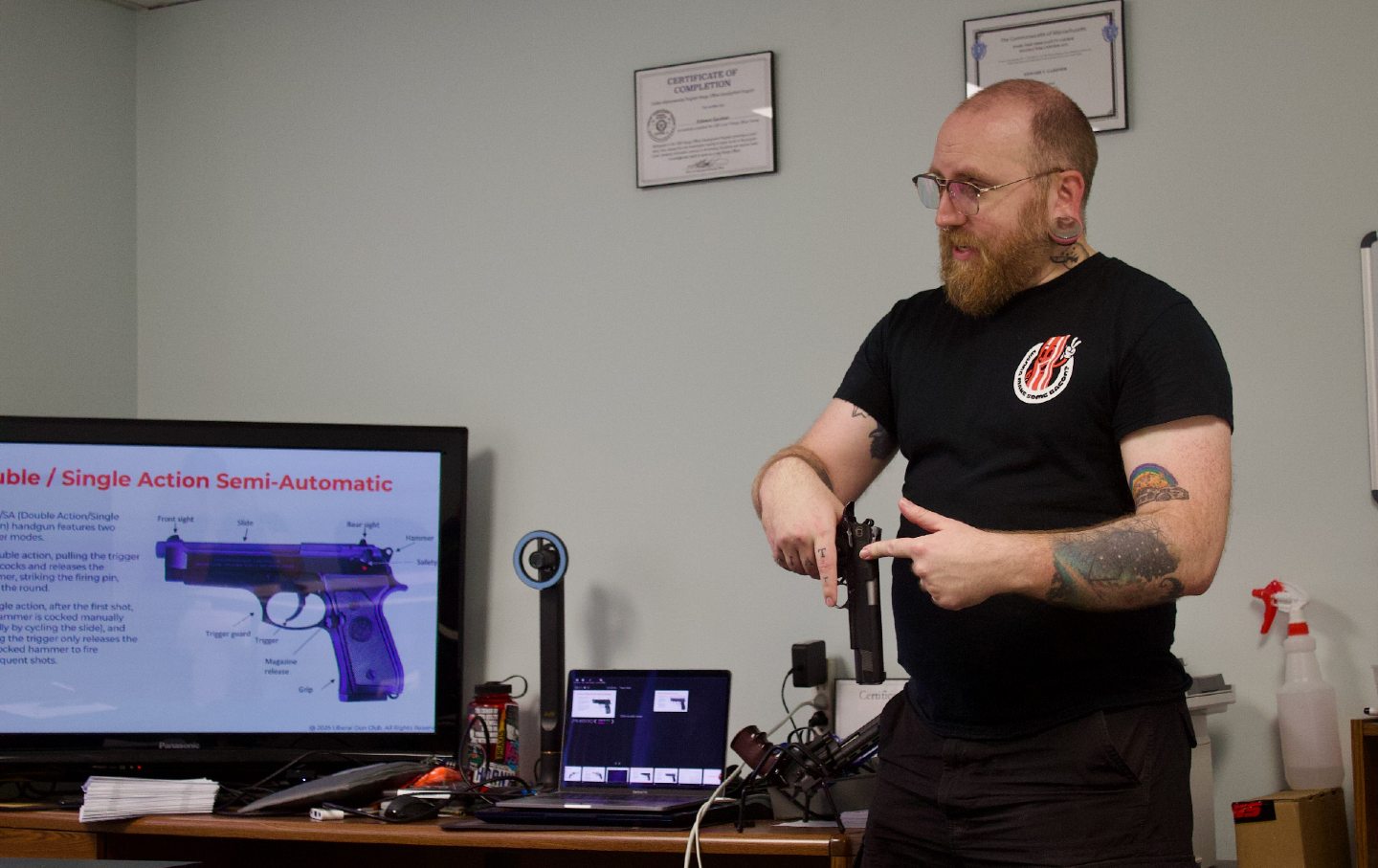
Assault Weapons Are Banned in Massachusetts. These Leftists Want to Change That. Assault Weapons Are Banned in Massachusetts. These Leftists Want to Change That.
The Liberal Gun Club, which has chapters in more than 30 states, reported a spike in interest as ICE raids ratcheted up early this year.

