
Ro Khanna Has a New Tech Social Contract for California’s Oligarchs
As Peter Thiel and other fat cats threaten to flee California over a billionaire tax, Khanna is calling their bluff.

Silicon Valley Representative Ro Khanna has the distinction of representing more billionaires than any other member of Congress. Despite this—or maybe because of it—he’s backing a state-level proposal that has infuriated some of his wealthiest constituents: a billionaire tax.
The measure could appear on ballots this year, and if passed by voters, would apply a one-time, 5 percent tax on billionaires who were residing in California as of the first day of 2026. The state would collect payments in 2027, and funds would be sorted into a dedicated account, with much of the proceeds specifically earmarked for healthcare funding.
“All this is saying is, ‘You’ve created unprecedented wealth. We want to make sure that there’s some shared prosperity, that there is some benefit to the working and the middle class,” Khanna told me in an interview.
In response, a consortium of tech billionaires—Palantir cofounder Peter Thiel, Google cofounder Larry Page, and venture capitalist turned Trump 2.0’s crypto and AI czar David Sacks among them—have threatened to leave the state for the greener pastures of onshore tax havens like Texas or Florida.
Really, though, all these shaking fists and revving private jet engines mean one thing: The measure might actually work.
Thanks to Trump’s One Big Beautiful Bill Act, California’s Medicaid program is set to lose $190 billion over the next ten years. This is on top of increasing housing insecurity, stagnating wages, and the systematic shutdown of clinics and rural hospitals across the state. Meanwhile, in Silicon Valley, 15 percent of wealth—in a region that is itself home to nearly one-third of the value of America’s stock market—is owned by just nine households. This can’t hold.
The billionaire tax promises immediate relief to these countervailing crises. Proposed by healthcare unions, it would fund healthcare, education, and food assistance programs in California—and functionally neutralize some of the egregious tax breaks carved out for billionaires by the OBBA.
And beyond its impact on the Golden State, this measure would set a precedent. It was one thing for Bernie Sanders and Elizabeth Warren to include wealth taxes in their 2020 campaign platforms; it’d be another entirely to see one play out in California—the state Democrats nationwide turn to as a laboratory for experiments in progressive public policy. From being the first in the nation to implement a $15 minimum wage to taking the most aggressive posture on climate and clean energy, California has broadened the bounds of what is politically possible time and again. A wealth tax success story would offer a model for lawmakers everywhere.
And maybe that’s why the billionaires are talking about their “long-term commitments” to leases they signed last week. We saw this same panicked song and dance during Zohran Mamdani’s campaign: Billionaires threatened to leave Park Avenue for Palm Beach, claiming New York would become openly hostile to business. So far, they haven’t.
In fact, the wealthy are actually less likely to move than the middle class—in part because it’s a lot harder to pick up a thriving business and drop it in Miami than tech CEOs would have you believe.
In their haste to disavow California, tech founders seem to forget that Silicon Valley made them just as much as they made Silicon Valley. It’s long been the global hub of tech innovation because it’s the place where capital, supportive infrastructure, and human talent converge—not because a handful of genius messiahs coincidentally wound up in Palo Alto.
And while some portray this policy effort as some sort of punitive act of vengeance against the wealthiest Americans, Khanna made the case to me that this is simply an effort to establish what he calls a “new tech social contract.”
“I have always supported innovation and the Silicon Valley ecosystem,” he said. But he also argues that “the social contract is, to those who much has been given, much is expected. And we have a situation now where people in California are being denied healthcare.… they’re closing rural hospitals, they’re closing clinics…. if you’re building extraordinary wealth, then a nation only thrives if everyone in the community feels like life is improving.”
Some of the more level-headed tech scions recognize that this is no great imposition on their success. NVIDIA’s Jensen Huang, who himself has seen his net worth grow by tens of billions in recent years, has said he’s staying put.
“I have not even thought about [leaving] once,” he said in a recent interview. “We chose to live in Silicon Valley, and whatever taxes they would like to apply, so be it. I’m perfectly fine with it.”
Popular
“swipe left below to view more authors”Swipe →Nevertheless, right now Huang’s sanguine attitude is the exception to the rule—contrary to Khanna’s expectations. He sees this tax as part of a fight for a system that both supports entrepreneurial risk-taking and offers a dignified standard of living for all.
“I was surprised by the freak-out over it,” said Khanna. “What I’ve tried to do is say, look. I celebrate builders. I celebrate entrepreneurs. I celebrate innovators. I understand that people have taken an extraordinary risk in creativity, and that’s a great thing. But there is a social contract to make sure there’s shared prosperity, and that is what we need.”
Later in our conversation, I asked Khanna about the elephant in the room: what his support for a billionaire tax means for his political future in a district—and a country—where the ultrarich hold outsize political sway. Reporting suggests that a number of tech moguls in California are conspiring to support a primary challenge against him (in secret Whatsapp chats, of course).
Khanna told me he’s not fazed.
“My values are with the working class and middle class in my district and around the country,” he said. “And I’m not going to be a coward or intimidated into compromising my values. And I think at this point, people want moral courage.”
Become a Sustaining Donor This September
Between the reemergence of right-wing red-baiting and Donald Trump’s use of the chilling National Security Presidential Memorandum–7 to criminalize left political organizing, we’re seeing McCarthyism reborn before our eyes.
This assault on democracy cannot be ignored or wished away. Resisting it requires bravery in the face of threats and repression, a steadfast commitment to the truth, and the unwavering belief that we can—and will—overcome this darkness.
We must have an independent media that sets the record straight, unearths corruption and abuses of power, and advances a politics of justice and dignity for all if we’re to win this fight.
That’s why I’m writing to you today. This September, The Nation needs to add 100 monthly donors to sustain our progressive journalism. Your contribution makes the next investigative report, the next truth-speaking column, and the next pathbreaking essay all possible.
I hope you’ll support our work with a recurring donation today. If you donate $10 or more a month, we’ll send you a brand new “Hands Off the Free Press!” sticker to recognise your commitment to our cause. Please, donate today.
Onward,
Katrina vanden Heuvel
Editor and Publisher, The Nation
More from The Nation
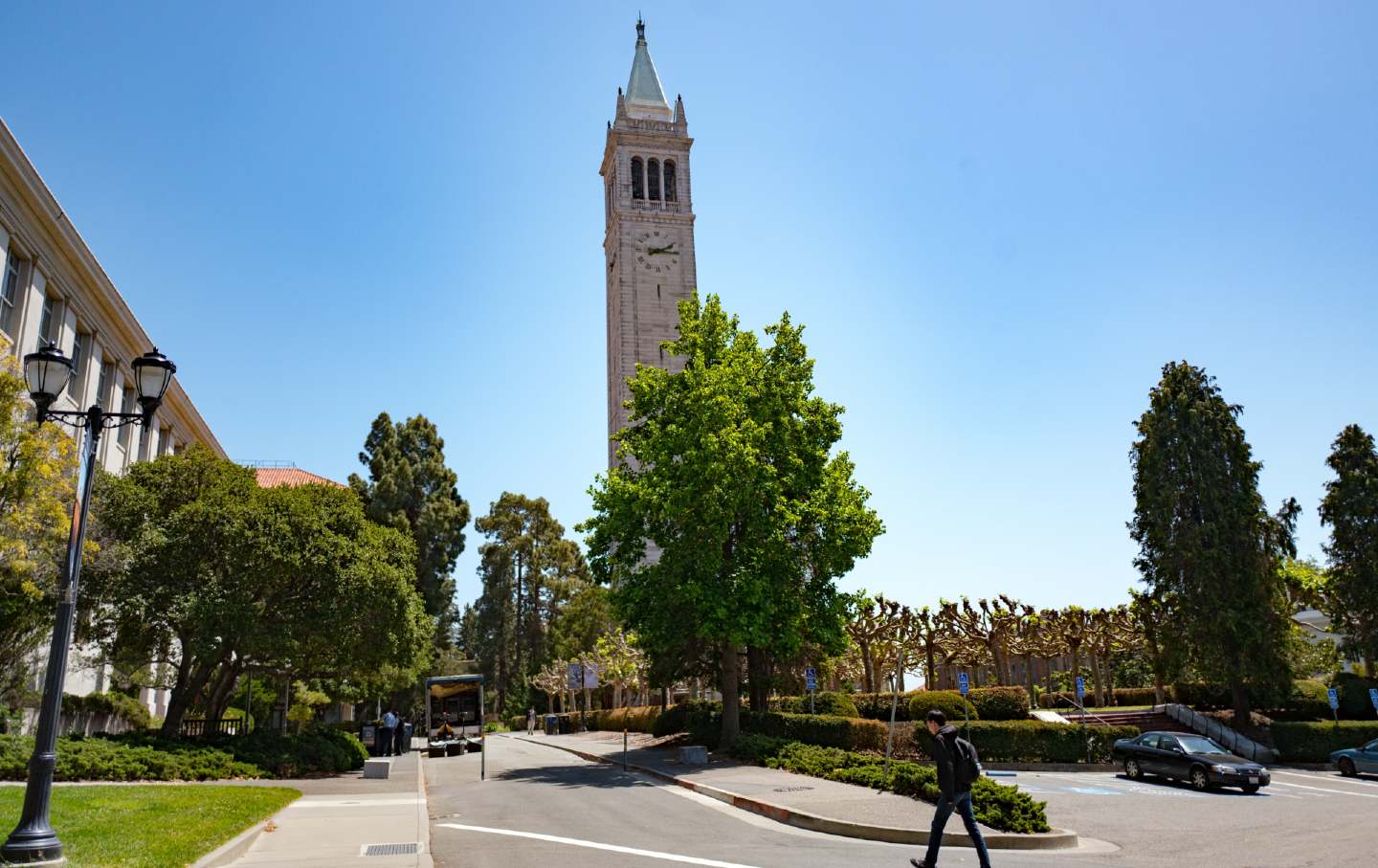
The School Behind the Billionaires and the Billionaire Tax The School Behind the Billionaires and the Billionaire Tax
UC Berkeley will inevitably be behind the defeat or victory of Proposition 40.
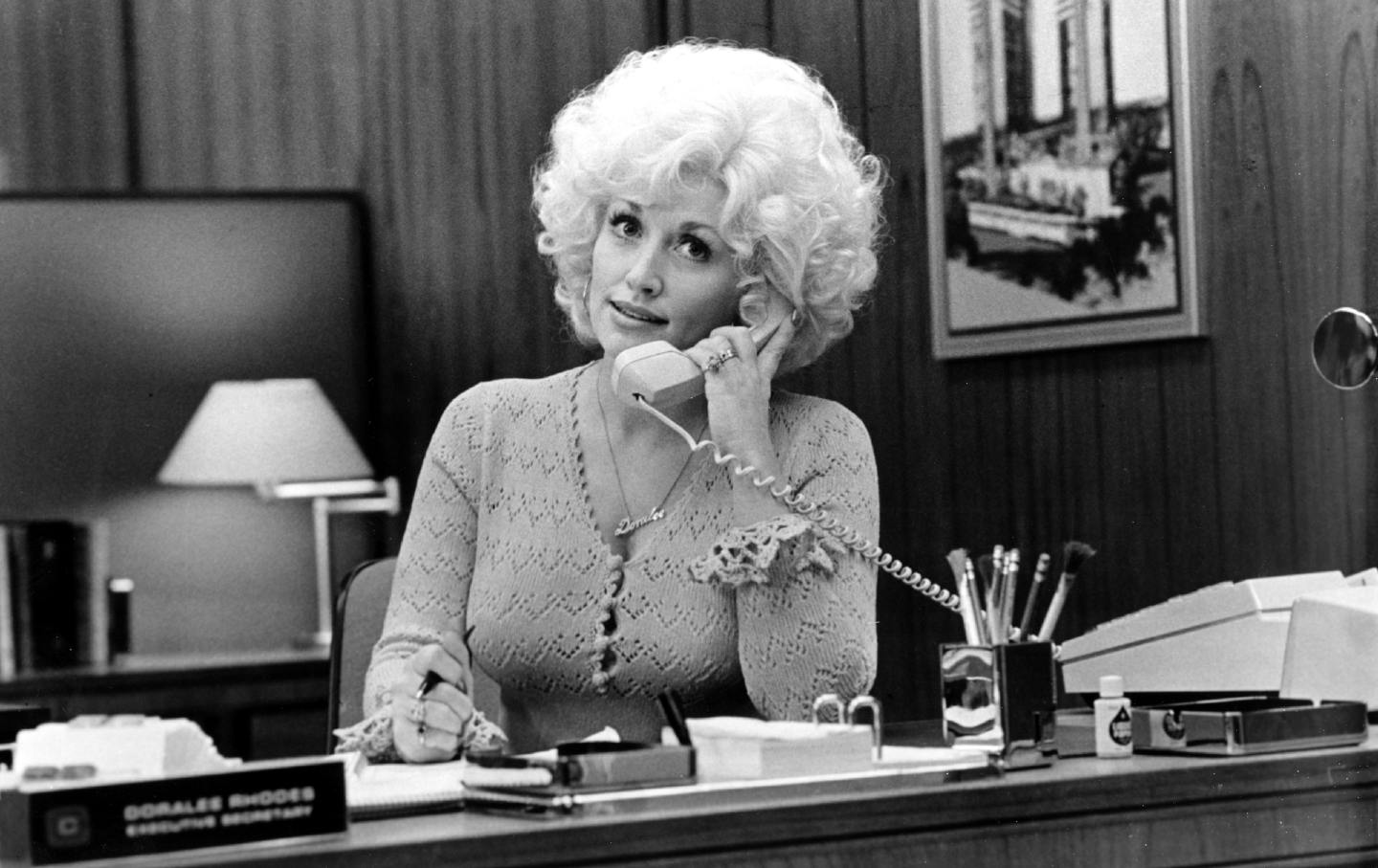
Dolly Parton Was a Proud Union Sister Dolly Parton Was a Proud Union Sister
Organized labor is celebrating the life and legacy of an artist who championed working women and carried a union card for almost 60 years.
Of Debt and Deficits and the Dollar System Of Debt and Deficits and the Dollar System
By force of preset agendas, conservatives and liberals react to debt headlines like Pavlov’s dogs.
What Happens When 8 Million People Lose Their Student Loan Repayment Plan? What Happens When 8 Million People Lose Their Student Loan Repayment Plan?
As the Biden-era SAVE plan ends, borrowers are facing unaffordable bills, lost payment records, and errors that have falsely put some into default.
David Ellison’s Delusional Stab at Self-Justification David Ellison’s Delusional Stab at Self-Justification
While the Skydance–Warner Bros. merger is in legal limbo, the CEO seeking to pull it off makes a disingenuous case for it in the court of public opinion.
The War on the UAW The War on the UAW
The United Auto Workers called for a ceasefire in Gaza. The union’s federal monitor didn’t like it—and now he’s investigating Shawn Fain, just weeks before union elections.

