
When It Comes to Trump, Virginia Is for Haters
Democrats stormed back to dominance, winning all three statewide races and a stunning 13 seats in the House of Delegates.

The crowd cheers winning Virginia gubernatorial candidate Abigail Spannberger in Richmond.
(Al Drago / Bloomberg via Getty Images)“This is surreal,” victorious Virginia House of Delegates candidate Kimberly Pope Adams declared as she walked into her raucous victory party Tuesday night. In 2023, the Democrat lost her race for this Virginia House seat by only 53 votes. On Tuesday night, she won with 53 percent of the vote, defeating Republican incumbent Kim Taylor overwhelmingly, with her focus on affordability, abortion rights, healthcare and spreading the wealth in the 82nd District more fairly between its white suburbs and Black Petersburg. (She won an amazing 89 percent of the vote in Petersburg.)
After visiting Adams in Petersburg, I wrote last week that Democrats in Virginia, who organized the first major anti–Donald Trump electoral resistance in 2017, weren’t showing quite the same energy—though the energy was good–eight years later.
Maybe I was wrong.
Just as in 2017, Democrats swept all three statewide races. Governor-elect Abigail Spanberger won by 15 points, more than Ralph Northam’s margin in that first anti-Trump uprising. Ghazma Hashmi won the lieutenant governor’s race comfortably, and embattled attorney general candidate Jay Jones, written off because of his own creepy violence-touting texts, rode the women’s coattails to win by almost seven points.
But most astonishingly, Democrats won 13 seats in the House of Delegates, bringing their margin in the chamber to 64–36. That was practically the GOP margin in 2017, until Democrats won 15 seats, almost taking the majority. Another contrast: Kamala Harris won 59 of the 100 delegate districts; on Tuesday night, Democrats won 64.
“It was a genuinely epic win—truly right up there with Virginia 2017,” says Carolyn Fiddler, Virginia Democratic political maven. Fiddler was my guide to 2017, when she said “the Trump effect” led an unprecedented number of women to run—as I translated it, “If that fucking schlub can be president, I can run for office.”
“This is the largest Democratic majority in 40 years,” Democratic Legislative Campaign Committee President Heather Williams said on Wednesday morning. “And we saw a Democratic shift in almost every community.” In fact, every single county voted more Democratic than they did in 2024, even the red ones. The Democrats’ unprecedented fielding of candidates in all 100 districts—Republicans only fielded 84, leaving 16 Democratic incumbents totally safe—certainly helped that push. “Of course it was a factor,” says Dr. Fergie Reid Jr., whose progressive 90 for 90 group recruited challengers in the reddest districts (which, it should be said, the Virginia Democratic Party was reluctant to do, wary of squandering resources).
Other female Democrats, alongside Adams, won rematches after 2023 losses: Jessica Anderson in the Williamsburg area, Lindsey Dougherty in Chesterfield, and Lily Franklin in Roanoke County and Blacksburg. Elizabeth Guzman, a 2017 victor, lost her Prince William County seat after redistricting in 2023, but won it back Tuesday night. (You can find other remarkable Democratic wins here.)
In some ways, Virginia has been ground zero in Trump’s assault on America. His massive federal-sector layoffs disproportionately hit the state, whose suburbs serve as the federal government’s bedroom communities. The 36-day shutdown has taken another bite out of Virginia’s economy, and also the state’s sense of fairness.
Adams, who told me she started running again right after her devastating 2023 loss, thanked her supporters who “refused to give up” in her victory speech Tuesday night.
“This campaign has always been about service—about giving a voice to the people who too often feel overlooked, and making sure every corner of the 82nd District, from Petersburg to the back roads of Dinwiddie, Prince George, and Surry Counties, knows that their voices matter and that someone is fighting for them,” she said. “Together, we’ve proven that hope is stronger than cynicism, and that when we stand up for one another, we can deliver real change.”
Adams “was a helluva candidate when she ran before, and I was so thrilled she decided to run again,” Fiddler said. “She ran an incredibly smart race, and the incumbent seems to have left voters in Petersburg proper feeling unheard and poorly represented. If she legislates as well as she campaigned, she could have a long career ahead of her in the Virginia legislature, and that’s a very good thing for the district, for Democrats, and for the state House.”
Popular
“swipe left below to view more authors”Swipe →“Kimberly didn’t just flip a Republican seat. She transformed it into a seat for working people,” says Working Families Party mid-Atlantic leader Vidal Hines, whose group endorsed her. Adams will be “a fearless voice for working families both inside the Democratic Caucus and the House of Delegates.”
Meanwhile, Republican Governor Glenn Youngkin, who rode the early stirrings of anti-Biden resentment into Richmond in 2021, delusionally declared: “I believe Virginians thoroughly support what we’ve been doing.” Oh Glenn, grab your fleece and go back to the Carlyle Group. Remember when you were mentioned as a 2024 GOP presidential contender? Good luck in 2028!
More from The Nation

We Were Warned in 2001 We Were Warned in 2001
Science-fiction nightmares are now current events.
2028 Democratic Hopefuls Take on Data Centers 2028 Democratic Hopefuls Take on Data Centers
Data center opposition can foster a bigger Democratic tent by aligning red and blue, and rural and urban communities.
Making America Accountable Again Making America Accountable Again
Corporate leaders say they should be shielded from congressional inquiries because they had no alternative but to collaborate with the Trump administration. History says otherwise...
Minnesota Has Ilhan Omar’s Back Minnesota Has Ilhan Omar’s Back
Minnesotans say the raid on Omar’s home was all about politics. They also argue that it will backfire and generate boosted turnout for DFL candidates.
A Horrific ICE Shooting Is Testing Mamdani’s Approach to Trump A Horrific ICE Shooting Is Testing Mamdani’s Approach to Trump
After a federal agent shot an immigrant in New York, activists are questioning Mamdani’s handling of the NYPD and his relationship with the White House.
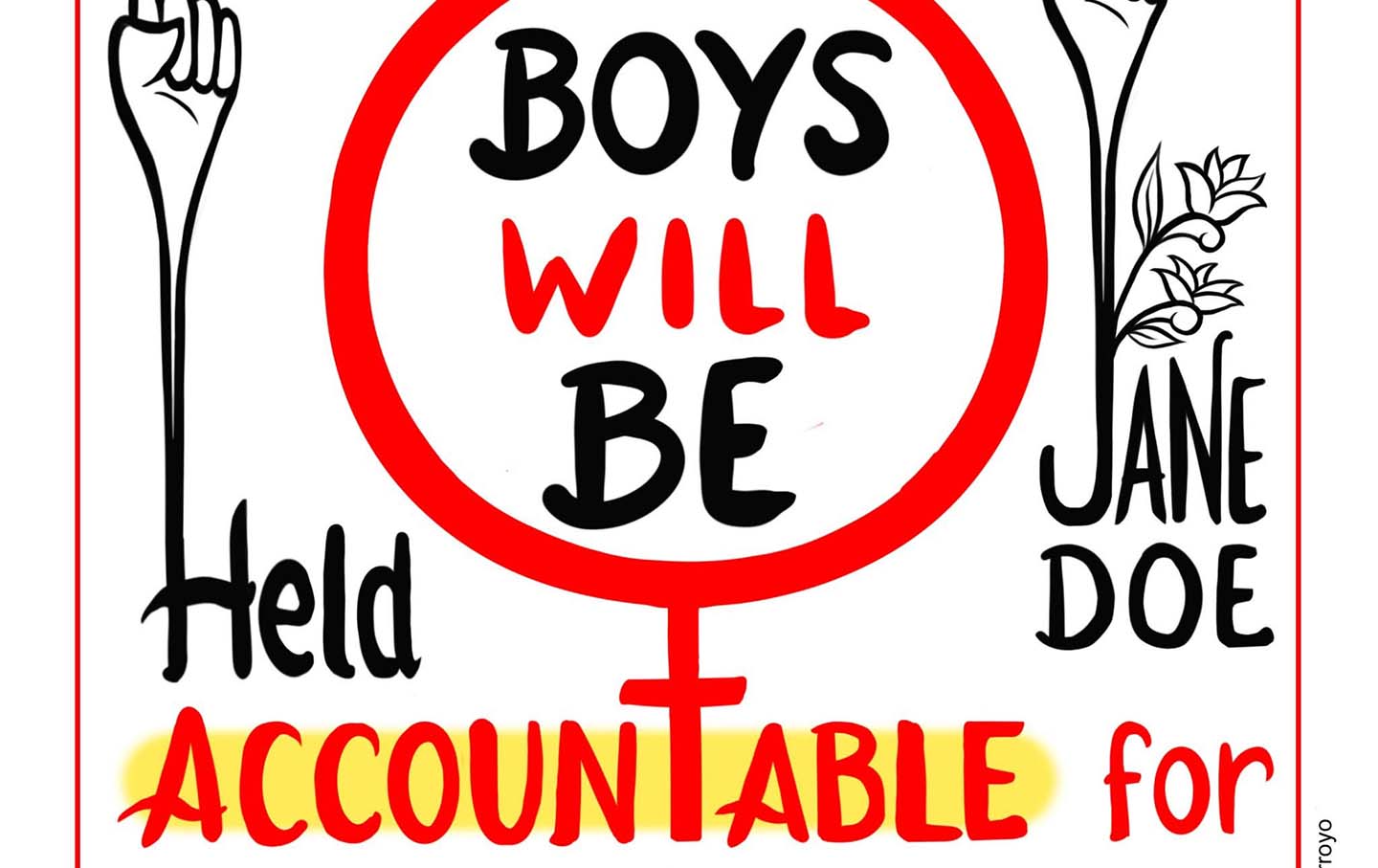
Jane Doe: Courage and Dignity Jane Doe: Courage and Dignity
Allegations of gang rape and sex trafficking at Cornell University highlight persistent concerns about rape culture, even years after the #MeToo movement.

