As Trump and Netanyahu Push for War, Europe Is Once Again Silent
Ahead of a NATO summit, European capitals are unwilling to strain ties with Washington.
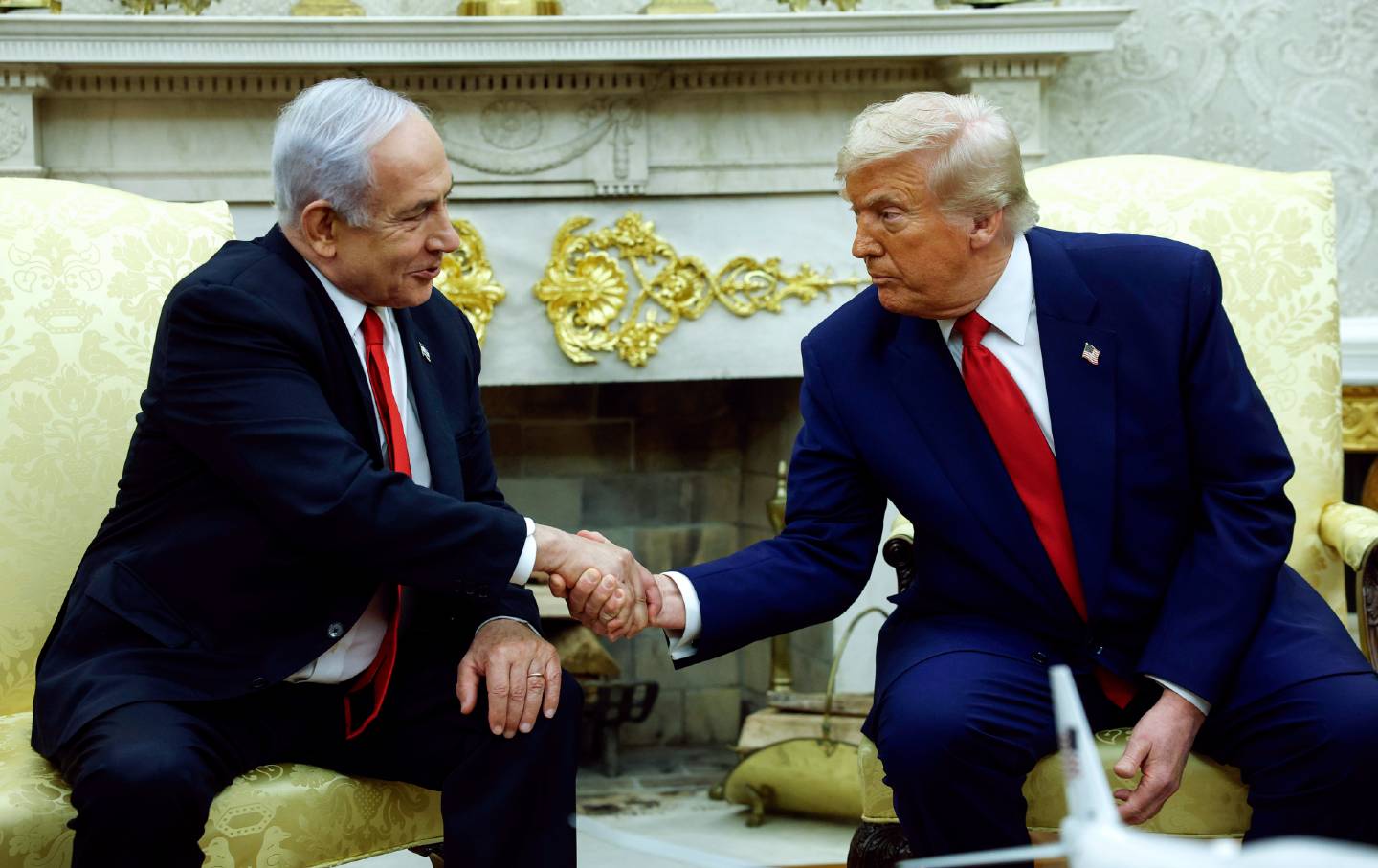
The Israeli-American offensive against Iran fits the textbook definition of a manufactured crisis. With Tel Aviv beating the drums for regime change as its air force pummeled Iranian cities last week, Donald Trump appeared to call Tehran back to the negotiating table—albeit while threatening massive destruction should Iranian Supreme Leader Ayatollah Khamenei not agree to “unconditional surrender” on the country’s nuclear program. The two-week ultimatum Trump delivered last Thursday will have been short-lived, however. On June 21, Washington launched a large bombing operation against Iranian nuclear facilities, bringing the broader Middle East one step closer to another devastating war of choice.
But save some judgment for Washington and Tel Aviv’s feckless tag-alongs. European capitals have watched the Israeli and US offensive from the sidelines. They are proving characteristically unwilling to throw what weight they have on the scales to reveal the latest crisis as what it is: a rogue offensive conducted in flagrant violation of international law. Instead, their silence has once again underscored the sputtering absence of a collective European foreign policy.
As Donald Trump moved last week closer and closer to the Israeli position, European powers had little to offer besides pro forma calls for de-escalation. In fact, many European capitals offered a tacit endorsement of Tel Aviv’s unprovoked strikes, underscoring Israel’s alleged “right to self-defense.” The foreign ministers of Germany, France, and the United Kingdom met on Friday with Iranian negotiators in Geneva, in the first known face-to-face talks between Western powers and Iran since Israel’s June 13 strikes. French President Emmanuel Macron claimed that Europe was after a “comprehensive negotiation offer” to bring the crisis to a close.
Yet the Europeans rapidly fell into line behind the United States and Israel’s maximalist line. Their representatives at Geneva urged the Iranian negotiators to abandon their refusal to negotiate with the Trump administration while Israeli missiles and bombs were being shot against their cities and military and energy assets. In an even more dramatic retreat, Europe’s leaders have increasingly come to endorse the Israeli and US position that no nuclear enrichment by Tehran is to be tolerated.
Trump had little reason not to dismiss the European initiative as a sideshow. “Iran doesn’t want to speak to Europe. They want to speak to us. Europe is not going to be able to help in this one,” the US president said. By the time Europeans woke up on Sunday morning to the news that Trump had gone ahead with his threats to bomb Iranian nuclear facilities, their half-hearted efforts at mediation were moot. European leaders were just as quick to show no daylight between them and Washington. European Commission President Ursula von der Leyen called on Sunday morning for Tehran to “engage in a credible diplomatic solution.” A joint statement by France, Germany, and the United Kingdom urged Iran “not to take any further action that could destabilize the region.” German Defense Minister Boris Pistorius was the most forthcoming about Europe’s meek position, however, calling the US strikes “good news” on Sunday.
On the question of Iran, Europe has been on its back foot ever since the seeds of the current crisis were planted during the first Trump administration. Trump’s 2018 withdrawal from the Joint Comprehensive Plan of Action (JCPOA), which traded sanctions relief for controls on nuclear enrichment by Iran, tore the rug out from under a major European and American diplomatic initiative. It was a key victory for Netanyahu, too, who had leaned on Republicans in the United States to unwind what was perhaps the signature foreign policy success of Barack Obama’s presidency. One of Netanyahu’s priorities since then has been to scuttle any return to negotiations. One could draw a straight line from the Israeli premier’s bellicose 2015 address to the US Congress, in which he lambasted the Obama administration’s overture to Tehran, up to his decision to launch the latest offensive.
Passive spectators to Trump and Netanyahu’s undermining of the 2015 agreement, Europeans caved on upholding their end of the treaty. While they publicly called for a return to the JCPOA framework, and its extension to other questions such as Iran’s ballistic missile arsenal, Europe has been consistently unwilling to accept an open rupture with Washington. Trump’s imposition of “maximum pressure” sanctions on Iran left Europeans with little choice but to conform—or face the mighty extraterritorial power of US law and the dollar. European corporations, such as BNP Paribas, had already been dealt hefty, multibillion-dollar fines in US courts for sanctions violations before the 2015 agreement was brokered.
Their hands are just as tied today as they were then. The main powers in Europe are petrified at the thought of ruffling feathers in Washington and adding another point of contention to an already fraying transatlantic alliance. They are looking apprehensively toward the upcoming NATO summit, to be held on June 24 and 25 in The Hague, to shore up the deep tensions that have resurfaced since Trump’s return to power in January.
But dependence is not an alibi for Europe’s refusal to seize what points of leverage it does have.
Netanyahu’s unprovoked aggression should be added to the long list of reasons for a serious downgrading of diplomatic ties between European capitals and Tel Aviv. Throughout this spring, those ties began to show signs of strain, aggravated by Netanyahu’s decision to resume Israel’s punitive invasion of Gaza after this winter’s short-lived ceasefire and his imposition in March of a full blockade of the Palestinian coastal enclave.
In May, European Union foreign ministers took the unprecedented step of voting a review of the EU–Israel Association agreement, potentially throwing into question the close commercial and diplomatic ties between European states and Tel Aviv. Meanwhile, several European states have expressed a willingness to consider recognizing Palestinian statehood, potentially joining the handful who did so in spring 2024. French President Macron was preparing to cochair, alongside Saudi Arabia, a UN conference billed as an attempt to revamp the two-state solution and lead toward the creation of a Palestinian state. It was postponed following Netanyahu’s June 13 attack.
If the growing European-Israel rift was symbolic, the risk now is that it gets buried as the totem of Israeli “self-defense” reexerts itself. On June 20, leaks of the EU review suggested that there were “indications” of Israeli violations of the human rights obligations in the association agreement. Kaja Kallas, the EU’s high representative for foreign affairs and security policy, is expected to formally present the review’s findings on June 23. But it remains highly unlikely that it will result in a significant suspension in EU-Israeli ties. In short, little to rein in Netanyahu. With Trump in tow, and the Europeans on hiatus, he seems ever more free to pursue his quest for a “new Middle East,” come hell or high water.
Disobey authoritarians, support The Nation
Over the past year you’ve read Nation writers like Elie Mystal, Kaveh Akbar, John Nichols, Joan Walsh, Bryce Covert, Dave Zirin, Jeet Heer, Michael T. Klare, Katha Pollitt, Amy Littlefield, Gregg Gonsalves, and Sasha Abramsky take on the Trump family’s corruption, set the record straight about Robert F. Kennedy Jr.’s catastrophic Make America Healthy Again movement, survey the fallout and human cost of the DOGE wrecking ball, anticipate the Supreme Court’s dangerous antidemocratic rulings, and amplify successful tactics of resistance on the streets and in Congress.
We publish these stories because when members of our communities are being abducted, household debt is climbing, and AI data centers are causing water and electricity shortages, we have a duty as journalists to do all we can to inform the public.
In 2026, our aim is to do more than ever before—but we need your support to make that happen.
Through December 31, a generous donor will match all donations up to $75,000. That means that your contribution will be doubled, dollar for dollar. If we hit the full match, we’ll be starting 2026 with $150,000 to invest in the stories that impact real people’s lives—the kinds of stories that billionaire-owned, corporate-backed outlets aren’t covering.
With your support, our team will publish major stories that the president and his allies won’t want you to read. We’ll cover the emerging military-tech industrial complex and matters of war, peace, and surveillance, as well as the affordability crisis, hunger, housing, healthcare, the environment, attacks on reproductive rights, and much more. At the same time, we’ll imagine alternatives to Trumpian rule and uplift efforts to create a better world, here and now.
While your gift has twice the impact, I’m asking you to support The Nation with a donation today. You’ll empower the journalists, editors, and fact-checkers best equipped to hold this authoritarian administration to account.
I hope you won’t miss this moment—donate to The Nation today.
Onward,
Katrina vanden Heuvel
Editor and publisher, The Nation
More from The Nation
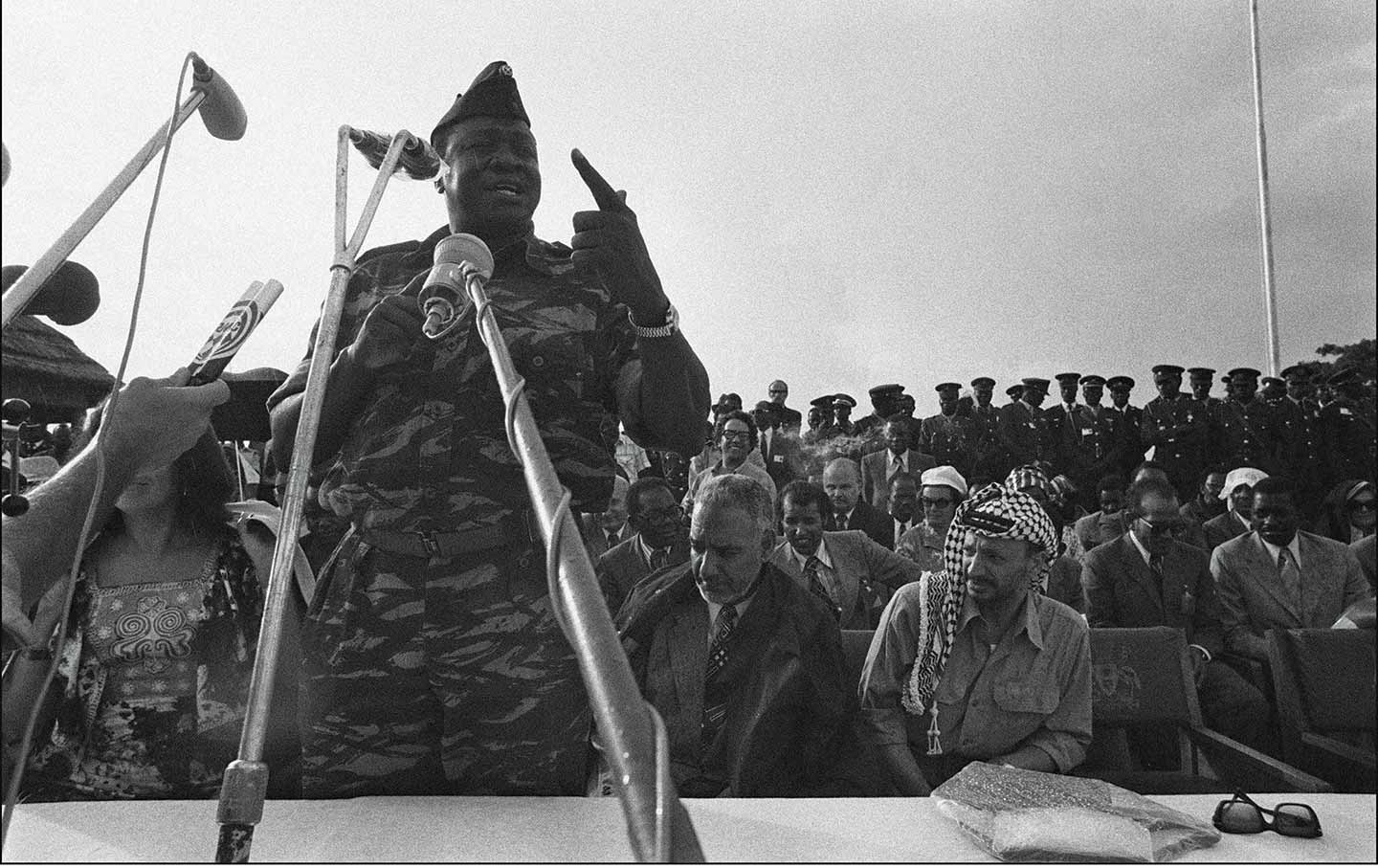
Mahmood Mamdani’s Uganda Mahmood Mamdani’s Uganda
In his new book Slow Poison, the accomplished anthropologist revisits the Idi Amin and Yoweri Museveni years.

The US Is Looking More Like Putin’s Russia Every Day The US Is Looking More Like Putin’s Russia Every Day
We may already be on a superhighway to the sort of class- and race-stratified autocracy that it took Russia so many years to become after the Soviet Union collapsed.

Israel Wants to Destroy My Family's Way of Life. We'll Never Give In. Israel Wants to Destroy My Family's Way of Life. We'll Never Give In.
My family's olive trees have stood in Gaza for decades. Despite genocide, drought, pollution, toxic mines, uprooting, bulldozing, and burning, they're still here—and so are we.
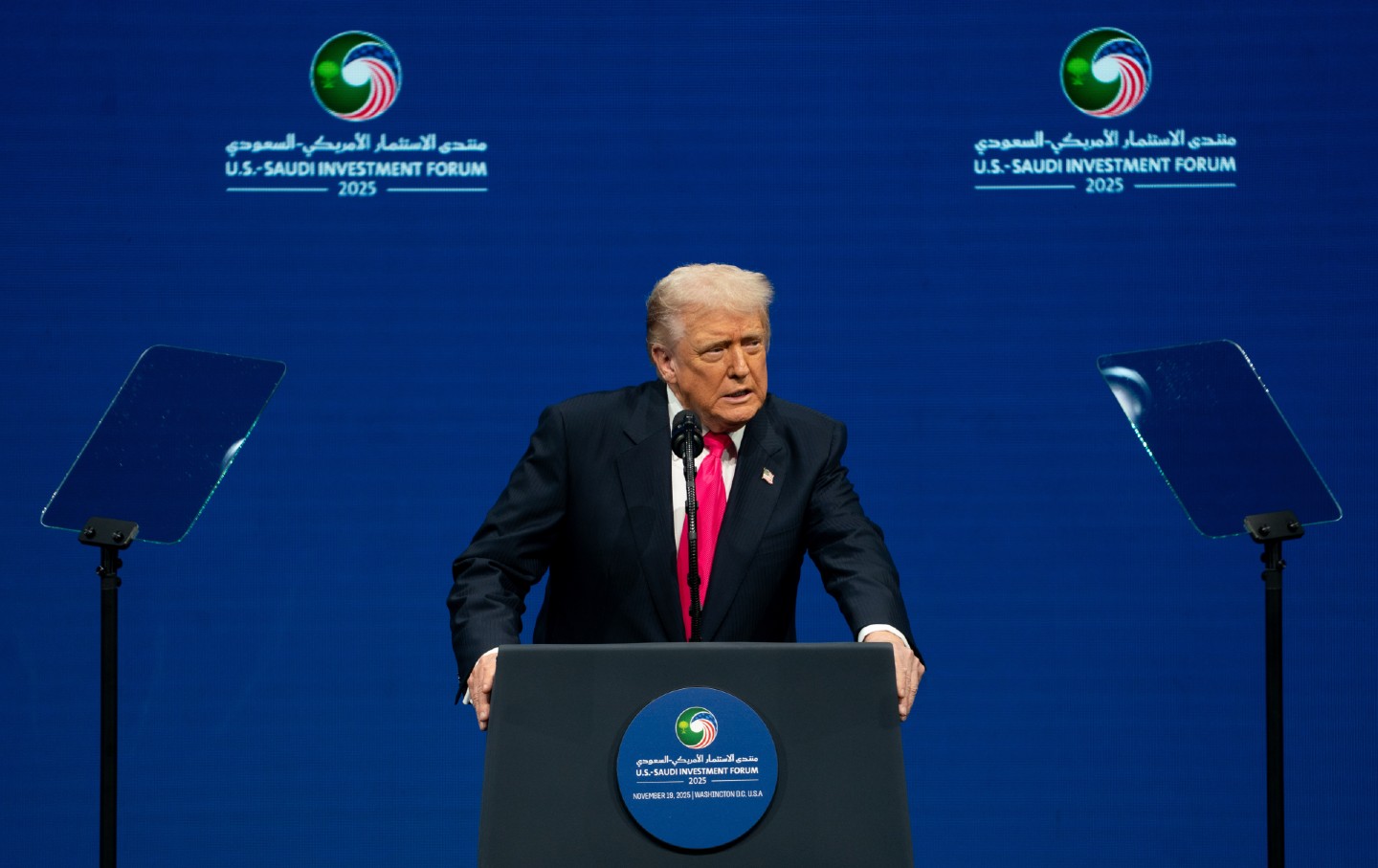
Trump’s National Security Strategy and the Big Con Trump’s National Security Strategy and the Big Con
Sense, nonsense, and lunacy.

Does Russian Feminism Have a Future? Does Russian Feminism Have a Future?
A Russian feminist reflects on Julia Ioffe’s history of modern Russia.
Ukraine’s War on Its Unions Ukraine’s War on Its Unions
Since the start of the war, the Ukrainian government has been cracking down harder on unions and workers’ rights. But slowly, the public mood is shifting.

