
Families in Tehran Have Been Shattered
Israel’s assault on the Iranian capital has brought destruction and grief to civilian neighborhoods.
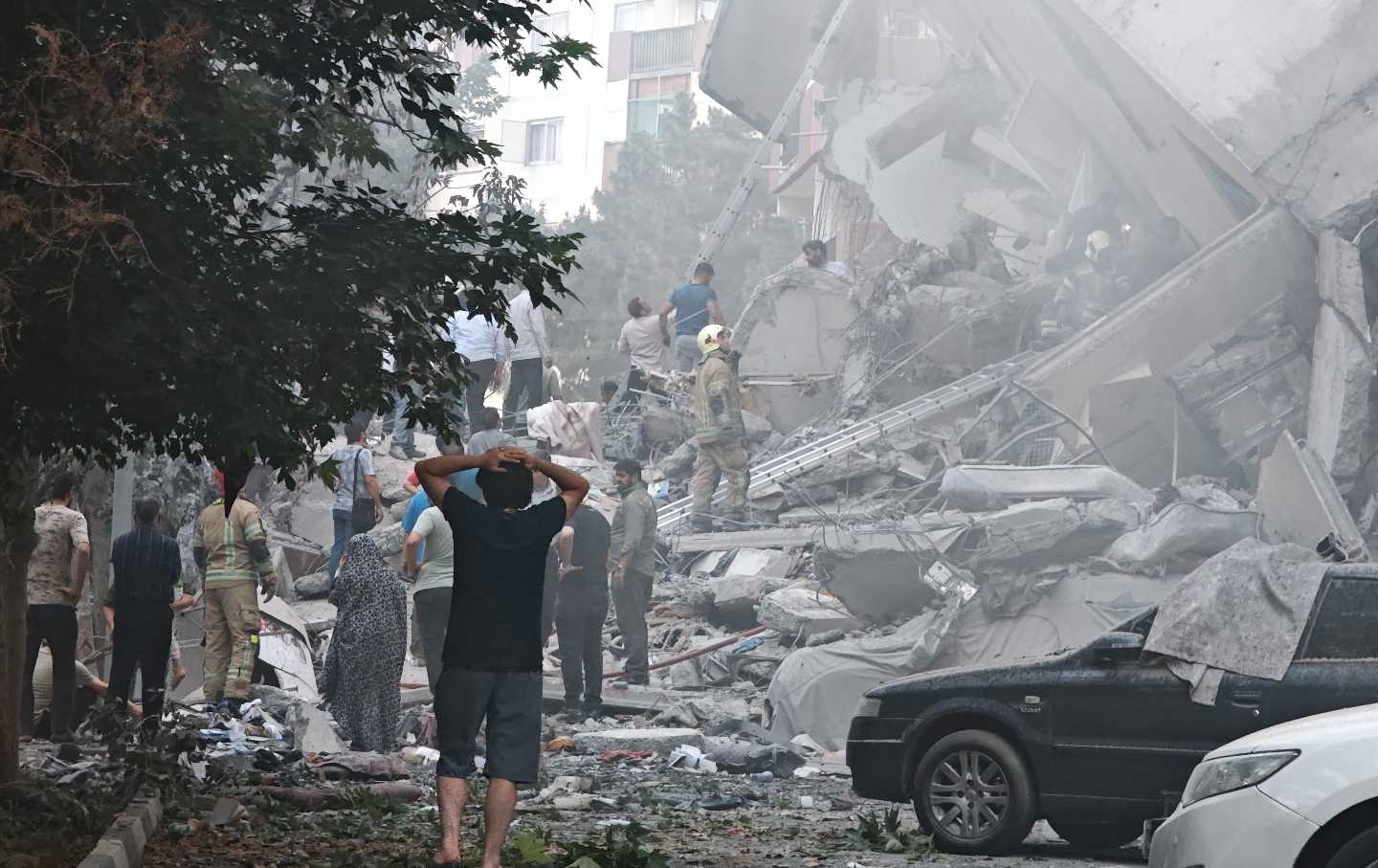
People look over damage to buildings in Nobonyad Square following Israeli air strikes on June 13, 2025 in Tehran, Iran.
(Majid Saeedi / Getty)Mohammad Ali Na’em, a man in his early 30s, stepped out of his apartment building near Nobonyad Square in northeast Tehran on Sunday evening to fetch dinner. His elderly mother, who suffered from heart disease, remained alone in their apartment, waiting for his return.
She had no way of knowing these would be her final moments.
“I was just two minutes away from home when the explosion hit,” he recalled. “I ran toward the building, screaming her name with everything I had.”
But what he found was not his mother; it was the ruins of their apartment scattered across the street, his neighbors weeping in silence. Moments later, the paramedics carried lifeless bodies cloaked in ash.
On June 12, the first night of what soon escalated into a major conflict between Tehran and Tel Aviv, Israeli forces launched a sweeping military campaign targeting Iran’s nuclear and military infrastructure. The coordinated strikes hit enrichment facilities at Natanz and Fordow, along with air defense systems and command centers across the country. The operation claimed the lives of senior Iranian military leaders, including Islamic Revolutionary Guard Corps commander Hossein Salami and aerospace chief Amir Ali Hajizadeh. In response, Iran launched missile attacks on Israeli military bases and areas around Tel Aviv, claiming the lives of at least 24 civilians.
Although Israel’s operation was officially aimed at military assets, the destruction quickly extended beyond those limits. Na’em’s mother died on the third night of hostilities between the two countries.
Families across the capital had been clinging to hope that the attacks would remain confined to military targets, that it might all be over within hours. But war had other plans.
Just hours before Israel’s attack, the country’s official Persian-language account issued a warning on social media, asking all Iranian residents currently located in or near military weapons factories and affiliated sites to leave and not return until further notice.
Na’em was not sure if the warning applied to his neighborhood, and with nowhere to take his ailing mother, he made the difficult decision to stay.
Shortly after, Israeli strikes hit multiple civilian areas and infrastructure across Tehran. Residential neighborhoods such as Kamranieh, Lavizan, Tehran-Pars, Chitgar, and Nobonyad were among those reportedly struck.
Just a day prior, Israeli Prime Minister Benjamin Netanyahu had addressed the Iranian public in video messages, promising that Israel’s actions were aimed at the regime, not the people. “Israel’s fight is not with you, the brave people of Iran, whom we respect and admire” he said on television. “Our fight is with our common enemy, a murderous regime that both oppresses you and impoverishes you,.
Since the launch of Israel’s military campaign, dubbed Operation Rising Lion, everyday life for thousands of Iranians has been upended. Eyewitnesses told The Nation that many of the capital’s residents attempted to flee Tehran, but heavy traffic and bottlenecks on major roads leading out of the city thwarted their efforts, leaving them trapped in place with nowhere to go.
The Iranian capital lacks bomb shelters or air raid sirens to warn citizens of incoming attacks. Many said they felt blindsided by the strikes, unprepared and exposed as the bombardment intensified. Official figures now report more than 224 fatalities and over 1,000 injuries, the majority of whom were civilians, with thousands more displaced.
On the 10th floor of Na’em’s building, Ali Afzalzadeh lived with his wife and their 3-year-old daughter. That night, he took a night shift at work. The missile struck while he was gone.
Popular
“swipe left below to view more authors”Swipe →“I wasn’t there. And that’s what kills me,” he said, clutching a small doll retrieved from the rubble—the only thing left of his daughter. “I wish I had died with them.”
He now lives with his brother. He rarely speaks, keeps his phone off, and rebuffs all visitors. “My wife and daughter are dead. I don’t want to live,” he repeats to those who try to reach him.
Afrooz Nazem, a homemaker in her late 30s, lost her husband as he slept beside her when the strike hit their home.
“I woke up to a violent noise, then total darkness… and then he was gone,” she said. Neighbors pulled her from the debris. Her husband did not survive.
Now she can only sleep when wrapped in the scent of his shirt. She says his voice still echoes in the places where she used to see him, and every evening, as dusk falls, she hears the sound of his footsteps.
Mostafa Ahmadian, a government employee and a resident of the same building, was the sole provider for his wife and their three children. On the night of the attack, the family had gathered around the television.
Ahmadain survived only because he had stepped out to visit his parents nearby. When he returned, his home was gone.
“The wall had collapsed… the children’s toys were still burning. My wife… there was no sound. I couldn’t find them. I couldn’t even recognize their bodies,” he said quietly.
Over the past five days, communities across Tehran have endured repeated strikes, leaving regular Iranians fearful and uncertain about what comes next, while daily life in the capital has ground to a halt. Schools and universities have shut their doors. Banks are closed, restaurants shut entirely or operating at limited capacity, and a heavy sense of uncertainty hangs in the air. Streets are tense, as many have begun stockpiling food after markets and grocery stores abruptly closed, preparing themselves for a protracted conflict.
Groups of residents can be seen gathering on sidewalks and street corners, anxiously exchanging updates and rumors, trying to make sense of the chaos around them. Many have voiced frustration with the policies of the current regime, which they believe led the country into this crisis, yet they remain reluctant to challenge it openly, especially amid mounting pressure from Israel.
“We’re just waiting for this nightmare to end,” one such person told The Nation, who chose to remain anonymous out of fear of reprisal.
More from The Nation
Brazil’s Decision Brazil’s Decision
The moral compass and basic humanity of political leaders really does matter.
Albanian Student Strikes Spur a Political Crisis Albanian Student Strikes Spur a Political Crisis
A new round of protests against the ruling party’s corruption has Prime Minister Edi Rama giving cops bonuses to crack down on dissent.
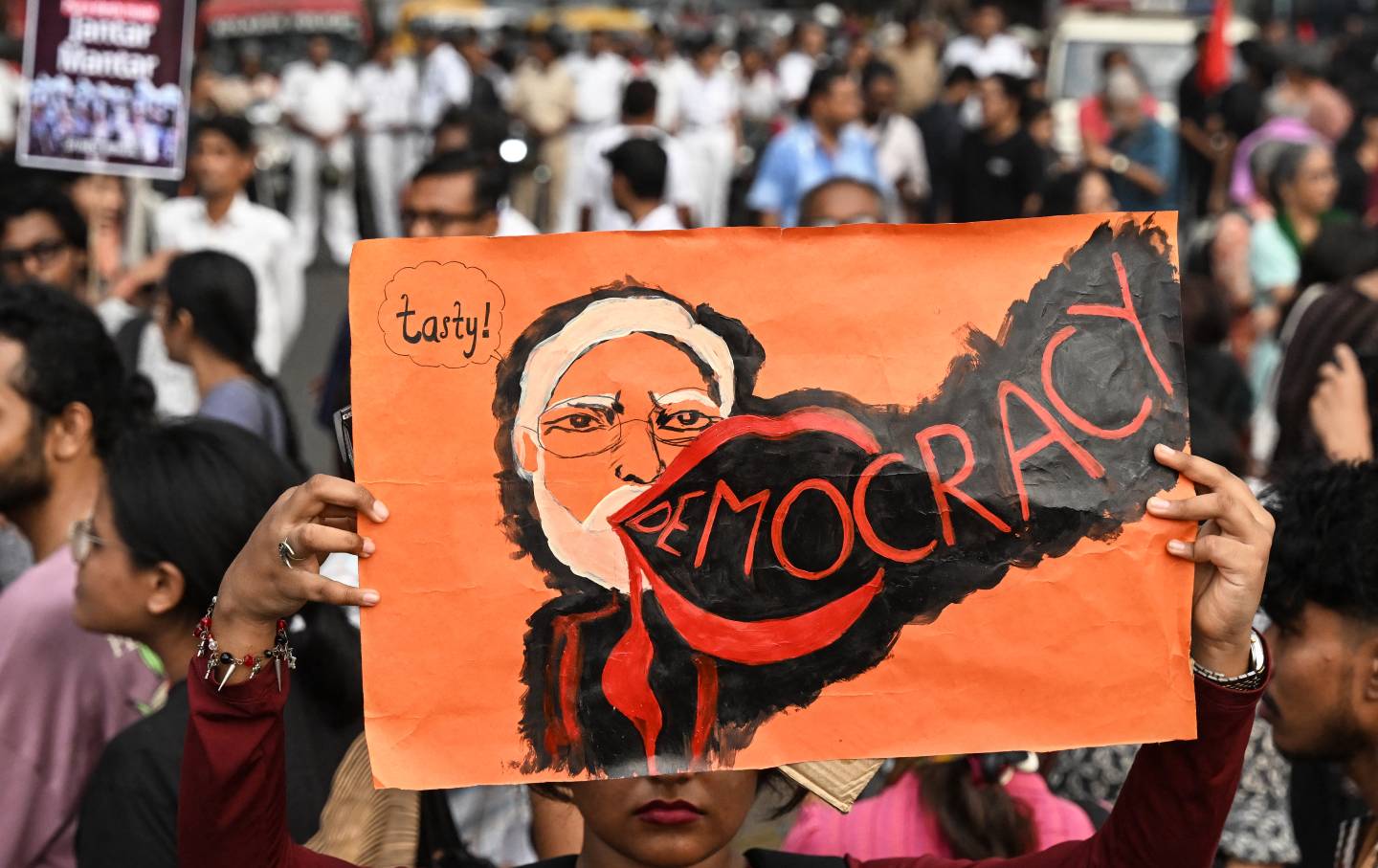
Inside India’s Gen Z Cockroach Janta Movement Inside India’s Gen Z Cockroach Janta Movement
Young Indians are challenging the purge of voter rolls by Modi’s right-wing government. Shrishti Khanna, who was detained by Delhi police while covering the protests, explains.
The Clarion Call of “NAZA” The Clarion Call of “NAZA”
Yuval Abraham and Rachel Szor’s new film not only documents the horrors of the present but give us a glimpse of a possible future too.
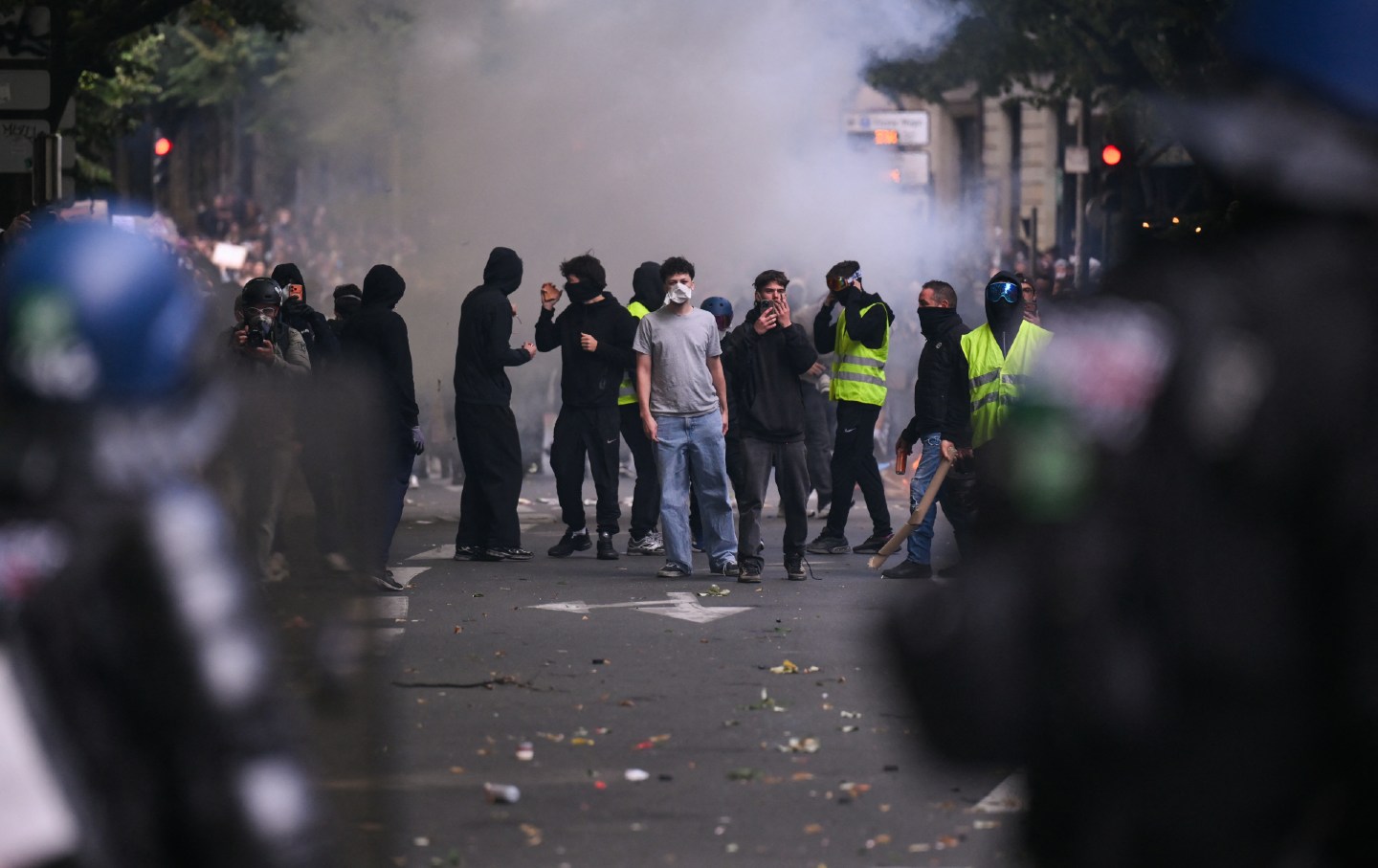
The Specter of Lepenism Looms Over France’s Social Crisis The Specter of Lepenism Looms Over France’s Social Crisis
Joining forces with the “yellow vests,” youth demonstrators are raising the alarm in a country falling to the far right.

