
Zohran Mamdani Is Surging at Just the Right Time
By running a campaign in the La Guardia tradition, the insurgent New York mayoral candidate is closing the gap with Andrew Cuomo—and winning support from AOC.
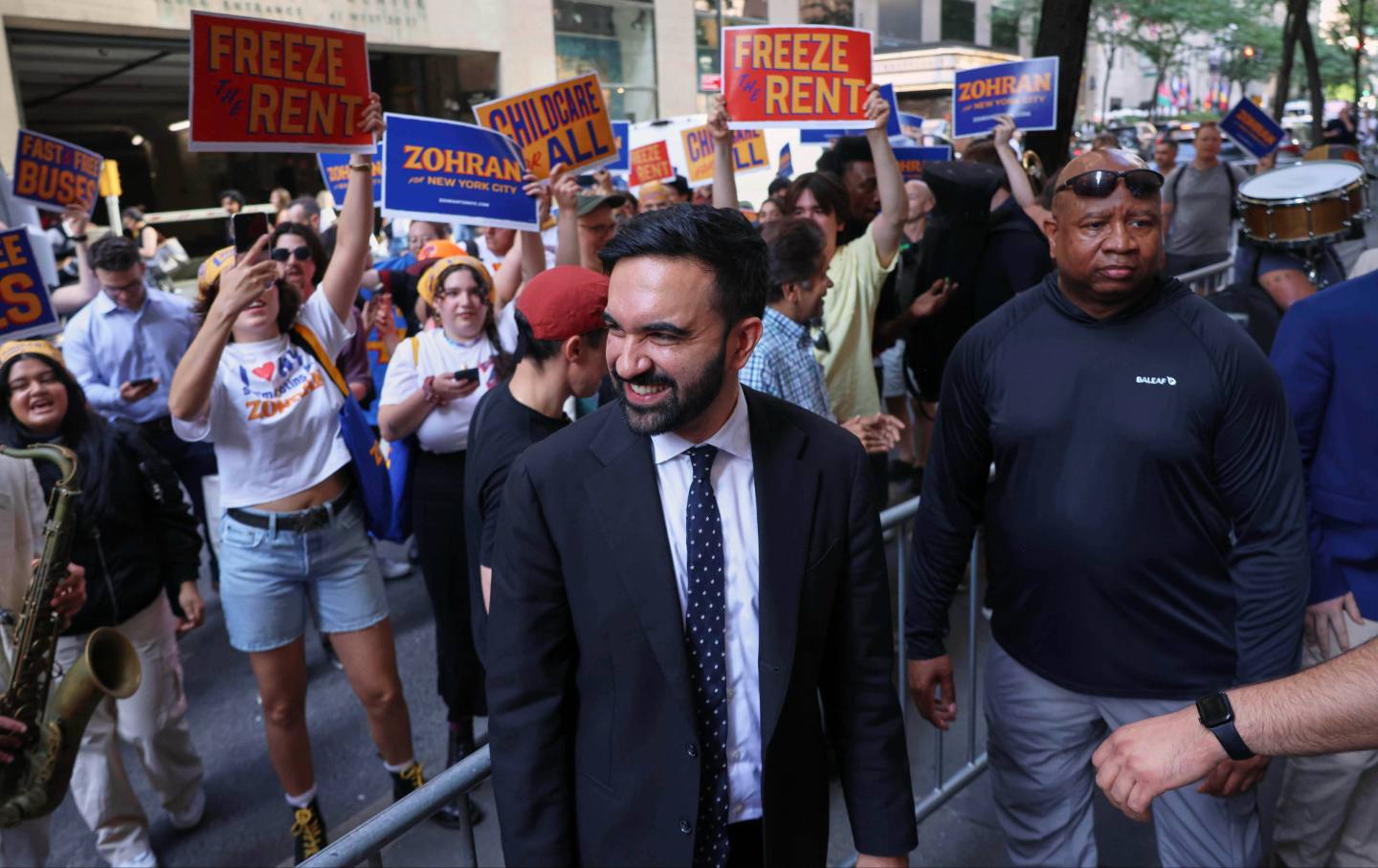
Zohran Mamdani arrives at the NBC studios to participate in a Democratic mayoral primary debate, Wednesday, June 4, 2025, in New York.
(Yuki Iwamura / Pool via AP)Headlines from Wednesday night’s crowded and often chaotic New York City Democratic mayoral debate focused on the fire that eight other contenders directed toward the front-runner in the contest, former New York governor Andrew Cuomo. But the notable substory of the debate was the time and energy that Cuomo put into attacking the candidate who has emerged as his closest rival in the race, State Assemblyman Zohran Mamdani.
Cuomo seemed scared, as he tried to suggest, again and again, that his democratic socialist challenger is little more than a social-media phenom who’s “very good on Twitter.” But Mamdani is much more than that. He proved to be an agile debater, who frequently cornered Cuomo with knowing jabs that confirmed the legislator’s assertion that the former governor is “allergic to any accountability or acknowledgement of any mistake.”
Cuomo should be scared. Mamdani’s a serious contender who is surging in the polls and seems to be peaking at just the right time—with a fresh endorsement from the most influential progressive in New York, US Representative Alexandria Ocasio-Cortez, and a campaign that keeps hitting the mark while others frequently miss it.
Even before AOC’s endorsement—which made so much headline news that it quickly eclipsed the debate—Mamdani was getting the sort of poll numbers that suggest that, in the words of a Newsweek analysis of recent survey data, he “may be catching up with his opponent.” The odds still favor Cuomo, with his name recognition, money, and connections. But a late-May Emerson College Polling/PIX11/The Hill poll determined that when New York’s ranked-choice voting system plays out—as second-place, third-place, and lower rankings from voters are reassigned to leading candidates—found that Cuomo wound up with a relatively narrow 54–46 advantage over Mamdani. Emerson College Polling executive director Spencer Kimball speaks about “Mamdani’s surge—gaining 23 points and winning second-choice votes almost two-to-one,” which is a very big deal in a ranked-choice election.
But the bigger deal is the evidence that suggests Mamdani could keep surging. The AOC endorsement certainly fed the speculation; she came in strong for Mamdani, identifying him as her top choice in a field that includes a number of contenders she has worked with over the years.
“She is…someone who’s shown that it’s possible to not only take on career politicians, billionaires, and Donald Trump, but also to win,” said a clearly delighted Mamdani on Thursday morning. “To have her endorsement with just a few weeks to go; it’s the perfect time, in fact, to receive that.”
True enough. But it wasn’t just the fact that AOC endorsed Mamdani that mattered. It was the way she gave her support to a candidate who must take full advantage of the ranked-choice voting system to upend Cuomo.
“Assemblymember Mamdani has demonstrated a real ability on the ground to put together a coalition of working-class New Yorkers that is strongest to lead the pack,” Ocasio-Cortez explained to The New York Times. “In the final stretch of the race, we need to get very real about that.” In an endorsement announced just days before early voting for the June 24 primary begins, AOC ranked Mamdani first, while suggesting that voters rank City Council Speaker Adrienne Adams second, city Comptroller Brad Lander third, former comptroller Scott Stringer fourth, and Brooklyn state Senator Zellnor Myrie fifth.
While the other candidates were mentioned, the media and momentum boost went to Mamdani, who has campaigned “as a progressive Muslim immigrant who actually fights for the things that I believe in.” What he believes in is a bold affordability agenda that proposes to freeze rents, make city buses free, and tax the rich to the tune of $10 billion. “Zohran doesn’t just speak truth to power—he organizes to build it from the ground up,” said Ocasio-Cortez. “His campaign isn’t just about policies, it’s about a vision for a city where every New Yorker, no matter their zip code, can thrive.”
That focus on the character and style of the Mamdani campaign is smart.
Mamdani is closing in on Cuomo with a campaign that proudly tells his own story, as a multilingual immigrant to a city of immigrants. He’s taken attacks for this, with Republican City Council member Vickie Paladino even calling for Mamdani, a US citizen who was born in Uganda, to be deported. Critics have also highlighted the fact that he’s recording online ads—including a lively new one in Hindi—and distributing literature in some of the countless languages spoken by the city’s rich tapestry of ethnic communities.
Mamdani says right-wing attacks on his candidacy are part of what “Trump and his sycophants have wrought” in politics these days, which is certainly true. But what Mamdani’s critics fail to recognize is the fact that New York City has a great history of candidates with immigrant backgrounds mounting multilingual campaigns.
The city’s greatest mayor, Fiorello La Guardia, was born in New York two years after his parents, who themselves were born in Foggia, Italy. and Trieste, in what was then the Austro-Hungarian Empire, had immigrated to the United States. But La Guardia spent a substantial portion of his youth in Italy and other parts of Europe. When he eventually returned to New York City and entered politics, La Guardia campaigned in multiple languages, including Italian, German, Serbo-Croatian and Yiddish—so skillfully that, in 1922, as the The New York Times recalled, “La Guardia was re-elected to Congress from East Harlem after he rebutted charges of anti-Semitism by challenging a rival to debate in Yiddish. La Guardia, a son of Jewish and Italian parents, was fluent in Yiddish. His Jewish rival was not.”
Popular
“swipe left below to view more authors”Swipe →La Guardia was also a radical reformer who championed unions and working-class New Yorkers and boldly challenged economic and political elites, party machines, and business-as-usual politics. A left-wing Republican in the days when Wisconsin Senator Robert M. La Follette and others preached progressivism within the “party of Lincoln,” La Guardia once won reelection to Congress on the Socialist Party ticket and frequently aligned with leftist political projects such as the old American Labor Party.
La Guardia took plenty of heat for those choices in his time, just as Mamdani does today. More than a few of La Guardia’s races were uphill climbs. Yet he was elected mayor of New York City in 1933, beating an incumbent Democrat at the height of the Great Depression. In his 1937 reelection bid, he again defeated the Democratic machine. And he did so once more in 1941.
This is another time. And, while Mamdani’s surge is real, it does not guarantee that his candidacy will prevail on June 24. There are still many chapters to be written in the story of the 2025 New York City mayoral race. Cuomo will not go down easily, and other candidates could gain traction. But don’t let anyone tell you that it is impossible for a progressive insurgent with a flair for communicating and a multilingual campaign to prevail. As Fiorello La Guardia’s story reminds us, it has happened before.
Become a Sustaining Donor This September
Between the reemergence of right-wing red-baiting and Donald Trump’s use of the chilling National Security Presidential Memorandum–7 to criminalize left political organizing, we’re seeing McCarthyism reborn before our eyes.
This assault on democracy cannot be ignored or wished away. Resisting it requires bravery in the face of threats and repression, a steadfast commitment to the truth, and the unwavering belief that we can—and will—overcome this darkness.
We must have an independent media that sets the record straight, unearths corruption and abuses of power, and advances a politics of justice and dignity for all if we’re to win this fight.
That’s why I’m writing to you today. This September, The Nation needs to add 100 monthly donors to sustain our progressive journalism. Your contribution makes the next investigative report, the next truth-speaking column, and the next pathbreaking essay all possible.
I hope you’ll support our work with a recurring donation today. If you donate $10 or more a month, we’ll send you a brand new “Hands Off the Free Press!” sticker to recognise your commitment to our cause. Please, donate today.
Onward,
Katrina vanden Heuvel
Editor and Publisher, The Nation
More from The Nation
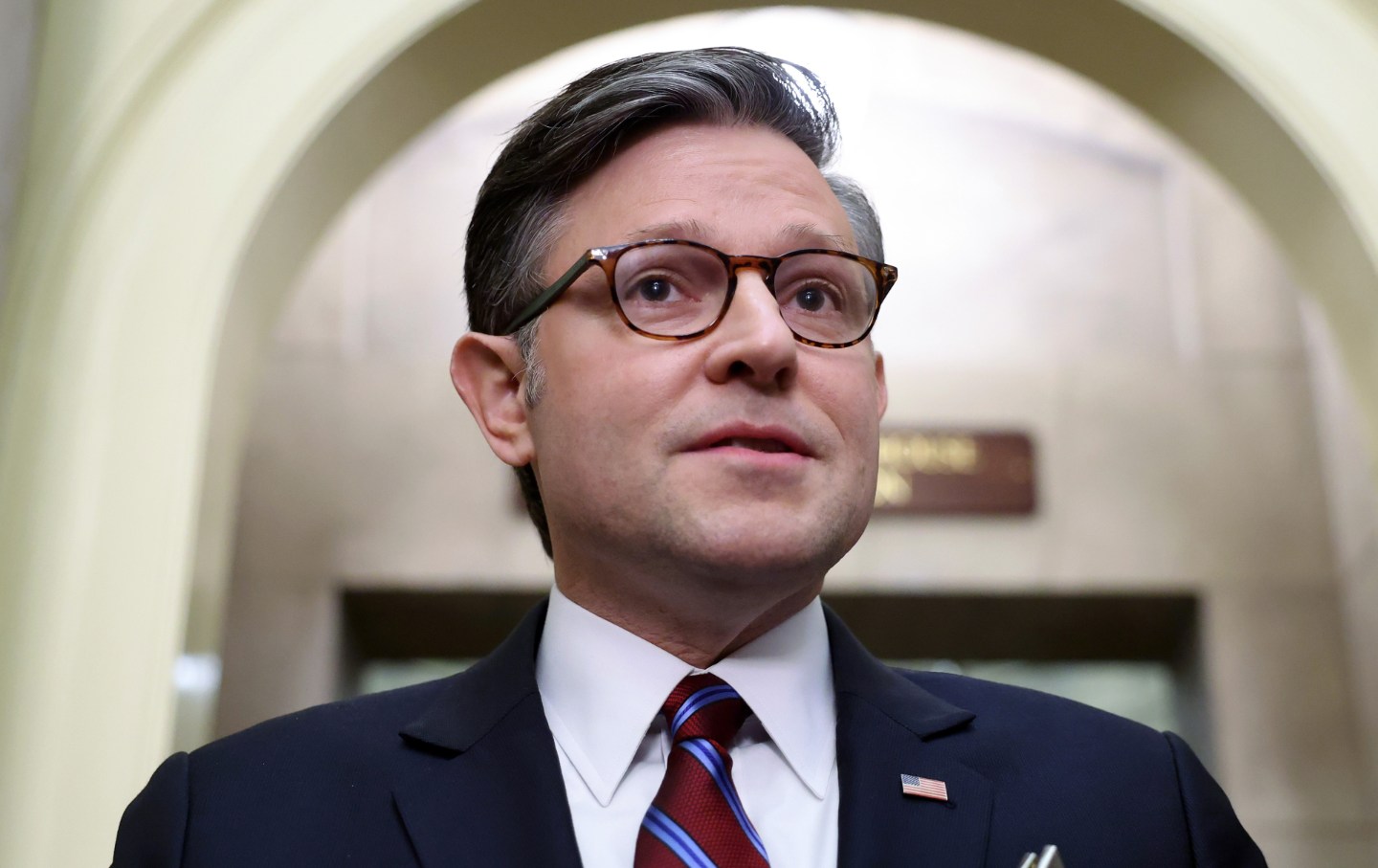
A Premature Farewell to the Ignominious Speaker Mike Johnson A Premature Farewell to the Ignominious Speaker Mike Johnson
If Democrats win the House in the midterms, as expected, Mike Johnson won’t hold the gavel in any meaningful way again.

Transphobia Isn’t Winning Votes. But It Is Making Our Lives Much Worse. Transphobia Isn’t Winning Votes. But It Is Making Our Lives Much Worse.
Trans people must now live out another election cycle knowing our friends, family, coworkers, and neighbors are being flooded with agitprop designed to dehumanize us.
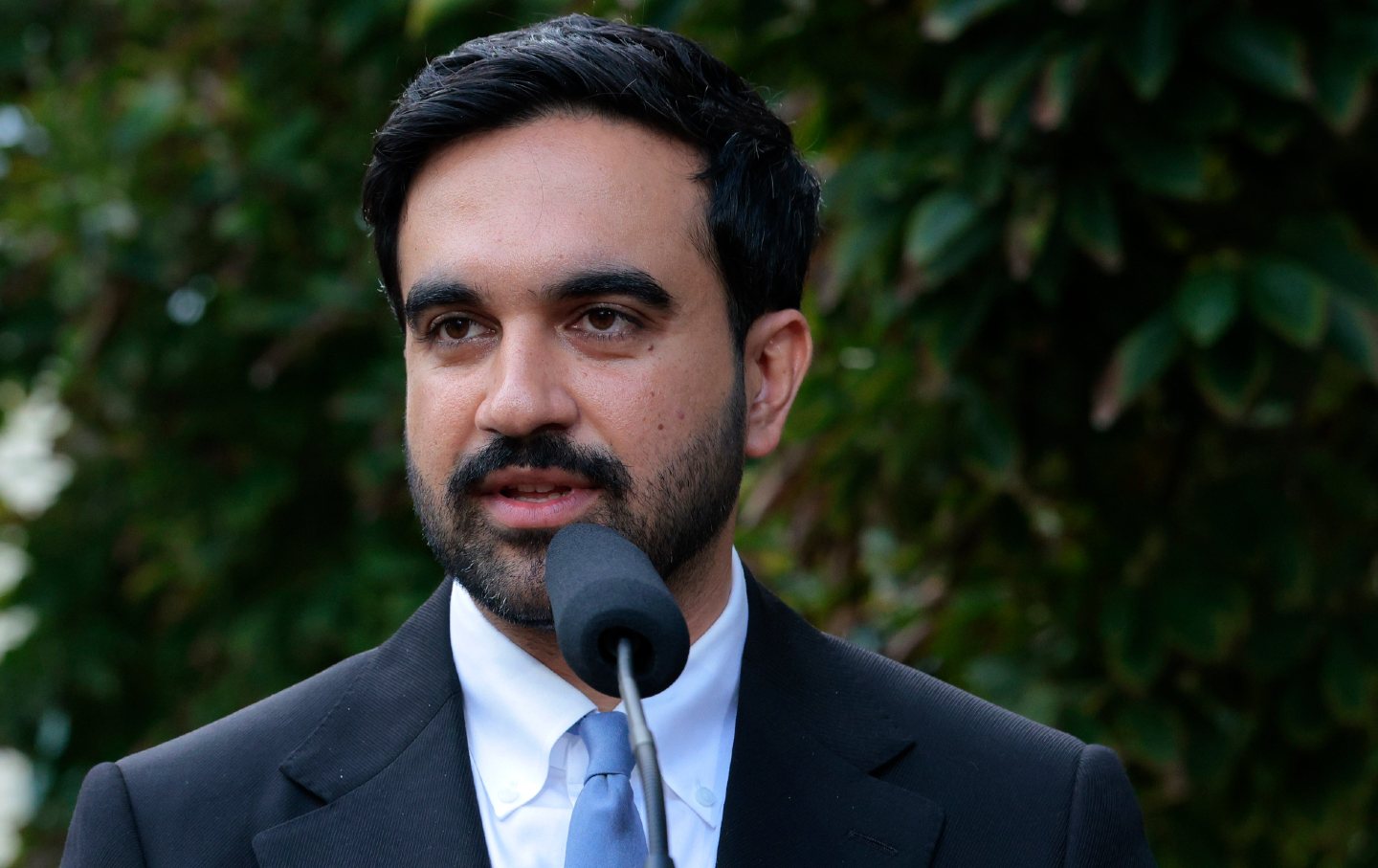
Zohran Mamdani Hosts the World Zohran Mamdani Hosts the World
In a meeting with mayors from around the globe, Mamdani argued that the left must fix everyday problems—or the right will find someone to scapegoat for them.

Is There Any Good News Left? Is There Any Good News Left?
Despite what our algorithms suggest, there’s still news worth celebrating.
CEOs Are Losing Control of AI CEOs Are Losing Control of AI
With no slowdown from Trump’s administration.

