The Democrats’ Class Trip to Nowhere
A sparsely attended forum about the working class held at a $40 million think tank—yep, sounds about right.

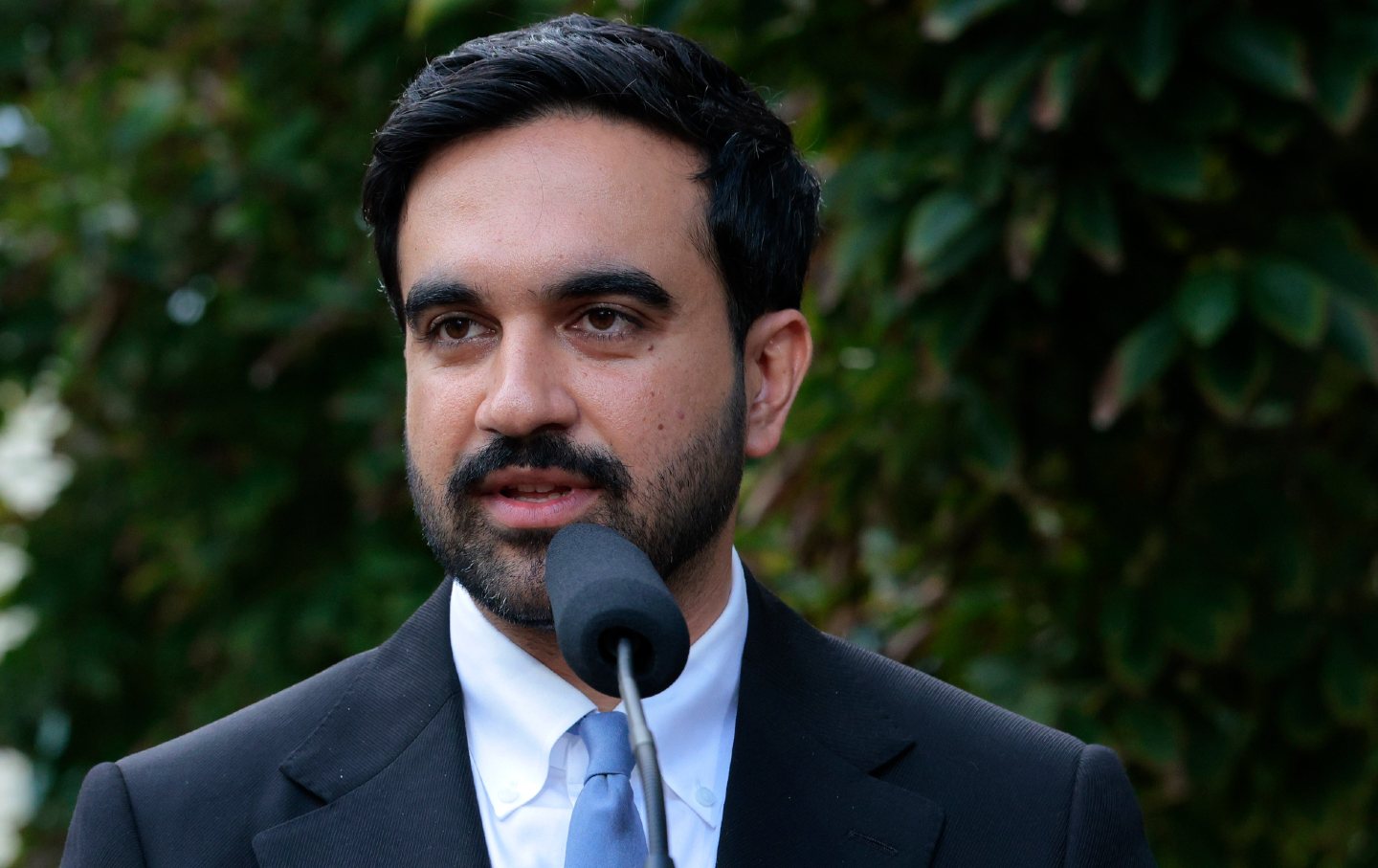
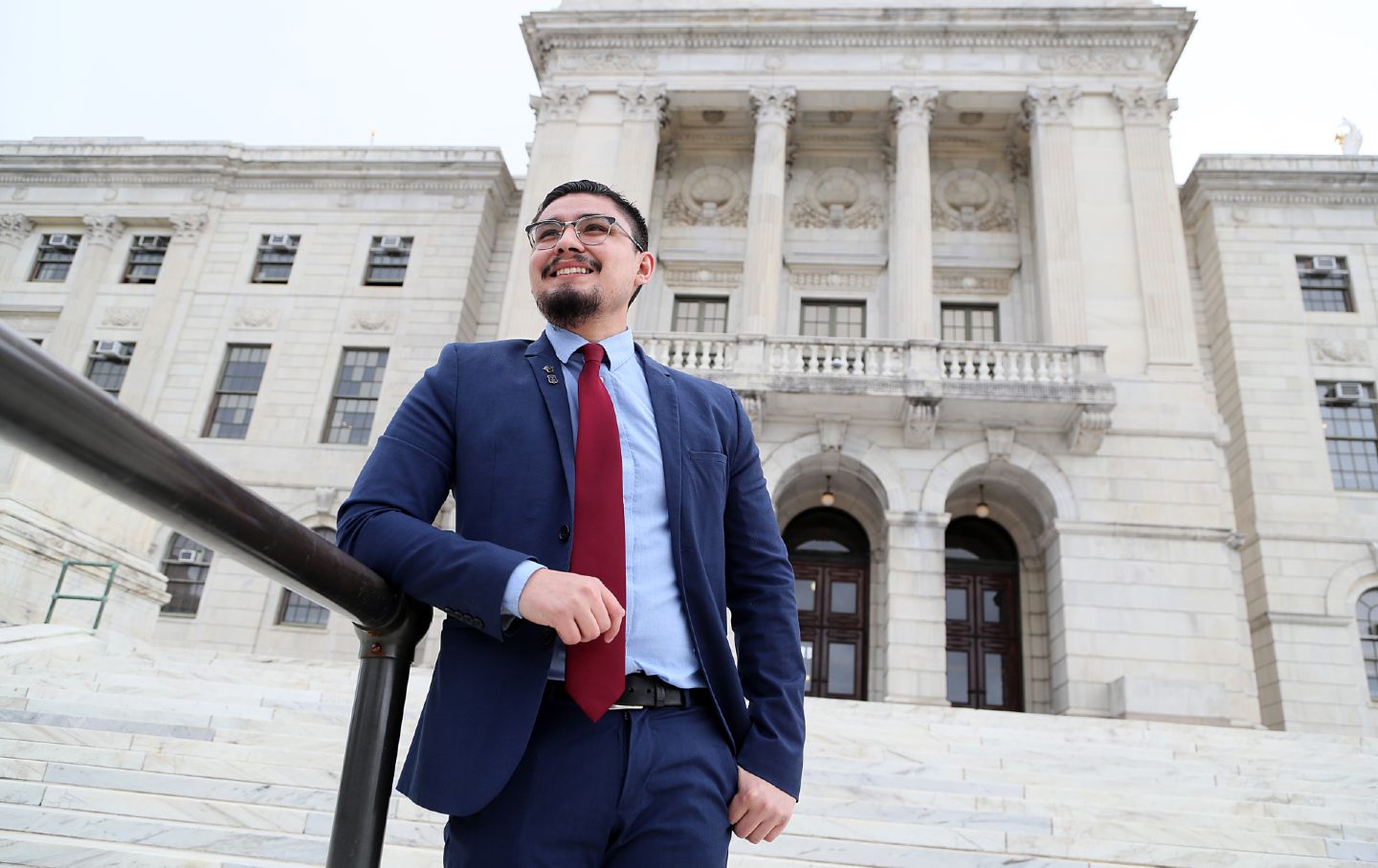
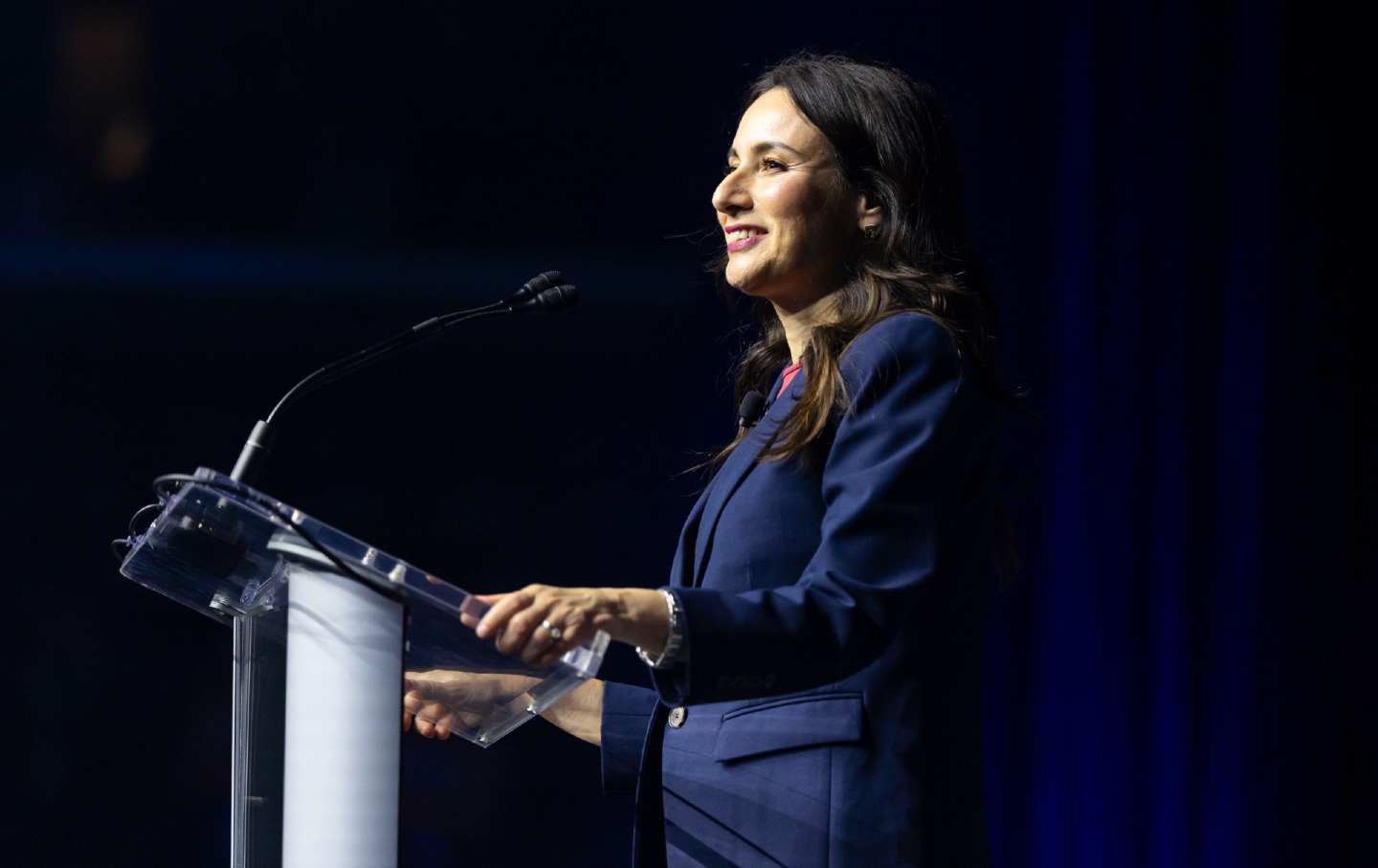
Representatives Greg Casar and Nikki Budzinski at the Center for American Progress on June 4, 2025.
(YouTube)There was much that felt off-kilter and disorienting in the Wednesday gathering that marked the latest effort by the Center for American Progress Action Fund to reckon with the vexed question of the Democratic Party’s future. To begin with, consider the title of the forum: “Representing Working Class Voters.” The phrasing here suggests that the class agenda before the Democrats is a fairly straightforward matter of improving services for an already bought-in constituency, when in reality the party has been hemorrhaging support from working-class supporters to an alarming degree. (Taking “representing” in a more scholarly context, the title also brought to mind a parallel set of class-avoidant tracts from the cultural studies academy: Routledge or Reuther—which way, Democrats?)
And, as is so often the case in DC, the setting for this blue-collar confab was more than a little jarring: The Center for American Progress (CAP) is a lavishly appointed center-liberal think tank, which regularly clocks more than $40 million in annual revenue, and occupies a gleaming glass tower in downtown DC. When the afternoon session kicked off in CAP’s multistory meeting area, working-class voters were themselves distinctly underrepresented; instead, the modest crowd was made up mostly of smartly turned out members of DC’s lanyard class.
The fact that the enormously pressing question of Democrats’ loss of support and credibility among workers drew but a half-hearted trickle of knowledge workers was also telling. All three stories of the CAP meeting space had been filled a few months ago with people keen to see billionaire Illinois Governor J.B. Pritzker auditioning man-of-the-people talking points ahead of an expected 2028 presidential run. Here, by contrast, a clutch of perhaps 30 attendees watched a prerecorded introduction from Action Fund chair Neera Tanden, who had hosted Pritzker but had a scheduling conflict for this discussion. As it happened, the gathering was scheduled against a far better attended gathering that bore vivid testimony to the challenges facing the revival of Democrats’ fortunes among working-class supporters: The WelcomeFest, the self-advertised “largest public gathering of centrist Democrats,” had convened just a few blocks away from CAP headquarters; any wonkish boulevardier monitoring both events would have no doubt about where the party’s organizing energy and resources abided.
But CAP fellow David Madland plunged into the matter at hand, moderating a discussion with Texas Representative Greg Casar, chair of the Democratic Progressive Caucus, and his Illinois colleague Nikki Budzinski, vice chair for policy in the centrist New Democrat Coalition. The panelists were in broad agreement that the Democrats were in serious trouble in reversing the migration of working-class voters away from the party: Casar called it “an existential issue for our party, and an existential issue for our country.… This is not a left-right issue—we’ve got to run directly toward working-class people.”
Yet as has been the case ever since the party’s pro-business makeover in the 1990s, the avenues for candidates to run toward workers are blocked with obstructions erected by many of the same big-ticket donors who fund CAP, starting of course with the regressive global trade accords that helped fuel the rise of Donald Trump’s brand of phony right-wing populism. The dismal showing of Democrats among working-class voters in the last presidential cycle stemmed in no small part from Kamala Harris’s inert economic agenda; the handpicked successor to “the most pro-labor president since FDR” courted support from the corrupt and cronyist crypto sector while signaling to party donors that she’d be willing to ditch Biden’s most social-democratic appointee, FTC Chair Lina Khan.
Yet these awkward questions of party infrastructure didn’t surface at CAP. Instead, Casar and Budzinski both endorsed electoral approaches stressing class solidarity over identity politics. Casar described an exchange he had with a union organizer in Nevada over Democrats’ supposed preference for LGBTQ+ issues over basic kitchen-table ones; the organizer explained that he was going to support Trump despite years of backing Democrats because he now believed that the GOP candidate would do more to save his job security. At that moment, Casar said, “I had this strong sense we had lost the election.” Budzinski likewise argued that “we need to get away from this identity politics” and cited the Trump campaign’s TV spot cynically suggesting Harris pursued trans interests to the exclusion of class ones as a similar breaking point in the race.
Madland pressed both panelists on the sort of policy agendas that might align with a class-first politics, and the replies here were focused mostly on piecemeal measures. In place of, say, student loan forgiveness or Medicare for all, Budzinski highlighted the effort to reform the market-making powers of pharmacy benefit managers, a House bid to resuscitate the Covid-era affordable connectivity program for high-speed Internet, and the child tax credit. Casar, in line with his Progressive Caucus role, floated some more universalist proposals, such as affordable child care and housing for all, and rightly called out the party’s policy caste for an overly “ wonky” approach to addressing stubborn inequality. Both endorsed the PRO Act—a bill to expedite collective organizing in workplaces poised to go nowhere in the 119th Congress.
Casar’s critique of the party’s resistance to political—let alone class—conflict was especially strong. He counseled against complacency over the party’s recent run of special-election and off-year wins, since those contests rely disproportionately on high-information and issue-engaged voters already primed to back Democrats. “We have to work like hell to win the midterms,” he said, “Or else we’ll be looking at eight years of JD Vance, Tucker Carlson or Josh Hawley or whoever.” The key to courting the same low-propensity and low-information constituency that helped swing the 2024 election rightward, Casar argued, is “to embrace controversies, pick a villain, and pick a fight.” He cited a recent confrontation he provoked in committee testimony from Education Secretary Linda McMahon, who like many Trump officials is a billionaire, over the windfall she’ll receive as part of the GOP’s disastrous spending and immigration bill. Casar also recounted the Democrats’ decision—one accompanied by a great deal of tactical fretting—to target Elon Musk as a billionaire carpetbagger in Wisconsin’s recent Supreme Court election. In raw political terms, “we’re the more risk-averse party,” Casar said; Democrats “have to be willing to pick the fights and the vaillains…and us calling out Elon Musk showed that it works.”
This was sound and well-taken advice; yet it was impossible to avoid thinking of the far larger confab of centrist pooh-bahs a couple of blocks away. There, pundit Josh Barro was engaging in the far more familiar class politics of Democratic policy savants. In conversation with Ritchie Torres, Barro invoked the now-sacrosanct “abundance” agenda gaining currency among party leaders. “When I look at policies in New York that stand in the way of abundance,” Barro pronounced, “very often if you look under the hood, eventually you’ll find a labor union at the end that’s the driver.” (The horror!) Meanwhile, a group of protesters against Israel’s Gaza genocide interrupted the Torres session; they were escorted out to cheers and catcalls from the attendees. And Abundance coauthor Derek Thompson, of The Atlantic, was part of a panel that ritually derided a recent Demand Progress poll that found that the sort of working-class voters that Casar and Budzinki want to woo back overwhelmingly support an economic populist agenda over the abundance crowd’s deregulatory one. In other words, in order to restore their status as credible and effective advocates for the interests of the working class, the Democrats have to face up to the uncomfortable truth that more than a few powerful villains are calling for continued oligarchic impunity from inside the house.
Become a Sustaining Donor This September
Between the reemergence of right-wing red-baiting and Donald Trump’s use of the chilling National Security Presidential Memorandum–7 to criminalize left political organizing, we’re seeing McCarthyism reborn before our eyes.
This assault on democracy cannot be ignored or wished away. Resisting it requires bravery in the face of threats and repression, a steadfast commitment to the truth, and the unwavering belief that we can—and will—overcome this darkness.
We must have an independent media that sets the record straight, unearths corruption and abuses of power, and advances a politics of justice and dignity for all if we’re to win this fight.
That’s why I’m writing to you today. This September, The Nation needs to add 100 monthly donors to sustain our progressive journalism. Your contribution makes the next investigative report, the next truth-speaking column, and the next pathbreaking essay all possible.
I hope you’ll support our work with a recurring donation today. If you donate $10 or more a month, we’ll send you a brand new “Hands Off the Free Press!” sticker to recognise your commitment to our cause. Please, donate today.
Onward,
Katrina vanden Heuvel
Editor and Publisher, The Nation