Can the Free Press Be Saved?
It will take a new movement of responsible readers and benefactors to protect independent media.
When Disney announced yet another round of layoffs at ABC News last week, it came on the heels of a year in which almost 15,000 media jobs were lost—and capped off a quarter-century in which we’ve seen thousands of independent publications shut down or merged with larger conglomerates.
The upshot is that Americans now find ourselves trapped in an information environment more tightly controlled than ever by a handful of oligarchs.
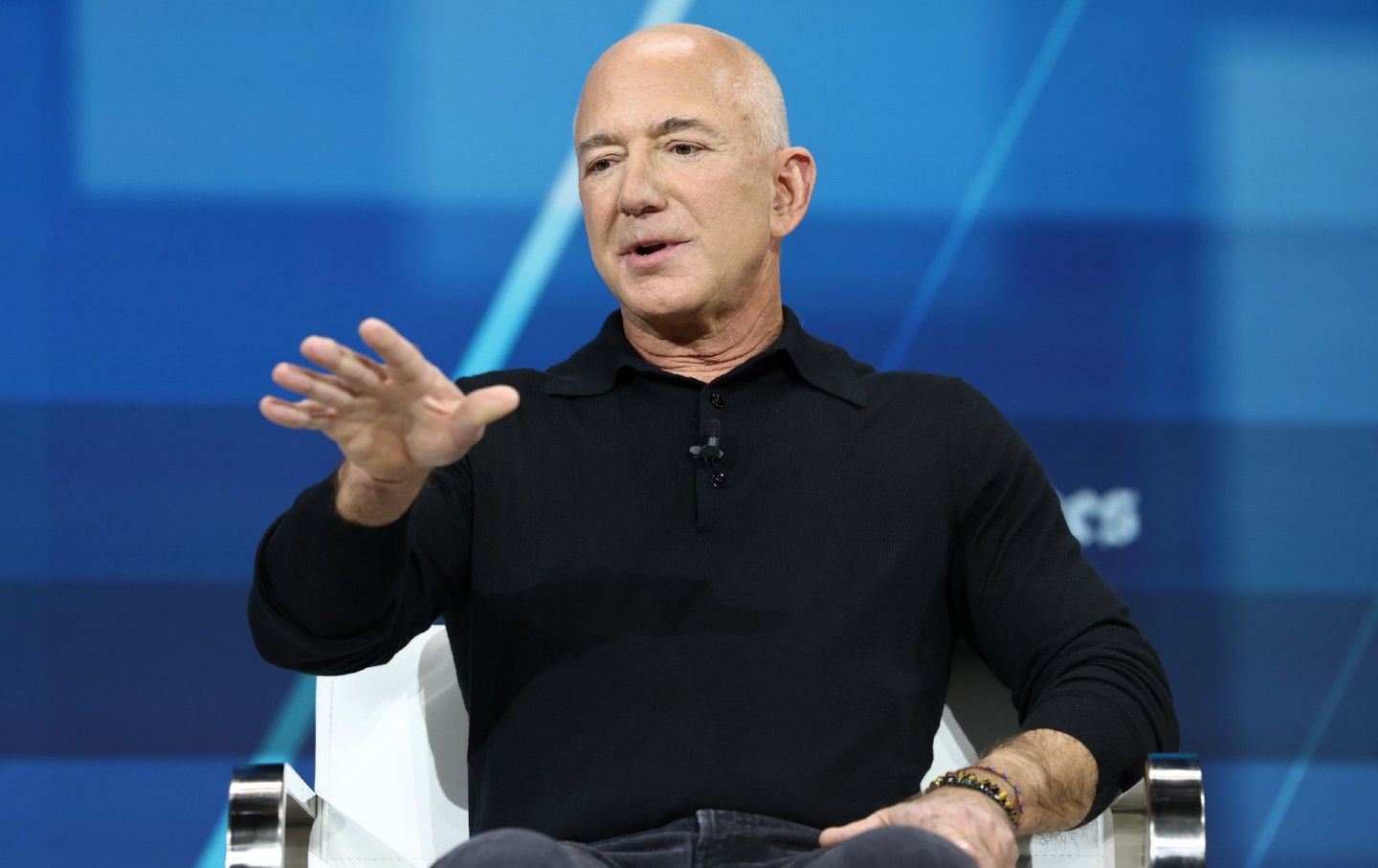
The media has trended in this direction for decades, but the story lost all subtlety when Jeff Bezos issued the X post heard round the world. He declared that The Washington Post will focus its opinion section on “personal liberties and free markets.” That surely means more editorial attention on stifling monopolies like Amazon, right?
Popular
“swipe left below to view more authors”Swipe →Mainstream media outlets have long faced dwindling audiences and, as a result, relied more and more on corporate benefactors. Now that those benefactors are competing to prove loyalty to their own benefactor in the White House, these essential institutions are stuck carrying water for the billionaire class, or else disappearing altogether. The task of rebuilding truly independent news outlets, then, falls to journalists, readers, and any concerned citizens who recognize how imperiled our free press has become—if there is to be any hope of the fourth estate holding the line against the second Trump regime.
Editorial encroachment by corporate interests dates back to the inception of the media age, when the competing newspaper empires of the ultra-wealthy William Randolph Hearst and Joseph Pulitzer engaged in a sensationalist race to the bottom, publishing incendiary headlines, exaggerations, gossip, and rumors that (among other ramifications) helped provoke the Spanish-American war.
Yellow journalism, as it was called, abated thanks to the regulatory efforts of independent agencies such as the Federal Communications Commission (FCC), which established the fairness doctrine requiring equal coverage of conflicting viewpoints on consequential issues (like Trump’s ongoing attempt to take over the FCC). But Ronald Reagan, in his laissez-faire frenzy, repealed that rule. Not to be outdone, Bill Clinton signed the deregulatory Telecommunications Act of 1996, which critics have deemed “essentially bought and paid for by corporate media lobbies.”
That same year, The Nation published a special issue on what we called the National Entertainment State. It detailed the growing media-industrial complex, where the corporations programming our news were increasingly programming public opinion. We represented this syndicate via a glossy centerfold diagram of an octopus with four tentacles, one for each of America’s dominant media conglomerates: Disney, General Electric, Time Warner, and Westinghouse (now CBS). Today, six tentacles control over 90 perent of our information.
Things are different now, and not for the better. While the news has represented a small cog in larger corporate structures long before this second Trump administration, we are now witnessing mass public capitulation from corporate owners in a way that feels unprecedented. Whether today’s billionaire media owners are angling for large federal contracts or anticipatorily bending the knee so their companies are not seen as “the enemy,” the chilling effect is the same: Major media publications are even more incentivized now to treat the rich and powerful with kid gloves, if not outright sycophancy.
The few that refuse to do this will have to face the wrath of our notoriously censorious, litigious head of state. The most powerful man in the world is currently suing Iowa pollster Ann Selzer for merely predicting that Kamala Harris would win the state last November; what he calls “election fraud” most people call “polling.” With that context, is there any reason to expect that prominent players like Paramount and Skydance would do anything but hold the line if it means getting FCC approval for their merger?
The natural counterbalance to for-profit media would seem to be nonprofit newsrooms. They need not go cross-eyed from trying to keep in view both the public’s interest and that of their owner. In the US alone, there are at least 475 independent outlets, from the Marshall Project to the Center for Public Integrity, which has won several Pulitzer prizes for its investigative reporting. And independent journalism is currently enjoying a renaissance on self-publishing platforms like Substack and the newly launched Noosphere. These sites offer refuge for writers that have renounced (or been renounced by) corporate news, including Mehdi Hasan and Matt Taibbi. The journalistic equivalent of farm-to-table, it cuts out any meddlesome middle-moguls between the writer and the reader. (The Nation has been independent since 1865.)
Yet neither of these alternatives offer a true one-to-one replacement for mainstream outlets. For all their latent bias, our media behemoths are uniquely positioned to furnish the resources to fund years-long investigations that often incur legal backlash, such as the Pentagon Papers—which might not have resonated as deeply with the Mailchimp logo at the bottom.
Not so long ago, Jeff Bezos was proud to bear this torch. At the inception of his ownership, he claimed Katharine Graham’s pugnacious leadership as his model, and seemingly sincerely so, even if the Post did go soft on its coverage of Amazon of its own volition. I experienced Bezos’s benign neglect firsthand. From 2011 to 2022, I penned over 500 columns for the paper, most of them during Bezos’s tenure—including columns directly criticizing Amazon’s labor practices and even the corporate bias of the Post itself. I never received any note remotely resembling the kind of editorial restrictions that he is imposing today—the likes of which just led the columnist and associate editor Ruth Marcus to resign after four decades at the paper. Nevertheless, for a time, at least in this case, corporate ownership didn’t have to be mutually exclusive with editorial independence.
But until that détente between owner and editorial is reestablished, audiences and reporters will continue to flee compromised publications. In his e-mail to The Washington Post’s team, Bezos argued that this newspaper of record could dodge offering a variety of perspectives because “the internet does that job.” It will take a new movement of responsible readers and benefactors to ensure that this is true.
Become a Sustaining Donor This September
Between the reemergence of right-wing red-baiting and Donald Trump’s use of the chilling National Security Presidential Memorandum–7 to criminalize left political organizing, we’re seeing McCarthyism reborn before our eyes.
This assault on democracy cannot be ignored or wished away. Resisting it requires bravery in the face of threats and repression, a steadfast commitment to the truth, and the unwavering belief that we can—and will—overcome this darkness.
We must have an independent media that sets the record straight, unearths corruption and abuses of power, and advances a politics of justice and dignity for all if we’re to win this fight.
That’s why I’m writing to you today. This September, The Nation needs to add 100 monthly donors to sustain our progressive journalism. Your contribution makes the next investigative report, the next truth-speaking column, and the next pathbreaking essay all possible.
I hope you’ll support our work with a recurring donation today. If you donate $10 or more a month, we’ll send you a brand new “Hands Off the Free Press!” sticker to recognise your commitment to our cause. Please, donate today.
Onward,
Katrina vanden Heuvel
Editor and Publisher, The Nation
More from The Nation
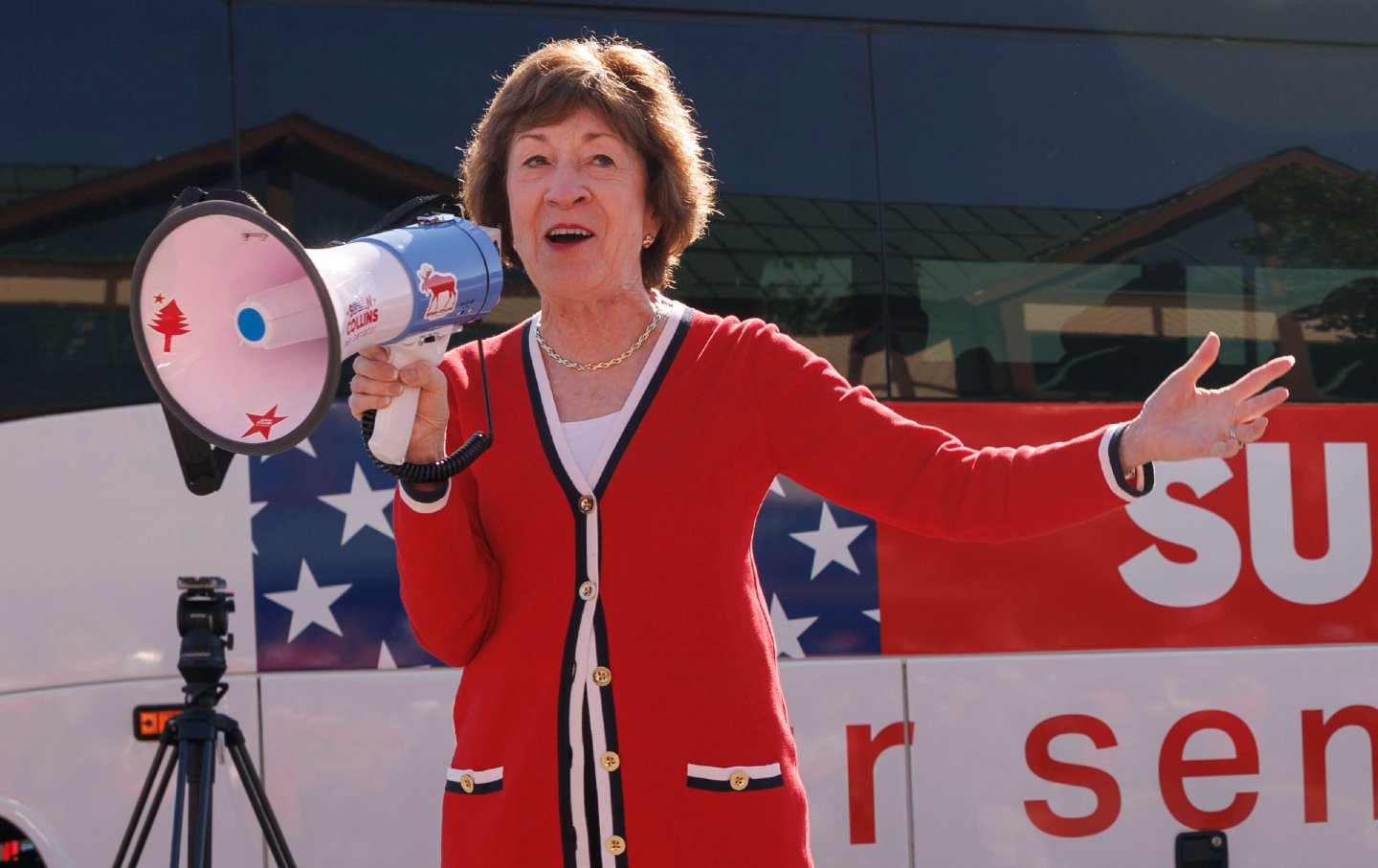
Susan Collins Is Corrupt. She Still Might Be Reelected. Susan Collins Is Corrupt. She Still Might Be Reelected.
Despite being embroiled in scandal, the Maine senator is benefiting from Democratic Party divisions.
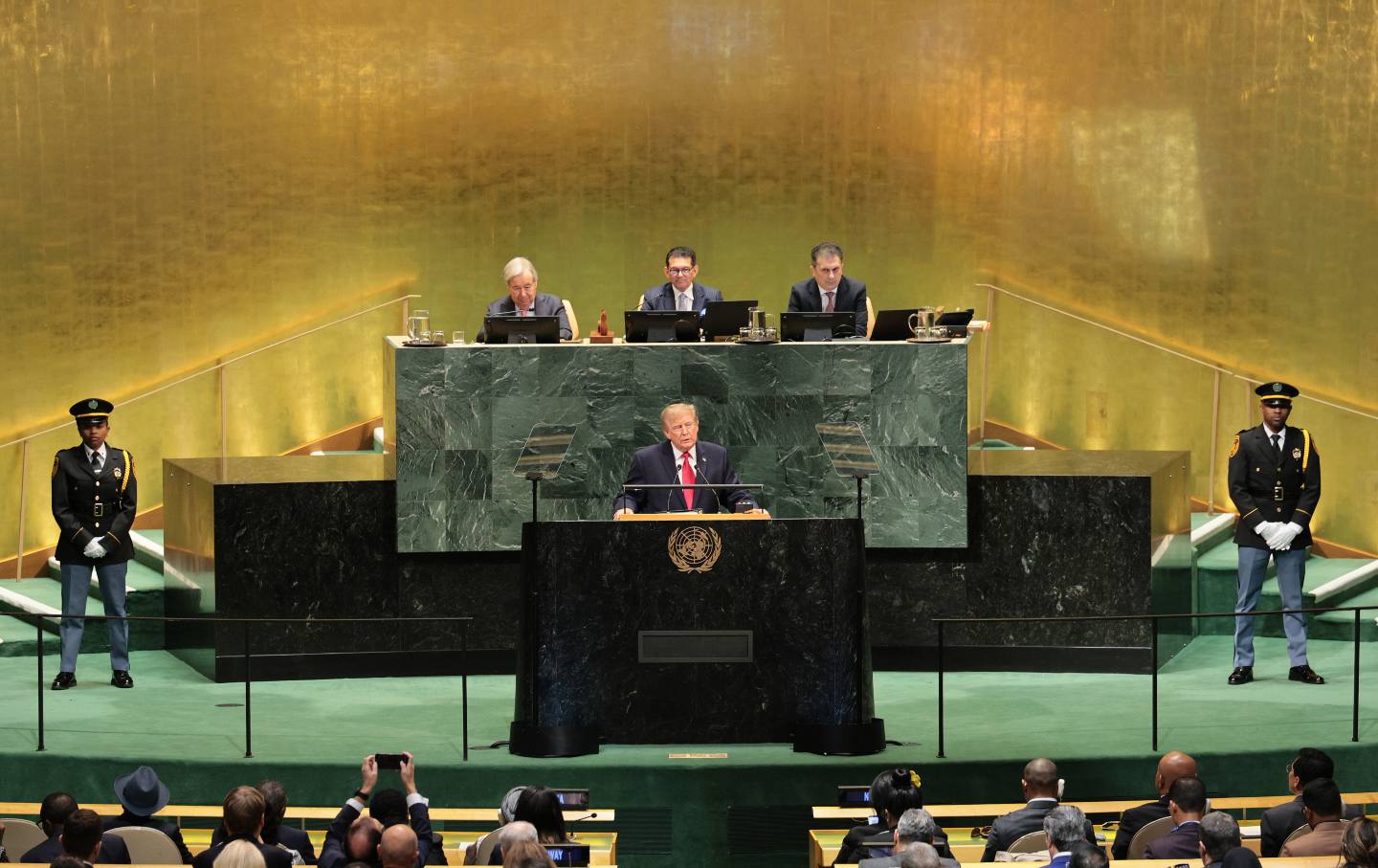
Trump Impersonated Hitler at the United Nations Trump Impersonated Hitler at the United Nations
It was just one more of many examples of the president mirroring a fascist leadership.
Trump Is Destroying Public Health. Democrats Need to Fight Back. Trump Is Destroying Public Health. Democrats Need to Fight Back.
If they win in the midterms, the party must move quickly and aggressively to undo the harm Trump and his cronies have caused.
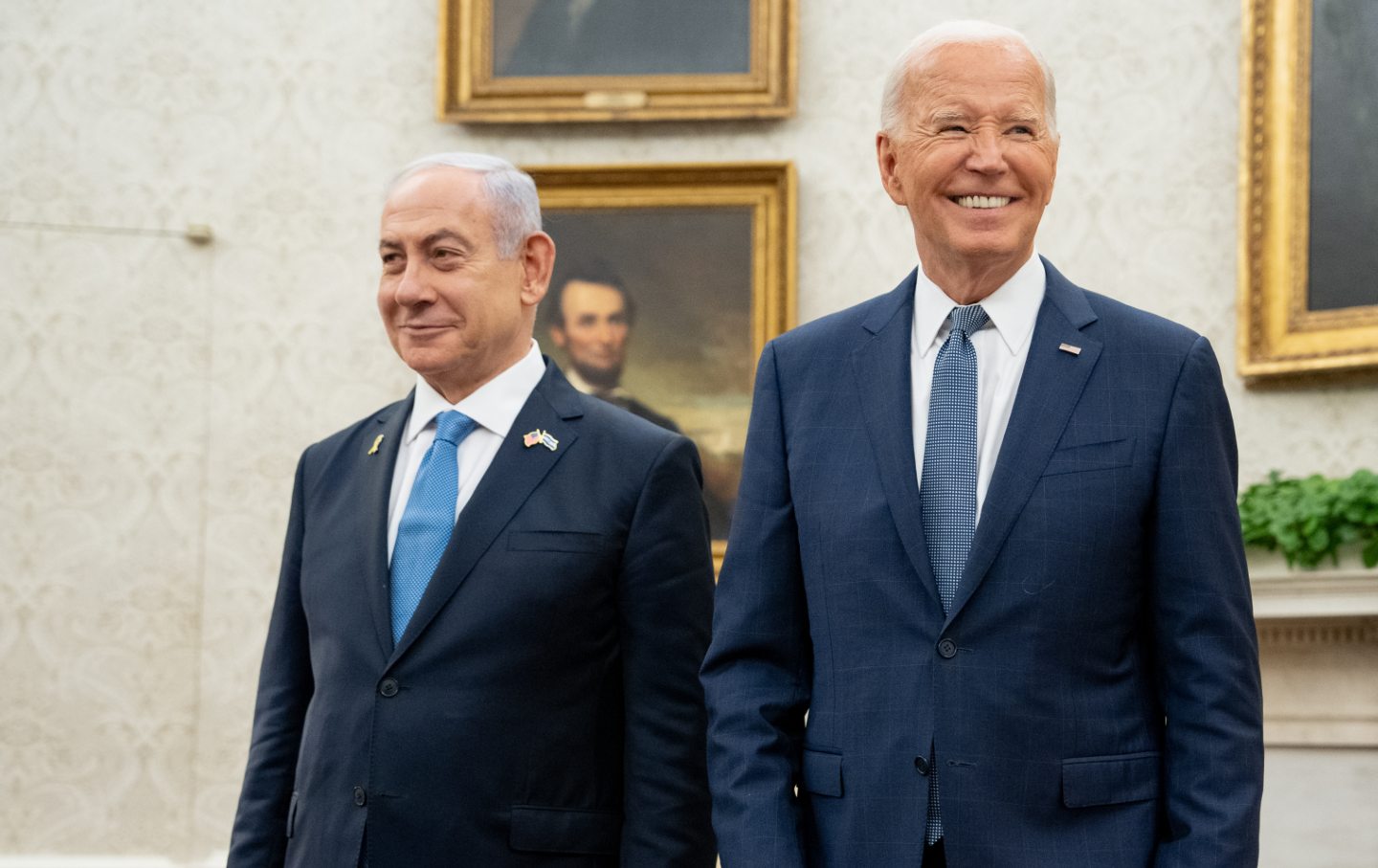
How Joe Biden Helped Cause a Genocide in Gaza How Joe Biden Helped Cause a Genocide in Gaza
An interview with reporter Akbar Shahid Ahmed about his new book, “Crossing the Red Line.”