Blocking Planned Parenthood From Medicaid Will Only Worsen the US Maternal Health Crisis
The “defund Planned Parenthood” campaign is back—and headed to the US Supreme Court.
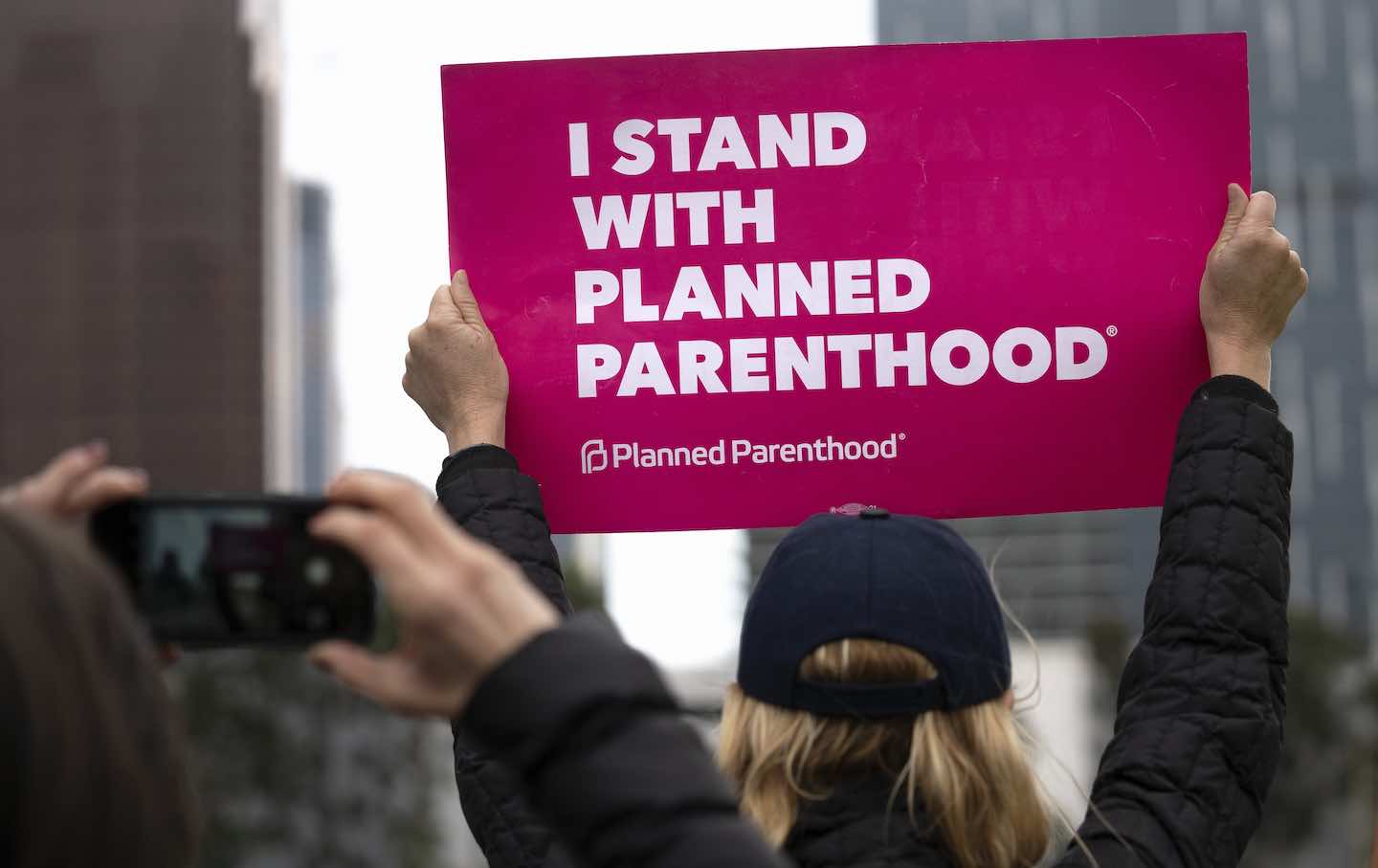
Elon Musk and Vivek Ramaswamy, tasked to lead Trump’s new Department of Government Efficiency, recently pledged to strip federal funding from “progressive groups like Planned Parenthood.” That might seem like one consequence of an election: Groups and causes fall out of favor with a new administration. But their reference to defunding Planned Parenthood is misleading. The statement feeds into a long-standing campaign to suggest that federal dollars broadly pay for abortion in states, which they do not, and that Planned Parenthood clinics are unique beneficiaries of federal programs, which they are not.
At the same time, the US Supreme Court has agreed to hear arguments about whether South Carolina can disqualify Planned Parenthood from being reimbursed by Medicaid for services that have nothing to do with abortion. In fact, South Carolina banned abortion after around six weeks of pregnancy, except in narrow circumstances, in 2023.
Stripping Planned Parenthood clinics of federal funding is discriminatory, since it treats the organization differently from others that provide the same services; more urgently, it threatens to deny medical services to those who need them the most. For the most part, healthcare in this country is treated not as a right, but as a privilege available only to those who can afford it. Any reduction in funding to clinics that deliver a spectrum of care, from contraceptives to prenatal care, will deepen these disparities. The damage to reproductive care for low-income Americans already is clear in states that have blocked Planned Parenthood from participation in Medicaid.
South Carolina has been trying to exclude Planned Parenthood from Medicaid since 2018, well before the Supreme Court overturned Roe v. Wade. South Carolina’s governor deemed abortion clinics “unqualified” to be reimbursed for reproductive healthcare by Medicaid, riding a wave of defunding fervor that started years before. One outcome of the upcoming Supreme Court case might be that South Carolina—along with Texas, Arkansas, Missouri, Mississippi, and other states that aim to restrict access to reproductive care—can keep Planned Parenthood clinics from seeking Medicaid reimbursement for services like cancer screenings, birth control, annual exams, infertility referrals, mental health support, testing and treatment for sexually transmitted infections, adoption information, and prenatal and postpartum services.
Nationally, 16 million women of reproductive age rely on Medicaid; in South Carolina, nearly 50 percent of all mothers rely on the program. According to the organization’s estimate, one in five women in the United States will seek out a Planned Parenthood clinic for healthcare at least once. The immediate effect of allowing states to preclude Planned Parenthood from participating in Medicaid will be to close clinics or prevent new facilities from opening, and the providers who serve them will leave. The longer-term effects will threaten people’s health and their ability to thrive—and, in some cases, to survive.
Defunding Planned Parenthood will curtail access to contraceptives, which have become increasingly essential in preventing unwanted pregnancies in states like South Carolina where abortion has been largely outlawed. In late 2022, 50 percent of pregnant South Carolinians reported that their pregnancies were unintended. Longitudinal studies demonstrate that unwanted pregnancies, even when they result in healthy births, saddle people with increased debt and stress, missed educational and employment opportunities, mental health problems, and diminished care for the children they are raising. These are challenges that access to affordable birth control can blunt.
When people give birth, they will face a decimated landscape for prenatal and postnatal care with services once offered by Planned Parenthood limited or missing. Much of the United States is now a maternal healthcare desert, particularly in the South and the Midwest. As those deserts expand, the rates of maternal and infant morbidity and mortality—women and children who suffer health complications or who die in (or after) childbirth—will increase. That’s not an overstatement. Evidence of such trends emerged in Texas after the state banned almost all abortions before Roe was reversed. While births increased, access to maternal healthcare did not, and mothers and newborns paid the price.
Medicaid is an invaluable resource for low-income people, including pregnant people and children, who need preventative and often time-sensitive healthcare. If states like South Carolina can cut off services because legislators do not like the provider, an already burdened system will come under even more strain. And lawmakers may not stop at Planned Parenthood. Defunding Planned Parenthood could embolden an administration that has signaled its intention to treat healthcare as a luxury, not a right, while allowing state legislators who claim to promote life to implement policies that do the opposite.