
Congresswoman Barbara Lee on Why Shirley Chisholm Was Right
The California Democrat explains why, during her 25 years in Congress, it was important for her “to disrupt and dismantle and build something that’s equitable and just and right.”

Barbara Lee started out as a Bay Area radical who didn’t believe that voting could make a difference in people’s lives. Shirley Chisholm set her straight, reminding the young Black woman from California that those in power preferred that advocates for economic and social and racial justice disengage from the electoral process. So Lee engaged, becoming a Chisholm delegate to the 1972 Democratic National Convention, an aide to California’s legendary Democratic US Representative Ron Dellums, and, in 1999, Dellums’s replacement in the House. Two years later, she cast the sole vote against authorizing President George W. Bush’s forever wars. She has remained a hero to peace activists since she cast that vote. But Lee’s epic tenure in Congress—now coming to a conclusion after 25 years—has seen her lead on issues including abortion rights, the global fight against AIDS, reframing US foreign policy, and efforts to cut the Pentagon budget to fund human needs. In early November, just days before the election, she talked with The Nation about her time in Congress and the ongoing struggle for peace and justice. This interview has been lightly edited for length and continuity.
—John Nichols
JN: You have served with five presidents, voted on thousands of bills, and participated in too many debates and committee hearings to count. What do you want your time in Congress to be remembered for?
BL: Hopefully, that I pushed the envelope to the point where members of Congress who didn’t talk about poverty—and about lifting people out of poverty—now understand that we have to focus on the poor and the working poor. And we have to focus on lifting people out of poverty. I’m telling you, that was a big, heavy lift for me. And I finally was able to get the Poverty and Opportunity Task Force established [in 2013]. I’m the chair, and we’ve had over 100 members join. We’ve led the efforts on the child tax credit and other issues, working with Bishop [William] Barber and the Poor People’s Campaign. I just pushed, pushed, pushed, and they came and testified before the Budget Committee, Bishop Barber did. Now it’s OK to use the P-word—“poor.”
Then the other thing that I’m really proud of, and that I hope people will remember, is pushing the envelope on the Pentagon budget. You know, every year, not voting for it and talking about why we need to reduce defense spending and put more into domestic spending—how we need to support our troops at the same time that we are making sure that the military-industrial complex and the military contractors stop scamming the taxpayers. The Pentagon is the only agency that hadn’t been audited, John. So I worked with several Republicans in the House to audit the Pentagon. And nobody had done that before. So we got the Pentagon audited.
JN: That’s something a lot of people don’t know about you—you’ve often made alliances with Republicans on unexpected issues?
BL: Where there’s common ground, I’ve been able to figure it out. The bottom line is, the Pentagon has been audited six times, and it has failed every single audit. I hope people remember that.
JN: You’ll also be remembered for your work on PEPFAR, the President’s Emergency Plan for AIDS Relief, a global health initiative to fund HIV and AIDS treatment and prevention.
BL: Yes, working with George W. Bush, Henry Hyde, and the really conservative members of Congress to develop the Initiative for Global AIDS, the Global Trust Fund, PEPFAR, and the Office of Vulnerable Children—all the issues that no one was dealing with before [Lee and a few others started focusing on them in Congress]. I’m really proud of the fact that, even though we don’t get a lot of attention on it, we’ve saved 25 million lives and are trying to get to the goal of [ending AIDS by 2030].
JN: You got your introduction to Congress as a longtime aide to US Representative Ron Dellums, an anti-apartheid campaigner who sought to reframe US foreign policy on a host of issues and worked to cut Pentagon budgets. He was a boss and a mentor.
BL: Yes, he influenced me and taught me. He was a mentor to me in many, many ways. First of all, he really showed by example. In my working for him, there were very few senior staff members on Capitol Hill who were Black women. He used to say that he was a feminist. He hired me to head up his office, and that said something about Ron right there. Secondly, he was one who always insisted that we don’t look at decisions and recommendations that we make for him through a political lens. He always said, “Ask yourself just one question: Is it the right thing to do?” That’s on casework in the district, which I pride myself on as a social worker. But also on legislation. He said, “If this is the right thing to do, then do it.” And that was an important lesson: Don’t squirm in the wind about the politics of something. You’ll figure that out later. If it’s right, go on and do it.
JN: Were you thinking about that counsel when you voted against the authorization of the use of military force in September 2001?
BL: I called Ron and talked to him. He said, “I’m not going to tell you what the right or wrong vote is because this is a very difficult vote for you, but I’m going to give you the pros and cons, and then you make up your own decision.” He said, “You’re a social worker.” I have my MSW, and he had an MSW. So we talked about decisions that are made when people are very emotional, and how they could be the wrong decisions based on our knowledge of human nature and human behavior. Then we talked about the fact that everyone was grieving in the country, and people were in mourning. And when you’re grieving and in mourning, that’s not when you can make good decisions—you have to wait until you can provide a little space so you can be rational and respond appropriately to whatever is taking place.
JN: I know that he also argued that, often, when you take a lonely stance, people come to recognize that you were right, and join you. That’s encouraging, but, ultimately, you ended up standing on your own in opposition to a rush to war.
BL: I wasn’t sure how I was going to vote, because I tried to get them to narrow the authorization, to change it. And there were other members who knew that it was bad. It was overly broad: 60 words that gave away Congress’s [authority] to the executive branch, to any president. So other members knew that. But it was that moment in time where it was so hard because of the grief and the anger—the weight was really heavy—and so Ron and I talked. I talked with my pastor and a couple of other people. I also talked to Marcus Raskin [of the Institute for Policy Studies], to my kids, to my mother and my father, who was a military officer—and I wasn’t sure. But the [deciding] moment, it was in the church, where Bishop Nathan Baxter, who was the head of the National Cathedral, at the memorial service said, “As we act, let us not become the evil that we deplore.” That was when I was settled with voting “no.”
JN: History will record that you were willing to stand alone for peace. It is also true that, through much of your time in Congress, Democrats were in the minority, and you were in a smaller minority as a committed progressive. But you were still able to build alliances, to get things done. Why is that so?
BL: If you’re Black in America, and if you’re a woman in America, please, you got to figure it out.
Here’s a story I can tell you: When I lived in England [as a young woman], I realized then that America had tricked me into thinking I was a minority. I met people from the Middle East, from Africa, from the Caribbean who looked like me, and I realized then that I was really part of the world majority. So I never accepted a minority status again after I came back from England. Whether we’re politically in the minority or whether racially I’m in the minority, that mentality of believing I’m a minority just doesn’t exist.
JN: You took that consciousness to Congress. You also took a strategic sense about how to negotiate as a progressive.
BL: If you’re a real progressive, you have got to stake out the progressive position, because the right wing is going to stake out their territory and their position. And if you’re a progressive and you’re dealing with a right-winger, [you have to do the same thing]. I’m telling you, John, if you start in the middle as a moderate, you don’t have anywhere to go, so you end up caving to the right wing.
JN: That willingness to stake out a strong position is something we see with the new generation of young women who are now in Congress. You have worked with many of them, especially Massachusetts Representative Ayanna Pressley, on abortion rights issues. So you’ve gotten allies for these progressive fights, right?
BL: I’ve seen a lot change. They call me “OG”—OG Lee. If someone didn’t know what “OG” meant, I said, “Look, it’s not ‘original genius.’ It’s ‘original gangster,’ right?” And I love it, because that’s who I am. I mean, I couldn’t play by these rules that were set up, unless they were just and fair and inclusive. And so you have to be sort of a gangster to bust through some of this stuff. And I’m really proud of those new members, because when you look at their voting records, John, I am telling you, they get amendments done even in the minority. They have ascended, too. I fought for them to get on the right committees. And they have just excelled in everything. They all are strategic. Look at all the amendments [Michigan Representative] Rashida Tlaib gets in on water and on clean air and on everything. So, you know, they all are unbelievably great legislators and haven’t given up their progressive values. They know how to get the job done. I’m proud of them. And yes, I’m the OG, and I love it.
JN: You’ve also worked closely with Pramila Jayapal, the chair of the Congressional Progressive Caucus, a group you once chaired.
BL: I just have to say, she’s taken the Progressive Caucus to the next level. It’s more organized. We put the task forces together. I chair the Global Peace and Security Task Force.
JN: You also cochair a caucus that seeks to cut the Pentagon budget with Wisconsin Representative Mark Pocan.
BL: Mark has been my coconspirator on many issues, especially war and peace. We started the Defense Spending Reduction Caucus. And every year, we try to cut $100 billion. We got up to about 95 House votes for that one year.
JN: One of your priorities has been to try and refocus American foreign policy to be more attentive to Africa and the Caribbean. And you have worked to change US policy toward Cuba.
BL: What I haven’t been able to do, which I’m still going to work on outside of Congress, is ending the embargo against Cuba. You know, that’s on my list still. I’ve talked to the administration; I’ve talked to the president…. Taking Cuba off the “state-sponsored terrorism” list is just a must-do. Trump put them on before he left office, for no reason. And now you see what’s happening in Cuba [as a result of US policies]. I mean, it’s a shame and disgrace. This policy toward Cuba has been ineffective, and the Cuban people are suffering as a result. And I’ve been down there at least 30 times since 1976, so ending this embargo against Cuba is a big deal that’s still going to be on my agenda to work on.
JN: And Middle East peace?
BL: Yes, it’s a long list. And I know the Middle East very well, the world in which we live. You know, I’ve been to Gaza. I’ve been to Ramallah…. I know these people. I know the organizations. I helped get the United States back into UNRWA [the United Nations Relief and Works Agency for Palestine Refugees in the Near East]. Now you see what they’re doing with UNRWA and UNESCO [the United Nations Educational, Scientific and Cultural Organization]. It’s awful.
JN: One of your priorities as the top Democrat on the Foreign Operations Subcommittee of the Appropriations Committee has been to place a much greater emphasis on diplomacy.
BL: And to prevent defense from having to trigger the use of weapons and the military. [On the Foreign Operations Subcommittee], my budget was probably $61 billion, $62 billion. At the same time, defense was about $840 billion. So, part of what I tried to do was get some rebalancing… between development, diplomacy, and defense. Because those are supposedly the three legs of our foreign policy and our national security policy… So, that’s one thing I want hopefully for people to remember: that I fought like hell to get a rebalancing of our priorities as it relates to national security and to put more money into preventing wars and into asserting leadership in the world by putting more into helping development and diplomacy and trade.
JN: You and I have talked many times over the years about the fact that Shirley Chisholm told you that you had to get involved in politics if you were going to make a difference. Looking at that conversation more than 50 years later, was she right?
BL: She was absolutely right. She told me that you have to get involved. But she also told me that you can’t get on the inside and go along to get along—you’ve got to shake things up. And she’d say these rules weren’t made for you or me, so you’ve got to disrupt and dismantle and build something that’s equitable and just and right.
The challenges that she faced, the challenges [I have faced], and what Kamala has faced, they’re many of the same challenges. But Shirley Chisholm paved the way for me to be Barbara Lee, and paved the way for Kamala to be Kamala Harris, to get to where we are. And, you know, one of the things I’m working on now, John, I hope we get this done, is a Congressional Gold Medal for Shirley Chisholm. I’ve got about 70 Republicans signed on, so we’ve got enough to get to the floor. And Senator Laphonza Butler’s almost got enough Republicans in the Senate. I’m hoping when we get back [to Washington] in November, I’ll be able to get it passed—because Shirley Chisholm’s 100th birthday is November 30. I want to be able to say “Happy birthday” with this Congressional Gold Medal.
Popular
“swipe left below to view more authors”Swipe →More from The Nation
A Horrific ICE Shooting Is Testing Mamdani’s Approach to Trump A Horrific ICE Shooting Is Testing Mamdani’s Approach to Trump
After a federal agent shot an immigrant in New York, activists are questioning Mamdani’s handling of the NYPD and his relationship with the White House.
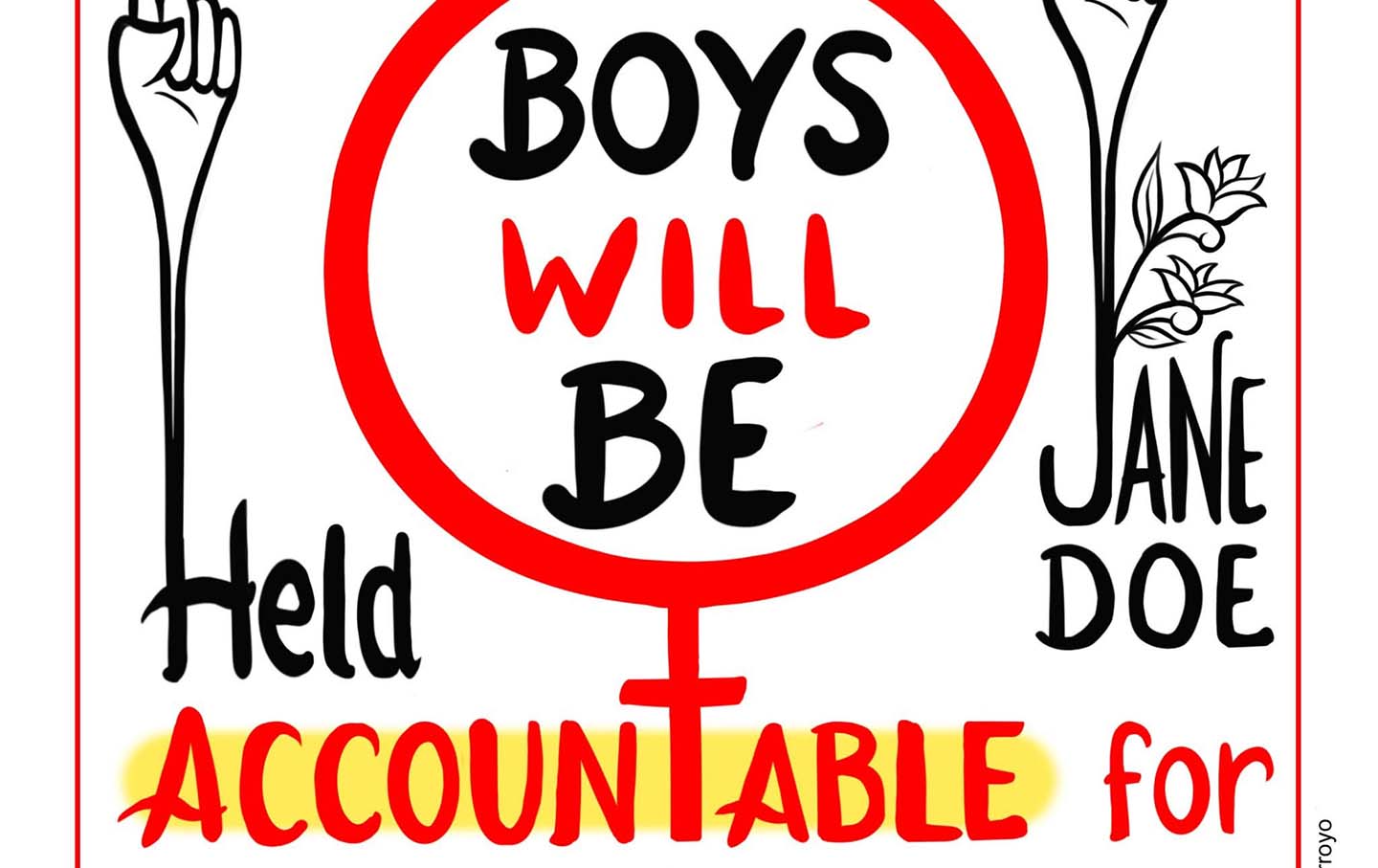
Jane Doe: Courage and Dignity Jane Doe: Courage and Dignity
Allegations of gang rape and sex trafficking at Cornell University highlight persistent concerns about rape culture, even years after the #MeToo movement.

Democrats Are Learning a New Political Language Democrats Are Learning a New Political Language
Candidates in 2026 are responding to an electorate that’s ready to abolish ICE, tax the billionaire class, and free Palestine.

Why Democratic Leaders Keep Waging War on the Young Why Democratic Leaders Keep Waging War on the Young
The party's silver-haired establishment is caught up in an existential culture war.
The DNC Fight to Ban Dark Money in Presidential Primaries The DNC Fight to Ban Dark Money in Presidential Primaries
The inside debate.
Pete Hegseth’s High-Tech Barbarism Pete Hegseth’s High-Tech Barbarism
In livestreaming Nidal Hasan’s execution, the secretary of war is marking his territory in the snuff movie business—and radicalizing people along the way.

