
Why Trump Picked Lee Zeldin to Lead the Environmental Protection Agency
With a Republican majority in Congress and Zeldin promising to “deregulate” the EPA, the new Trump administration will prioritize fossil fuel interests over environmental protection.
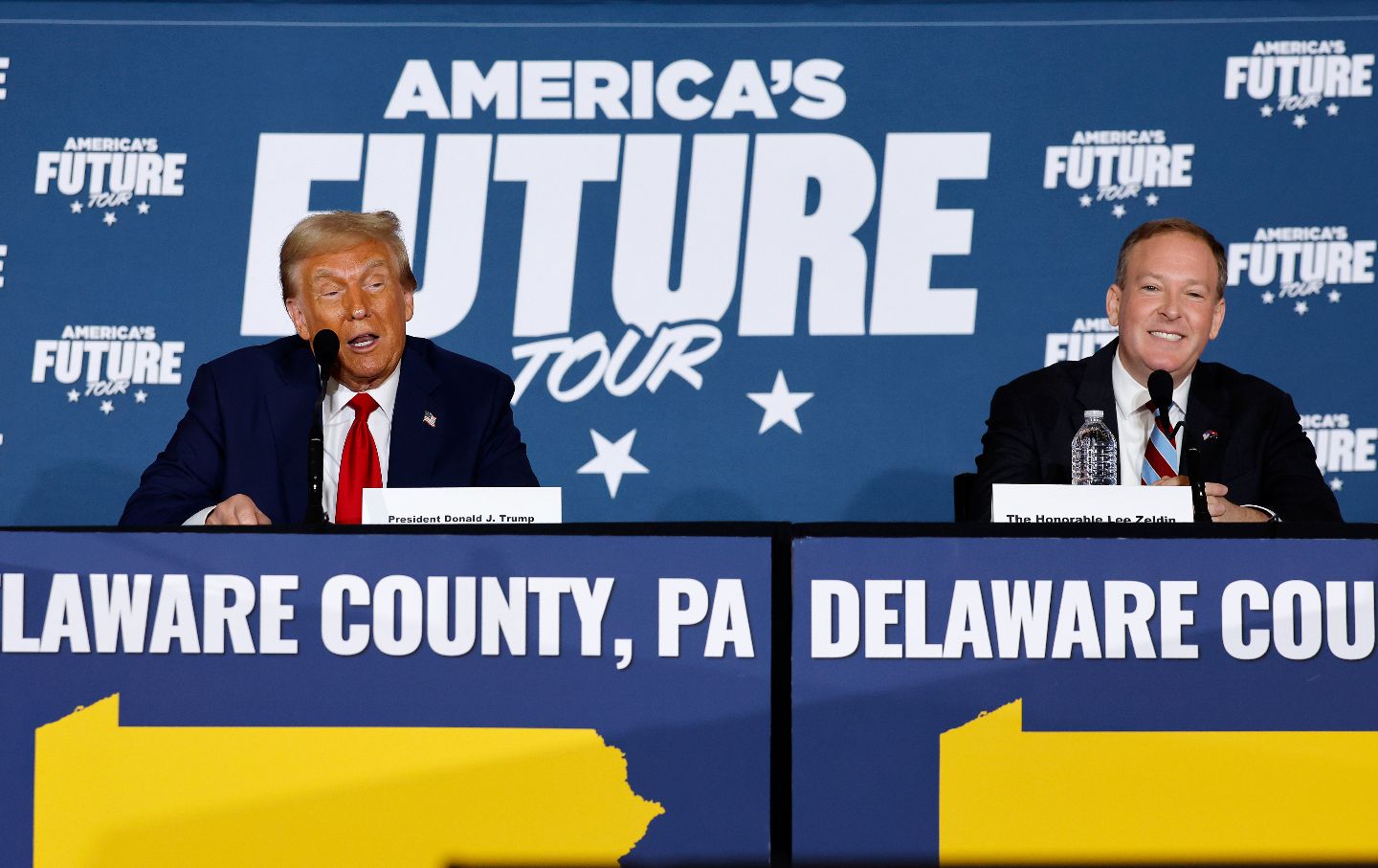
Donald Trump participates in a roundtable discussion with former Republican representative from New York Lee Zeldin.
(Chip Somodevilla / Getty)
In 2019, then-Representative for New York’s District 1 Lee Zeldin voted against extending the moratorium on offshore drilling on the Florida Gulf Coast. That same year, he voted against another bill that would have protected the Arctic National Wildlife Refuge from new oil and gas leases.
Zeldin’s voting history from over 15 years in Congress—before running an unsuccessful New York gubernatorial campaign in 2022—shows his unwavering allegiance to fossil fuel interests. And given this record, it’s obvious why an avid climate change denier like Donald Trump would pick Zeldin to lead the Environmental Protection Agency.
But the youth-led climate action organization Sunrise Movement, in a statement posted on X, called Zeldin’s “loyalty to Trump” his main qualification for the job, while emphasizing that his record includes “slashing the EPA’s budget, opposing climate action, and denying climate change.”
“We need a steady, experienced hand at EPA to marshal federal resources to fight climate change and utilize the full power of the law to protect communities from toxic pollution. Lee Zeldin is not that person,” Abigail Dillen, president of the environmental law organization Earthjustice, said in a statement. “His loyalty to Donald Trump indicates he will gladly take a sledgehammer to EPA’s most recent life-saving regulations, putting politics over science and endangering our communities.”
During his first term, Trump famously pulled the United States out of the Paris Agreement and overturned more than 100 environmental rules, including opening up 18.6 million acres of the Alaska Arctic National Wildlife Refuge to oil and gas exploration and exempting fossil fuels companies from reporting methane emissions.
Trump, who campaigned on environmental slogans like “drill, baby, drill” and promises to roll back President Joe Biden’s Inflation Reduction Act—the single largest federal clean-energy investment in history—is poised to overhaul even more environmental regulations in his second term. With a Republican majority in Congress and Zeldin promising to “deregulate” the EPA, Trump’s vision could very well come to fruition.
Announcing the pick, Trump called Zeldin “a true fighter for America First policies,” who would “ensure fair and swift deregulatory decisions that will be enacted in a way to unleash the power of American businesses, while at the same time maintaining the highest environmental standards, including the cleanest air and water on the planet.”
The Trump-appointed conservative majority on the Supreme Court has already diminished the EPA’s regulatory power over the last few years, overturning the Chevron doctrine and pausing the EPA’s “good neighbor” rule, which limited air pollution emitted from industrial sites.
Zeldin is poised to roll back more of the EPA’s regulatory power, using the agency as a vehicle for protecting fossil fuel interests over environmental protection, writing on X: “We will restore US energy dominance, revitalize our auto industry to bring back American jobs, and make the US the global leader of AI. We will do so while protecting access to clean air and water.”
Zeldin’s claim that he will “protect access to clean air and water,” however, reads more as an afterthought. Restoring American energy dominance is code for expanding domestic fossil fuel production, but Zeldin’s anti-environment agenda becomes even more clear when we take a closer look at his reverence for artificial intelligence, which is fueled by massive amounts of electricity. In fact, AI was a huge factor in Google’s emissions’ rising by nearly 50 percent in the last five years, despite the company’s net-zero goals.
“Through the EPA we have the ability to pursue energy dominance, to be able to make the United States the artificial intelligence capital of the world, to bring back American jobs to the auto industry and so much more,” Zeldin told Fox News. During the first 100 days, he said, “we have the opportunity to roll back regulations that are forcing businesses to be able to struggle; they’re forced to cut costs internally; they are moving overseas all together.”
Zeldin received a dismal score of 14 percent from the League of Conservation Voters for repeatedly voting in favor of fossil fuel expansion, slashing environmental funding, rescinding US participation in international climate change politics, and voting against disaster aid to Puerto Rico post–Hurricane Maria. In 2014, Zeldin said that he was “not sold yet on the whole argument that we have as serious a problem” in response to rising global temperatures. In 2018, Zeldin said that he did not support US participation in the Paris Agreement.
Two days after Trump’s victory in the 2024 US presidential election, the European Union’s Copernicus Climate Change Service declared 2024 “virtually certain” to have been the hottest year on record. This year was also the first in which global temperatures surpassed the climate threshold of 1.5 degrees Celsius above preindustrial levels—the critical point at which climate change impacts are dramatically amplified, leading to severe ecosystem disruption and more extreme weather events like heat waves and hurricanes. The United States has already experienced this in the unprecedented devastation of Hurricane Helene and a record-breaking California wildfire season.
“Trump made his anti-climate action, anti-environment agenda very clear during his first term and again during his 2024 campaign. During the confirmation process, we would challenge Lee Zeldin to show how he would be better than Trump’s campaign promises or his own failing 14 percent environmental score if he wants to be charged with protecting the air we breathe, the water we drink, and finding solutions to climate change,” LCV senior vice president for government affairs Tiernan Sittenfelt said in a statement Monday. “The stakes for our climate and future generations could not be higher, and we’re all in to fight for our communities and defend the climate, clean energy, and environmental justice progress we have made.”
More from The Nation
Abby Martin on the Climate Cost of US Empire Abby Martin on the Climate Cost of US Empire
The filmmaker discusses military pollution, her reporting in Hawai’i, and why the climate and antiwar movements belong together.
Trump Is Making Deals With Big Oil Trump Is Making Deals With Big Oil
Democrats and the press should be paying attention to how this pay-to-play behavior relates to the midterms
This Lawsuit Could Make Big Oil Pay for the Harm It’s Caused This Lawsuit Could Make Big Oil Pay for the Harm It’s Caused
The question is whether the Supreme Court will let it.

Germany and California Make Up an Environmental Superpower Germany and California Make Up an Environmental Superpower
The world’s third- and fourth-largest economies have pledged to environmental protections. Will others follow suit?
Gavin Newsom Comments on Climate Gavin Newsom Comments on Climate
On the sidelines of the UN General Assembly meeting and New York Climate Week, the California governor called AOC “the real damn deal.”
Cities as Climate Labs: Inside the U20 Summit Cities as Climate Labs: Inside the U20 Summit
Mayors at the Urban 20 Summit worked across borders to confront the climate crisis at the local level.

