
The Hidden Barriers to Voting While Unhoused
Turnout is low among people experiencing homelessness–a result of restrictive registration laws, political disaffection, and the misconception that they’re not allowed to vote.
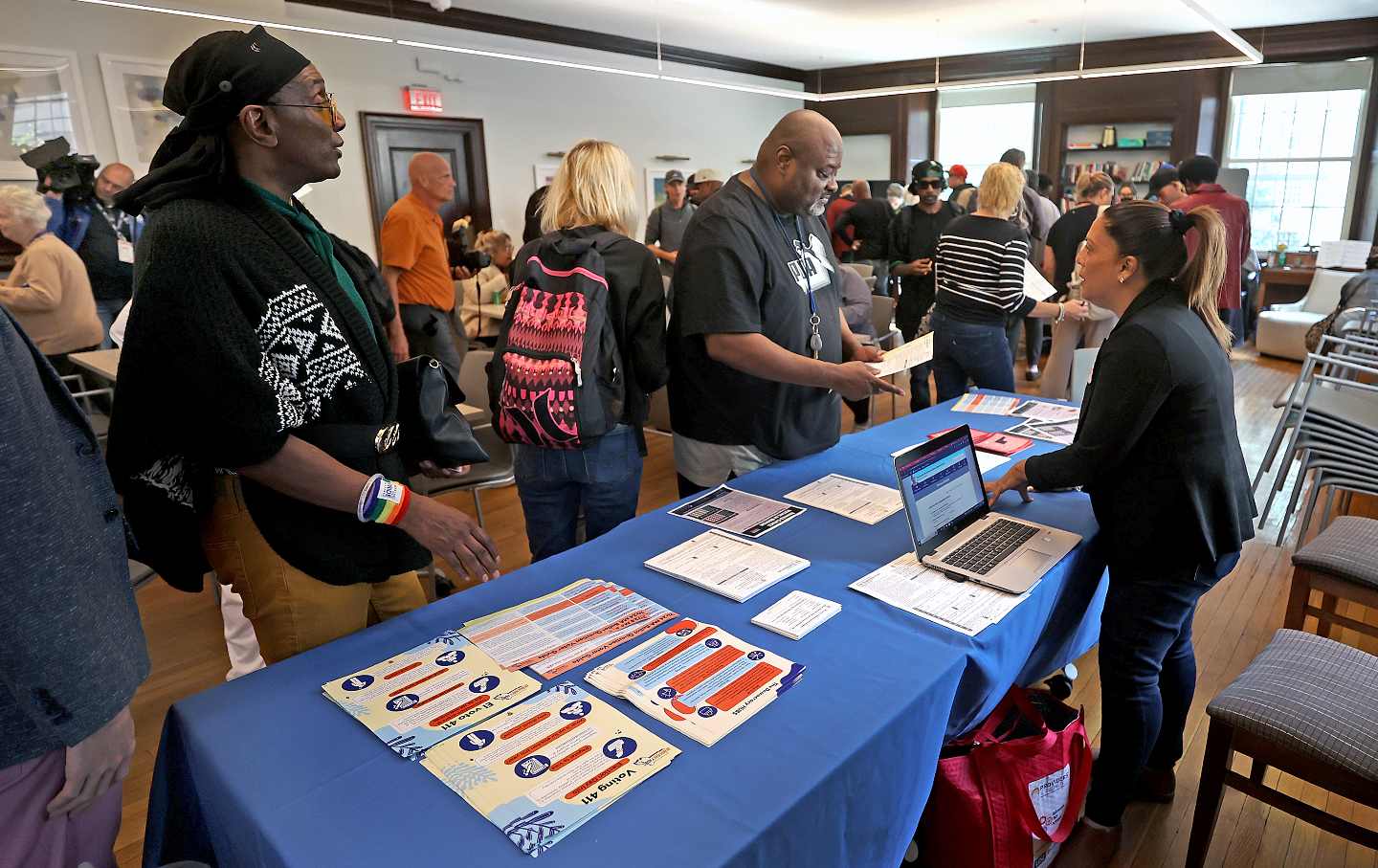
Pine Street Inn, New England’s largest homeless services organization, cohosted a voter registration drive to encourage voting among people experiencing homelessness.
(David L. Ryan / Getty)
In preparation for the November election, the Downtown Evening Soup Kitchen in New Haven, Connecticut, has begun incorporating voter registration information into the intake process at its drop-in resource center. Many unhoused people, according to Steve Werlin, the executive director, didn’t realize that they can vote without a permanent address. “The perception of eligibility is the biggest stumbling block,” Werlin said.
Voter turnout among people experiencing homelessness is understudied, but the best available data suggests the numbers are very, very low. The most recent study on the topic, on the 2012 elections, estimates that only 10 percent of eligible voters experiencing homelessness actually voted—a fraction of the overall turnout of the country’s voting-age population, which was 54 percent.
Some may make a personal political choice not to vote. Others face barriers to registering and receiving election information without a permanent address. But even more pressing, experts say, is the widespread misconception that people cannot vote.
“One of the biggest barriers is misinformation,” Donald Whitehead, executive director of the National Coalition for the Homeless, said. “People do not think that being homeless creates the opportunity for them to vote if they don’t have a regular fixed address. Sometimes it’s actually information that is given to them by people that don’t want them to vote–there’s a lot of misinformation and even intentional voter suppression.”
To fight such misinformation, the National Coalition for the Homeless has launched a “You Don’t Need a Home To Vote” campaign, likely the only national campaign aimed at mobilizing unhoused voters. Though state laws vary, people can often list a shelter, a church, a park, or even a street intersection as their place of residence when registering.
Yet in many ways, our electoral system is designed around the idea that each voter is tethered to a specific residential address. Important voting information is often communicated via the US postal service. Shelters can receive an overwhelming amount of election mail each month, and it may be difficult for individuals to receive information such as registration confirmation and the location of their polling place. For people living unsheltered, IDs are often lost, stolen, or thrown out during encampment sweeps, making it difficult to meet voter ID requirements in certain states. Some polling places may be prohibitively far away, and accessing transportation can be difficult.
In Georgia, a new law concerning voters without a residential address has raised alarms for voting rights advocates. The law, SB 189, will take effect in 2025 and prohibits the use of a nonresidential address while voting, requiring voters without a permanent address to instead register at their county registrar’s office. The law endangers the registration of thousands of unhoused people currently registered at nonresidential addresses.
Andrew Garber, a counsel with the Brennan Center’s Voting Rights and Election Program, says increasing voter turnout among unhoused people requires expanding access to voting. Every person ought to have access to multiple methods of voting: early voting, in-person voting, no-excuse absentee voting. Such reforms, Garber believes, are healthy democratic practice that can benefit all.
“A lot of these hurdles are the same for unhoused voters as they are for all voters,” Garber said. “There’s just so many ways now that people who want to restrict voting are finding the ability to do it.”
In recent weeks, Whitehead has toured swing states to visit shelters as part of the “You Don’t Need a Home To Vote” campaign. In races with tight margins, Whitehead believes, mobilizing unhoused voters could make a difference. In the 2020 election, Biden won Arizona by some 10,400 votes, and the state has an estimated 14,237 residents who are unhoused.
But Whitehead hopes that registering more unhoused people can impact races below the top of the ticket. In June, the Supreme Court ruled in Grants Pass v. Johnson that the government can criminalize someone for sleeping outside, even if there are no available shelter beds in the area. Already, dozens of municipalities have passed bans on encampments which threaten fines, ticketing, or arrest if someone sleeps outside. Whitehead believes that electing mayors, sheriffs, and council people who oppose the criminalization of homelessness is crucial to mitigating the effects of the Grants Pass.
Dora Kingsley Vertenten, a professor of public policy at the University of Southern California and the author of the study on voter turnout in the 2012 elections, says people experiencing homelessness are systematically ignored by political campaigns—a dynamic not helped by low turnout. “Campaigns aren’t magical,” Vertenten said. “They’re actually a numbers game.”
Werlin says that a general feeling of disenfranchisement—a belief that their vote doesn’t matter, and that the government fails to address their needs—contributes to lower voting levels among people experiencing homelessness. Neither presidential candidate has made addressing homelessness part of their platform.
Popular
“swipe left below to view more authors”Swipe →Mykala Grace, who lives unhoused in New Haven, Connecticut, hasn’t voted for the past several elections and suspects that their voter registration has lapsed. Grace is adamant that they will not vote in the upcoming presidential election because they believe neither candidate has an anti-war, pro-Palestine platform. No candidate, they believe, represents their interests and is “for the people.”
Though Vice President Kamala Harris has unveiled a plan to build housing and increase homeownership, her housing policy focuses on potential homeowners, overlooking immediate protections for people living unsheltered.
Whitehead worries about how homelessness is often left out of the political conversation, and he hopes increasing voting among people who are unhoused can help. “One thing you haven’t heard in the discourse about this presidential election, if we’re getting into national issues, is the word ‘homeless,’” Whitehead said. “Neither of the candidates has talked about this issue.”
More from The Nation
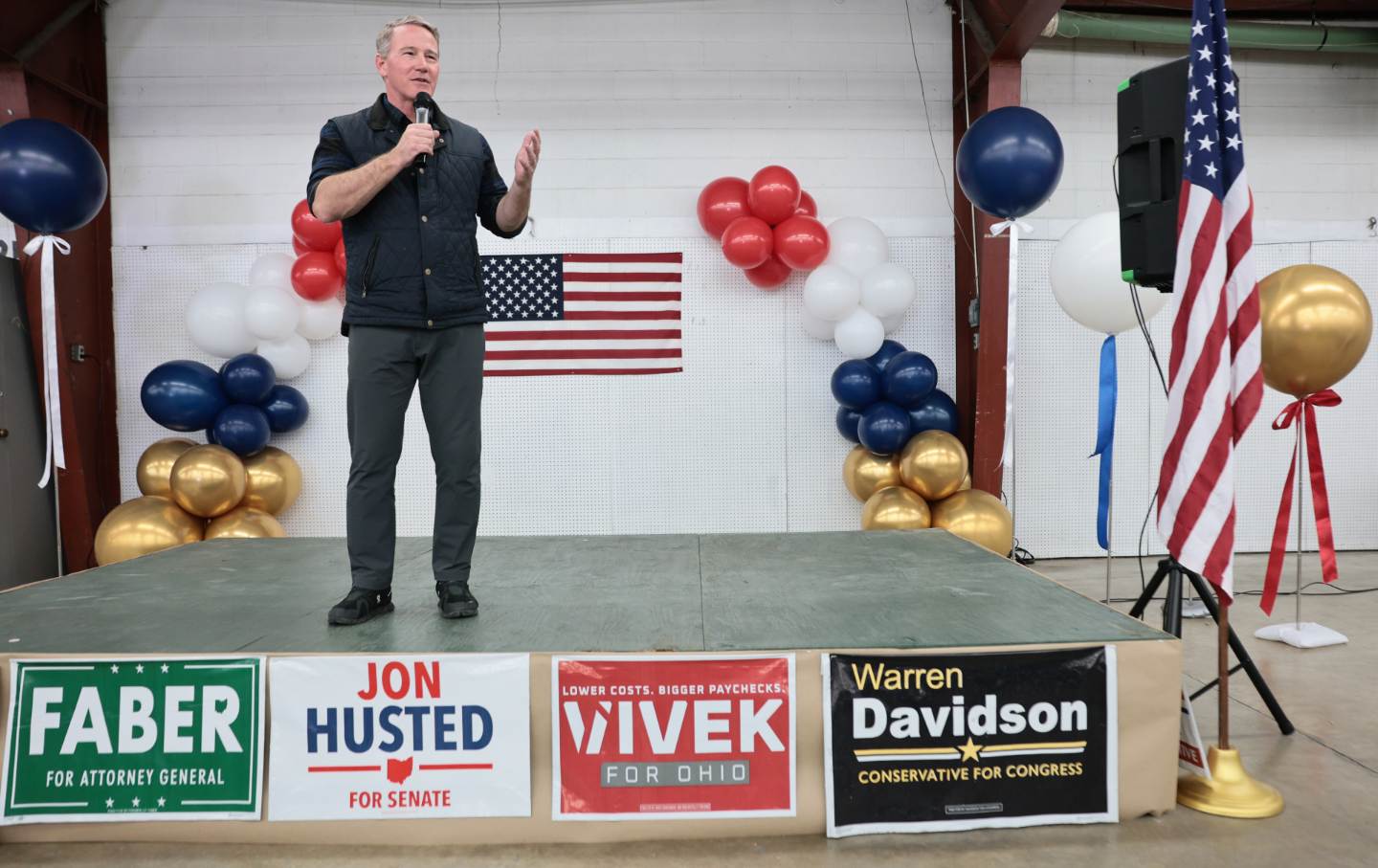
Will the GOP’s Big Money Save Jon Husted in Ohio? Will the GOP’s Big Money Save Jon Husted in Ohio?
Former senator Sherrod Brown is leading in most polls, but a tidal wave of spending may prop up the struggling incumbent.
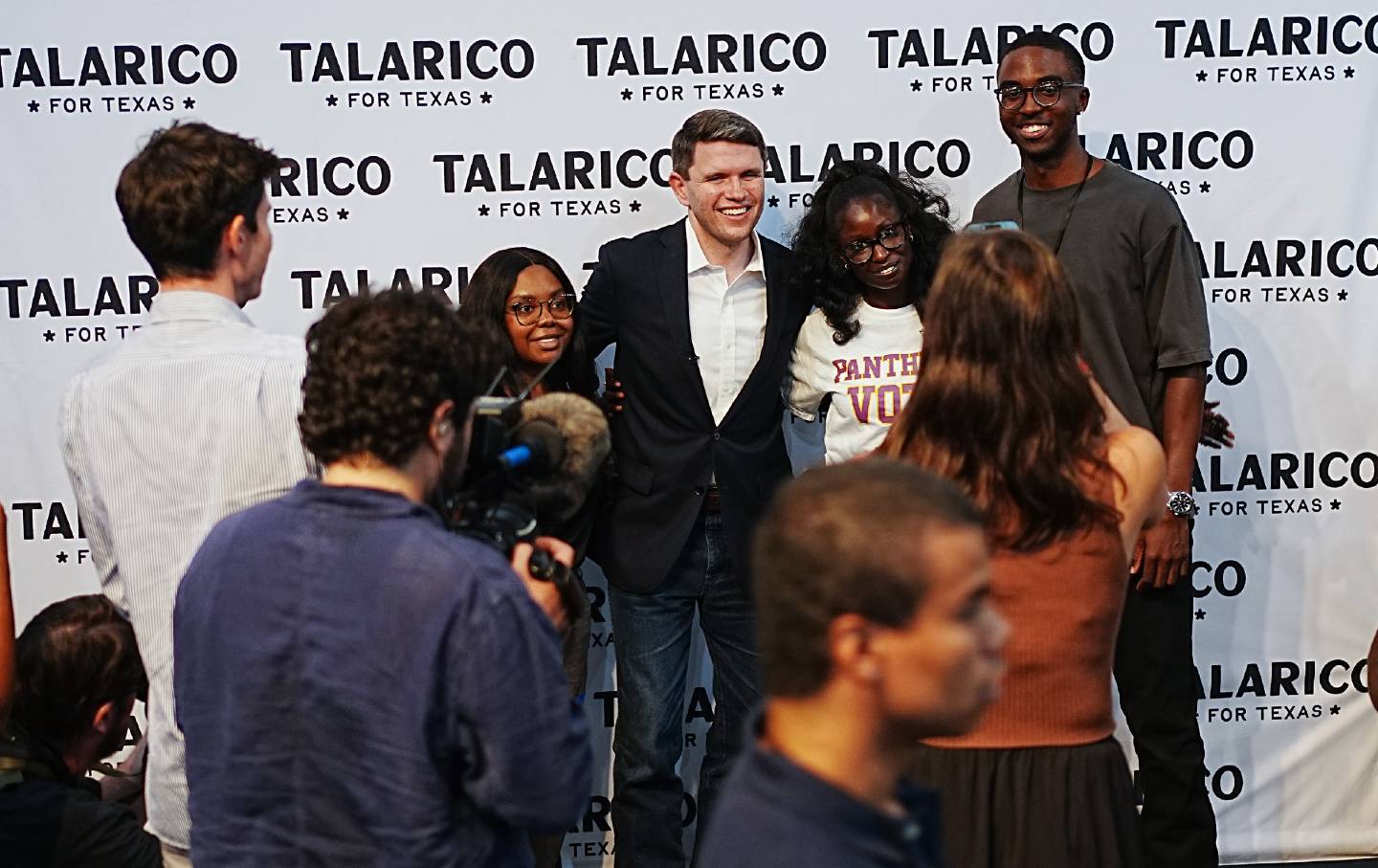
James Talarico Is Preaching a Gospel of Pluralism James Talarico Is Preaching a Gospel of Pluralism
He’s not the only progressive doing it.
Even Republicans Are Waking Up to Trump’s Corruption Even Republicans Are Waking Up to Trump’s Corruption
And, somewhat shockingly, so are Democratic elites.
Mamdani Can No Longer Avoid the Issue of the NYPD Mamdani Can No Longer Avoid the Issue of the NYPD
The mayor has been able to put difficult questions about policing on the back burner—until now.
Why Democratic Leaders Keep Waging War on the Young Why Democratic Leaders Keep Waging War on the Young
The party's silver-haired establishment is caught up in an existential culture war.

