
Eric Adams Has Been Indicted. What Now?
The Southern District has indicted New York City’s mayor. But anyone who claims to be certain of the trajectory of the next six months is lying to you.
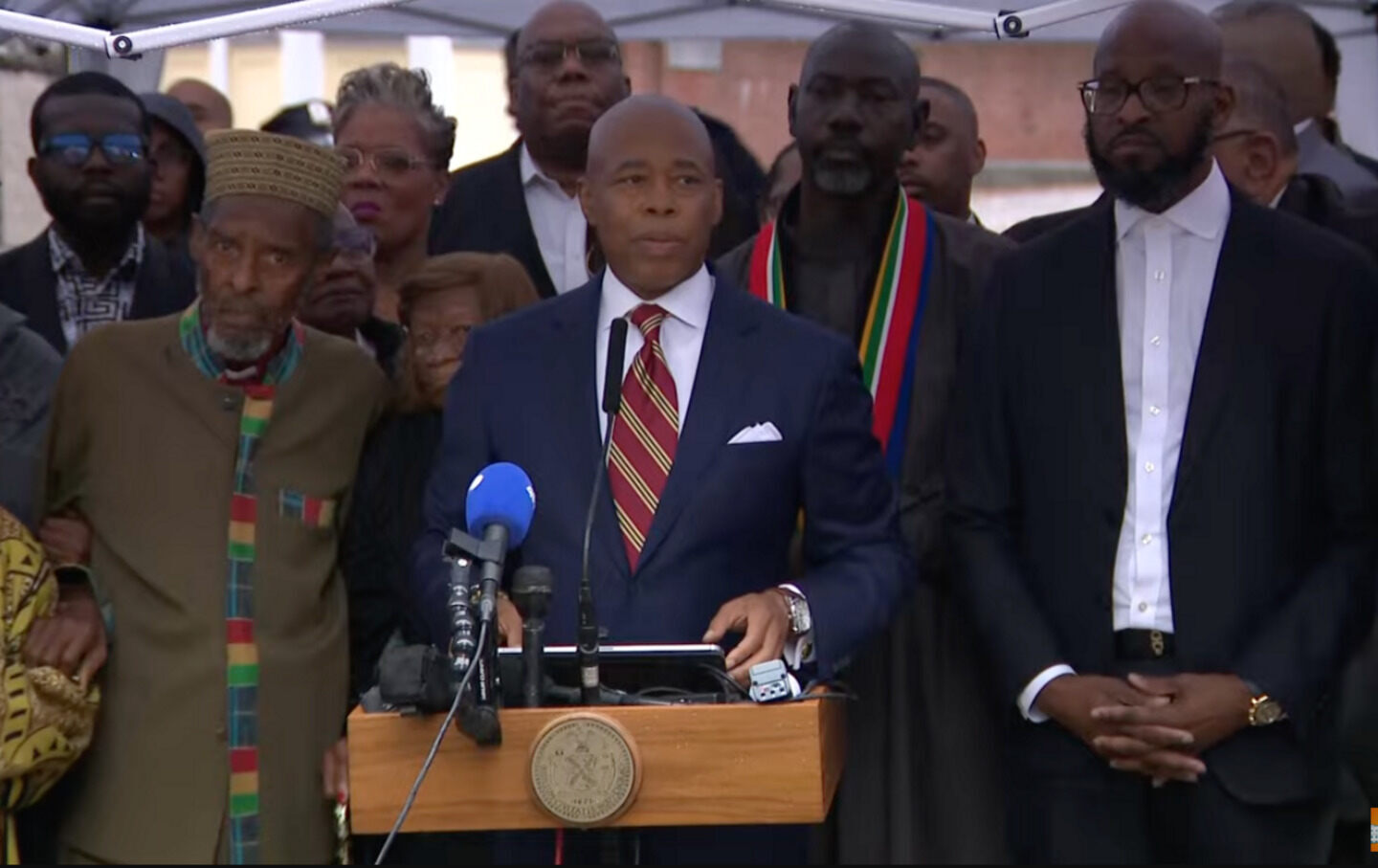
Eric Adams at a press conference on September 26, 2024.
(YouTube screenshot)
The nature of the indictment of Eric Adams is almost beside the point, though the charges are serious enough: The US Attorney for the Southern District has accused the New York City mayor of seeking and accepting illegal campaign contributions and “improper valuable benefits” such as international travel, plus wire fraud, bribery, and conspiracy. The indictment, which runs for 57 pages, spends much of its time on the mayor’s connections to Turkey.
With at least three other federal corruption probes into the Adams administration, this may not even be the end of the indictments—of Adams himself and those closest to him, like his former fundraiser Brianna Suggs and Winnie Greco, his director of Asian affairs. FBI agents have seized the phones of his schools chancellor, David Banks, who announced he’d step down by the end of the year, and his brother Philip Banks, the deputy mayor for public safety, a nebulous position Adams created to oversee the NYPD. Adams’s police commissioner, Edward Caban, had already resigned after the FBI took his phone.
Corruption clouds have long hovered over Adams, the first sitting New York mayor to ever be indicted, and now they are thick enough to blind everyone around him—the crimes in the indictment going as far back as 2014 when he was Brooklyn borough president. For now, he has vowed to remain in office, battling an indictment like Donald Trump and gesturing at unnamed enemies trying to crush him. It will not be any conspiracy, of course, that unravels Adams: It will merely be his own brazenness and incompetence.
The alleged crimes of the Adams City Hall are petty, a leftover of the machine politics era, and they speak to no grand vision of criminality, only a smash-and-grab that has been the hallmark of Adams’s politics for many years. He was not far from being indicted as a state senator and courted controversy as Brooklyn borough president. As they say around town, “He was never really on the level.”
The question, for the residents of the largest city in the wealthiest country on earth, is: What comes next? Paralysis has set in at City Hall. Adams, before all of the corruption investigations, was a poor and disinterested manager, and little in the way of public policy was ever achieved. Now a city councilmember with a constituent complaint about the schools cannot get the Department of Education’s chancellor on the phone because the FBI took his phone away. New York, by charter, has a powerful mayor, and the executive oversees many billions of dollars in spending, more than some small nations. Adams, from the inside, has rotted out city government.
It is easier to drive a legislator out of office than an executive—even if elected officials as prominent as Alexandria Ocasio-Cortez have called for Adams’s resignation. George Santos was expelled from Congress. The only equivalent would be if Governor Kathy Hochul used her constitutional powers to remove Adams. As an ally of the mayor, she is reluctant to do so, and she might also balk at ending the career of a democratically elected politician who has not yet been found guilty of a crime. Adams may hold on as long as possible to extract leverage from federal prosecutors. Or—since he is not the most rational political actor, and nothing has stopped Trump from doing the same in higher office—he might forge on anyway, attempting a reelection campaign in the Democratic primary next year.
What is clear at this point, at least, is that Adams will not be the mayor of New York City beyond 2025, when his first term ends. He is either going to leave office or lose his next election. He is deeply unpopular already, and his coalition continues to shrink. All paths to victory are foreclosed. If believes otherwise, he is profoundly delusional.
But what happens if Adams does resign? Jumaane Williams, the public advocate, becomes the acting mayor until, by law, a special election is held. It would be around three months after the resignation and, unlike the Democratic primary, it would be open to all voters across the city. Like the primary, it would be a ranked-choice voting (RCV) election, with up to five choices offered at the ballot box.
For progressives, there are appealing options. Williams, a close ally of the Working Families Party, was nearly elected lieutenant governor in 2018, running an insurgent campaign against Hochul, who was then on Andrew Cuomo’s ticket. Williams is, like Adams, a product of the outer-borough Black working class, and he’s demonstrated a clear ability to forge coalitions between the communities he once represented in the City Council and the affluent, college-educated liberals who are making up a growing share of the city’s electorate. He obviously differs from Adams in his positions on protest and crime, particularly stop-and-frisk policing strategies. If there is an argument against Williams, it’s that his tenure as public advocate—a relatively powerless post once occupied by the previous mayor, Bill de Blasio—has been undistinguished. When he ran for governor in 2022 against Hochul, he performed poorly, and it’s unclear if he’ll be able to stand up a potent mayoral bid in a very short amount of time.
Another progressive who has long allied himself with Williams, City Comptroller Brad Lander, would also compete in this hypothetical special election. Williams, as acting mayor, would have an edge, but Lander—a fellow Brooklynite with his own deep ties to the professional-class left—would be a serious contender. RCV does make it so Williams and Lander wouldn’t necessarily cannibalize each other. They could, in theory, form a unity coalition.
Scott Stringer, the former city comptroller who launched an exploratory bid for mayor earlier this year, could also run competitively in a special election. Though his 2021 mayoral campaign imploded after sexual assault allegations were lodged against him—he strongly denied the accusations—he would enter the race with name recognition from prior campaigns and a tangible political base in Manhattan.
A special election would be a greater challenge for the other current candidates: state Senators Zellnor Myrie and Jessica Ramos. New York is an enormous city and as many as a million people could participate in a special election, if not more. Myrie and Ramos are not well-known, and would only have a few months to get in front of voters. A pileup of prominent Democrats could leave them behind.
Looming over it all is Andrew Cuomo, the disgraced former governor. Cuomo very badly wants to get back into politics, since he both craves redemption and has little else to occupy his time. With Adams indicted, Cuomo has his trigger to enter the race, and he would be an immediate favorite to win. Whether his notoriety holds him back remains to be seen. In 2021, a spiraling sexual harassment scandal forced him too from office, and he has been scrutinized for his management of the pandemic, including sending Covid patients into nursing homes where the virus spread unchecked. Without RCV, Cuomo might be a lock to win, with voters split among various candidates and factions as he rockets to the top of the field.
But the current system makes it more difficult for polarizing candidates like Cuomo. The other Democrats could form a “stop Cuomo” coalition or at least spend all of their time and money bashing him. He would not glide to the mayoralty. Eliot Spitzer, the governor who resigned in a prostitution scandal, thought winning a city comptroller’s race would be straightforward. Instead, he was bested by Stringer, who tore at his record throughout the campaign.
Whatever happens next, there will simply be no precedent. There has never been an indicted sitting mayor, a mayoral special election, or a mayor, while in office, fighting through the charges. Anyone who claims to be certain of the trajectory of the next six months is lying to you.
Popular
“swipe left below to view more authors”Swipe →More from The Nation
Will the GOP’s Big Money Save Jon Husted in Ohio? Will the GOP’s Big Money Save Jon Husted in Ohio?
Former senator Sherrod Brown is leading in most polls, but a tidal wave of spending may prop up the struggling incumbent.
James Talarico Is Preaching a Gospel of Pluralism James Talarico Is Preaching a Gospel of Pluralism
He’s not the only progressive doing it.
Even Republicans Are Waking Up to Trump’s Corruption Even Republicans Are Waking Up to Trump’s Corruption
And, somewhat shockingly, so are Democratic elites.
Mamdani Can No Longer Avoid the Issue of the NYPD Mamdani Can No Longer Avoid the Issue of the NYPD
The mayor has been able to put difficult questions about policing on the back burner—until now.
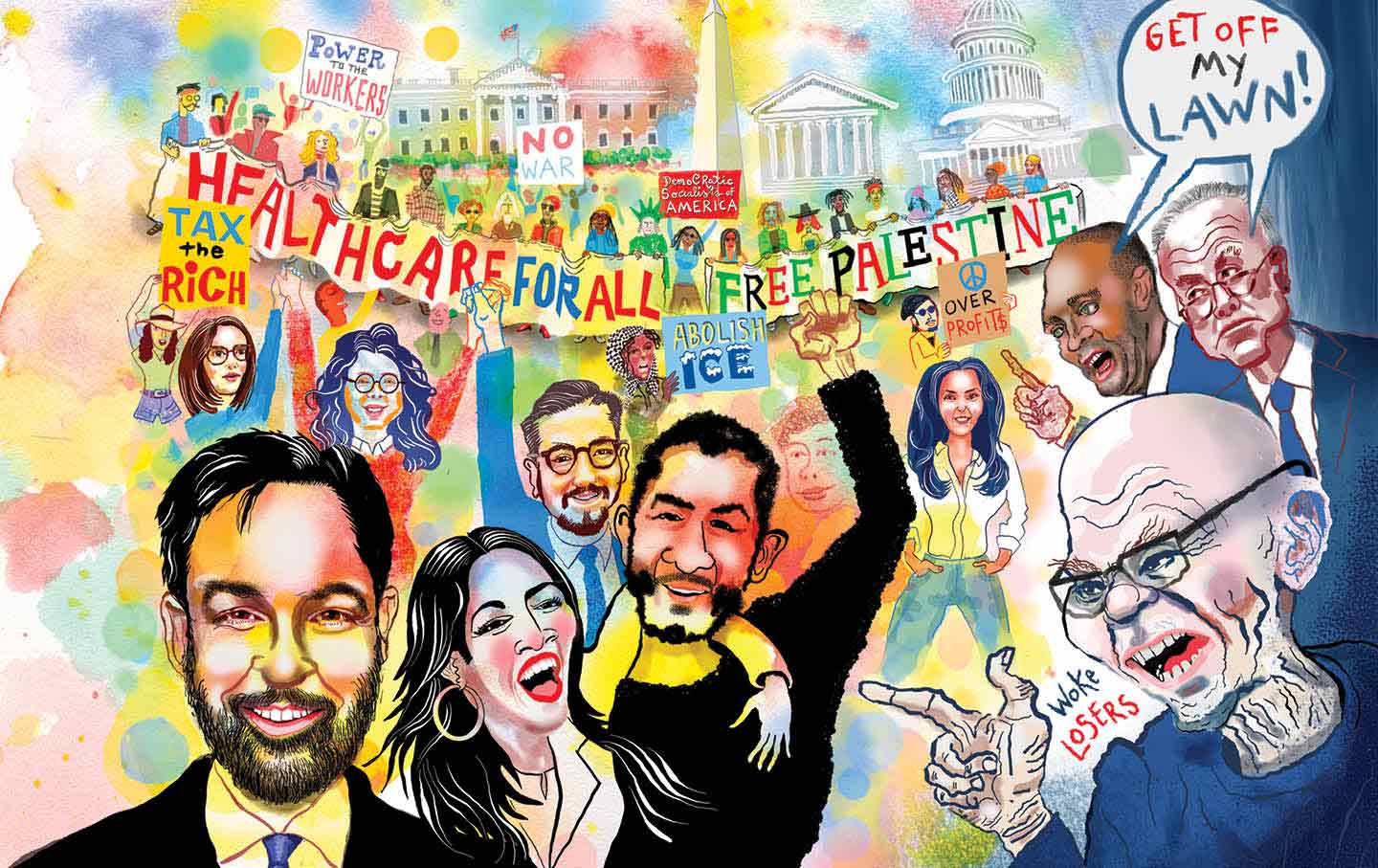
Why Democratic Leaders Keep Waging War on the Young Why Democratic Leaders Keep Waging War on the Young
The party's silver-haired establishment is caught up in an existential culture war.

