
Why Are Bernie Sanders and the Squad Propping Up Joe Biden?
A wounded Biden is running on a platform that progressives have long dreamed about.
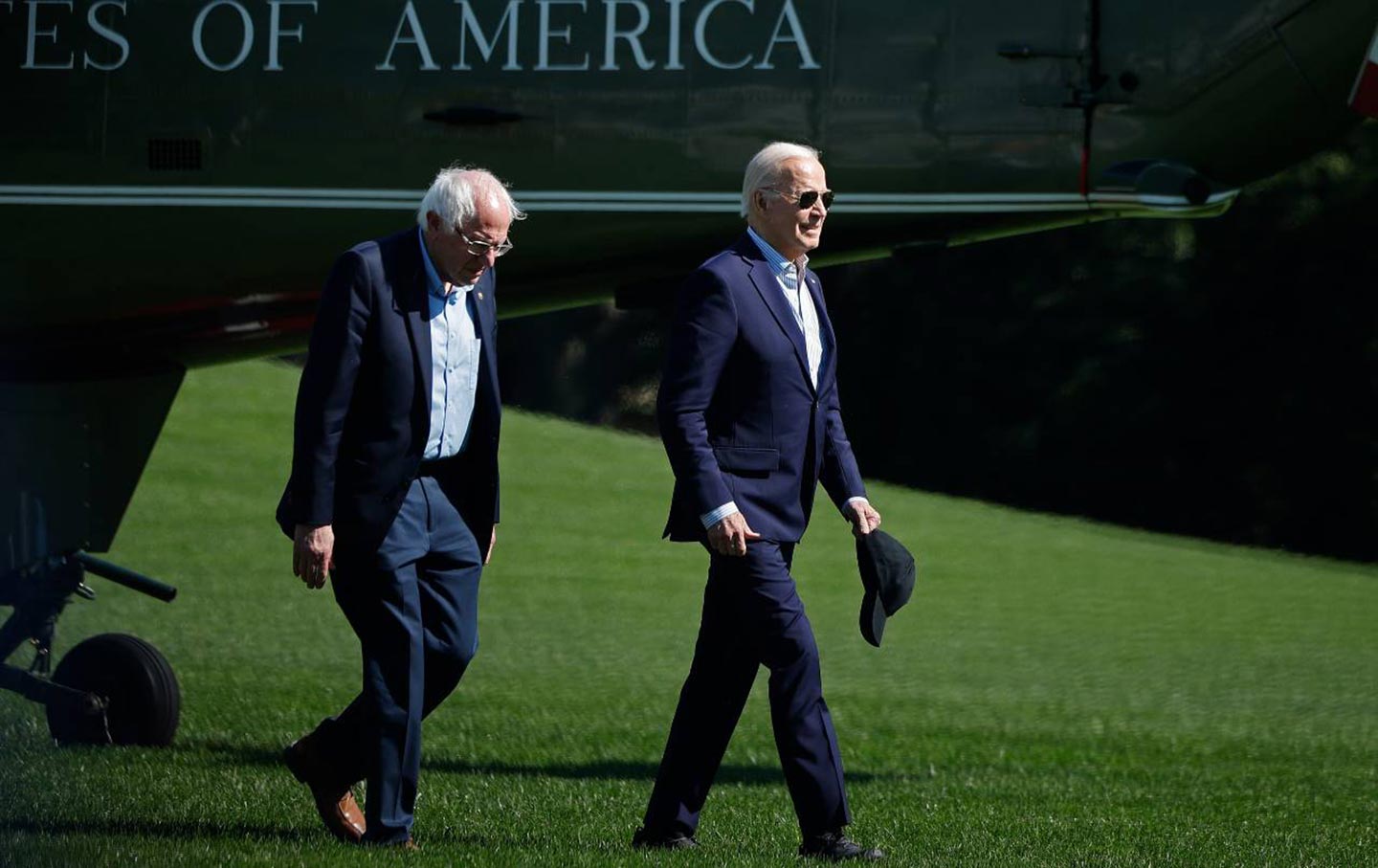
Joe Biden, fighting for his political life, has made a surprise move to the left wing of the party. Biden has always carefully calibrated his politics to be close to the median position of his party, which is why Axios described him as “long a centrist Democrat.” But now, under siege, Biden has become a born-again progressive—perhaps even a leftist.
Over the last two weeks, he’s announced support for a wide swath of policies tailored to please left-wing Democrats: new rules banning medical debt from being used in credit ratings and a push for total medical debt relief, term limits and an enforceable ethics code for the Supreme Court, and new legislation limiting rent increases from corporate landlords to 5 percent per year, among other newly elevated proposals.
Axios describes this batch of policies as part of Biden’s “rescue operation” involving a “left leap to survive.”
The leading instigators of this “left leap” are Senator Bernie Sanders, the Squad (led by Representative Alexandria Ocasio-Cortez), the Congressional Progressive Caucus, and the Congressional Black Caucus. These individuals and groups have become the unexpected fortress of Bidenism, shielding the president from attack even as centrists like Representative Angie Craig (D-MN) and Representative Adam Smith (D-WA) turn on him.
As Axios reports:
Progressives also have cheered Biden’s recent moves.
After the Congressional Progressive Caucus had a call with Biden, Representative Brad Sherman (D-Calif.) told Axios the president teased many policies the caucus wants—which he said is “not a complete coincidence,” based on where Biden is now drawing support on Capitol Hill.
“This is his base,” Sherman said of the Progressive Caucus, “You see who has called upon him to move on, and who has called upon him to stay, and the Progressive Caucus lines up with those who have asked him to stay.”
Sanders penned an effusive op-ed in the New York Times for Biden’s reelection over the weekend, and Rep. Alexandria Ocasio-Cortez (D-N.Y.) also has been publicly supportive.
This embrace by progressives and leftists is matched by the fact that the anti-Biden faction in the party is now headed by centrists such as Representative Adam Schiff (who is running to fill Diane Feinstein’s Senate seat in California). Schiff is a longtime close associate of former House speaker Nancy Pelosi, hence a good barometer of where the party elite stands.
It might seem topsy-turvy for centrists to go knives-out on Biden even as the left embraces him; it’s certainly not a turn of events that could be predicted by Biden’s lifelong commitment to middle-of-the-road liberalism.
But the current alliances make sense when you realize that the elected Democrats who are most at risk by Biden’s staying on as candidate are centrist Democrats in swing districts and purple or red states. These Democrats are facing a real existential threat, as Biden’s unpopularity could unleash a red wave that swallows up their political support. Conversely, progressive and left-wing Democrats tend to represent very safe blue seats. They’ll survive even a Biden wipeout.
From the point of view of Bernie Sanders and the Squad, they have much to lose if they oppose Biden. In the past, as in Representative Jamaal Bowman’s losing primary fight earlier this year, centrists made much hay out of bad-faith arguments that Bowman betrayed Biden’s agenda by occasionally voting against it (in fact, Bowman voted in opposition to centrists watering down Biden’s proposals). It’s in the Squad’s interest to avoid such accusations in the future.
Further, if the congressional left did come out strong against Biden, that could make centrist politicians and donors more pro-Biden in reaction. Cynically, one could say that the proper left view of the Biden mess is that the centrists created the monster of the aging Biden presidency, so it is their job to clean it up.
In essence, the Squad is following the strategy of Richard Nixon in 1964, when the Republicans had nominated the wildly unpopular Barry Goldwater. Although Nixon came from the more moderate Eisenhower wing of the Republican Party, he stuck by Goldwater and campaigned hard for him. This loyalty to the losing leader of an opposing faction paid off in 1968, when party members rewarded Nixon for being a good soldier.
If Biden loses, everyone will understand that it was because of his age and incompetence as a campaigner. But the legacy of his embrace of left-wing positions will remain, showing that if sufficiently motivated a president can overcome long held political taboos. As economist J.W. Mason of John Jay College notes, “I’m actually slightly more sympathetic to AOC/Bernie here. There is some value to concessions that aren’t delivered, if they are legitimate positions that were off-limits before. Having a president publicly support rent control does mean something, I think.”
There is also the real possibility that Biden could surprise everyone and win. Biden is down in the polls, but not by much (in his best polls, Biden is down 2 to 3 percent in most swing states). That means that a normal-size polling error could lead the underdog to victory, as it did with Trump in 2016. If that happens, the bet the congressional left made on Biden would pay off in a big way.
In an interview with The New Yorker, Bernie Sanders acknowledged all of Biden’s political liabilities, but suggested that if the president adopts economic populism, he could win:
As a nation, we do a very poor job, both in Congress and in the media, of focussing on issues that impact the working class. So I would much prefer to have somebody who can’t put three sentences together who is setting forth an agenda that speaks to the needs of working-class people: raising the minimum wage, making it easier for workers to join unions, dealing with the existential threat of climate change, protecting women’s reproductive rights, building millions of units of affordable housing….
I think he is the best candidate, and I think if he runs a strong, effective campaign focussed on the needs of the working class of this country, he will win. And I think there’s a chance he could win big.
Popular
“swipe left below to view more authors”Swipe →What Sanders is recommending here is a gamble: The bet is that economic populism is so attractive it can allow even an unpopular candidate like Joe Biden to win. One could easily argue that the reverse is equally likely: that Biden’s unpopularity, which includes the public’s doubts about his ability to govern, will discredit even a popular economic message.
If Biden continues to stay on as the Democratic Party’s nominee, then we’ll find out if Bernie’s bet paid off. The congressional left is taking a big risk—but there is no safe option right now, and nothing dishonorable about their leap in the dark.
More from The Nation
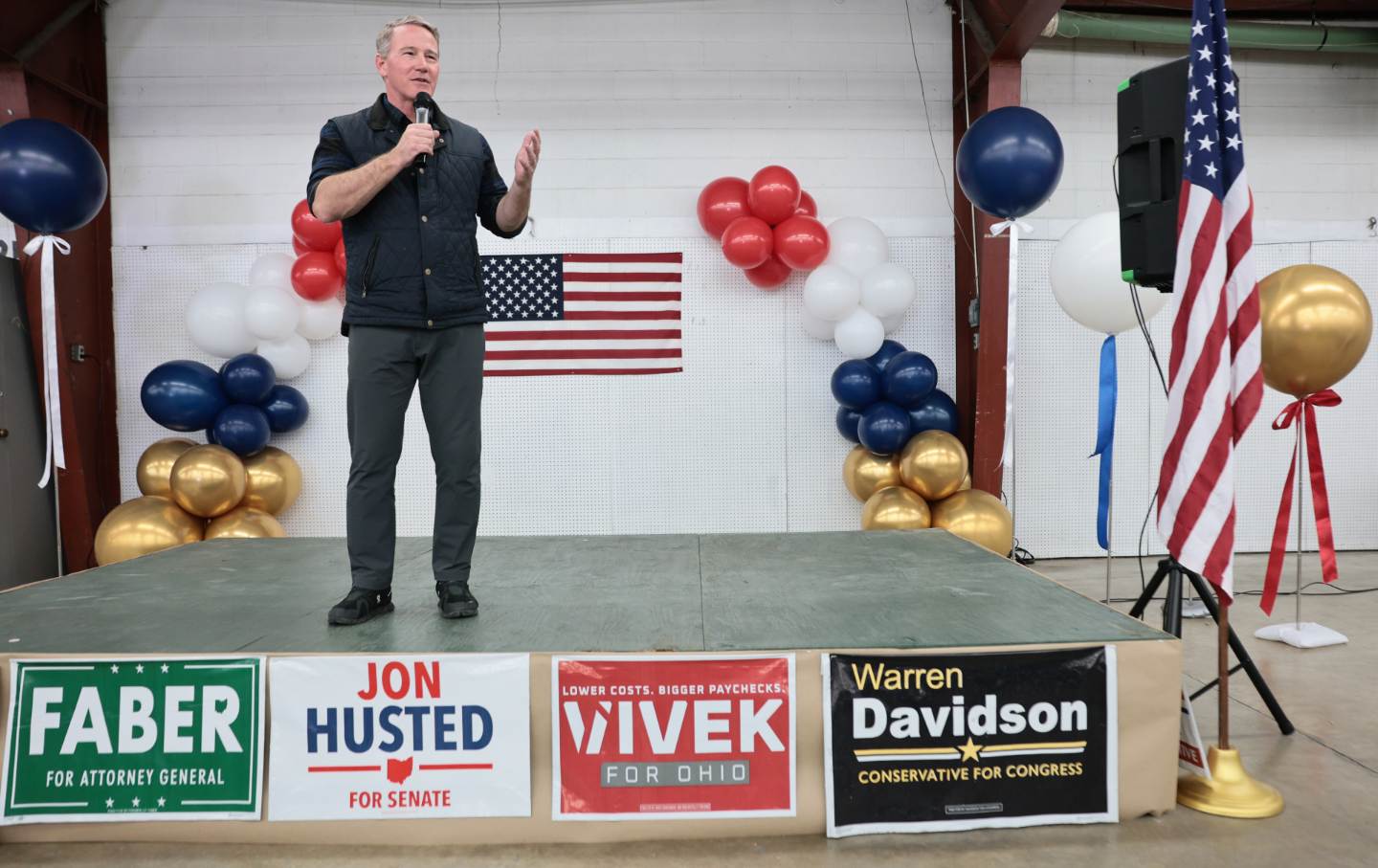
Will the GOP’s Big Money Save Jon Husted in Ohio? Will the GOP’s Big Money Save Jon Husted in Ohio?
Former senator Sherrod Brown is leading in most polls, but a tidal wave of spending may prop up the struggling incumbent.
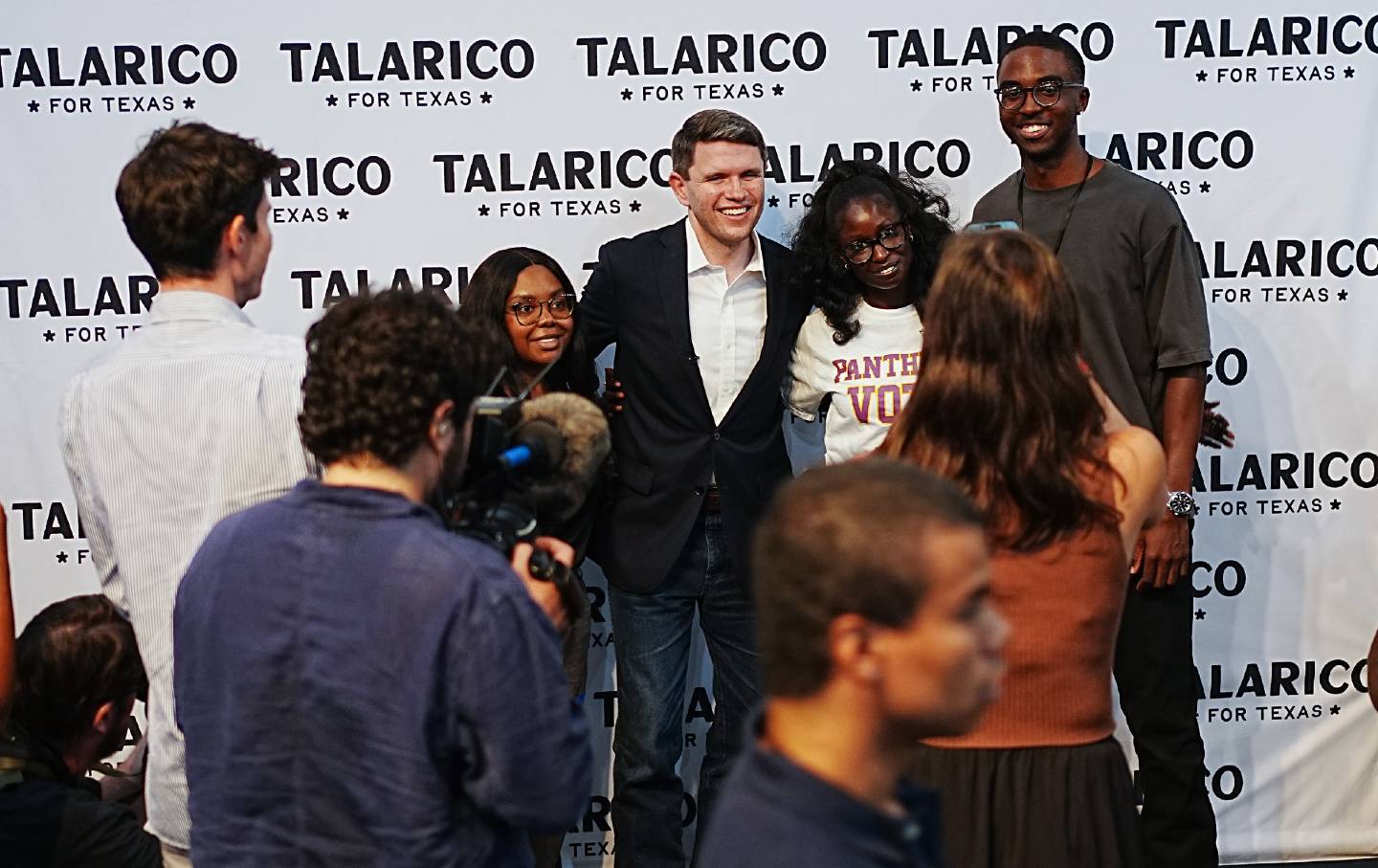
James Talarico Is Preaching a Gospel of Pluralism James Talarico Is Preaching a Gospel of Pluralism
He’s not the only progressive doing it.

Even Republicans Are Waking Up to Trump’s Corruption Even Republicans Are Waking Up to Trump’s Corruption
And, somewhat shockingly, so are Democratic elites.


Mamdani Can No Longer Avoid the Issue of the NYPD Mamdani Can No Longer Avoid the Issue of the NYPD
The mayor has been able to put difficult questions about policing on the back burner—until now.

Why Democratic Leaders Keep Waging War on the Young Why Democratic Leaders Keep Waging War on the Young
The party's silver-haired establishment is caught up in an existential culture war.

