Fatal Recklessness at Boeing Traces Back to Long-Standing C-Suite Greed
Why Jack Welch’s philosophy of maximizing short-term shareholder value at all costs is to blame.
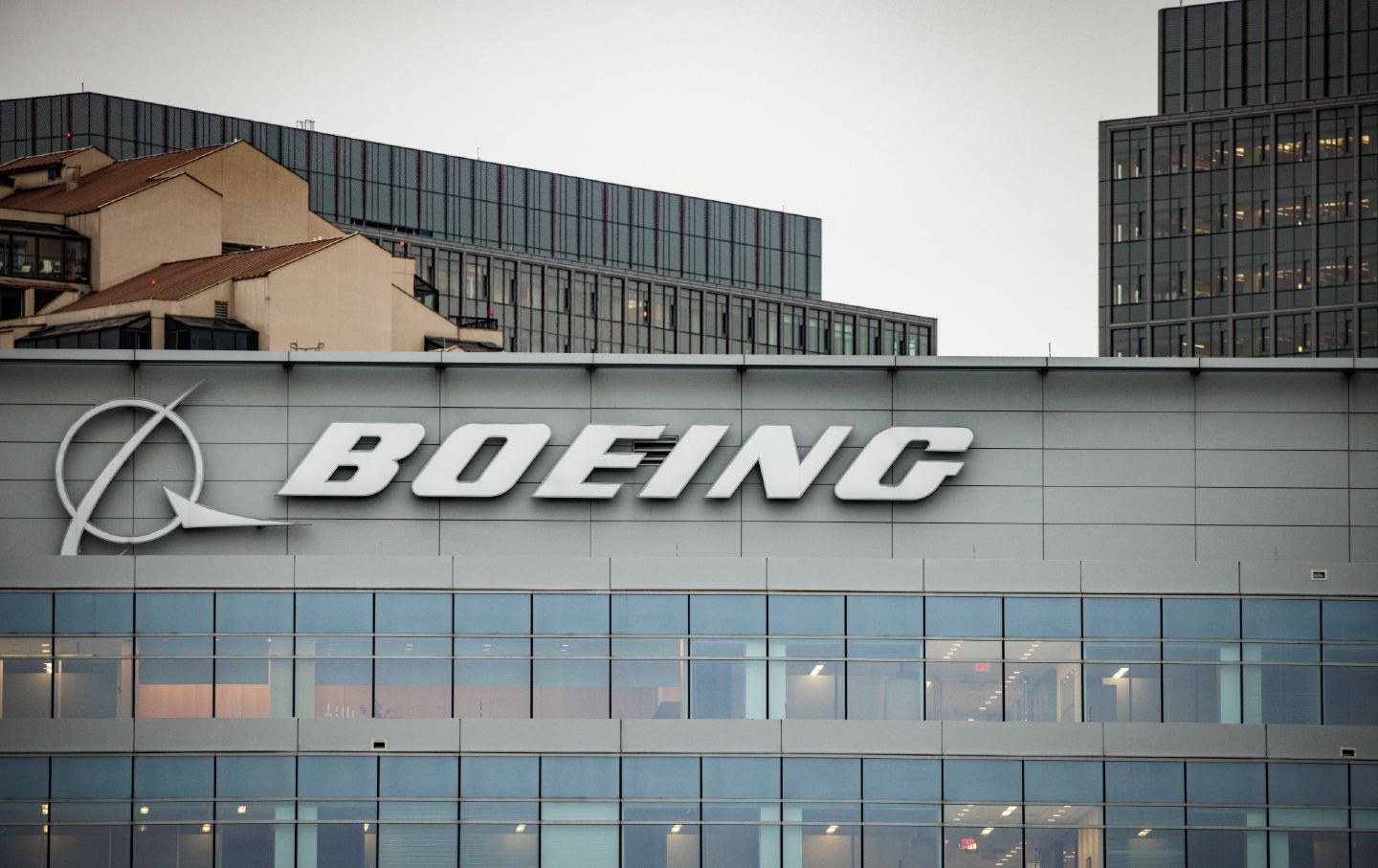
Frazzled, exhausted employees. Major components being installed out of order. Well-orchestrated assembly lines breaking down. No, this isn’t a burger joint at rush hour; it’s how a Boeing whistleblower described the 737 Max manufacturing plant where he used to work. As he put it: “We were rushing planes out the door.” And that’s how you get doors rushing out of planes.
It’s no wonder that, for six years now, passengers have experienced harrowing and sometimes fatal malfunctions on Boeing planes: A panel tearing off and leaving a gaping hole in the side of an ascending aircraft. A wheel falling off during takeoff. A cockpit window cracking. Planes crashing because of faulty, secret software that was never mentioned in pilot training. New examples seem to be coming to light constantly: Earlier this week, a Houston-bound Boeing plane lost its engine cover 35 minutes into its journey.
But despite the flood of well-deserved media attention that this company’s woes have received, Boeing is not unique. Across companies and industries, fatal recklessness has been justified time and again in the name of the profit motive. Too often, we discover too late that executives knew about dangers with their products and services, and forged on anyway. Preventable consumer death will continue to be treated as simply part of the cost of doing business—until the people running America’s biggest companies are compelled to understand that they will suffer real consequences.
This is about more than faulty manufacturing. As aviation expert Jeff Wise wrote recently, it reflects a broader negligence at Boeing that traces back to long-standing C-suite greed.
In 1997, Boeing acquired McDonnell Douglas, one of their largest competitors, in a $13.3 billion merger, which at the time was the 10th biggest in US history. In so doing, it also adopted the company’s CEO, Harry Stonecipher, into executive leadership—a man who, as Wise points out, subscribed to the Jack Welch philosophy of maximizing short-term shareholder value at all costs.
That view quickly took hold at the new Boeing. One CEO after another drove up Boeing’s stock value by skimping on its greatest assets: its world-leading engineering and the experts who made it possible. In the last decade alone, the company spent over half a billion dollars on executive pay and $40 billion on stock buybacks instead of reinvesting those profits in operations. Cracks in this approach started showing in 2018 and 2019, when two faulty 737 Max planes crashed, leaving 346 people dead.
Boeing has faced some repercussions from its string of disasters since then. Its stock is down 29 percent this year, its CEO is stepping down, and the FAA has ordered it to shore up its manufacturing practices by June. But unlike a Boeing plane, Boeing’s reputation isn’t exactly in shambles; a number of analysts seem to believe the company will bounce back.
The truth is, the underlying incentives that nurtured Boeing’s negligence are the foundation of American capitalism: skirting safety in favor of greed is a long-standing American tradition.
In the 1970s, Ford made a car called the Pinto, now known for its exploding gas tank and jamming doors that turned it into a fiery prison. There’s evidence that Ford engineers knew these risks after repeated crash tests. But executives, gunning to compete with the Volkswagen Beetle, held off on recalling the car for seven years.
This callousness extends beyond the transportation industry. In a leaked 2016 memo, a Facebook VP wrote: “Maybe someone dies in a terrorist attack coordinated on our tools. And still we connect people.” He has since been promoted to CTO. Juul executives knew early on that they were hooking teens with their nicotine-based e-vape, but chose not to install a feature to limit nicotine dosage. From OceanGate to SpaceX, the list goes on. For all the talk of ESG and corporate values, companies will always be motivated most by one thing: financial gain.
To a certain extent, consumers can help hold companies accountable. Travelers’ trust in Boeing has taken a hit, and more fliers are trying to avoid booking travel on a 737 Max. But absent a mass movement of disgruntled airline passengers demanding better travel conditions—which, admittedly, sounds totally plausible—federal regulators need a drastically better strategy to effect change in the airline industry and beyond.
After January’s door panel fiasco, the FAA has grounded some 737 Max planes to conduct safety inspections, pressed pause on Boeing’s plan to expand production of that model, and scaled up inspection and maintenance requirements for the aircraft. But the FAA has struggled to enforce safety regulations for years now. It also grounded the entire 737 Max fleet in 2019, after the two fatal crashes. The ban lasted only two years, and it appears the lesson didn’t stick.
Popular
“swipe left below to view more authors”Swipe →If the FAA doesn’t have the capacity to enforce existing rules better, it’s time to impose bigger penalties and actual consequences—like directly fining top executives for preventable safety failures.
Even then, the fact remains that, through disaster after disaster, Boeing has proven that a company can indeed be “too big to fail.” Legislators might consider consequences that are just as big. Is it time to nationalize Boeing? The company may not be in the kind of financial distress that has prompted such a takeover before, but it’s certainly causing enough distress, even as it essentially functions as a government entity, relying on government contracts for nearly 40 percent of its revenue.
Let’s not pretend that patching up some planes in the short term can remedy a foundational rot that’s been festering for nearly three decades. It’s time to make the poster child for the worst of American capitalism into the poster child for consumer safety regulations. Boeing’s first-class ride is over. They can fly economy.
Become a Sustaining Donor This September
Between the reemergence of right-wing red-baiting and Donald Trump’s use of the chilling National Security Presidential Memorandum–7 to criminalize left political organizing, we’re seeing McCarthyism reborn before our eyes.
This assault on democracy cannot be ignored or wished away. Resisting it requires bravery in the face of threats and repression, a steadfast commitment to the truth, and the unwavering belief that we can—and will—overcome this darkness.
We must have an independent media that sets the record straight, unearths corruption and abuses of power, and advances a politics of justice and dignity for all if we’re to win this fight.
That’s why I’m writing to you today. This September, The Nation needs to add 100 monthly donors to sustain our progressive journalism. Your contribution makes the next investigative report, the next truth-speaking column, and the next pathbreaking essay all possible.
I hope you’ll support our work with a recurring donation today. If you donate $10 or more a month, we’ll send you a brand new “Hands Off the Free Press!” sticker to recognise your commitment to our cause. Please, donate today.
Onward,
Katrina vanden Heuvel
Editor and Publisher, The Nation
More from The Nation
How Joe Biden Helped Cause a Genocide in Gaza How Joe Biden Helped Cause a Genocide in Gaza
An interview with reporter Akbar Shahid Ahmed about his new book, “Crossing the Red Line.”
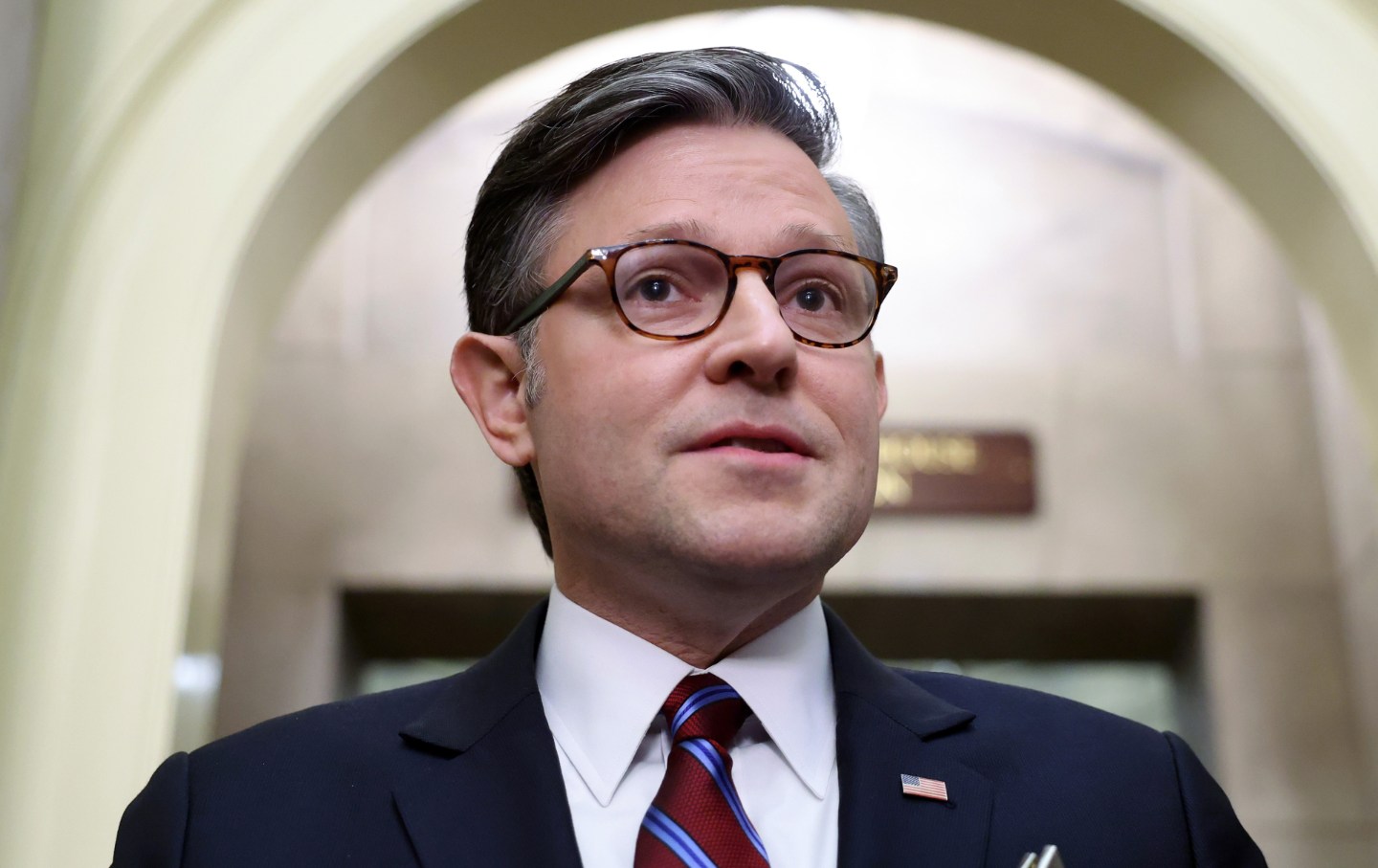
A Premature Farewell to the Ignominious Speaker Mike Johnson A Premature Farewell to the Ignominious Speaker Mike Johnson
If Democrats win the House in the midterms, as expected, Mike Johnson won’t hold the gavel in any meaningful way again.
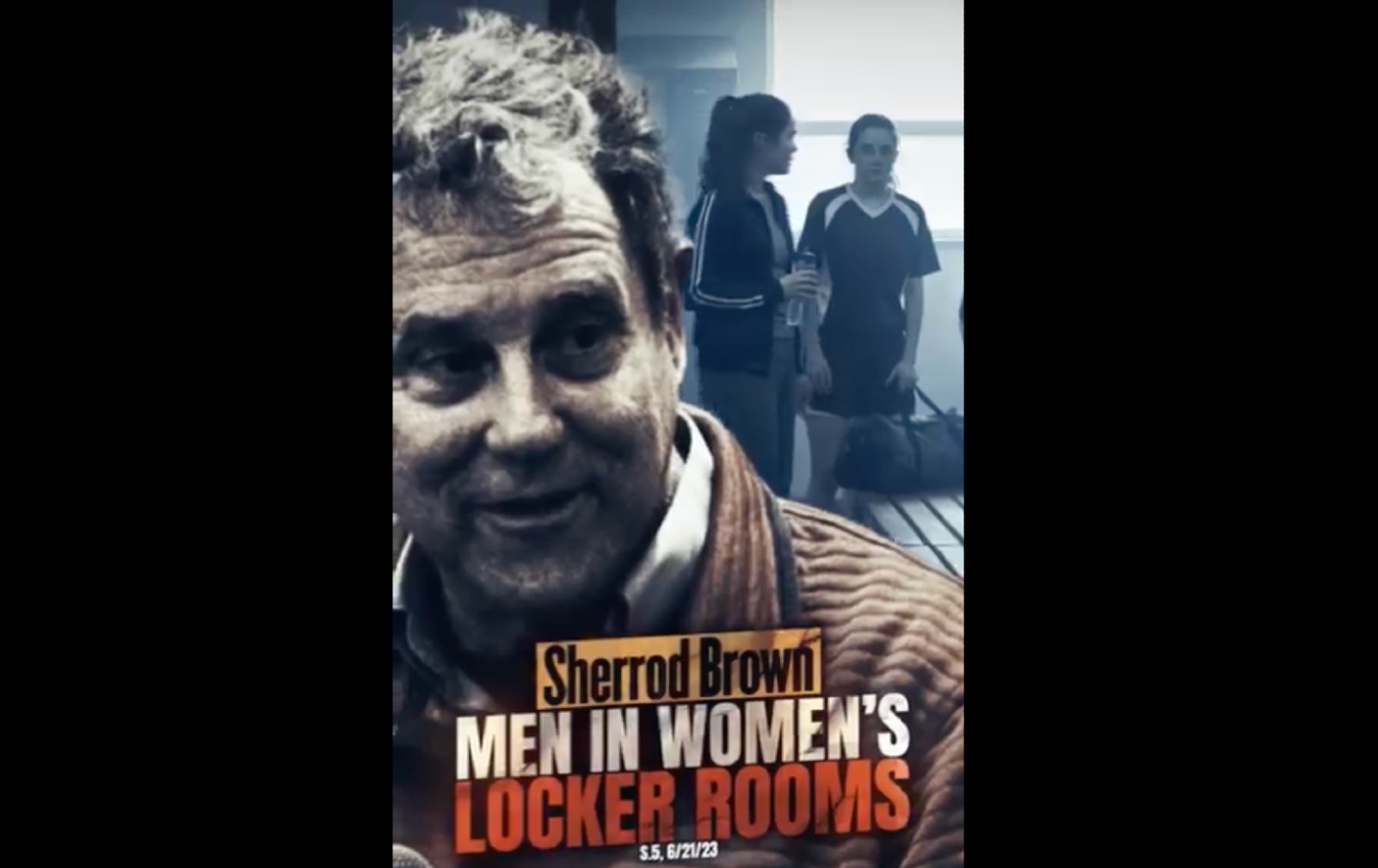
Transphobia Isn’t Winning Votes. But It Is Making Our Lives Much Worse. Transphobia Isn’t Winning Votes. But It Is Making Our Lives Much Worse.
Trans people must now live out another election cycle knowing our friends, family, coworkers, and neighbors are being flooded with agitprop designed to dehumanize us.
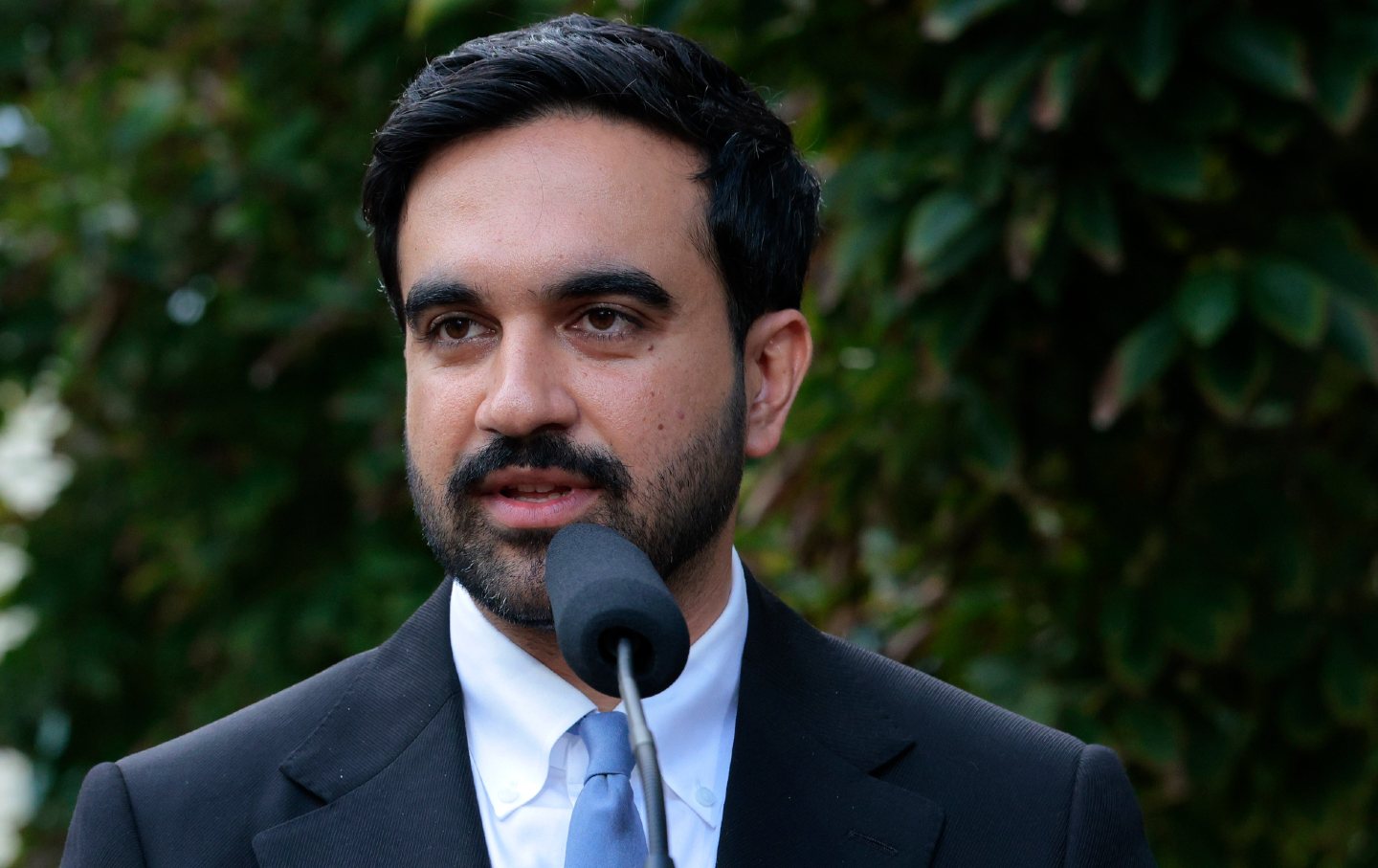
Zohran Mamdani Hosts the World Zohran Mamdani Hosts the World
In a meeting with mayors from around the globe, Mamdani argued that the left must fix everyday problems—or the right will find someone to scapegoat for them.