January 29, 2024

Former Speaker Pelosi, the Call for a Cease-Fire in Gaza Has Wide and Universal Support

It is not “Mr. Putin’s message.”

Katrina vanden Heuvel
SAN FRANCISCO, CALIFORNIA - DECEMBER 15: U.S. Representative Nancy Pelosi speaks during a dedication ceremony of Michael Tilson Thomas (MTT) Way, the block on Grove Street between Franklin Street and Van Ness Avenue as Mayor London Breed, conductor and pianist Michael Tilson Thomas and family, San Francisco Symphony leaders and supporters attend, in San Francisco, California, United States on December 15, 2023.
Nancy Pelosi attends a dedication ceremony in San Francisco on December 15, 2023.(Tayfun Coskun / Anadolu / Getty Images)

If former House speaker Nancy Pelosi is any measure—and she is—the Democratic Party establishment is intent on turning President Biden’s ruinous Gaza position into a domestic political debacle.

Sunday morning on CNN, Pelosi bizarrely and in a menacing tone labeled the call for a cease-fire in Gaza as “Mr. Putin’s message.” Suggesting that some who support it are on Putin’s payroll, she said she would call for the FBI to investigate.

Pelosi gives Putin far too much credit. The call for a cease-fire is the “message” of virtually the entire world community, as revealed by vote after vote in the United Nations. The latest showed 153 nations in favor of an immediate cease-fire, with only 10 against, with the major allies of the US either in favor or abstaining.

According to a December New York Times/Sienna poll, a plurality of Americans—44 percent—support a cease-fire, including 50 percent of women, 62 percent of 18–29 year-olds, 59 percent of Democrats, and 58 percent of those who voted for Biden in 2020.

Sixty-seven members of the Democratic caucus in the House, including 13 members from Pelosi’s California delegation, have already joined the call. These include centrists like Don Beyer, Debbie Dingell, and Judy Chu, Pelosi allies like Jan Schakowsky and Jared Huffman, as well as progressive leaders like Pramila Jayapal, Barbara Lee, Jamie Raskin, and members of the “Squad.” They are joined by leading Senate Democrats, including Elizabeth Warren, Jeff Merkley, Chris Van Hollen, and Dick Durbin.

Some of the strongest labor unions in the country—including the 2 million–member SEIU, the United Auto Workers, and the American Postal Workers Union—are calling for an immediate cease-fire.

City councils across the country, including Pelosi’s hometown of San Francisco, have called on the president to demand a cease-fire. Others include Minneapolis, Detroit, Oakland, Bridgeport, Atlanta, Seattle, Dearborn, Albany, Akron, and Providence.

The National Council of Churches, the nation’s largest ecumenical body, uniting 38 Christian faith groups, has called for a cease-fire, as have more than 1,000 black Christian pastors. The call for a cease-fire has also been endorsed by the president of the US Conference of Catholic Bishops, a leader of Pelosi’s own religion.

As the casualties mount in Gaza—now over 25,000 dead, mostly women and children, with over 60,000 wounded—and the systematic destruction continues, the clamor for an immediate cease-fire swells ever louder.

The White House has labeled such calls “repugnant and disgraceful.” Pelosi attributes them to Putin’s machinations. But it is the White House and the former speaker who are out of touch with the country and the world. In reality, the growing support is not a product of Putin’s “financing” or of Russian disinformation but of people moved by their conscience and their sense of decency.

Which leads one to ask the former speaker, to paraphrase Joseph Welch’s famous query to Joe McCarthy in the 1954 Army-McCarthy hearing: “Have you no sense of decency, madam?”
Katrina vanden Heuvel

Katrina vanden Heuvel is editor and publisher of The Nation, America’s leading source of progressive politics and culture. An expert on international affairs and US politics, she is an award-winning columnist and frequent contributor to The Guardian. Vanden Heuvel is the author of several books, including The Change I Believe In: Fighting for Progress in the Age of Obama, and co-author (with Stephen F. Cohen) of Voices of Glasnost: Interviews with Gorbachev’s Reformers.

More from The Nation

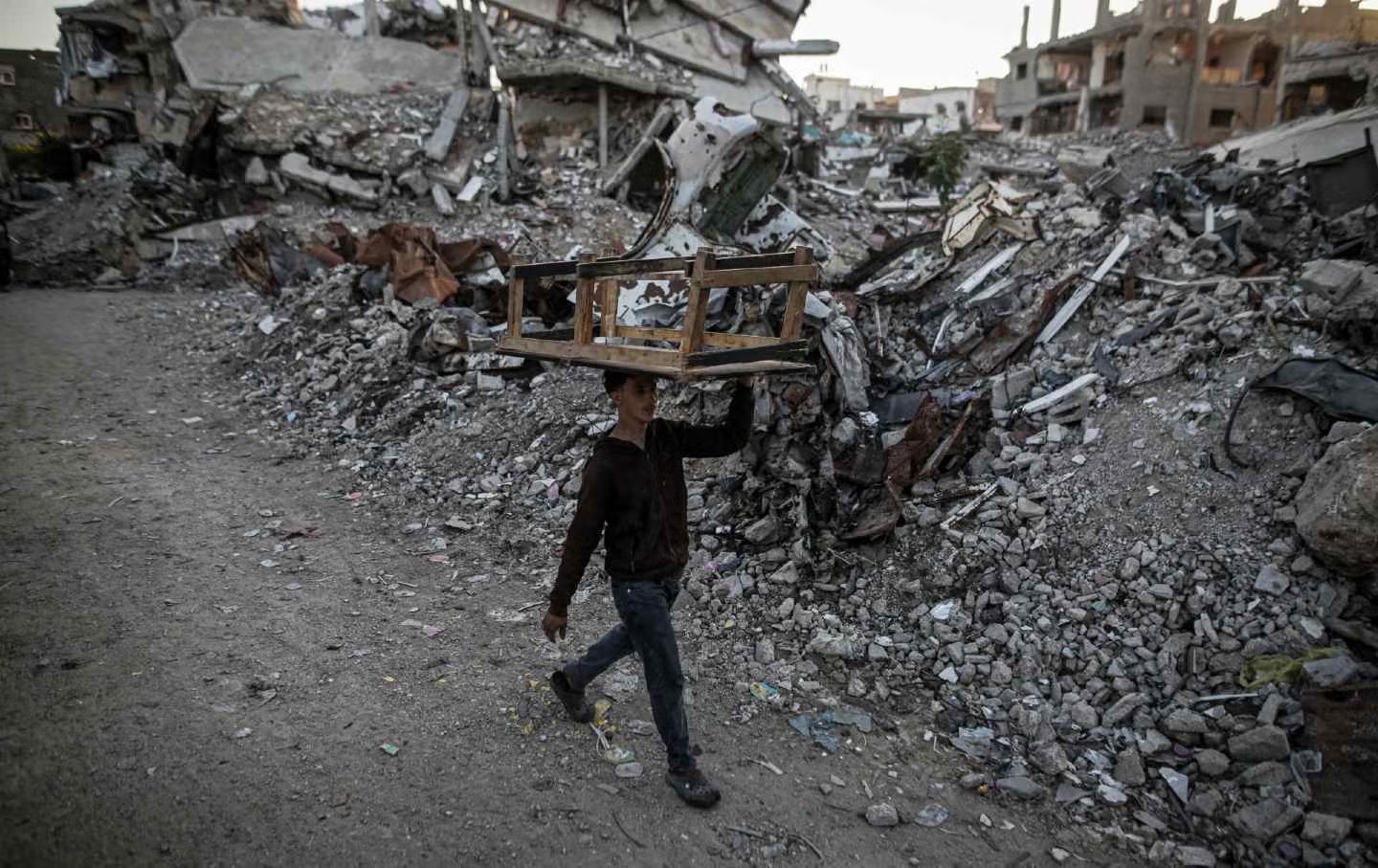
A view of destruction as the displaced Palestinians salvage belongings from the rubble of their destroyed homes after the last remaining houses in the Zeitoun neighborhood, near the Yellow Line in southeastern Gaza City, were demolished when Israeli army quadcopter unmanned aerial vehicles (UAVs) dropped explosive-laden boxes on residential areas, on November 14, 2026 in Gaza City, Gaza, Palestine. (Photo by Saeed M. M. T. Jaras/Anadolu via Getty Images)

The Second Life of Gaza’s Rubble The Second Life of Gaza’s Rubble

The Strip is buried under 61 million tons of rubble. Some people are finding creative ways to use it as a resource.

Hassan Herzallah

Critical Condition: What Are We Doing About Nuclear War?

Critical Condition: What Are We Doing About Nuclear War? Critical Condition: What Are We Doing About Nuclear War?

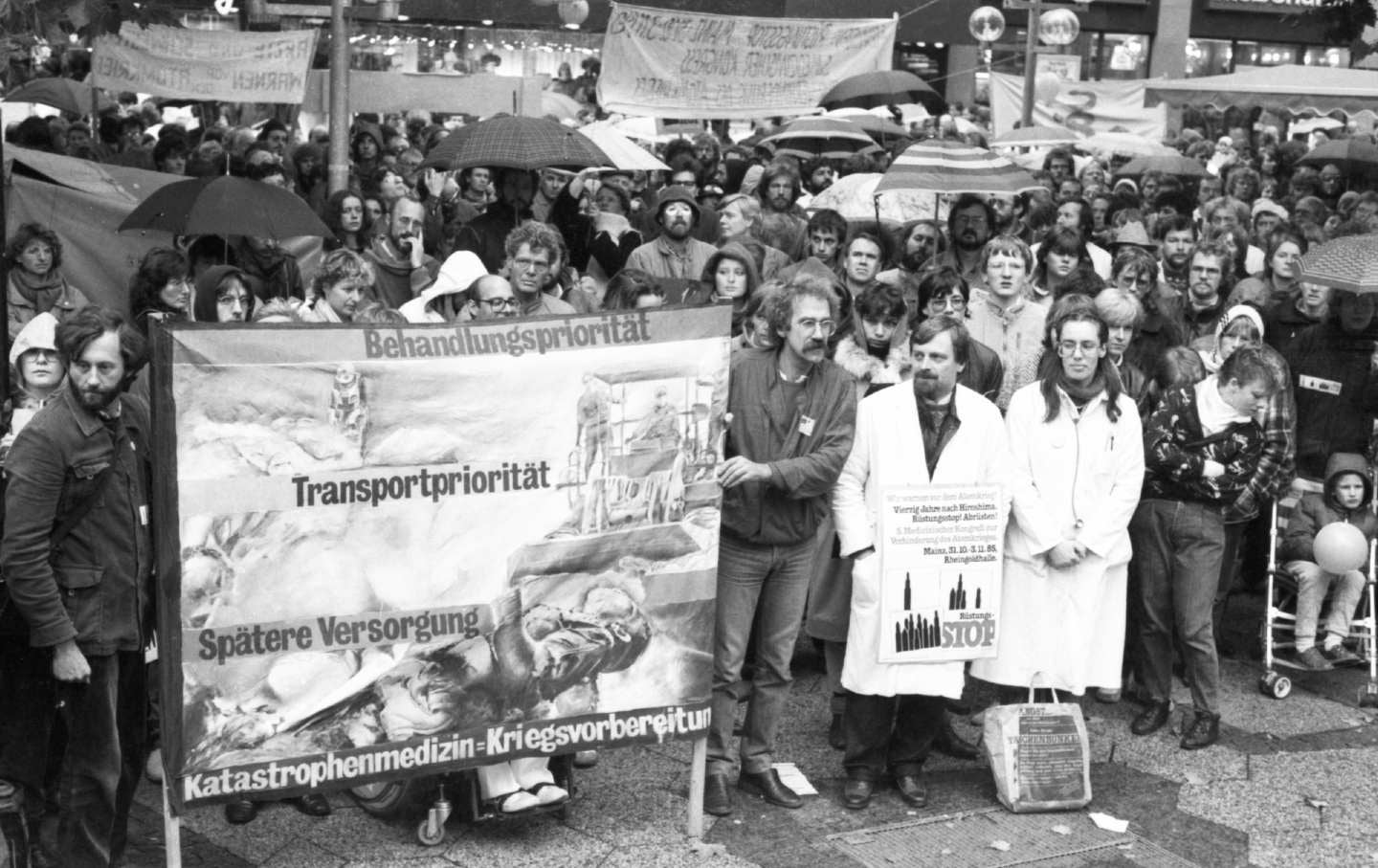
Doctors are calling for verifiable, deadline-driven agreement to eliminate all nuclear weapons. The flourishing—and even the survival—of the human species is at stake.

Matt Bivens

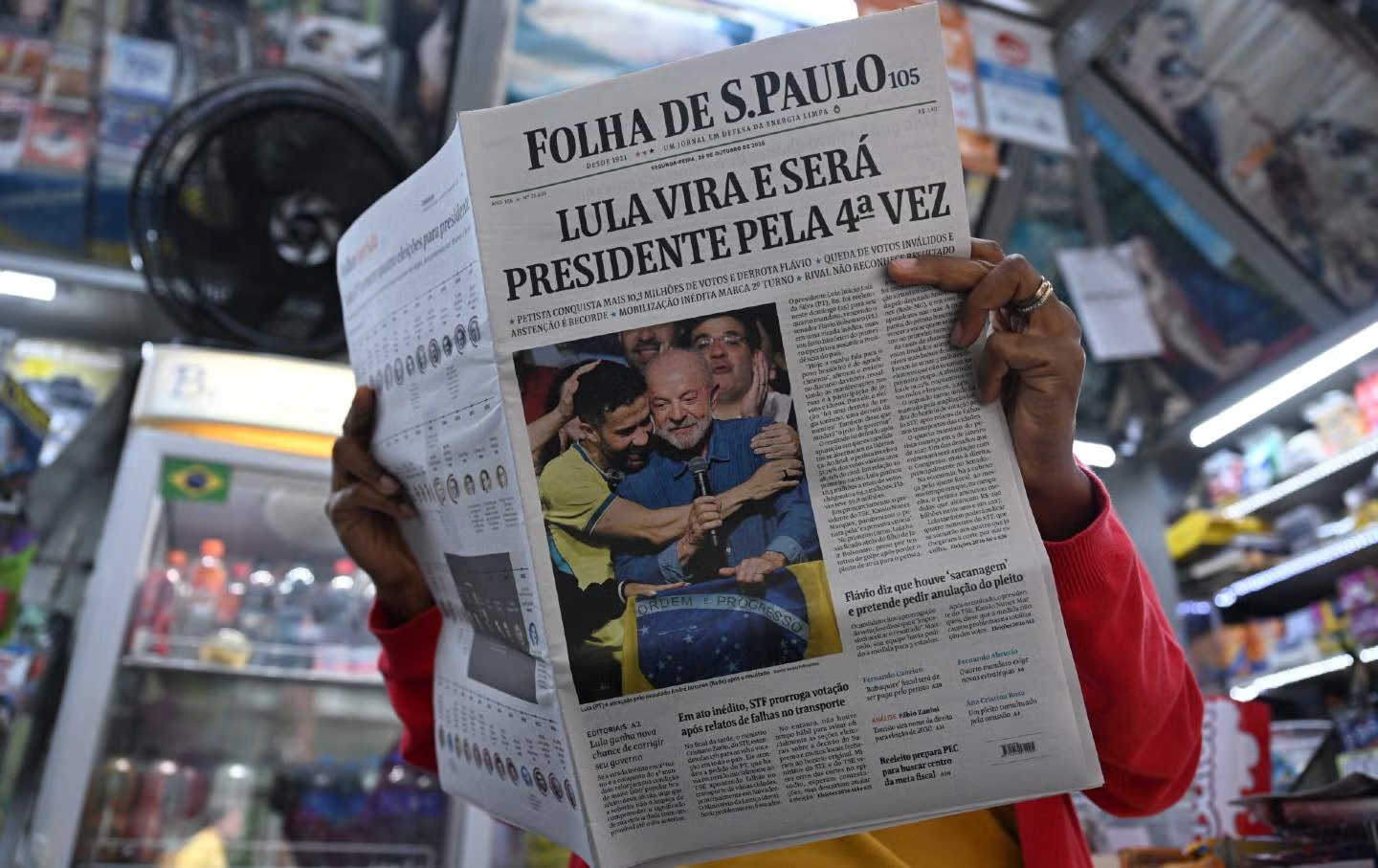
A woman reads a newspaper whose front page displays the victory of Brazil's president and reelection candidate Luiz Inácio Lula da Silva, a day after the presidential runoff election in São Paulo, Brazil, on October 26, 2026.

What We Can Learn From Lula’s Seismic Win What We Can Learn From Lula’s Seismic Win

The Brazilian president looked headed for defeat. The Brazilian people had other ideas.

David Adler

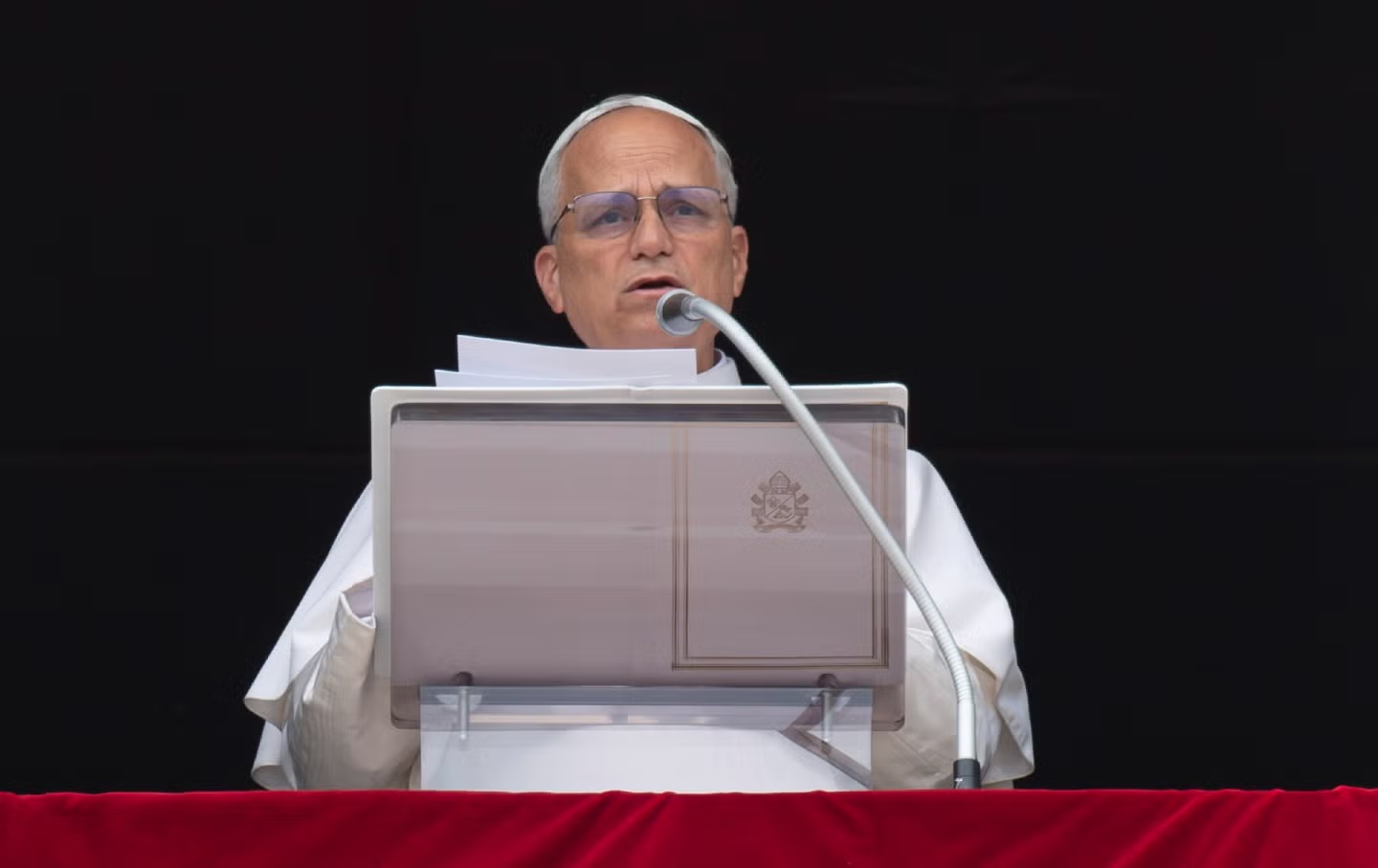
Pope Leo XIV delivers his Angelus blessing on the Solemnity of Corpus Christi on July 22, 2025, in Vatican City. Speaking hours after the US bombing of nuclear sites in Iran, the pope said the cry for peace “demands responsibility and reason and must not be drowned out by the roar of weapons.”

Pope Leo Goes to War—Against the Department of War Pope Leo Goes to War—Against the Department of War

The growing divide between Rome and Washington.

Victor Gaetan

Jean-Luc Mélenchon, leader of the La France Insoumise, during a cost-of-living protest in Paris, France, on October 31, 2026.

France’s Left, Divided at the Worst Possible Time France’s Left, Divided at the Worst Possible Time

Years of progressive infighting weigh on Jean-Luc Mélenchon’s presidential ambitions.

Harrison Stetler

Defeated right-wing Brazilian presidential candidate Flávio Bolsonaro arrives at the airport in Miami, Florida, on October 28, 2026.

The Fugitive From Brazil The Fugitive From Brazil

The implications of Trump’s red-carpet rollout for Flávio Bolsonaro.

Andre Pagliarini