
The Forces That Nearly Murdered Me Are Meeting In San Francisco Today
I was almost killed by Philippine troops upholding the global economic order on display at this week’s APEC Summit.
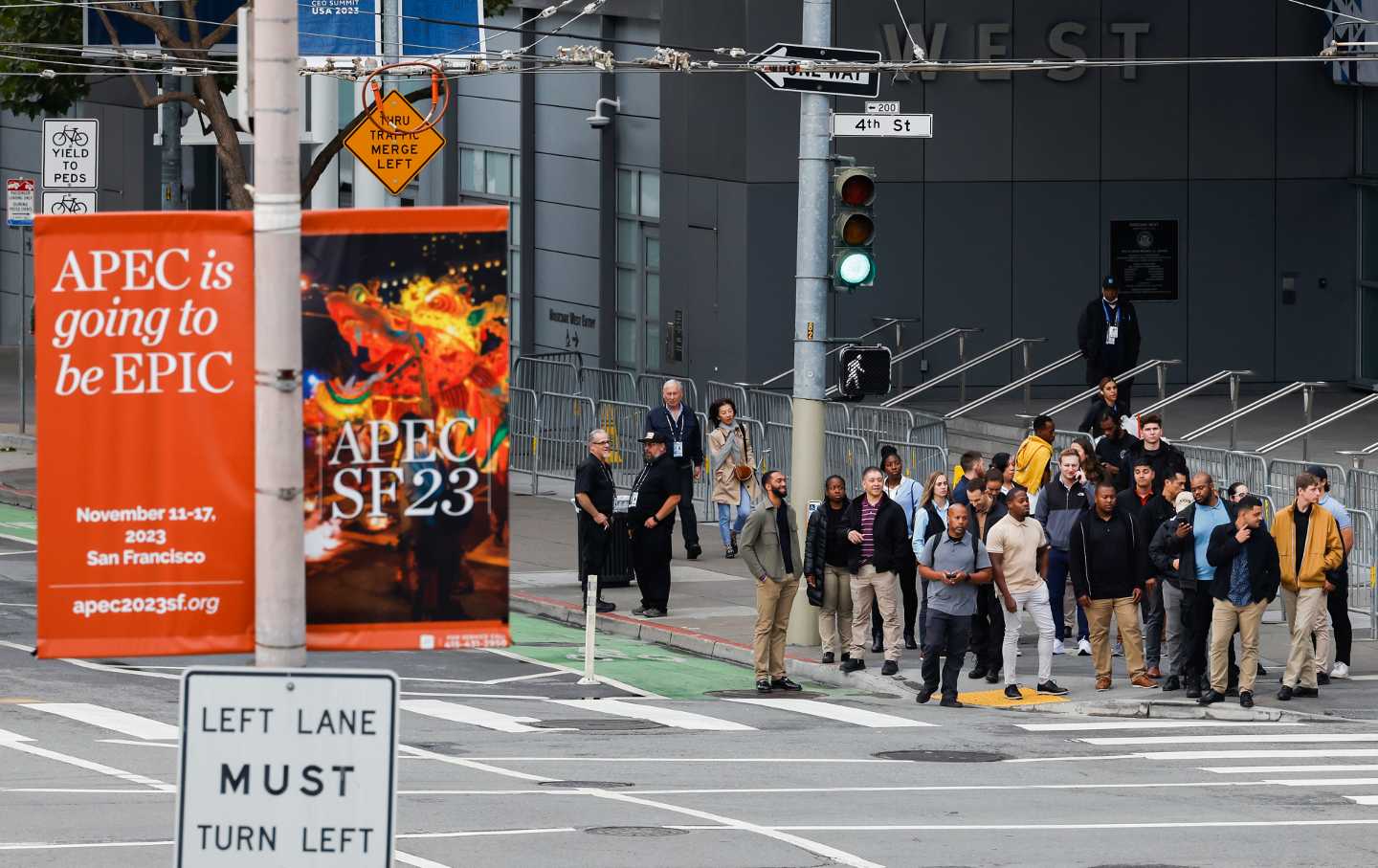
Attendees make their way into Moscone South for the Asia-Pacific Economic Cooperation summit held at Moscone Center in San Francisco, Tuesday, November 14, 2023.
(Jessica Christian / San Francisco Chronicle via AP)Today, I will come face to face with the forces who nearly killed me.
In 2019, members of the Armed Forces of the Philippines attempted to assassinate me in response to my efforts to defend Indigenous Philippine lands from environmental and governmental degradation. Bullet fragments from the attack are still lodged in my body, and I am paralyzed from the chest down.
But it was not only those specific soldiers who were responsible for my near-murder. It wasn’t even only the Philippine government. The global neoliberal economic model that prioritizes endless profiteering and exploitation over peace, equality, and environmental stewardship helped load the gun.
Now, four years later, and back in my hometown of San Francisco, I am surrounded by the leading symbols of that global order—because my city has been chosen as the site of this year’s Asia Pacific Economic Cooperation (APEC) summit. For the first time in 12 years, the United States is hosting the APEC Heads of State meeting, a gathering of national leaders from 21 member economies—including Joe Biden, Xi Jinping, and Philippine President Ferdinand Marcos Jr., all of whom have arrived in San Francisco—and the business executives of some of the largest multinational corporations in the world.
San Francisco is requiring all police and security personnel to work overtime and the federal Secret Service is deploying its forces to secure the closed-door APEC meetings. Meanwhile, thousands of local residents and small businesses are bracing for street closures, sweeps of houseless people, invasive checkpoints, harassment by the police, and inaccessibility of neighborhood services.
I grew up in San Francisco learning about the struggle most people face at some point to put food on the table and earn enough to pay the bills, even while across town a few people lived in Victorian mansions and worked for the big banks in the skyscrapers that made up the city’s iconic skyline.
The stark divide between rich and poor from my childhood has only gotten wider, throughout the world and in San Francisco itself, precisely due to the kinds of policies that APEC is discussing during its week of meetings.
According to APEC, its members encompass 41 percent of the world population, 44 percent of world trade, and a whopping 51 percent of the entire world’s GDP, which underscores how critical the Asia Pacific region is to the global economy and to geopolitics. APEC is always a forum where the great powers compete to bring member countries into their sphere of influence, but playing out in the backdrop this year is intense global competition and strife. The US in particular has been aggressively pushing the Indo-Pacific Economic Framework (IPEF) in negotiations with 13 other countries (including India, which is not a member of APEC) in the run-up to the APEC Summit.
A free-trade agreement repackaged in the post-pandemic language of “fostering resiliency” and “climate-smart sustainable production,” IPEF is the trade aspect of America’s desperate attempt to gain the upper hand in its competition with China. In line with its Indo-Pacific Strategy, the US backs up its trade agenda by deploying military forces, expanding overseas bases, and forging new military agreements with Japan, South Korea, the Philippines, Australia, and other countries in the Pacific to isolate and contain China. All of these maneuvers put APEC member economies—especially those in the first-island chain—right in harm’s way.
I know this from direct experience, having spent nine years living with the Igorot Indigenous peoples of the Philippines as they defended their land, rights, and lives in the resource-rich area known as the Cordillera region. I saw firsthand how neoliberal policies supported by APEC, such as the Philippine Mining Act of 1995, liberalized the mining industry, allowing foreign mining companies to reap 100 percent of the profits from the plundering of Indigenous people’s lands.
Unbridled mining destroyed the environment and forcibly displaced Indigenous people who had been living there for generations. When the people protested against the foreign mining companies and the policies that enabled them, the state responded with violence. Indigenous communities were militarized, bombed, and strafed with artillery shelling. Individual Indigenous rights activists were threatened, harassed, surveilled, abducted, slapped with legal cases based on fabricated evidence, illegally arrested, and even extrajudicially killed.
Because I protested alongside the Indigenous communities and as a journalist wrote about the daily attacks they faced, I was also threatened, politically vilified as a terrorist, and given death threats, culminating in being riddled by a fusillade from members of the 54th Infantry Battalion of the Philippine Army in front of my home on August 6, 2019.
More recently, under Marcos Jr., who was elected last year, a string of human rights violations have hammered the Cordillera Indigenous peoples: Phosphorus bombs were dropped in Kalinga province; three Indigenous rights activists were abducted; and four of my friends and colleagues in the Cordillera Peoples Alliance were tagged as terrorists for defending Indigenous people’s rights and land. Only the Philippine military and police apparatus trained by and supplied with arms from the US have the ability to systematically carry out these crimes on such a wide scale. The bullets that hit me were quite possibly funded by American taxpayers, as are the bombs that continue to be dropped all over the Philippines to silence the people protesting the policies that APEC is showcasing.
The Indigenous people of the Philippines will be excluded from the APEC talks. APEC has never invited them nor any of the billions of ordinary people who bear the brunt of its free-trade deals: workers, women, migrants, and all sectors of society who comprise the 99 percent have never been given a seat in the APEC meetings, at the lavish dinners, or at the side meetings. Instead, the biggest US corporations, such as Amazon, GM, Chevron, and Boeing, are spending millions of dollars to back this November’s APEC meetings and thus get exclusive access to global leaders. These global leaders become the biggest customers of corporations like Boeing, which manufactures drones used in the bombing of Indigenous communities in the Philippines and in Israel’s war of genocide against Palestinians; and Chevron, which continues to seek expansion of natural gas production in the Philippines and with Israel in the Leviathan gas fields off the coast of occupied Palestine.
The people of the Bay Area have not taken this lying down. Hundreds have formed the broad No to APEC Coalition comprised of grassroots organizations, and labor and climate advocates, and thousands have been protesting APEC all week. We will follow in the footsteps of a generation of people who have protested APEC since its inception.
As San Francisco rolls out the red carpet for APEC and the 1 percent, I’ll be standing with the people again, ready to confront this institution that not only almost took my life but has contributed to the poverty, unemployment, and environmental destruction that have killed millions worldwide.
Become a Sustaining Donor This September
Between the reemergence of right-wing red-baiting and Donald Trump’s use of the chilling National Security Presidential Memorandum–7 to criminalize left political organizing, we’re seeing McCarthyism reborn before our eyes.
This assault on democracy cannot be ignored or wished away. Resisting it requires bravery in the face of threats and repression, a steadfast commitment to the truth, and the unwavering belief that we can—and will—overcome this darkness.
We must have an independent media that sets the record straight, unearths corruption and abuses of power, and advances a politics of justice and dignity for all if we’re to win this fight.
That’s why I’m writing to you today. This September, The Nation needs to add 100 monthly donors to sustain our progressive journalism. Your contribution makes the next investigative report, the next truth-speaking column, and the next pathbreaking essay all possible.
I hope you’ll support our work with a recurring donation today. If you donate $10 or more a month, we’ll send you a brand new “Hands Off the Free Press!” sticker to recognise your commitment to our cause. Please, donate today.
Onward,
Katrina vanden Heuvel
Editor and Publisher, The Nation
More from The Nation
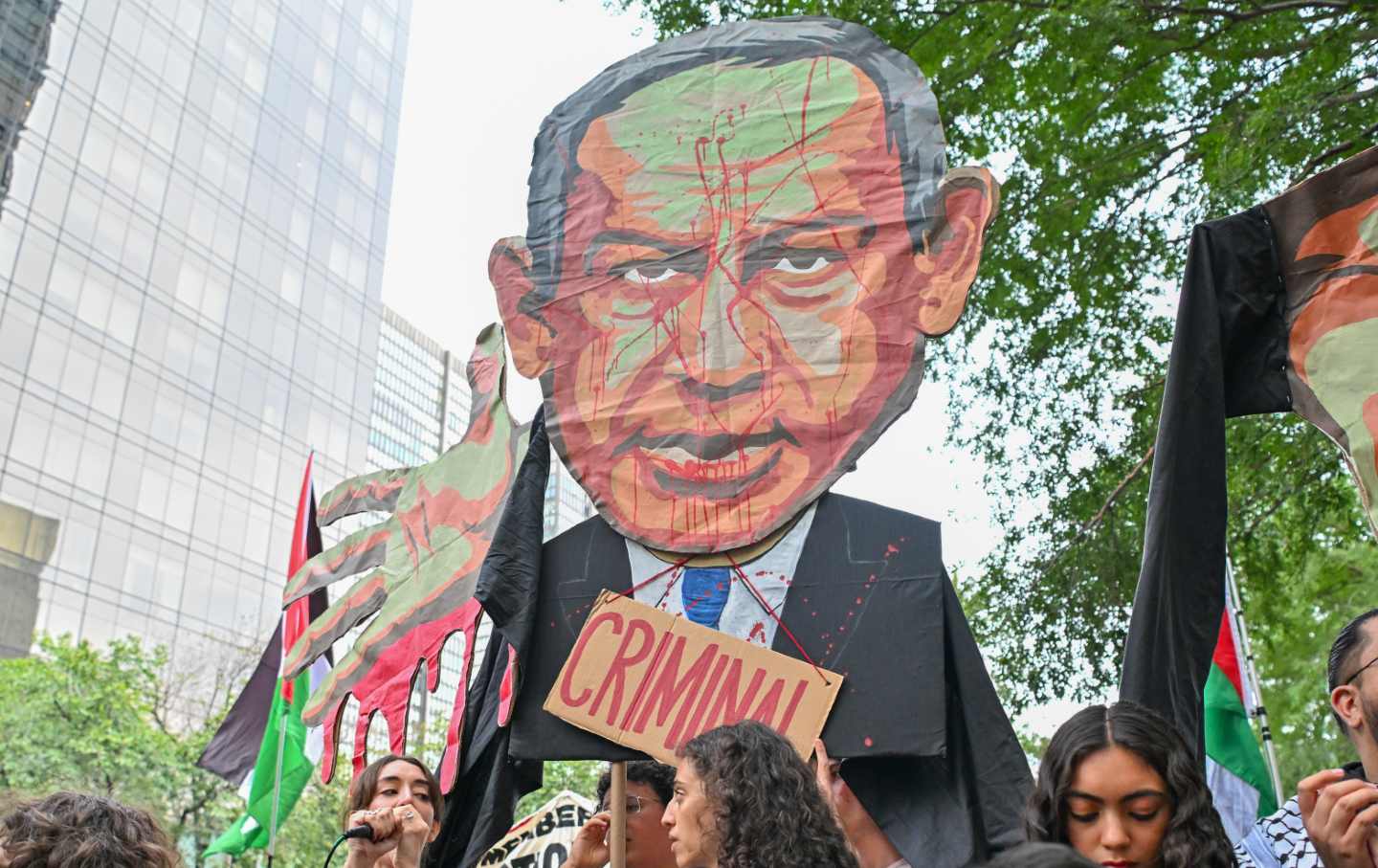
Netanyahu Came to New York. New Yorkers Were Ready for Him. Netanyahu Came to New York. New Yorkers Were Ready for Him.
Scenes from the defiant protest against the genocidal leader’s UN speech.
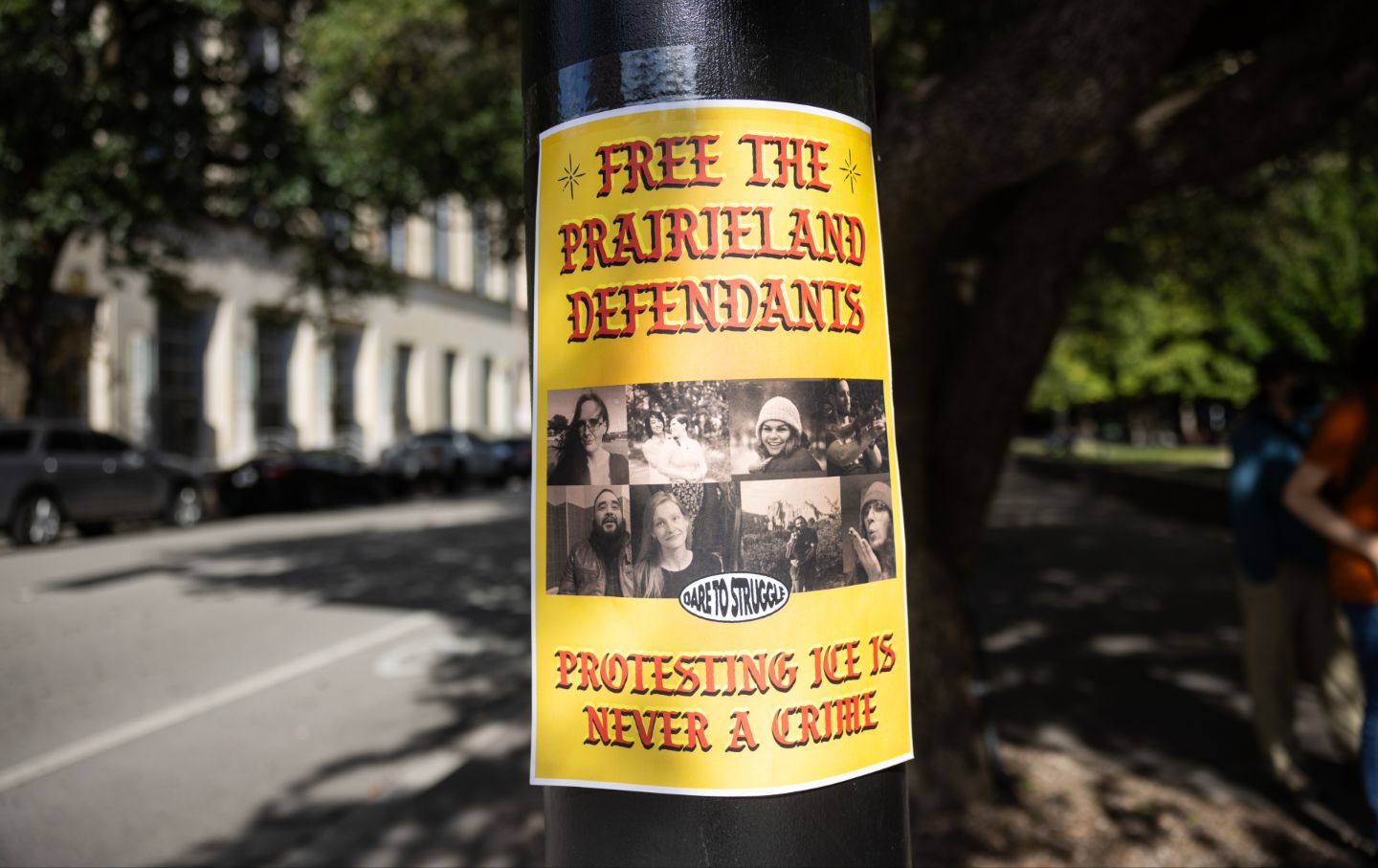
A Message From Prairieland Prisoner Autumn Hill: “Don’t Be Afraid” A Message From Prairieland Prisoner Autumn Hill: “Don’t Be Afraid”
I talked to the political prisoner about the politics of love, her case, surviving as a trans woman in a men’s prison, and how she makes it through the day.
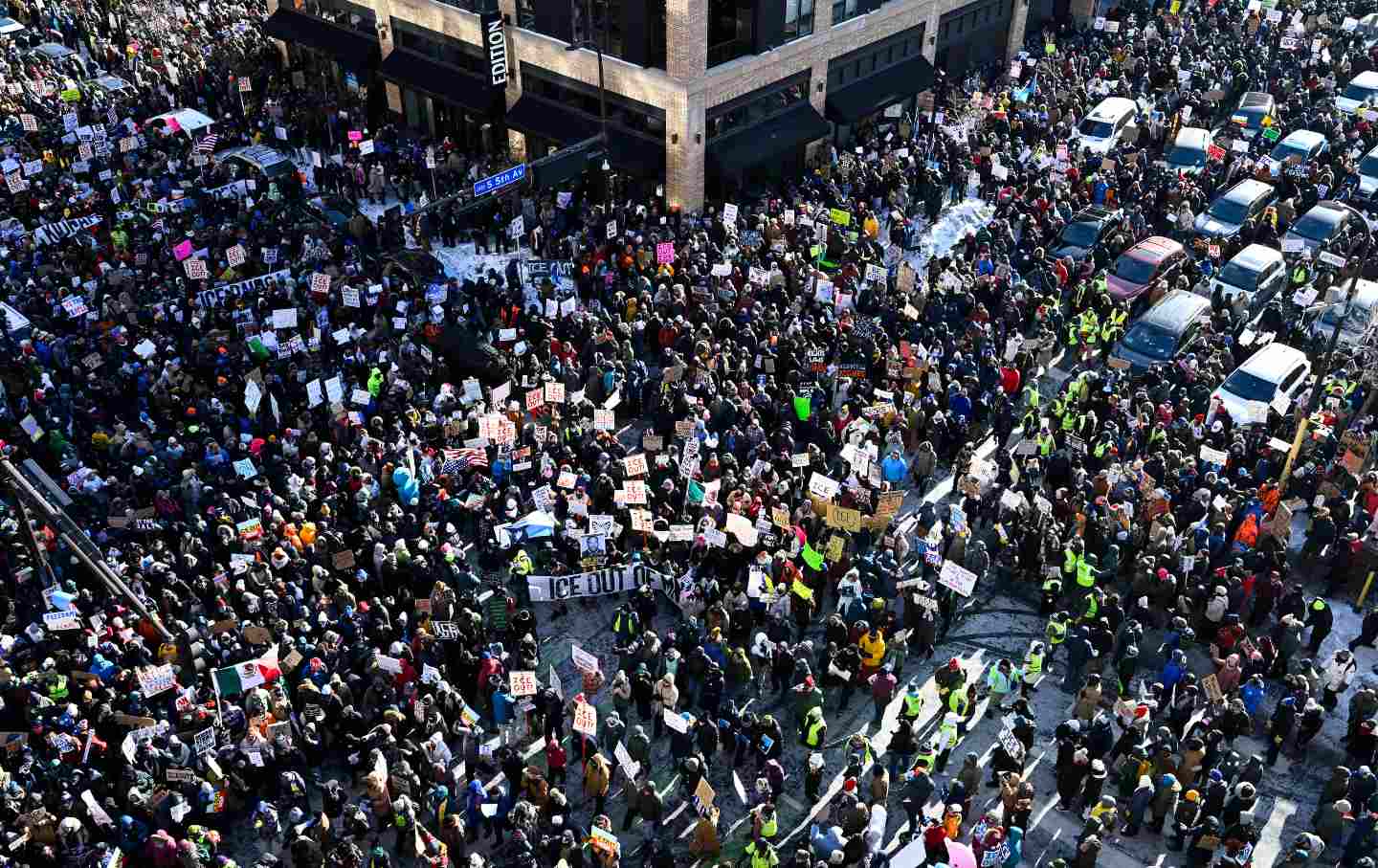
The Impossible Will Take a Little While: The Power of Persistence The Impossible Will Take a Little While: The Power of Persistence
In troubled times, history offers a lesson: Seemingly impossible change can begin with ordinary people who refuse to give up.
Gloria Steinem’s Many-Splendored Feminist Life Gloria Steinem’s Many-Splendored Feminist Life
The feminist icon lived the struggle for gender equality and always found time to lend support and solidarity to other women leaders, even in her final days.

No, Woke 1 Was Not Crazy No, Woke 1 Was Not Crazy
AOC and others are laughing off 2020 as a wild, isolated moment. None of that is true.

How Occupy Wall Street Still Explains Politics Today How Occupy Wall Street Still Explains Politics Today
It sowed the seeds for a new era of social movements—but its politics of powerlessness should act as a cautionary tale.

