
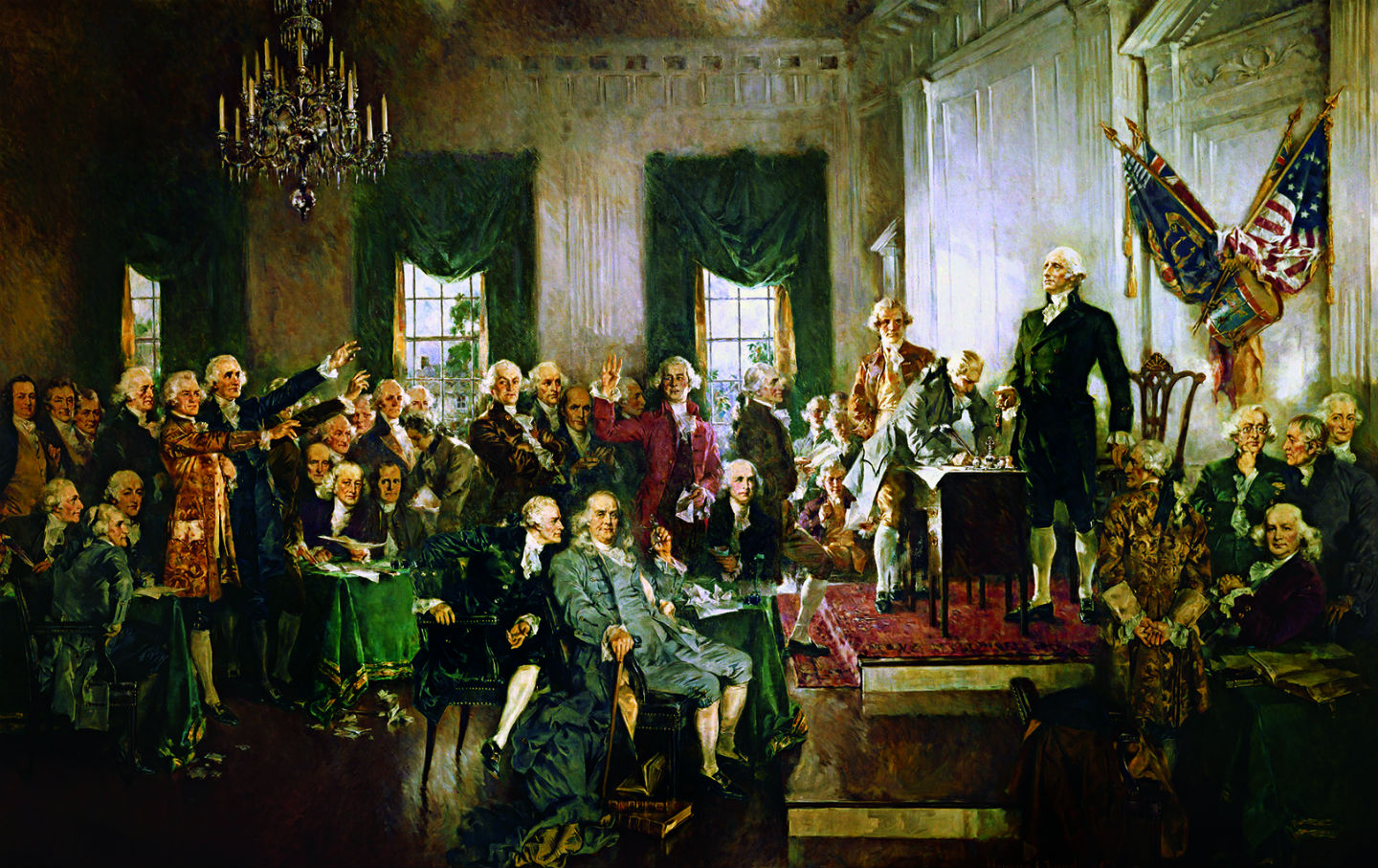
When the Constitution Becomes The Last Resort of Scoundrels When the Constitution Becomes The Last Resort of Scoundrels
We know today the Founders were not Fathers to be proud of.
Mar 23, 2015 / Feature / Simeon Strunsky and Richard Kreitner
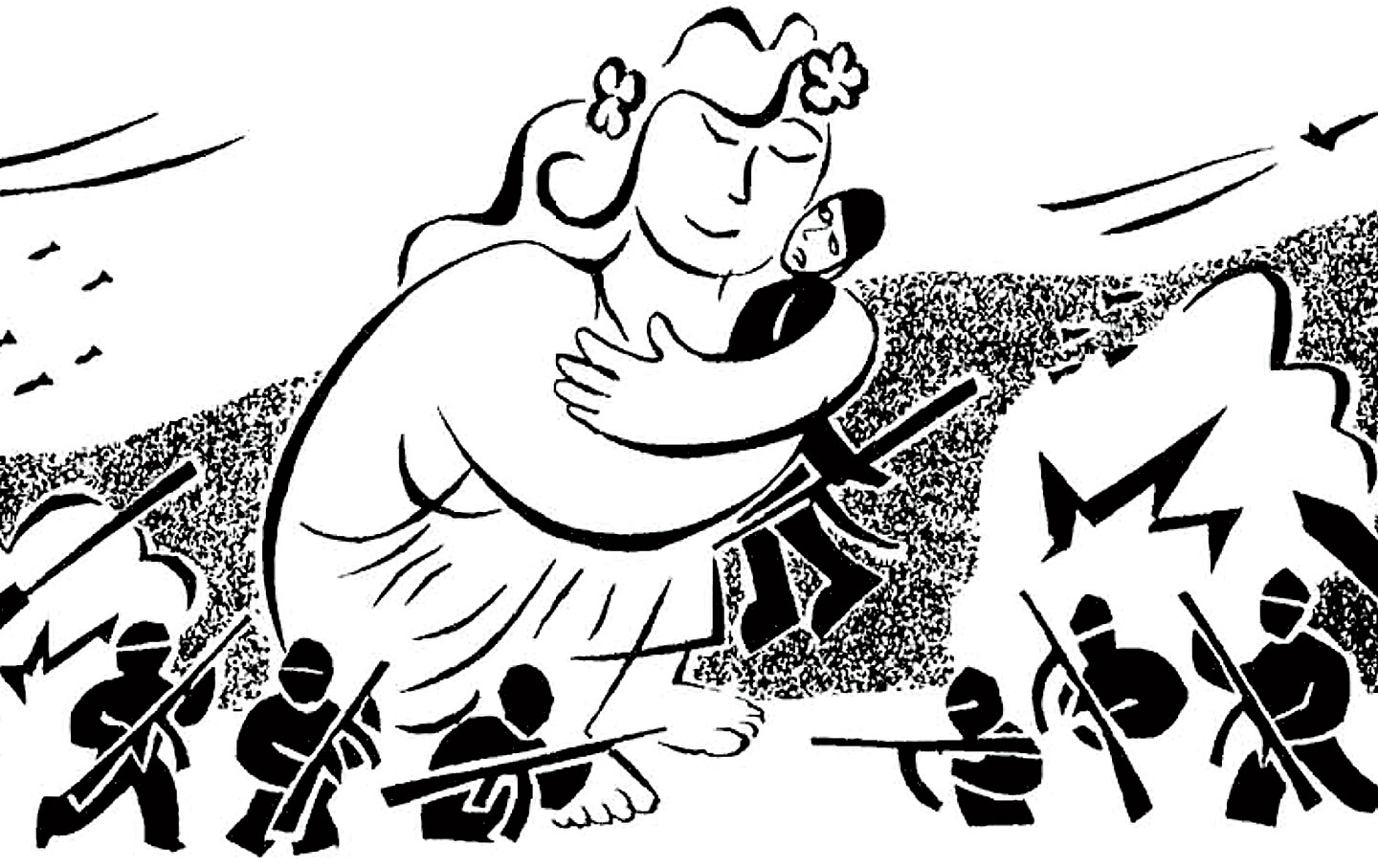
Are Women Morally Superior to Men? Are Women Morally Superior to Men?
Woman as sharer and carer, woman as earth mother, woman as guardian of small rituals—these images are as old as time.
Mar 23, 2015 / Books & the Arts / Katha Pollitt
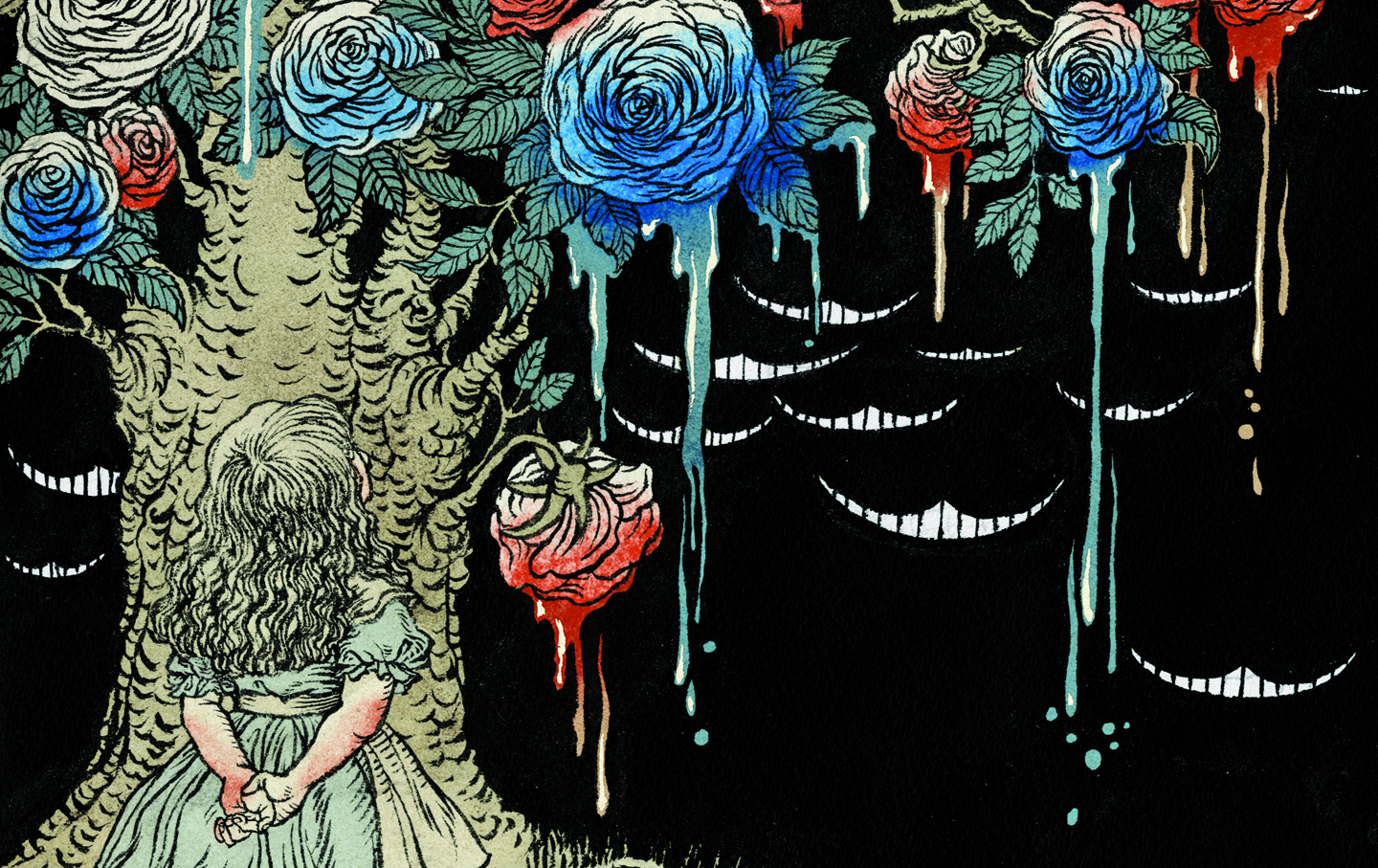
Separated at Birth Separated at Birth
The Nation and Alice in Wonderland were born within days of each other. In this seditious reading, they rejoin the dance.
Mar 23, 2015 / Books & the Arts / Ariel Dorfman

For the Jews—Life or Death? For the Jews—Life or Death?
An appeal for help from 1944.
Mar 23, 2015 / Feature / I.F. Stone
Tight Rope Tight Rope
July 13, 1963 We live in fragments like speech. Like the fits of wind, shivering against the window. Pieces of meaning, pierced and strung together. The bright bead of the poem, the bright bead of your woman’s laughter. This article is part of The Nation’s 150th Anniversary Special Issue. Download a free PDF of the issue, with articles by James Baldwin, Barbara Ehrenreich, Toni Morrison, Howard Zinn and many more, here. The Nation was one of the first major publications to print LeRoi Jones’s work, including his 1964 essay on the fight between Cassius Clay and Sonny Liston. Jones (1934–2014) later changed his name to Amiri Baraka.
Mar 23, 2015 / Books & the Arts / LeRoi Jones

Testimonials to ‘The Nation’ Testimonials to ‘The Nation’
Encomiums from Elizabeth Warren, Rev. Jesse Jackson, Bernie Sanders and many more.
Mar 23, 2015 / Feature
Home Song Home Song
March 24, 1926 Oh breezes blowing on the red hill-top By tall fox-tails, Where through dry twigs and leaves and grasses hop The dull-brown quails! Is there no magic floating in the air To bring to me A breath of you, when I am homesick here Across the sea? Oh black boys holding on the cricket ground A penny race! What other black boy frisking round and round, Plays in my place? When picnic days come with their yearly thrills In warm December, The boy in me romps with you in the hills— Remember! Paris, 1925 This article is part of The Nation’s 150th Anniversary Special Issue. Download a free PDF of the issue, with articles by James Baldwin, Barbara Ehrenreich, Toni Morrison, Howard Zinn and many more, here. Claude McKay (1889–1948), author of the novels Home to Harlem (1928) and Banjo (1929), only published this one poem in The Nation, but he also wrote three essays in the mid-1930s on race relations in New York City—including a firsthand report on the 1935 Harlem riot—and one travel dispatch from North Africa.
Mar 23, 2015 / Books & the Arts / Claude McKay

Can Men and Women Be Friends? Can Men and Women Be Friends?
Feminism has opened up far more space than could have been imagined in the 1920s.
Mar 23, 2015 / Feature / Floyd Dell and Michelle Goldberg

Adolph Reed Destroys ‘The Bell Curve’ Adolph Reed Destroys ‘The Bell Curve’
Despite their concern to insulate themselves from the appearance of racism, Herrnstein and Murray display a perspective worthy of an Alabama filling station.
Mar 23, 2015 / Books & the Arts / Adolph Reed Jr.
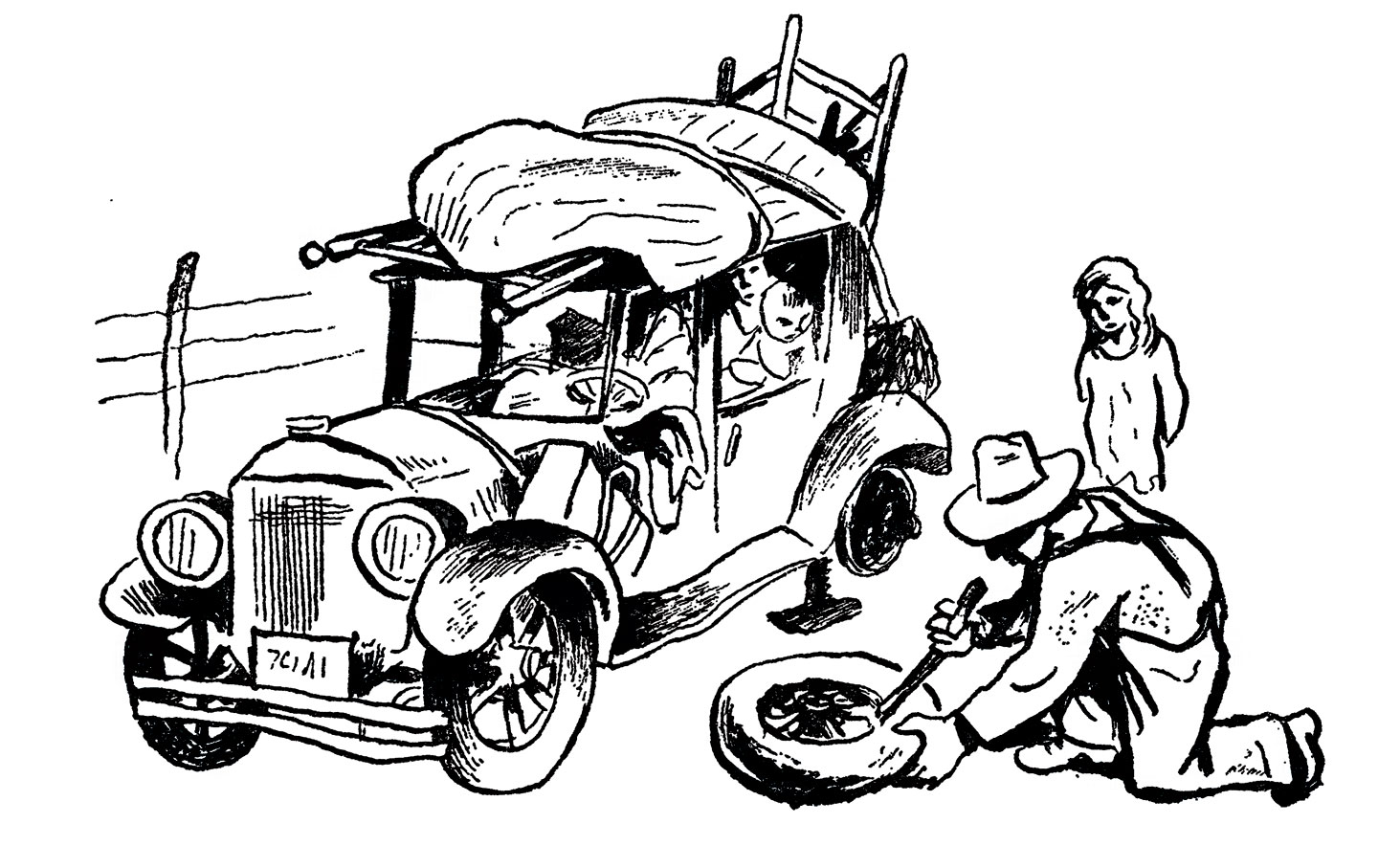
John Steinbeck on the Violent Repression of the Fight for Migrant Workers’ Rights John Steinbeck on the Violent Repression of the Fight for Migrant Workers’ Rights
We now know that workers are being attacked not because they want higher wages, not because they are Communists, but simply because they want to organize.
Mar 23, 2015 / Feature / John Steinbeck