
Inside Ukraine’s Underground Maternity Wards
Four years after Russia launched its full-scale invasion, Ukrainian health workers are shoring up maternity care to protect the most vulnerable—and preserve Ukrainian identity.
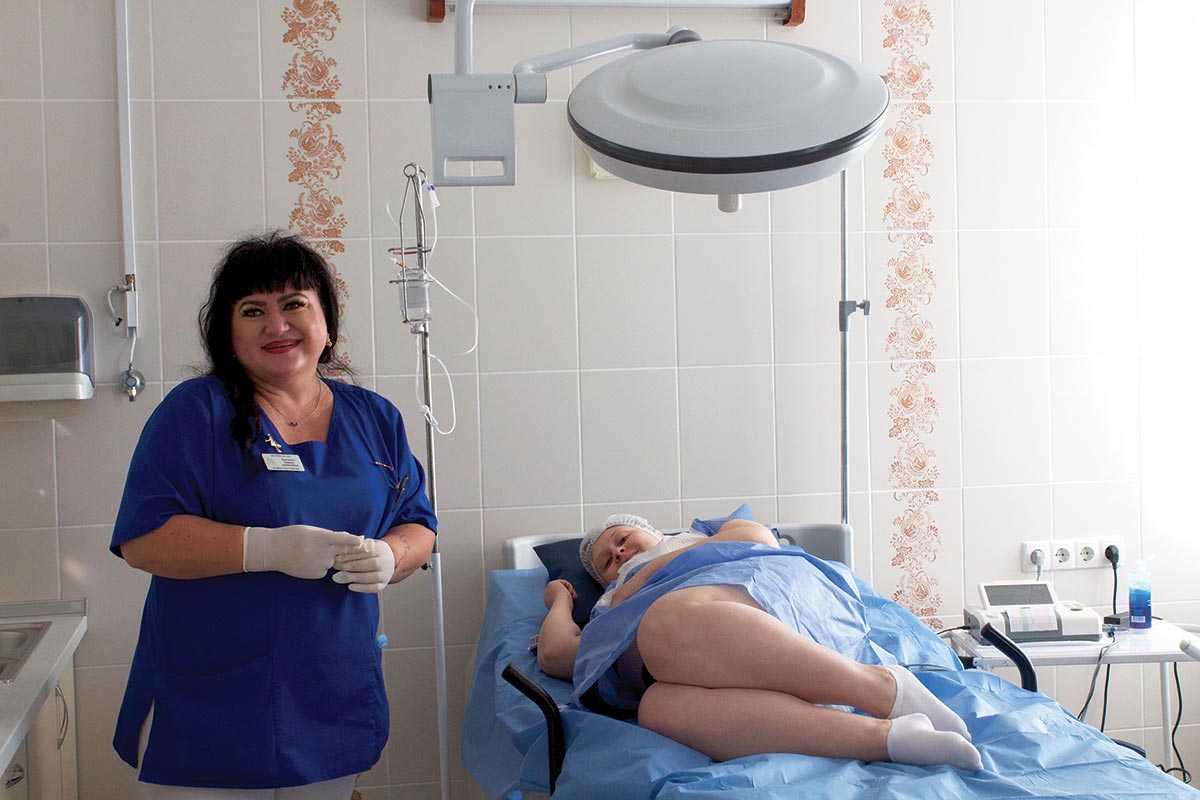
Curled up on her side, Anastasiia smiles at her midwife, Karina, as she rests between contractions. Her labor had begun slowly the night before, but now 24-year-old Nastia has traded her clothes for a blue paper gown and settled into the room where she will deliver her child, a boy she plans to name Robert. Listening to the thrum of her son’s heartbeat on the fetal monitor, Nastia chats with Karina as her husband, Edward, changes into a pair of scrubs.
“Frankly, I adore this woman,” Nastia says, gesturing to her midwife. “So I can relax and feel all right with these people.”
Even the night before, in the midst of her first contractions, when explosions echoed across the Ukrainian city of Kharkiv, Nastia says she felt safe: “Birth, it’s the most scary thing. People get used to the war.”
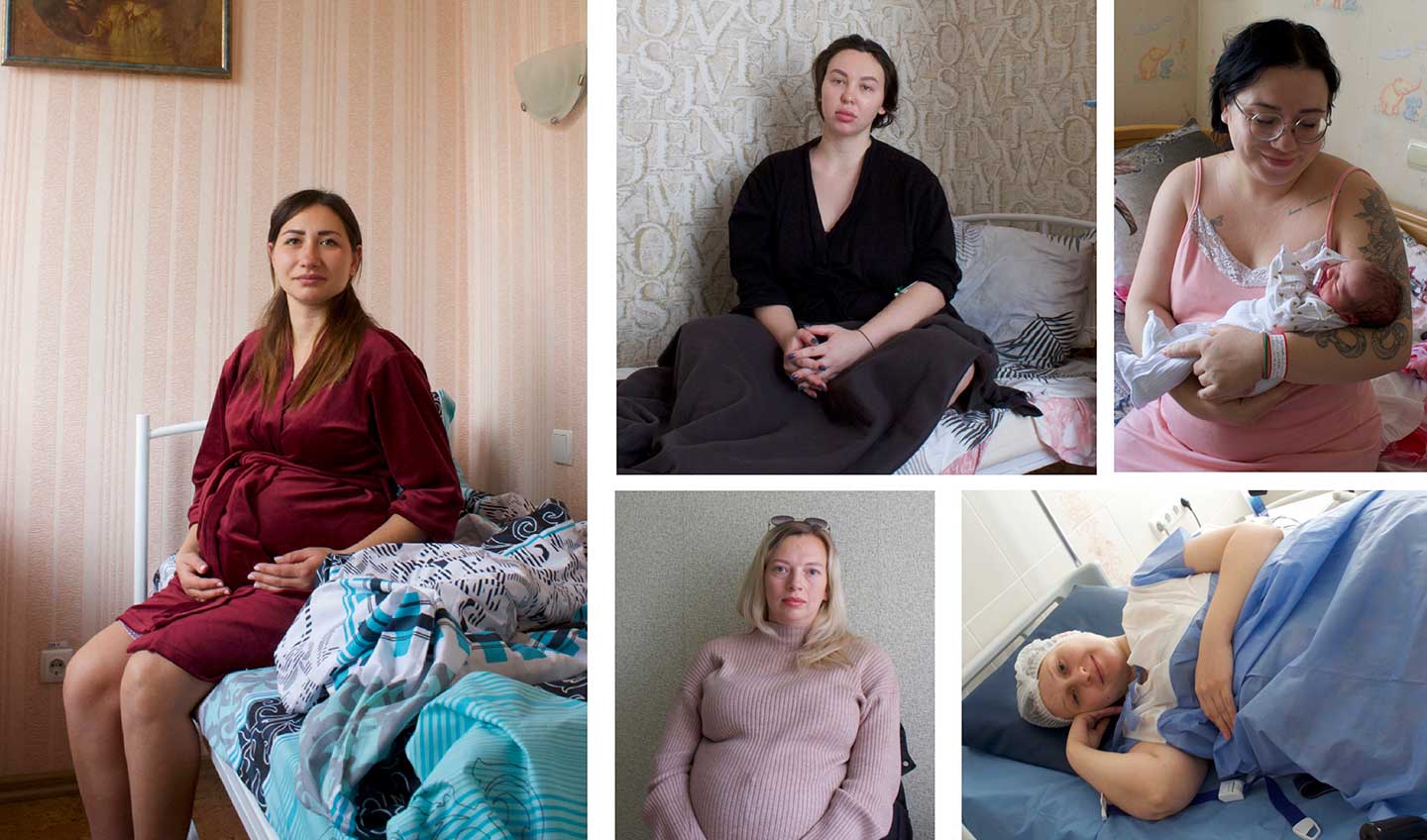
While Nastia labors, doctors and nurses tend to two dozen patients at the maternity ward of Kharkiv Hospital No. 25, less than 20 miles from the Russian border. Down the hall, 39-year-old Iryna consults with her doctor about methods to prevent a preterm birth due to her cervix shortening at 30 weeks’ gestation. “We turn on calm music very loudly” at night to drown out the sounds of war, says Iryna, who lives with her husband and their three children. Elsewhere, new mom and soldier Olena cradles her daughter Sofiia after an emergency cesarean—performed after Olena developed preeclampsia. Her doctor notes that they’ll keep her in the ward for another three days, to give her incision time to heal before sending her home. Mothers in her condition receive home visits from UNICEF-supported nurses around the country.
In another part of the ward, 22-year-old Anna waits for an ultrasound to monitor the amount of amniotic fluid in her uterus—currently less than her doctors would like. “I would like to give birth, of course, in an underground maternity hospital,” she says. That is, a maternity ward in a bomb shelter.
Her desire is understandable: Just a few months earlier, in July 2025, Russian forces struck a nearby maternity hospital in Kharkiv. And as Anna speaks, in October 2025, news appears on social media that a Russian drone has demolished a kindergarten in the area. That afternoon, at the site of the former nursery, now a mess of glass and metal, a firefighter describes pulling children from the bomb shelter where they had taken cover. All 48 survived the strike.
When Iryna Borzenko, an obstetrician-gynecologist, arrived at Hospital No. 25 in April, after it had merged with the nearby regional hospital where she’d been working for years, building an underground maternity ward quickly became one of her first priorities, she says. During air raids, Borzenko, now chief of the hospital’s neonatal-care unit, would help patients into the hallway—which is safer than the rooms, where shattering windows can cause shrapnel injuries—or down to the building’s bomb shelter if they could walk. But there is no way to move a woman in active labor, to pause a cesarean section, or to relocate a newborn on a ventilator. “Most women asked us about [an underground bomb] shelter and ‘Can we give birth in shelter?’” she says.
In October, Borzenko began to see that vision realized, when contractors started to transform an existing 800-square-meter concrete bomb shelter into a fully functional maternity unit, which they expect to complete by the spring of 2026, with the support of the government of Ireland and the United Nations Population Fund (UNFPA), the UN’s sexual-and-reproductive-health agency. UNFPA had already contributed to two similar renovations in the border cities of Kherson and Sumy, reflecting a rising trend of underground care in modern warfare.
Even after Russia and Ukraine began negotiating a peace agreement, maternal-healthcare providers and reproductive-rights groups continued advocating to shore up access to care for the predominantly working-class families, mostly unenlisted women, who remain along the front lines. Amid a colonial war being waged over natural resources, land, and heritage, Ukraine’s efforts to fortify its maternity hospitals have become a way to protect the most vulnerable—and preserve Ukrainian identity. “We all hope for the best, but what should we do?” Borzenko says, acknowledging that women deserve a safe place to give birth, war or no war. She spoke from the construction zone, wearing a neon safety vest over her scrubs, as she gestured toward the former storage space that will soon become patient rooms, a wearable blood-pressure monitor that her children gave her fastened to her wrist. With the new shelter, “it will be possible for every woman” who arrives at the hospital and wants to give birth underground “to do it here.”

When Russia escalated its invasion of Ukraine four years ago, some of the first images to emerge from the conflict were of devastated maternity wards. On March 2, 2022, a mother gave birth in an underground bomb shelter in Zhytomyr right after a Russian missile hit the facility. Days later, photographs of an ashen pregnant woman being evacuated on a stretcher began circulating after the maternity hospital in Mariupol was bombed. The woman and her child later died.
Although those images have faded from public view, particularly as peace negotiations ramped up, Russia’s attacks continue. Even after a peace deal is reached, Ukrainians will be recovering from the effects of the war for some time—and they’re hesitant to believe that Russia will abide by any ceasefire. The World Bank estimates that the cost of reconstruction will be at least $524 billion, with at least $19.4 billion needed to rebuild Ukraine’s healthcare sector, which has been the subject of more than 2,700 air strikes. More than 80 of those attacks targeted maternity hospitals and neonatal facilities, according to UNFPA, including strikes that occurred during peace negotiations.
Ukraine is also suffering a demographic crisis the likes of which it has never seen before, as a falling birth rate coincides with a high rate of battlefield deaths and an exodus of refugees fleeing the country. In 2024, the most recent year for which data is available, Ukraine recorded the lowest birth rate—and the highest mortality rate—of any country in the world. According to UNFPA, Ukraine’s maternal-mortality rate increased 37 percent between 2023 and 2024. Pregnancy-related diseases have increased as well: From 2023 to 2024, the rate of hypertensive disorders, such as preeclampsia, rose 12 percent, and uterine ruptures went up by 44 percent. In 2023, the Ukrainian government recorded a nationwide preterm-birth rate of 6 percent, but frontline cities reported higher rates, such as 11.8 percent in Kherson. In part as a result of those figures, the national cesarean-section rate is now 28.7 percent—which is far above the World Health Organization’s recommended limit of 10 to 15 percent and is even higher in frontline cities like Kherson, where it’s 46 percent, and Kharkiv, where it’s around 34 percent.
Borzenko cites stress as the leading culprit behind the higher rates of pregnancy complications. Jacqueline Mahon, the UNFPA representative to Ukraine, also notes the consequences of the war on women. “Women are under tremendous stress,” she says, “not just for themselves” but for their pregnancies, their families, their elderly parents, their partners fighting on the front lines, “and then they’re also thinking about, ‘Where am I going to deliver my baby?’”
Studies examining pregnancy during wartime show that exposure to prenatal stress raises cortisol levels, which increases the likelihood of complications like gestational diabetes, hypertension, preeclampsia, miscarriage, premature labor, and low birth weight. In Kharkiv, Borzenko says, a majority of the patients who utilize Ukraine’s universal-healthcare system to see her are “people who have now lost their homes and the opportunity to earn money,” internally displaced people who cannot escape that stress. “That is,” she adds, “the most vulnerable segment of the population.”
Yet global funding for reproductive-healthcare programs, including those that support maternity hospitals in Ukraine, is in free fall. Since Donald Trump began his second term as president, the United States—once the largest provider of global aid—has announced its withdrawal from the World Health Organization; ordered the incineration of a $10 million stockpile of contraceptives destined for low-income countries; and revoked $377 million in funding for UNFPA, $15 million of which was destined for Ukraine.
As Ukraine takes in the effects of any proposed peace deal and what it might mean for reconstruction, the United States’ support will be sorely missed in the efforts to train more midwives, create safe spaces for women to report gender-based violence, and build secure facilities for them to give birth. Construction on facilities like the underground maternity ward in Kharkiv represents a critical step toward protecting women and young families in a war zone.
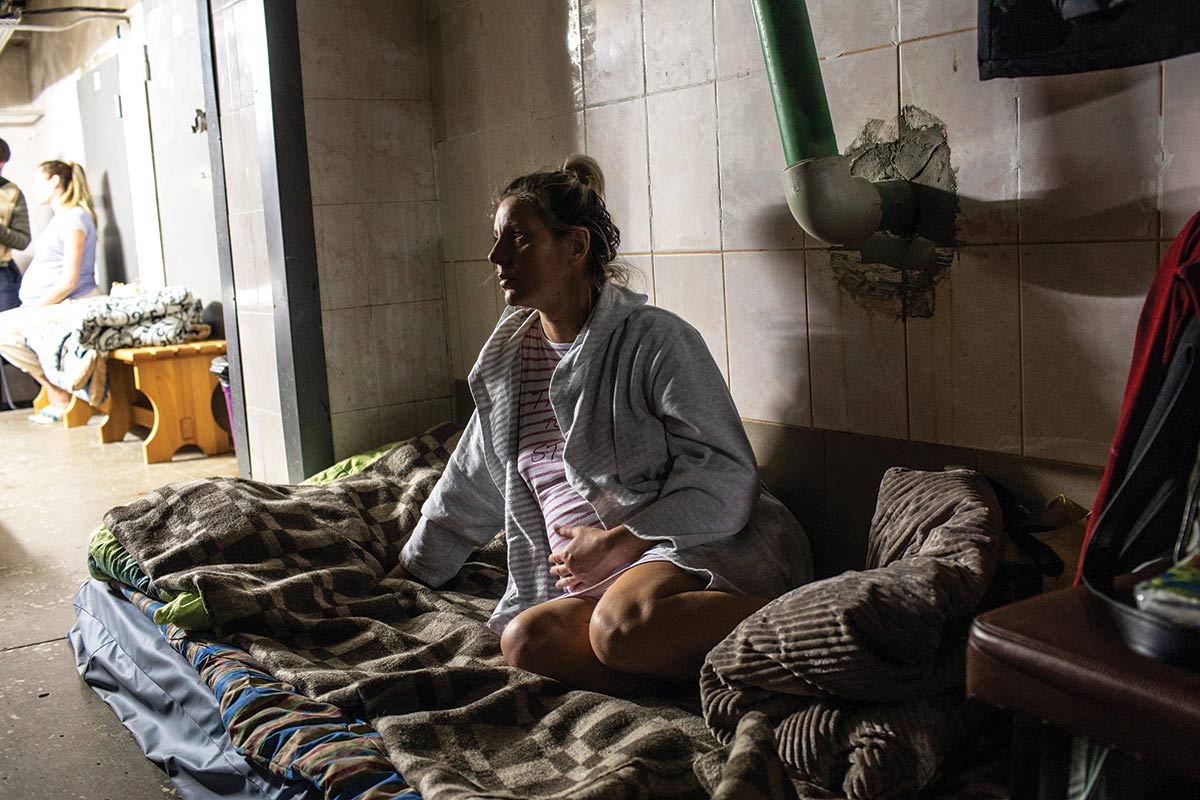
One hundred miles north of Kharkiv, still just 20 miles from the ever-shifting front line, another woman named Anastasiia waits to give birth.
Lying on a twin-size bed in a room with eight other expectant mothers, 25-year-old Anastasiia cradles her belly as she talks about her decision to wait at the Sumy City Perinatal Hospital’s underground maternity ward—a 20-bed facility that the hospital began building in 2023 and that the UN helped equip with medications and other supplies—until she gives birth.
She made it to the 39th week of her pregnancy at home in Okhtyrka, a town 50 miles away marked by the bombed-out skeletons of buildings. Russian forces had pummeled the city, previously home to an oil depot and a military base, with cluster munitions, rockets, and a vacuum bomb in early 2022. In the first month of the 2022 invasion, half of the community’s residents fled. Anastasiia, studying at a university in nearby Poltava, returned to be with her parents, and her father joined the military. After learning of the hospital’s underground maternity ward, Anastasiia decided to return to wait out the rest of her pregnancy in the safety of the shelter. “We have missiles and drones flying in all the time, so you get used to it,” she says, but she admits her fears were worse during this pregnancy. “The first thing you worry about is the child, and it’s very scary.”
Adding to her fears, shortly after Anastasiia arrived at the facility, a maternity hospital on the other side of town was bombed while 160 people were sheltering in its basement.
Anastasiia is far from the only woman in the Sumy region who was concerned enough to seek shelter at the underground maternity ward. Here, the women rest in two rooms, filled with rows of up to 20 standard hospital beds, venturing across the hall to an examination room for ultrasounds and other appointments. The bunkerized maternity unit is brightly lit; the only sign that it was once used for storage and maintenance is the overhead pipes that run through the hallway. With no windows to peer out of, and insulated from the aboveground noise, the women chat with one another about their coming children.
“It’s a very nice and cozy atmosphere here, because all around there are other pregnant women and they have similar questions regarding pregnancy and motherhood,” Anastasiia says.
Not every woman living along the front lines can make it to such a facility for regular appointments, however. So Ukrainian midwives, ob-gyns, and paramedics also go to them.
In the early days of the full-scale invasion, when some of the 265,000 women who were pregnant at the time began wondering what they would do if they weren’t able to make it to a hospital to give birth, Ukrainian foundations like Safe Birth UA began producing instructional videos and brochures about how to have a safe birth outside of a medical facility, and midwives prepared to attend home births in their communities. But data from Ukraine’s Health Ministry shows that very few were actually unable to make it to a hospital, even in frontline areas. In 2024, only 174 live births occurred outside a health center, about 0.10 percent of that year’s 178,091 total. That number is similar to rates from other years since before the war escalated in 2022—about 0.12 percent in 2023 and 0.16 percent the year before.
From her base in Sumy, 60-year-old midwife Halyna Ivakhno and her team drive a UNFPA-equipped mobile maternity unit to the smaller communities that fill the countryside. The ambulance-like vehicle is equipped with a gynecological chair, ultrasound, colposcope, medications—and Halyna’s flak jacket and Kevlar helmet, which she wears only along roads where one can expect to encounter drones. When she arrives in the neighboring towns, she is sure to share information about gender-based violence between blood glucose tests and pelvic exams. Midwives like Halyna have become increasingly critical in communities where workforce shortages, intensified by the war and the relocation of doctors, have made physicians scarce. They typically work in hospitals alongside ob-gyns, although a newly formed Ukrainian Association of Midwives is advocating to expand their ability to practice independently. Even with a peace deal on the table, doctors may be slow to return to the frontline regions, where unexploded landmines are omnipresent and locals fear the next Russian strike.
Back in Kharkiv, Vitalii Kucher, an ob-gyn, joins a team on board a similar mobile maternity unit. When he began traveling out of the city with such teams in January 2023, their first goal was to reach communities in formerly occupied areas, where residents had gone without healthcare for months. “There were a lot of people we did not expect, which once again proves that the need for our trips is very great,” he says, describing his surprise at finding women and children still living in cities that had been overtaken by Russian forces. Data from occupied and de-occupied territories is difficult to come by, but at the height of the invasion in early 2022, Russia occupied more than a quarter of all Ukrainian land.
During that period, medics in Kharkiv continued to respond to calls for help from deeper along the front line, including from a maternity hospital in Sloviansk, in Ukraine’s battle-weary Donetsk region. In early 2025, Maryna Tashian, a paramedic with the Kharkiv Emergency and Catastrophe Department, responded to a call to retrieve a one-pound, 10-ounce preterm baby from that frontline hospital. Despite the threat of first-person-view drones (which are equipped with onboard cameras that allow the operator to immediately bomb or fly into their target), she and her colleagues made such trips two to four times a month, using the ambulance’s ventilator and incubator to keep newborns alive.
She says they put all thoughts of the drones aside: “We [didn’t] think about it—this is our work. The main thing for us is the child.”
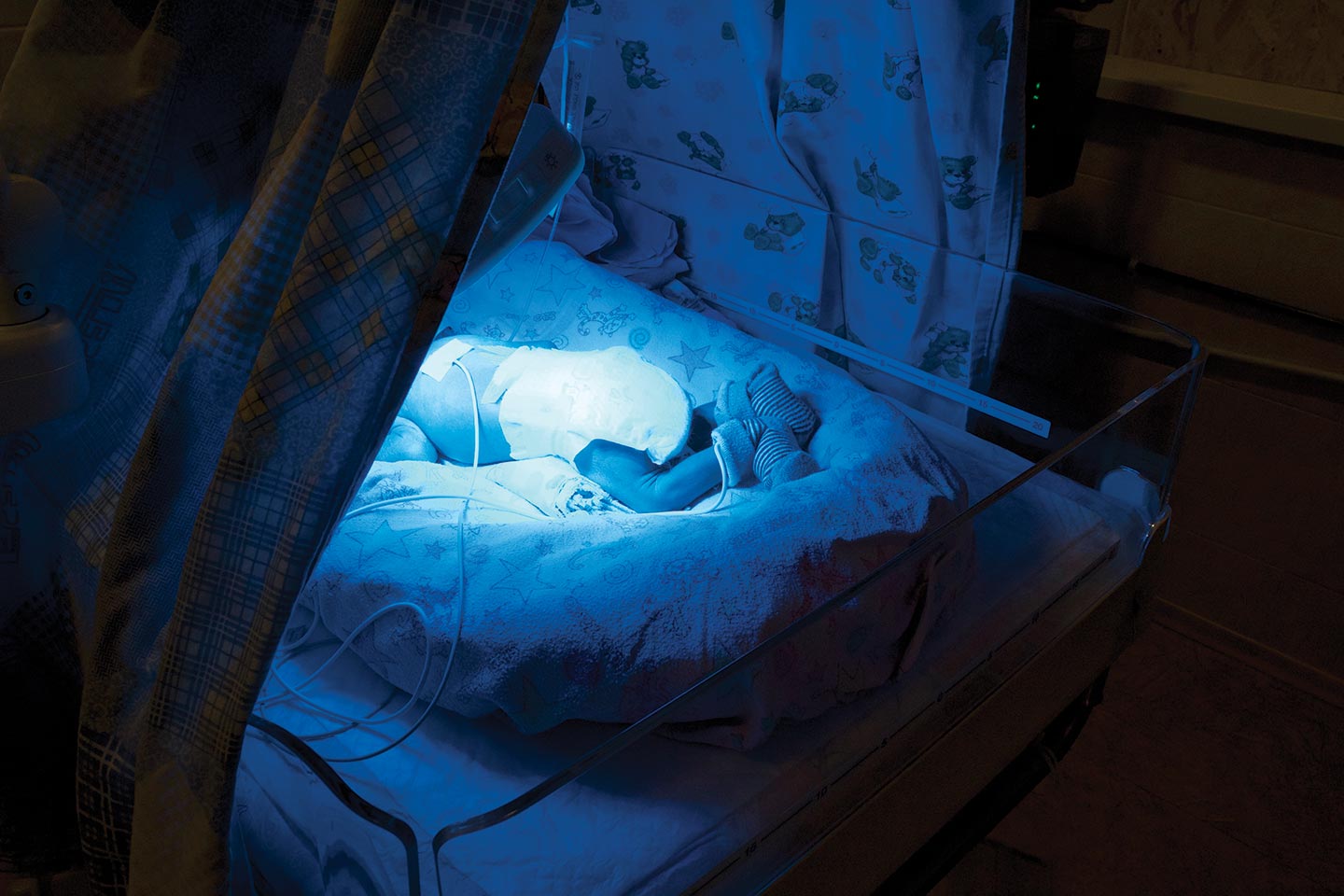
Two floors above the sumy maternity ward’s underground shelter, new mom Viktoriia stands vigil beside a bassinet holding her 3-day-old daughter, Solomiia. As the other mothers visiting their newborns in the room whisper to their children, 27-year-old Viktoriia gently rubs Solomiia’s arm.
“She’s moving,” Viktoriia says with pride. She and her husband have been talking to Solomiia, stroking her back and giving her gentle massages while she receives treatment in the neonatal intensive-care unit. Such facilities are integrated into maternal and regional hospitals around the country, including here and at a regional hospital in Kharkiv.
Born at 33 weeks’ gestation, Solomiia weighed a mere three pounds, eight ounces, at birth and required treatment for pneumonia and jaundice. Although she’s the only newborn in the ward lying under a blue light, to help clear the jaundice-causing bilirubin from her system, Solomiia is not the only baby fighting off pneumonia and struggling to gain weight. The oldest child in the ward—in this case referring to gestation rather than date of birth—was delivered at 35 weeks of pregnancy. All of the four babies in the six-bed unit had underdeveloped lungs at birth or are clearing a case of pneumonia.
Before 2022, Ukraine’s Health Ministry ran a program that treated neonatal respiratory-distress syndrome, says ob-gyn Olha Butenko, the medical head of the Sumy City Perinatal Center. After Russia began its 2022 invasion and Ukraine directed much of its government resources to the war effort, the program closed—and UNFPA and other humanitarian agencies stepped up to supply frontline hospitals with the expensive medication that Butenko says the majority of babies born here now need. It’s difficult to predict whether Ukraine will be in a financial position to resume the program once a peace deal is reached.
When the air-alert siren sounds, signaling an incoming drone or ballistic missile, Viktoriia and the other mothers visiting their newborns step into the hallway. All Ukrainians are familiar with the two-wall protocol: moving at least two walls away from the outside of a building, away from any windows, to avoid shattering glass. But they can’t move their babies, all of whom are hooked up to ventilators or other medical equipment.
“We had a lot of thoughts about it” at the start of the invasion, Butenko says, offering a stark reminder of why birthing in a bomb shelter still has limitations. Because the newborns required equipment that could not be moved underground—oxygen is highly hazardous to operate in a bunker—hospital staff decided to keep the newborns in the aboveground ward and to cover its windows with wood and coat any glass walls with a protective lining.
“It’s scary, of course, when you hear explosions, you hear things flying,” Viktoriia says. She says she’s grown used to it to some extent, but “when you have kids, it is scarier for both of you.”
The neonatal ICU is staffed by Sumy locals who could have fled the region in 2022 but decided to stay and provide care to their neighbors instead. Valeriia Yankovska, a 37-year-old neonatal intensive-care physician and mother of two, balances her fears for her own children with her concern for others if she were to leave. Serhii Chyrva, a 36-year-old ultrasound technician and father, left Sumy for seven days at the start of the full-scale invasion to deliver his family to the relative safety of western Ukraine before returning to the hospital where he has worked for a decade. Butenko herself is a mother caring for an elderly parent whose home was destroyed in a drone strike in October.
The medical staff at her hospital is mostly “educated, and this is their choice to stay here to provide their help,” Butenko says. But, she notes, skilled workers who have the opportunity to work in other parts of the region, “they are not here.”
Viktoriia is one of the many residents whose economic stability was upended by the war. Raised in the nearby village of Krasnopillya, six miles from the Russian border, Viktoriia quit her job when the shelling intensified in early 2025. “I moved in March, and during my pregnancy I was with my sister in the village,” she says, referring to Okhtyrka.
Like many other women who live along the front lines, she downplays the role that stress may have played in her preterm birth. Solomiia “probably wanted to be here earlier,” she quips.
“In 2025, people who are here, we just live here,” Butenko says. “We will hear the Shaheed [drones] and we’ll keep sleeping.” At the same time, she acknowledges that every neighborhood in Sumy has been shelled.
As peace negotiations remain ongoing, frontline providers like Borzenko say they have observed an increase in shelling and attacks on energy infrastructure, leading to frequent and prolonged outages that affect electricity, heat, and water supplies. This complicates the construction of the new underground maternity ward, not to mention that, Borzenko says, “the number of births is not decreasing, despite the threat.” Women seek to give birth in the safest possible conditions, and for some that means going underground.
Your support makes stories like this possible
From Minneapolis to Venezuela, from Gaza to Washington, DC, this is a time of staggering chaos, cruelty, and violence.
Unlike other publications that parrot the views of authoritarians, billionaires, and corporations, The Nation publishes stories that hold the powerful to account and center the communities too often denied a voice in the national media—stories like the one you’ve just read.
Each day, our journalism cuts through lies and distortions, contextualizes the developments reshaping politics around the globe, and advances progressive ideas that oxygenate our movements and instigate change in the halls of power.
This independent journalism is only possible with the support of our readers. If you want to see more urgent coverage like this, please donate to The Nation today.
More from The Nation
Gaza Is Still Here Gaza Is Still Here
Despite a “ceasefire,” Israel’s killing has not ended. Neither has the determination of the Palestinian people to survive.

The Ghosts of Colonialism Haunt Our Batteries The Ghosts of Colonialism Haunt Our Batteries
With its cobalt and lithium mines, Congo is powering a new energy revolution. It contains both the worst horrors of modern metal extraction—and the seeds of a more moral economics...
How Heidi Reichinnek Saved Germany’s Left How Heidi Reichinnek Saved Germany’s Left
The co-leader of Die Linke helped rescue the party and make it into a political force. But can she beat back Germany’s ascendant far right?

“We Are All Passengers on the Titanic” “We Are All Passengers on the Titanic”
An interview with Grigory Yavlinsky.

Speaking Out on the Insanity of Nuclear Weapons Speaking Out on the Insanity of Nuclear Weapons
At a time when nuclear dangers are not just rising, but multiplying, we need all hands on deck in sounding the alarm and advocating for abolition of nuclear weapons.
The End of Arms Control? The End of Arms Control?
For the first time, we will live in a world without constraints on the US-Russian nuclear arsenal.

