
No, Donald: The US Owes Ukraine
Not the other way around.
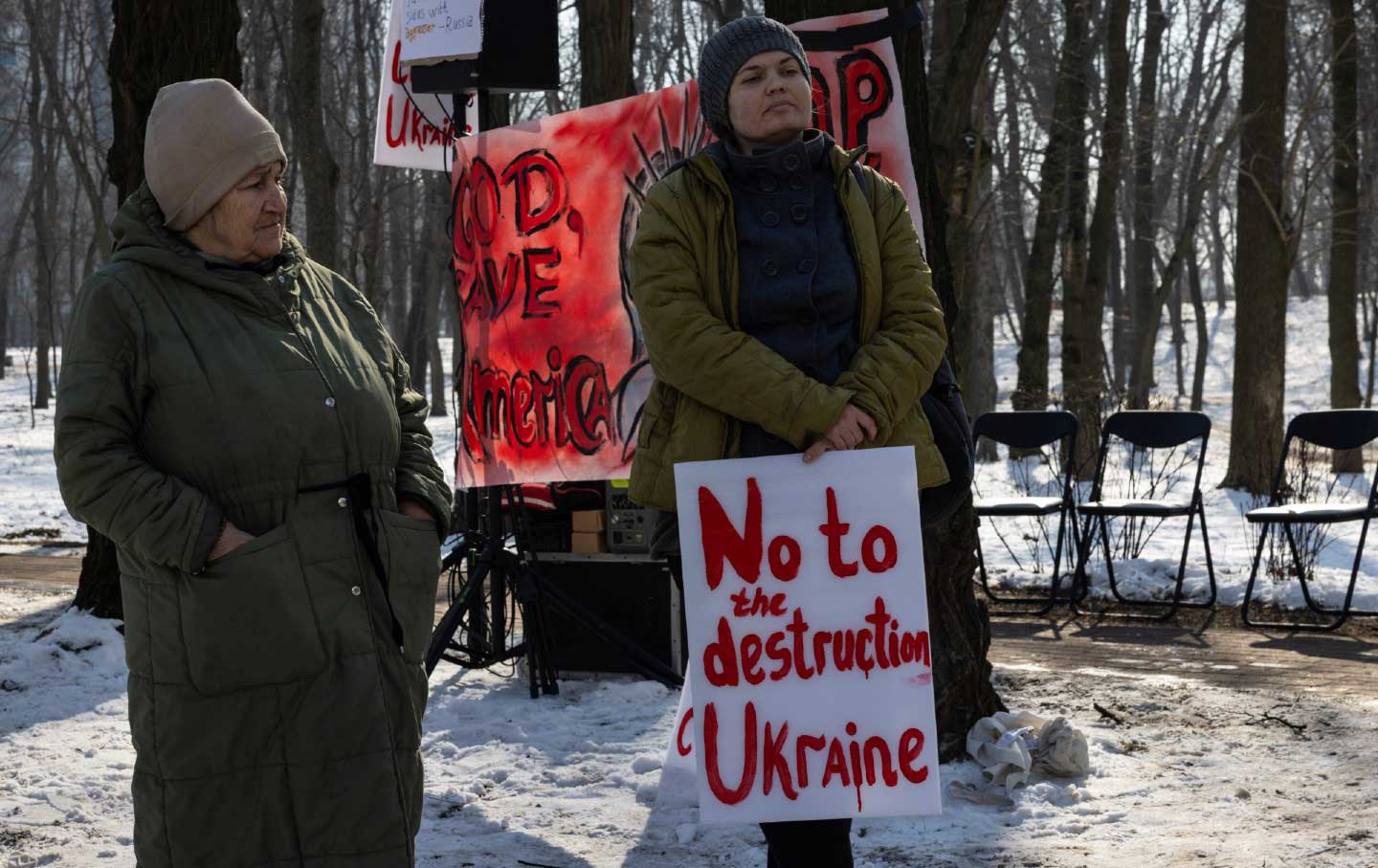
Besides calling its president a “dictator,” and claiming that it was Ukraine rather than Russia that caused the invasion, Trump is demanding that Ukraine pay for past aid with its precious minerals, as if the war-torn country were indebted to the US. Instead, the debt goes the other way, and it is time to reckon with how US foreign policies—hubristic policies, across both Democratic and Republican administrations—are directly culpable in the dire circumstances that Ukraine now finds itself in.
Make no mistake: Putin is a war criminal with blood on his hands, and Russia’s invasion of Ukraine, first in 2014 and then in 2022, was a “war of choice.” But US policy in crucial periods helped pave the road that led to this horrid war.
The first period was the 1990s, the halcyon days of American post–Cold War triumphalism and “the end of history,” when the Clinton administration sent US advisers to Russia to carry out a “transition to the market.” Instead, it amounted to a shock treatment on Russian society, leading to mass impoverishment, a sudden drop in life expectancies, rampant criminality, and the rise of a handful of “oligarchs” (we can thank the Russian 1990s for resurrecting that moniker). Wayne Merry, a US Embassy official in Moscow, argued in a “dissent cable” sent to his superiors in Washington that the painful reforms were leading to growing “frustration tinged with animosity” toward the West, and should the US policy continue, it would “encourage a renewal of Russia’s adversarial stance toward the outside world.” Yet continue the policy did.
It was out of this mire that Putin emerged. He was propelled to power by oligarchs like Boris Berezovsky, and his first act in power was to grant immunity to Yeltsin and his family from prosecution for charges of investigations. But while he waged a brutal war on the breakaway region of Chechnya, Putin did not initially view “the West” as his enemy; that developed incrementally over time. First, there was anger over the NATO bombing of Belgrade in 1999 without UN Security Council approval; in 2002, the George W. Bush administration renounced the ABM treaty, which Russia considered the cornerstone of strategic stability. Russia vehemently opposed the US invasion of Iraq as a blatant violation of international law, as well as support for “regime change” in Libya, Syria, and elsewhere during the Arab Spring.
Most troubling for the Kremlin was the expansion of NATO, the world’s most powerful military alliance, to Russia’s borders. Back in 1998, even before Putin was on the scene, none other than George Kennan—the father of Cold War containment—predicted that expanding NATO would be “beginning of a new cold war,” presciently adding, “Of course there is going to be a bad reaction from Russia, and then [the supporters of NATO expansion] will say that we always told you that is how the Russians are—but this is just wrong.”
Far from heeding that warning, in 2008, in the wake of “color revolutions” leading to pro-Western governments in Georgia and Ukraine, the Bush administration successfully pushed, over the objections of France and Germany, for a declaration that both countries would eventually become members of NATO. This came despite the cable to Washington earlier that year from Bill Burns, then the US ambassador to Russia, warning that “Ukrainian entry into NATO is the brightest of all redlines for the Russian elite (not just Putin).” That left Ukraine stranded in an untenable position—to someday join a military alliance that Russia clearly found threatening, but without the protection that the alliance would provide.
Let’s be clear: None of this exculpates Putin for his decision—and his alone—to invade Ukraine. Despite Trump’s delusion in blaming Ukraine for the war, the push for Ukraine to join NATO did not come from Ukrainians themselves—most Ukrainians overwhelmingly opposed NATO membership before 2014. Indeed, it was Putin himself, through his decision to seize Crimea and foment an armed uprising in Ukraine’s Donbas in 2014, and then with the full-scale invasion in February 2022, that swung Ukrainian opinion to solidly support membership in NATO.
That takes us to the third period. When the 2022 invasion happened, despite widespread predictions that Kyiv would fall in days, the Ukrainian people fought back heroically. The US understandably supported Ukraine. But with what strategy, and to what end? The Biden’s administration’s repeated claim that it would support Ukraine “for as long as it takes” begged the question—as long as it takes for what? When negotiations in Istanbul appeared close to a settlement just months after the war began, several observers have since attested that the US and the UK “pulled the plug” on the negotiations, with some suggesting that the real goal was to weaken Russia, a point stated explicitly by US Defense Secretary Lloyd Austin shortly after.
Yet, as Marcus Stanley rightly points out, the war, now entering its fourth years, has been a bloody stalemate since 2022. After Ukraine’s offensive in September of that year ground to a halt, Gen. Mark Milley, then chairman of the Joint Chiefs of Staff, urged Ukraine to “try to cement their gains at the bargaining table.” Yet the Biden administration publicly rejected that advice, and the Ukrainian position has only worsened since.
In a rather laudatory account of Jake Sullivan’s reign as Biden’s national security adviser, Washington Post columnist David Ignatius explains that Sullivan’s war strategy was “to attrit an adversary at low cost to America, while Ukraine was paying the butcher’s bill.” It is worth pausing on that last phrase. According to an estimate from The Wall Street Journal from September 2024, by then the war had resulted in more than 1 million casualties, of which the Ukrainian share was no less than 80,000 dead and 400,000 wounded.
Popular
“swipe left below to view more authors”Swipe →Yet shortly after stepping down from his post, Sullivan boasted that “the core engines of American power are humming.” One must ask: Tell us, Mr. Sullivan, where exactly are those engines heading now?
Enter Donald Trump. The wily president senses correctly that Americans are tired of war and, feeling the strain of paying for groceries and basic healthcare, they would rather their tax dollars not be spent on dropping bombs on foreign lands. But while Ukraine may have been “paying the butcher’s bill” for US foreign policy aims, Trump is now demanding that Ukraine surrender a substantial portion of its mineral wealth as compensation for past US military aid. This is not simply realpolitik stripped of any veneer of liberal idealism; rather, as Paul Krugman rightly notes, this is King Leopold–style imperial extraction. But instead of the rubber needed in the 19th century, the mineral wealth from Ukraine is indispensable for the industries of Elon Musk and his fellow tech bros.
Meanwhile, despite Trump’s claim that Ukrainian president Zelensky was only good at “playing Joe Biden like a fiddle,” the Kremlin is dangling the promise of its own mineral wealth to bait Trump to drop sanctions in exchange for deal-making. This includes rare earth elements to be taken from land Russia seized from Ukraine. In the likely event that Trump can’t resist such a deal, he will be handing Putin a lifeline to save his faltering economy and prevent the unrest that could follow in its wake.
It is past time for this war to end. Yet, while promising to do so, Putin and Trump appear to be conspiring to cannibalize Ukraine—Putin through a land grab from the east, and Trump by extracting its mineral resources, the very means Ukraine will need to rebuild the shattered country. Ukraine deserves a much better future, one free from militarized foreign policies and 21st-century imperial conquest.
Support independent journalism that does not fall in line
Even before February 28, the reasons for Donald Trump’s imploding approval rating were abundantly clear: untrammeled corruption and personal enrichment to the tune of billions of dollars during an affordability crisis, a foreign policy guided only by his own derelict sense of morality, and the deployment of a murderous campaign of occupation, detention, and deportation on American streets.
Now an undeclared, unauthorized, unpopular, and unconstitutional war of aggression against Iran has spread like wildfire through the region and into Europe. A new “forever war”—with an ever-increasing likelihood of American troops on the ground—may very well be upon us.
As we’ve seen over and over, this administration uses lies, misdirection, and attempts to flood the zone to justify its abuses of power at home and abroad. Just as Trump, Marco Rubio, and Pete Hegseth offer erratic and contradictory rationales for the attacks on Iran, the administration is also spreading the lie that the upcoming midterm elections are under threat from noncitizens on voter rolls. When these lies go unchecked, they become the basis for further authoritarian encroachment and war.
In these dark times, independent journalism is uniquely able to uncover the falsehoods that threaten our republic—and civilians around the world—and shine a bright light on the truth.
The Nation’s experienced team of writers, editors, and fact-checkers understands the scale of what we’re up against and the urgency with which we have to act. That’s why we’re publishing critical reporting and analysis of the war on Iran, ICE violence at home, new forms of voter suppression emerging in the courts, and much more.
But this journalism is possible only with your support.
This March, The Nation needs to raise $50,000 to ensure that we have the resources for reporting and analysis that sets the record straight and empowers people of conscience to organize. Will you donate today?
More from The Nation
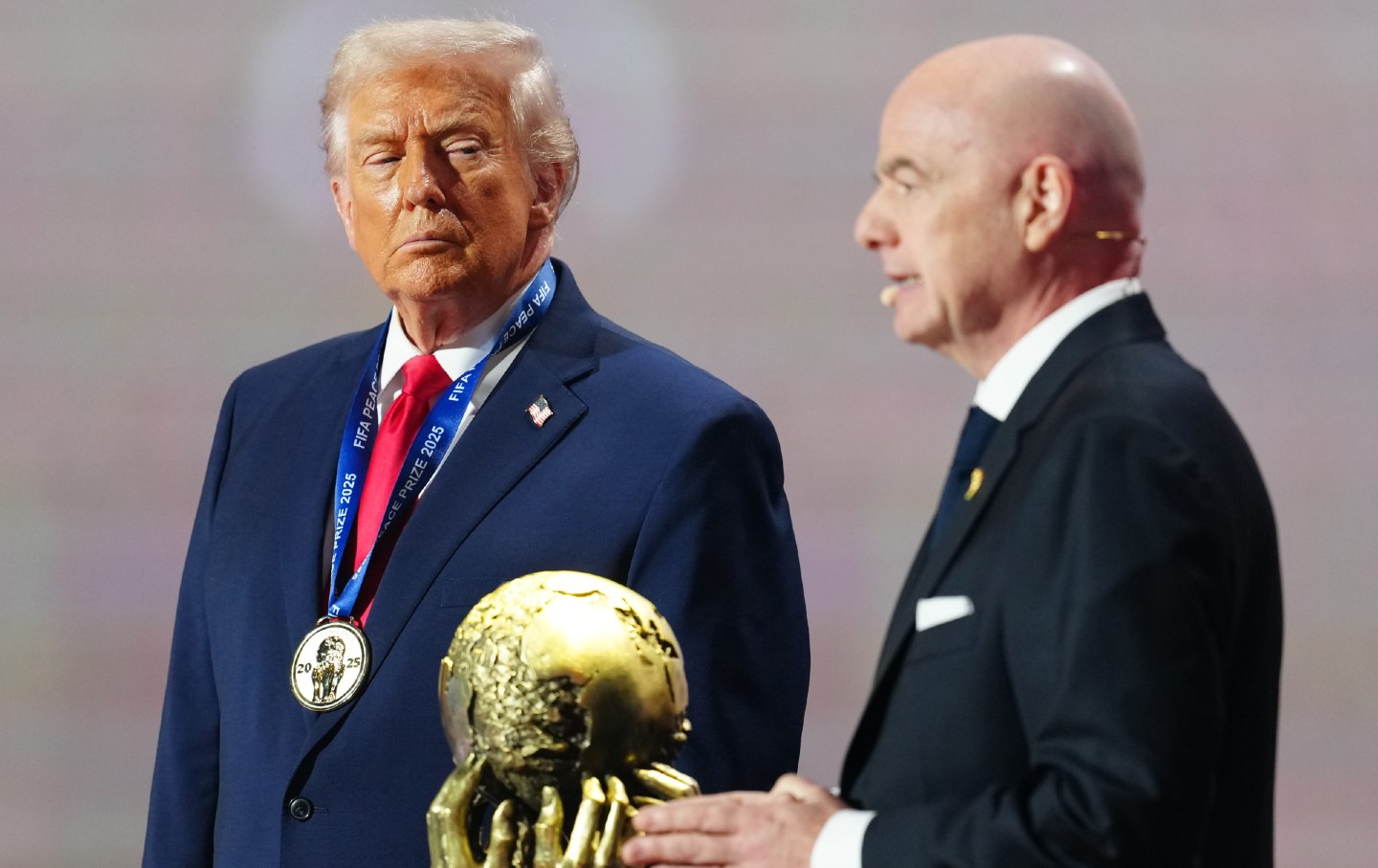
Trump and His Soulless Cronies Have Managed to Suck the Joy Out of the World Cup Trump and His Soulless Cronies Have Managed to Suck the Joy Out of the World Cup
Not even soccer is immune from Trump’s reverse Midas touch.
Garbage In, Carnage Out Garbage In, Carnage Out
The harrowing lessons of the Pentagon’s recently dissolved partnership with Anthropic.
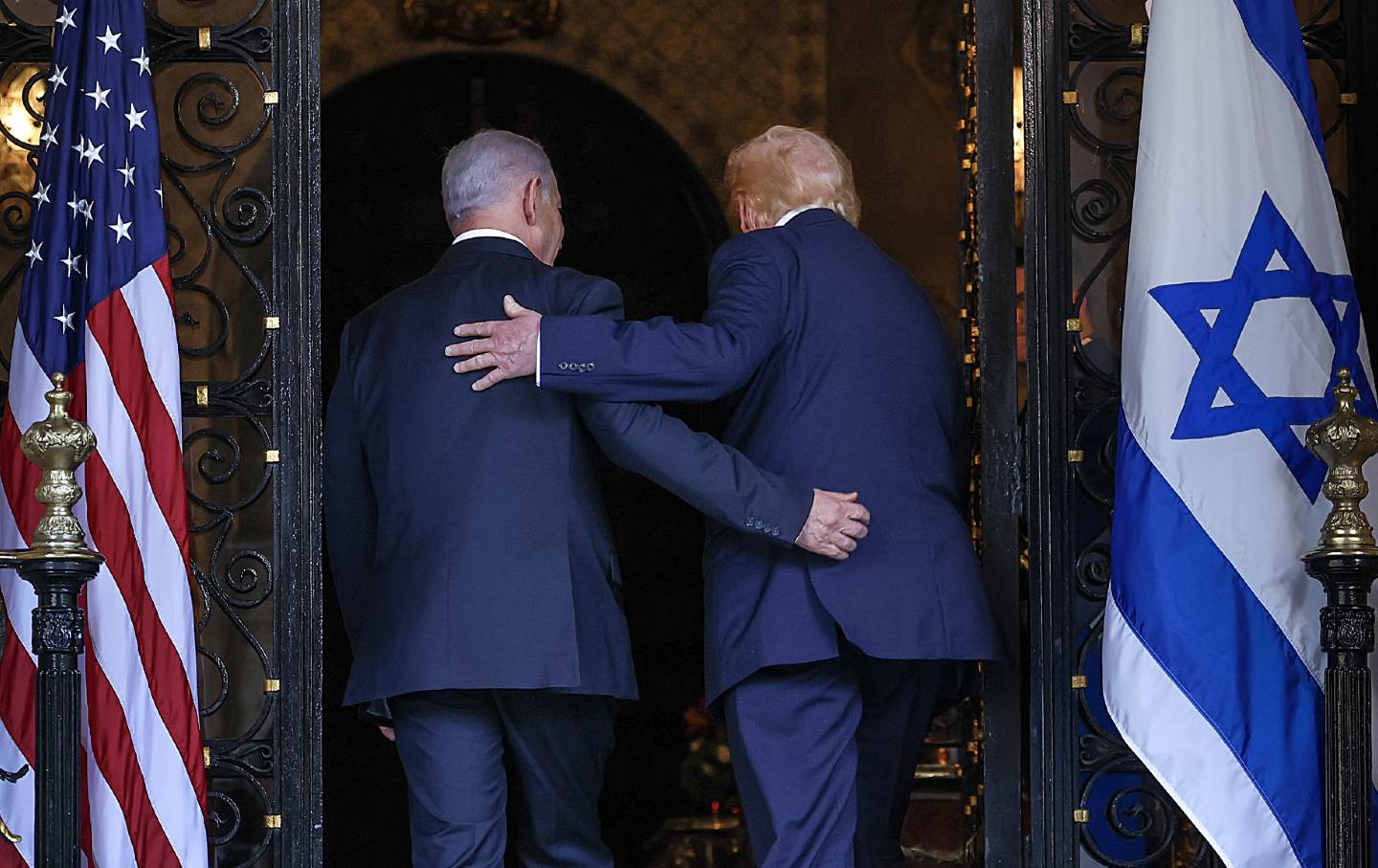
The Iran War Could Be Catastrophic for the US-Israel Alliance. Good. The Iran War Could Be Catastrophic for the US-Israel Alliance. Good.
As Israel’s role in pushing the war with Iran comes into ever sharper focus, it’s up to us to turn outrage into change.
An Unlawful War An Unlawful War
The precedent being set by the US in launching this war of aggression against Iran will long live in infamy.
Trump and Netanyahu Want to Turn Iran Into a Failed State Trump and Netanyahu Want to Turn Iran Into a Failed State
This war looks designed to cause maximum chaos and instability. The world will pay a high price.

The War on Terror Paved the Way for Trump’s Rise—Now He’s Making It His Own The War on Terror Paved the Way for Trump’s Rise—Now He’s Making It His Own
Only the total abolition of the DHS can restore freedom.

