
“We’re On Our Own”: Ukrainians Confront a New Reality
Even leftists who disagree with some of Zelensky’s policies are glad he didn’t back down to Trump.

A woman visits a memorial for fallen soldiers at at Kyiv’s Maidan, or Independence Square, on Saturday, March 1.
(Oleksandra Diachenko for The Nation)Kyiv—In a tucked-away corner of Kyiv’s arty Podil district on Sunday night, a small group of artists, musicians, and civic activists threw a party to mark the end of the world as they knew it.
Les Yakymchuk, a 32-year-old musician and founder of UA First Aid, an NGO that provides medical supplies to military units at the Ukrainian front, organized the event in the aftermath of what he described as the “shit show” press conference on Friday, in which US President Donald Trump and Vice President JD Vance berated Ukrainian President Volodymyr Zelensky. Zelensky, as the world witnessed, did not play along, creating a four-minute meltdown that Nation contributor Sasha Abramsky labeled “the most disgraceful foreign policy spectacle in US history.”
The press conference sent shock waves through Ukrainian civil society, where the reaction was almost universally a mix of support, anger, and fear—support, mostly, for how Zelensky handled the situation; anger at Trump and the United States; and fear over what was once unthinkable: that the US could completely abandon Ukraine as the fight against Russia’s full-scale invasion enters its third year.
The party in Podil was dimly lit, with purple and pink fluorescent lights and candles on shelves along the walls—all meant to convey a “trippy” vibe to capture the surrealness of the moment for Ukrainians.
“I don’t know what can happen next. We’re at a point of singularity right now. The old world is dying, and I wanted to make sure I could see all these people again because I will probably be drafted soon,” Yakymchuk said.
What did happen next might have confirmed Yakymchuk’s worst fears: The Trump administration “paused” all military aid to Ukraine on Tuesday night, with Bloomberg reporting that a senior state department official said it would remain stopped until the “country’s leaders demonstrate a good-faith commitment to peace.”
For some progressive Ukrainians and their allies, the press conference came with a few “silver linings” — it showed, for the whole world and on live TV, how nakedly aggressive and neocolonial Trump’s approach to Ukraine has become, thus also giving Europe a clear signal that it may need to do more to help Ukraine if the United States backs out.
Denys Pilash, an activist with Social Movement/Sotsialniy Rukh—a socialist organization—and an editor with the leftist journal Commons/Spilne, said that while he is naturally critical of Zelensky for his neoliberal domestic policies, he was glad Zelensky refused to back down in the White House. “Pandering to the likes of Trump and Musk only reiterates their self-perception as ‘geniuses and saviors,’” he told The Nation.
“Finally, someone said aloud that the ‘Emperor has no clothes,’ right in front of the emperor himself,” he added.
Dr. Yuliya Yurchenko, a professor at the University of Greenwich and also a contributor to Commons, highlighted another plus: The flare-up at least temporarily prevented the mineral rights deal that Zelensky was meant to sign after the press conference from going forward. Under the proposed agreement, Ukraine would contribute half of its resource-extraction revenue to an investment fund “jointly” controlled by the US and Ukraine. Critics argue that this setup would give the US outsize influence over Ukraine’s rebuilding and development, funneling lucrative contracts to American corporations while offering no concrete security guarantees.
“Trump was going to stop aid to Ukraine in any case. What exactly was lost? Opportunity to become [an American] colony? No, thanks. Zelensky was right to bring it up and was right to refuse humiliating and vassal conditions,” Yurchenko said.
As Yurchenko sees it, the US taking a more blatantly “neocolonial” approach while abandoning all pretense of defending democratic values or the international liberal order (with all its glaring hypocrisy and contradictions) made it clearer for Ukraine that it must find more reliable allies in Europe and elsewhere. “For this to work, however, [Europe] has to step up their game and involvement, economic and military. Europe no longer has an ally in the USA and has to act accordingly to ‘cut the cord,’ which is long overdue,” she said.
For Dr. Tereza Hendl, a political philosopher who researches the impact of Russian and German imperialism, and one of the founders of the RUTA Association for Central, South-Eastern, and Eastern European, Baltic, Caucasus, Central and Northern Asian Studies in Global Conversation, the merger of Putinism and MAGA has been evident for some time, with their mutual commitment to expansionist, authoritarian, and anti-LGBTQ+ politics. But with Ukrainians now confronting, at least on some level, both Trumpism and Putinism, will they be able to count on more solidarity from progressives in the US and elsewhere?
Yurchenko says she is “not holding her breath,” a sentiment Hendl shares. “Much of the Western but also global left has a major problem, its Western-centric exceptionalism (in the selective preoccupation with Western imperialism) and its campism are fueling the left’s inability to identify Russian imperialist fascism and the need to resist it and the global alliance of authoritarian politics,” she says. “But for that, the left would need to listen and learn from anti-imperialist movements in Eastern Europe, Central and North Asia and have the will and courage to overcome persistent double standards, long years of empire and genocide denial, and authoritarian politics in its own ranks.”
But, as Vladyslav Starodubtsev, a progressive Ukrainian historian, points out, this situation is not new for Ukraine. From 1917 onward, the West repeatedly allied itself with Russia in Eastern Europe and the Baltics. “Imperialists tend to align with those similar to them, in terms of imperial background and ideological experience. With Trump in office, a dictator aligns with dictators, while Ukraine faces an uphill battle.” His hope is that progressives “align against such threats, support colonized nations, including those occupied by Russia, and be prepared to stop the new fascist-like power from dominating the continent.”
Among everyday Ukrainians, concerns are more prosaic—and immediate. At Kyiv’s Maidan, or Independence Square, Yana, a 41-year-old teacher, took her teenage daughter to see the flags honoring fallen soldiers.
“We hope the American people will continue to support us. It’s very hard for us; it’s very difficult. We’re on our own. In the literal sense, we’ve been left alone with our problems, our tragedy, our war.… We’re worried, and we support one another. We all chip in, every last bit, to help the men and women holding the front line,” she said.
Popular
“swipe left below to view more authors”Swipe →Nearby, a group of Ukrainian-Armenian college-aged youth used a hammer to post Armenian flags honoring the Armenians who lost their lives fighting for Ukraine since Russia’s full-scale invasion. Tatevik, 20, said she left Armenia as a refugee during the Second Nagorno-Karabakh War and is now afraid she may have to leave Ukraine. “This is my home, my job, my friends—my entire career is here. And there’s this fear of having to leave again because I already left Armenia years ago for the same reasons. I really don’t want to abandon everything and start from scratch.”
But others have decided to do just that—leave their current lives behind. Back at the electronic music “End of the Old World” party in Podil, Anastasia, a redheaded 27-year-old, sprawled on a beanbag toward the back of the room.
She recently enlisted as a combat medic, and for her, the party was a chance to say goodbye to her friends and community before she leaves for basic training. As she told The Nation, what happened between Trump and Zelensky reinforced her decision to join. “It’s simple, I believe in our soldiers, in our government, in our army, and I have hope.”
Become a Sustaining Donor This September
Between the reemergence of right-wing red-baiting and Donald Trump’s use of the chilling National Security Presidential Memorandum–7 to criminalize left political organizing, we’re seeing McCarthyism reborn before our eyes.
This assault on democracy cannot be ignored or wished away. Resisting it requires bravery in the face of threats and repression, a steadfast commitment to the truth, and the unwavering belief that we can—and will—overcome this darkness.
We must have an independent media that sets the record straight, unearths corruption and abuses of power, and advances a politics of justice and dignity for all if we’re to win this fight.
That’s why I’m writing to you today. This September, The Nation needs to add 100 monthly donors to sustain our progressive journalism. Your contribution makes the next investigative report, the next truth-speaking column, and the next pathbreaking essay all possible.
I hope you’ll support our work with a recurring donation today. If you donate $10 or more a month, we’ll send you a brand new “Hands Off the Free Press!” sticker to recognise your commitment to our cause. Please, donate today.
Onward,
Katrina vanden Heuvel
Editor and Publisher, The Nation
More from The Nation
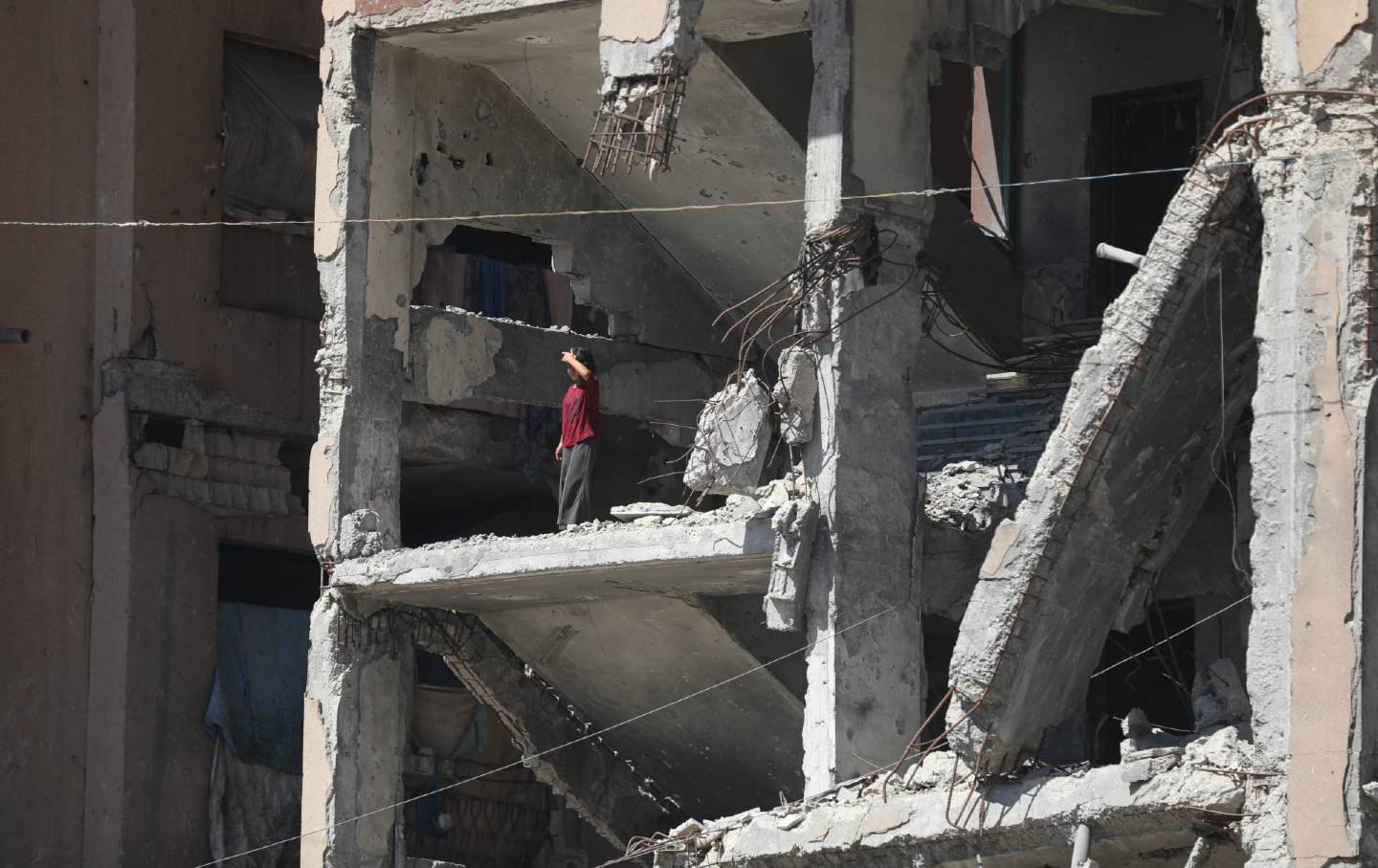
Israel’s Election Can’t Fix What Netanyahu Broke Israel’s Election Can’t Fix What Netanyahu Broke
The fundamental problem is not the name of the prime minister, but rather the actions of the Israeli government and the urgent issues that need to be addressed.
The AfD’s Rise Isn’t Just About East Germany The AfD’s Rise Isn’t Just About East Germany
The Alternative für Deutschland has a stable national poll lead, including in the former West Germany. Its rise owes to much more than Eastern grievances.
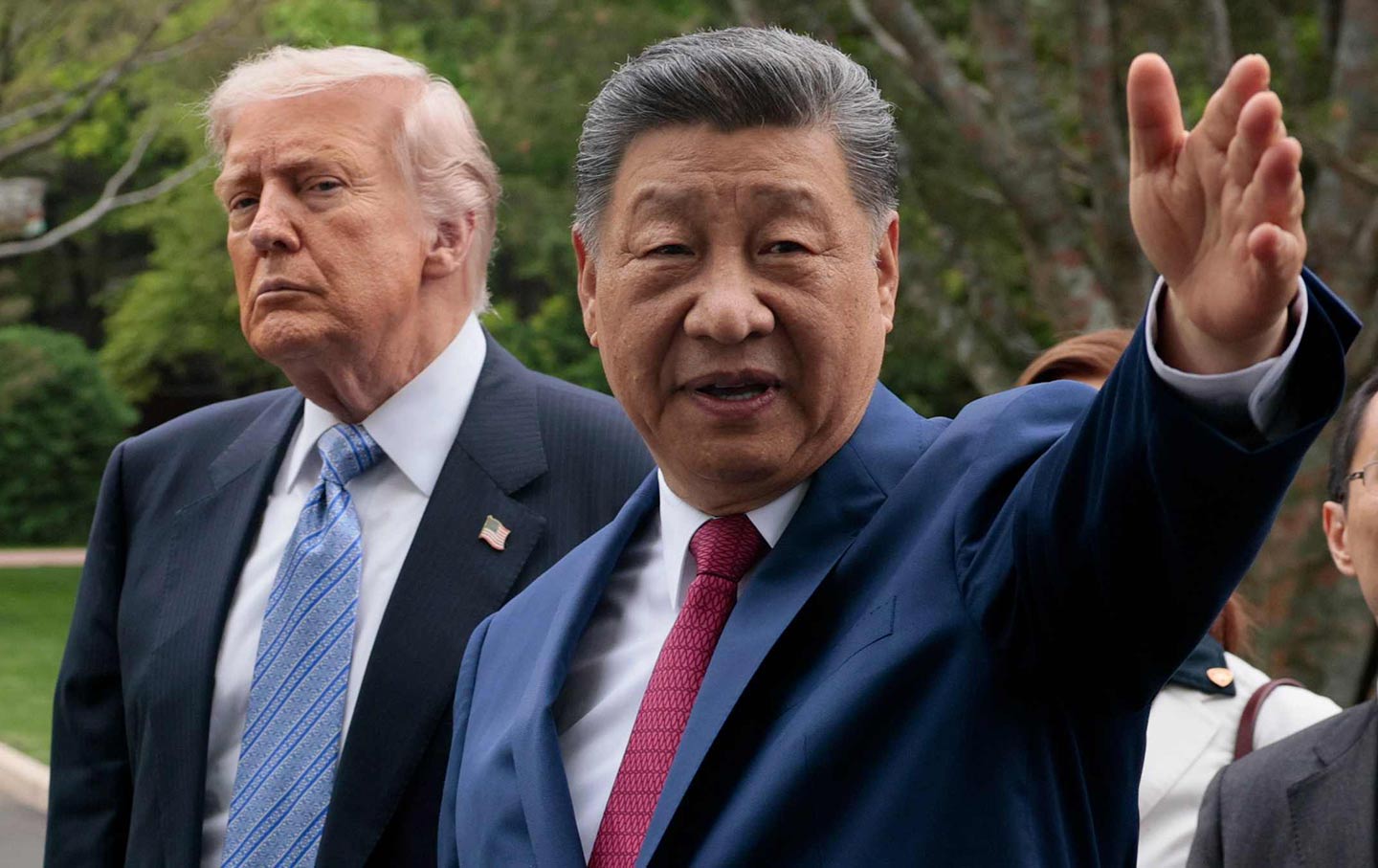
Chinese Development Is the Betrayal Washington Cannot Forgive Chinese Development Is the Betrayal Washington Cannot Forgive
The prospects for Xi Jinping’s visit are dim because American leaders are blaming China for the failures of globalization.

Pinochet: The Verdict of History in the Letelier-Moffitt Case Pinochet: The Verdict of History in the Letelier-Moffitt Case
An act of international terrorism on the streets of Washington, DC, still reverberates 50 years later.
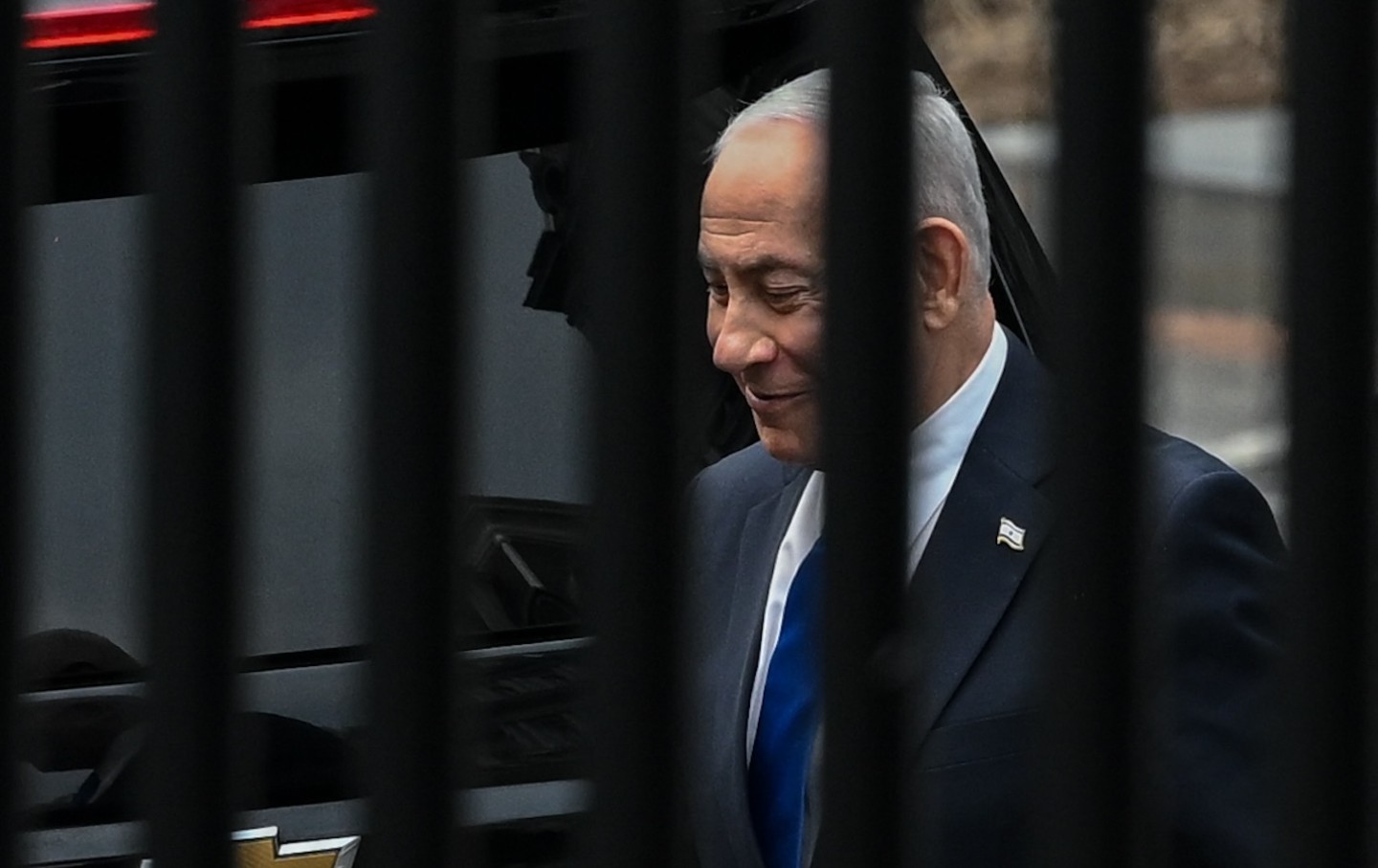
How to Arrest Benjamin Netanyahu How to Arrest Benjamin Netanyahu
Make no mistake: The United States can seize Netanyahu for crimes under US law and prosecute him in US courts when he is in New York City this week.
In the Age of AI, Nuclear Weapons Abolition Is a Renewed Imperative In the Age of AI, Nuclear Weapons Abolition Is a Renewed Imperative
As long as we have nuclear weapons, the job of ending humanity will continue to be as easy as the push of a button—or an AI agent hacking into a nuclear command-and-control system...

