
Trump Brought the War on Terror Home—and He’ll Do It Again.
While the War on Terror has receded into the background of our lives, its premises and tactics remain all too readily available.
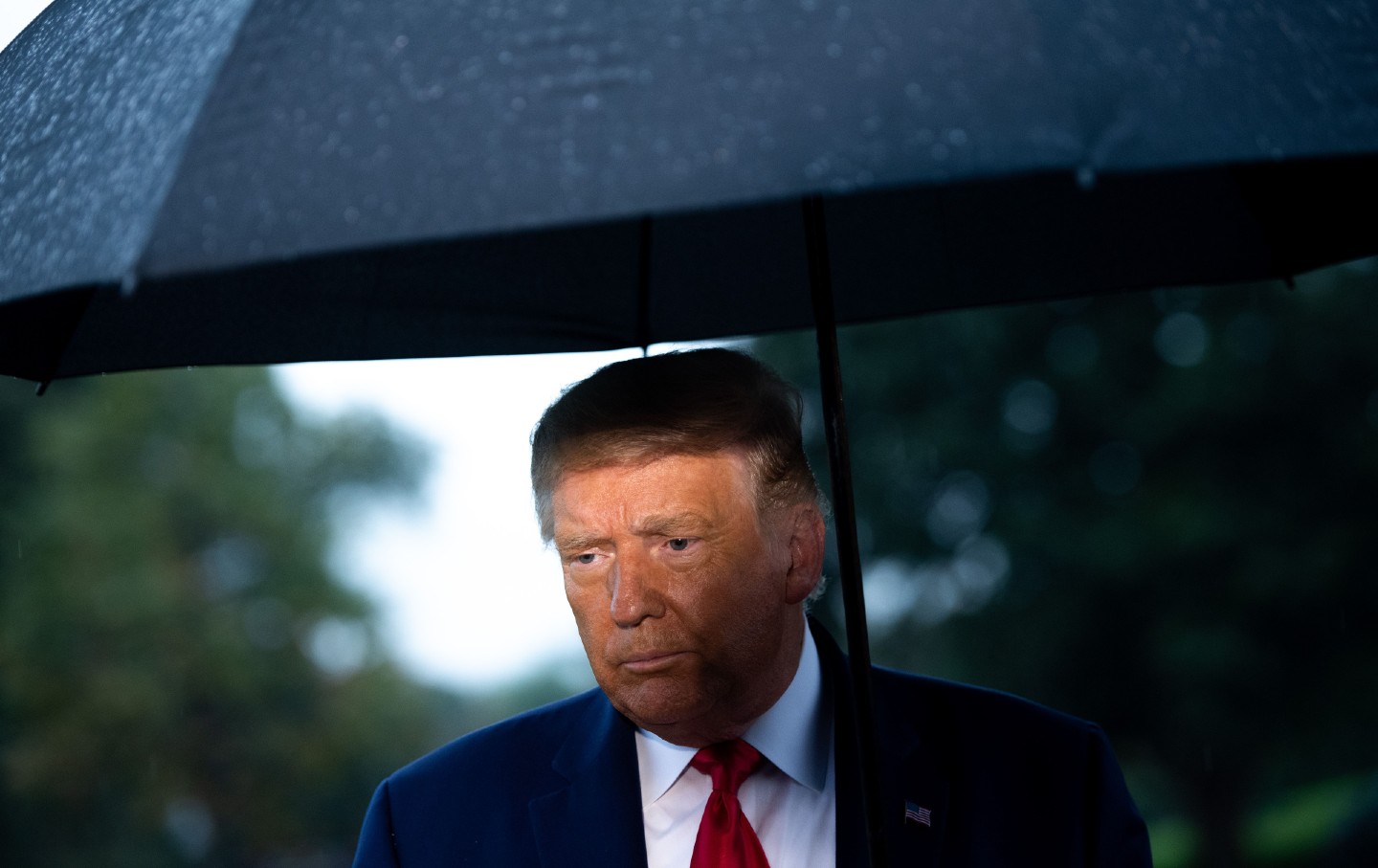
Donald Trump speaks to the press on the South Lawn of the White House.
(Saul Loeb / AFP via Getty Images)
This article originally appeared at TomDispatch.com. To stay on top of important articles like these, sign up to receive the latest updates from TomDispatch.com.
Post-election America finds itself in a panic. Voices from across a wide political spectrum warn that the country stands on the precipice of a potentially unprecedented and chaotic disregard for the laws, norms, and policies upon which its stability and security have traditionally relied. Some fear that the “new” president, Donald Trump, is likely to declare a national emergency and invoke the Insurrection Act, unleashing the US military for mass deportations of undocumented immigrants and for “retribution against” the “enemy from within” as well as “radical left lunatics.” As The New Republic‘s editor Michael Tomasky notes, writing about the nomination of Kash Patel for the post of director of the FBI, “We’re entering a world where the rule of law is turned inside out.”
The blame game for such doomsday fears ranges far and wide. Many pinpoint the Supreme Court’s 2023 decision to grant immunity to presidents for their core official acts, essentially removing any restraints on Trump’s agenda of retribution and revenge. Some, like Democratic Senators Elizabeth Warren and Richard Blumenthal, see loopholes in the law as the basis for their concern about the future and are urging Congress to pass legislation that will place additional constraints on the deployment of the military on American soil. Others argue that the Constitution itself is the problem. In his new book, No Democracy Lasts Forever: How the Constitution Threatens the United States, Berkeley Law School Dean Erwin Chemerinsky even suggests that it may be time for a new constitution.
But those involved in the fear and blame game might do well to take a step back and reflect for a moment on how we got here. Today’s crisis has been evolving for so many years now. In fact, much (though admittedly, not all) of what we’re witnessing today might simply be considered an escalation of the dire turn that this country took after the attacks of September 11, 2001, nearly a quarter of a century ago.
“Quaint” and “Obsolete”
It was January 2002 when White House Counsel Alberto Gonzales used the two words “quaint and obsolete,” whose echoes remain eerily with us to this very day (and seemingly beyond). The occasion was a debate taking place at the highest levels of the administration of President George W. Bush in the aftermath of the 9/11 attacks. By then, this country had invaded Afghanistan and authorized the opening of a new detention center at Bay, Cuba, ominously offshore of American justice, for captives of what already was being called the Global War on Terror. Two weeks after the first prisoners arrived at that prison camp on January 11, administration officials were already wondering which, if any, laws should apply when it came to the treatment of such prisoners.
Gonzales, who was to become the attorney general in Bush’s second term, laid out the options for the president. At issue was whether the Geneva Conventions—a set of treaties established in the wake of the atrocities of the Second World War—applied to the United States in its treatment of any prisoners from its War on Terror.
In a memo to President Bush, Gonzales noted that Department of Justice lawyers had already concluded, when it came to Al Qaeda and Taliban (Afghan insurgents in 2001, now in charge of the country) captives, the answer was no. Gonzales agreed, stating that “the war against terrorism is a new kind of war.” The laws of war, he told the president, were “obsolete” in the current context and the laws and norms requiring humane treatment for enemy prisoners had been “render[ed] quaint,” given this new kind of war. Accordingly, the Bush administration took the position that the Geneva Conventions did not apply to the prisoners they had already captured. As a result, in the years to come, the indefinite and arbitrary detention of about 780 men would be institutionalized and disregard for the law would become a regular, if secret, part of the War on Terror—an approach that would lead to the practice of torture at what came to be known as CIA “black sites” globally.
Nor would that be the only situation in which old laws were deemed outdated on national security grounds.
The Wider Framework
At the heart of such a rejection of the law was the determination that the president had primary, if not ultimate, authority when it came to national security. As Princeton historian Julian Zelizer has put it, top Bush administration officials “claimed that executive power was essential to fighting the war.” Members of Congress generally agreed and facilitated the shift to ever more solitary executive power in the name of war, setting a template for yielding some of its constitutional and statutory powers in matters of war to the president. One week after 9/11, Congress passed an Authorization for the Use of Military Force (AUMF) that granted the president the power “to use all necessary and appropriate force against those nations, organizations, or persons he determines planned, authorized, committed, or aided the terrorist attacks that occurred on September 11, 2001, or harbored such organizations or persons.”
Subsequently, other laws were bent, bypassed, or even broken in the name of keeping the nation safe. Congress also further enhanced the powers of the executive by passing the USA Patriot Act which, among other things, weakened the Fourth Amendment’s protections against the surveillance of American citizens. Prior to 9/11, such protections had remained strong. After 9/11, as Brown’s Costs of War Project reports, “These mass surveillance programs allow[ed] the US government to warrantlessly and ‘incidentally’ vacuum up Americans’ communications, metadata and content, and store their information in data centers and repositories,” sacrificing standing protections in the name of greater security.
Nor would that be the end of the matter. In the name of national security, the country’s law enforcement entities would also turn their backs on prohibitions against discrimination based on race, religion, or national origin as laid out, for example, in the Civil Rights Act of 1964. As a Costs of War Project report summed it up, the “Special Registration” requirement “announced in 2002 required all males from a list of Arab and Muslim countries [to] report to the government to register and be fingerprinted.” According to the ACLU, that program (known as NSEERS) would end up affecting foreign nationals from 25 countries.
Worse yet, such deviations from constitutional protections and the law did not come to an end with the Bush administration. Although President Barack Obama would issue an executive order restoring adherence to the laws banning torture and end the NSEERS program (which, the ACLU noted, “did not achieve a single terrorism-related conviction” despite “tens of thousands of people having been forced to register”), there were other key areas in which his administration did not reverse past policy—anything but, in fact. “Early in [President Obama’s] administration,” as historian Kathryn Olmstead notes, “the new president signaled his intention to continue Bush’s surveillance policies.” Though “surprised by the extent of the spying” in the domestic intelligence program, Obama’s team nonetheless “quickly agreed to continue Bush’s mass surveillance program.”
In addition, by escalating a global drone program of “targeted killings,” the Obama administration would forge its own path toward weakening legal protections in the name of national security. During the Obama years, on what came to be known as “Terror Tuesdays,” national security officials presented the president with a list of names, all potential targets to be captured or killed. (It would come to be known in the media as “the kill list.”) As NPR summed it up, Obama, “wishing to be seen as a restraining influence,” would weigh in on the final list of names. According to the Bureau of Investigative Journalism, “A total of 563 strikes, largely by drones, targeted Pakistan, Somalia and Yemen during Obama’s two terms, compared to 57 strikes under Bush.”
Leaving those programs on the table for the next president would be—and remains—a prescription for disaster.
Trump and the Tactics of the War on Terror
Trump’s first presidency combined the strategies of Bush and Obama when it came to the War on Terror. Though it was little noted then, he launched an unprecedented number of drone strikes, tripling Obama’s numbers by 2022, including the targeted assassination of a high-ranking Iranian official, Revolutionary Guard leader Qassim Soleimani. Political scientist Micah Zenko noted that, despite his claims of being non-interventionist, Trump proved to be “more interventionist than Obama: in authorizing drone strikes and special operations raids in non-battlefield settings (namely, in Pakistan, Yemen, and Somalia).”
The 45th president’s disregard for legal restraints took other war-on-terror policies to a new level. Within a week of his inauguration, President Trump had issued an executive order that came to be known as “the Muslim Ban,” forbidding citizens from seven predominantly Muslim countries entry to the United States. And like his predecessor, he showed little interest in sunsetting the expansive surveillance authority he had inherited.
Popular
“swipe left below to view more authors”Swipe →In fact, Trump brought the tools and tactics designed for the War on Terror to the “home front,” notably in his approach to dissent. He attacked Black Lives Matter protesters as enemies, labeling them “terrorists.” He made discrimination against foreigners a national policy at the onset of his first presidency, announcing his plans to detain and deport millions of undocumented immigrants and promising to institute policies that intentionally separated migrant children from their families. He even threatened to widen the uses of Guantánamo: “[W]e are keeping [Guantánamo] open…and we’re gonna load it up with some bad dudes, believe me, we’re gonna load it up.” Wondering who those “bad dudes” would be, NPR noted that captives in the War on Terror were mostly a thing of the past and reminded listeners of an interview in which Trump had said such suspects should be tried by military commissions, the fraught trial system already in place there.
When Joe Biden became president, he curtailed a number of the excesses of the War on Terror from the Trump years, even issuing a proclamation revoking the Muslim ban. When it came to drone strikes, he lessened them substantially, leaving them “far from their peaks under the Obama and Trump administrations.” In addition, he put new limits on their use going forward. In a striking gesture, Director of National Intelligence Avril Haines pledged to “promote transparency” in place of the excessive secrecy that had underpinned the torture program, surveillance abuses, and the targeted-killing program. Still, all too much remained ongoing or fully capable of being revived in the new Trump years.
Bringing It All Back Home
Which brings us to expectations—or fears—of what will happen in a second Trump presidency. When it comes to the use of force, detention, discrimination, and the erasure of constitutional protections, Trump has already promised to bring the broad counterterrorism authority of earlier in this century to bear on the home front.
Let’s begin with his promises to institute discriminatory policies based on race and national origin. As of today, the incoming administration has pledged to round up, put in camps, and oversee the mass detention and deportation of undocumented immigrants from Latin America in particular, potentially combining a detention nightmare (lacking due process and underpinned by massive discrimination) with suspicion often based on national origin rather than specific evidence of criminal behavior—an echo of the War on Terror’s early years.
In place of national security, Trump has promised to substitute, in the words of the 2024 Republican platform, the “threat to our very way of life,” a term that expands the vagueness encapsulated in “terror” and “terrorism” to a new level. Notably, in the run-up to the 2024 election he had already made it crystal clear that the path from the War on Terror abroad to his internal policy plans would be important to his administration. When candidate Trump promised to use the military to counter “the enemy from within,” a spokesperson clarified the meaning for the press. As The Washington Post reported at the time, Trump spokesperson Steven Cheung acknowledged the way the candidate was linking his political enemies to terrorists. Trump, he explained, was “equat[ing] the prospect of unspecified efforts by the left during the elections with the recent arrest of an Afghan man in Oklahoma, who is accused of plotting an Election Day attack in the United States in the name of the Islamic State group.” Cheung then furthered the analogy by adding, “President Trump is 100% correct—those who seek to undermine democracy by sowing chaos in our elections are a direct threat, just like the terrorist from Afghanistan that was arrested for plotting multiple attacks on Election Day within the United States.”
Where Are We Today?
While the War on Terror has receded into the background of our lives, its premises and tactics remain all too readily available. Its expansion of presidential powers, coupled with the Supreme Court’s recent immunity decision when it comes to more or less anything a president does in office, leaves the country in a state of imminent peril. Surveillance powers remain remarkably broad. Drone-strike authorities remain in place, even if, in the wake of the Biden years, curtailed for now. And the prospect of indefinite detention as a codified element of American policy remains possible not only at Guantánamo but for migrants across the United States. And to top it all off, Congress continues to be unwilling to restrict a president’s war powers in any significant way, having repeatedly refused to repeal or replace that original 2001 Authorization for the Use of Military Force in which neither time, nor geographical limits, nor even precise limits on the definition of the enemy exist.
If only, as a nation, we could look beyond the tumultuous context of the current moment and imagine how to make our way to a safer, more sustainable future. Sadly, despite the dangers that may lie ahead, it’s not just partisan politics, or economic disarray, or the fragile state of the world that has brought us to this point. It’s our own negligence in accepting the dismantling of the laws and norms that had guided us prior to 9/11 and refusing ever since to restore our once-upon-a-time respect for the rule of law and for one another.
Become a Sustaining Donor This September
Between the reemergence of right-wing red-baiting and Donald Trump’s use of the chilling National Security Presidential Memorandum–7 to criminalize left political organizing, we’re seeing McCarthyism reborn before our eyes.
This assault on democracy cannot be ignored or wished away. Resisting it requires bravery in the face of threats and repression, a steadfast commitment to the truth, and the unwavering belief that we can—and will—overcome this darkness.
We must have an independent media that sets the record straight, unearths corruption and abuses of power, and advances a politics of justice and dignity for all if we’re to win this fight.
That’s why I’m writing to you today. This September, The Nation needs to add 100 monthly donors to sustain our progressive journalism. Your contribution makes the next investigative report, the next truth-speaking column, and the next pathbreaking essay all possible.
I hope you’ll support our work with a recurring donation today. If you donate $10 or more a month, we’ll send you a brand new “Hands Off the Free Press!” sticker to recognise your commitment to our cause. Please, donate today.
Onward,
Katrina vanden Heuvel
Editor and Publisher, The Nation
More from The Nation
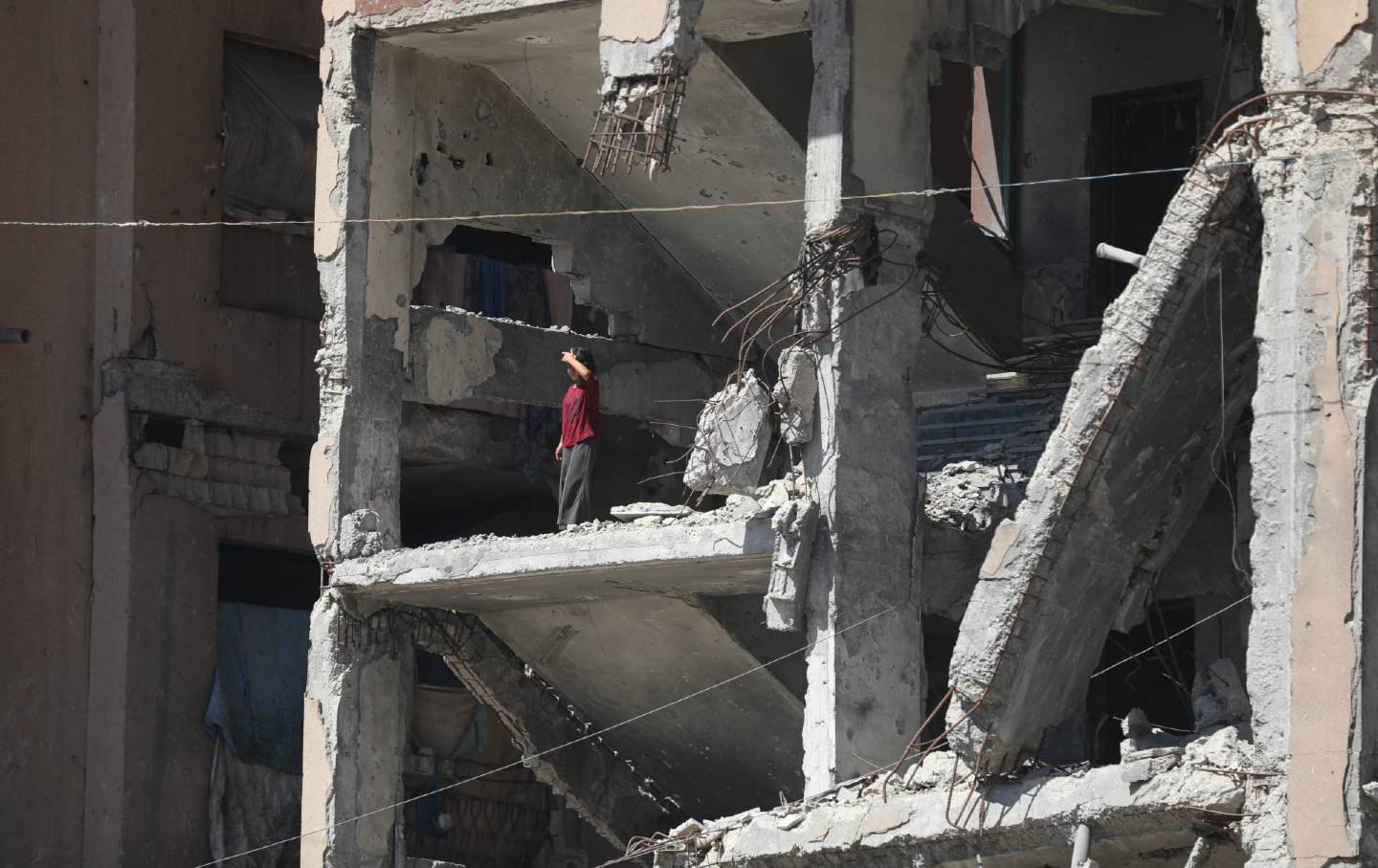
Israel’s Election Can’t Fix What Netanyahu Broke Israel’s Election Can’t Fix What Netanyahu Broke
The fundamental problem is not the name of the prime minister, but rather the actions of the Israeli government and the urgent issues that need to be addressed.

The AfD’s Rise Isn’t Just About East Germany The AfD’s Rise Isn’t Just About East Germany
The Alternative für Deutschland has a stable national poll lead, including in the former West Germany. Its rise owes to much more than Eastern grievances.
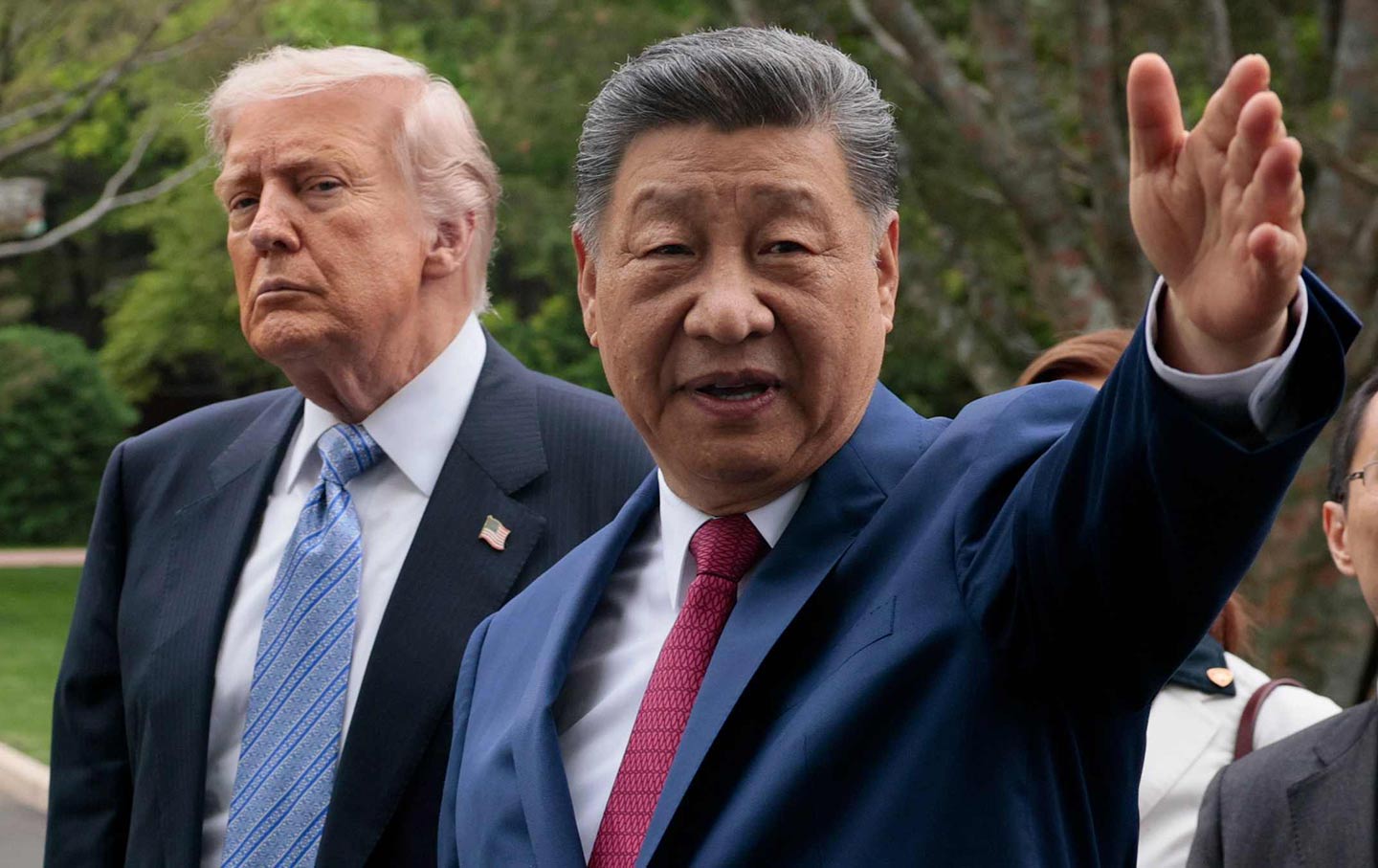
Chinese Development Is the Betrayal Washington Cannot Forgive Chinese Development Is the Betrayal Washington Cannot Forgive
The prospects for Xi Jinping’s visit are dim because American leaders are blaming China for the failures of globalization.

Pinochet: The Verdict of History in the Letelier-Moffitt Case Pinochet: The Verdict of History in the Letelier-Moffitt Case
An act of international terrorism on the streets of Washington, DC, still reverberates 50 years later.
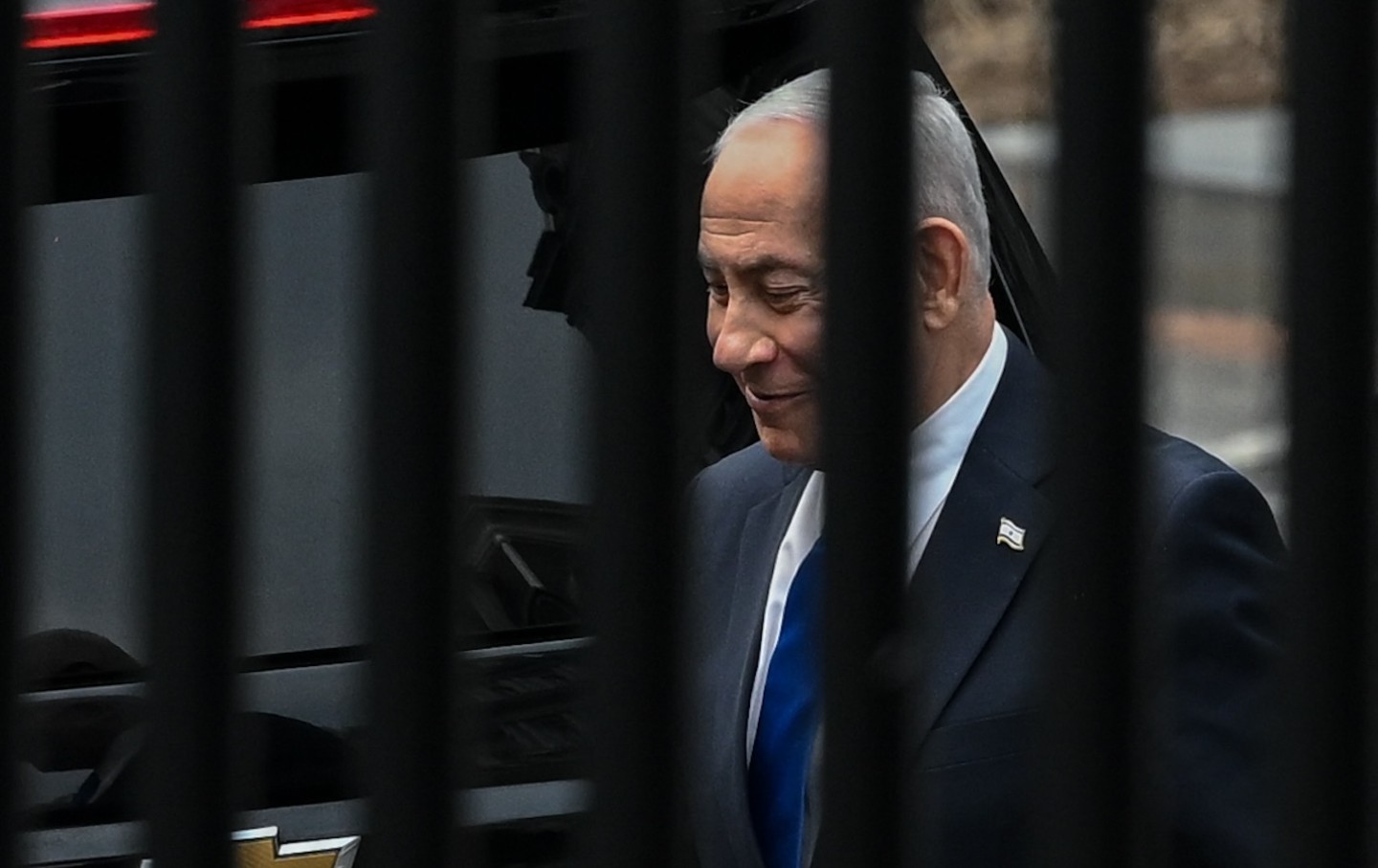
How to Arrest Benjamin Netanyahu How to Arrest Benjamin Netanyahu
Make no mistake: The United States can seize Netanyahu for crimes under US law and prosecute him in US courts when he is in New York City this week.
In the Age of AI, Nuclear Weapons Abolition Is a Renewed Imperative In the Age of AI, Nuclear Weapons Abolition Is a Renewed Imperative
As long as we have nuclear weapons, the job of ending humanity will continue to be as easy as the push of a button—or an AI agent hacking into a nuclear command-and-control system...

